Acne Pigmentation: Why Dark Marks Stay and How to Fade Them
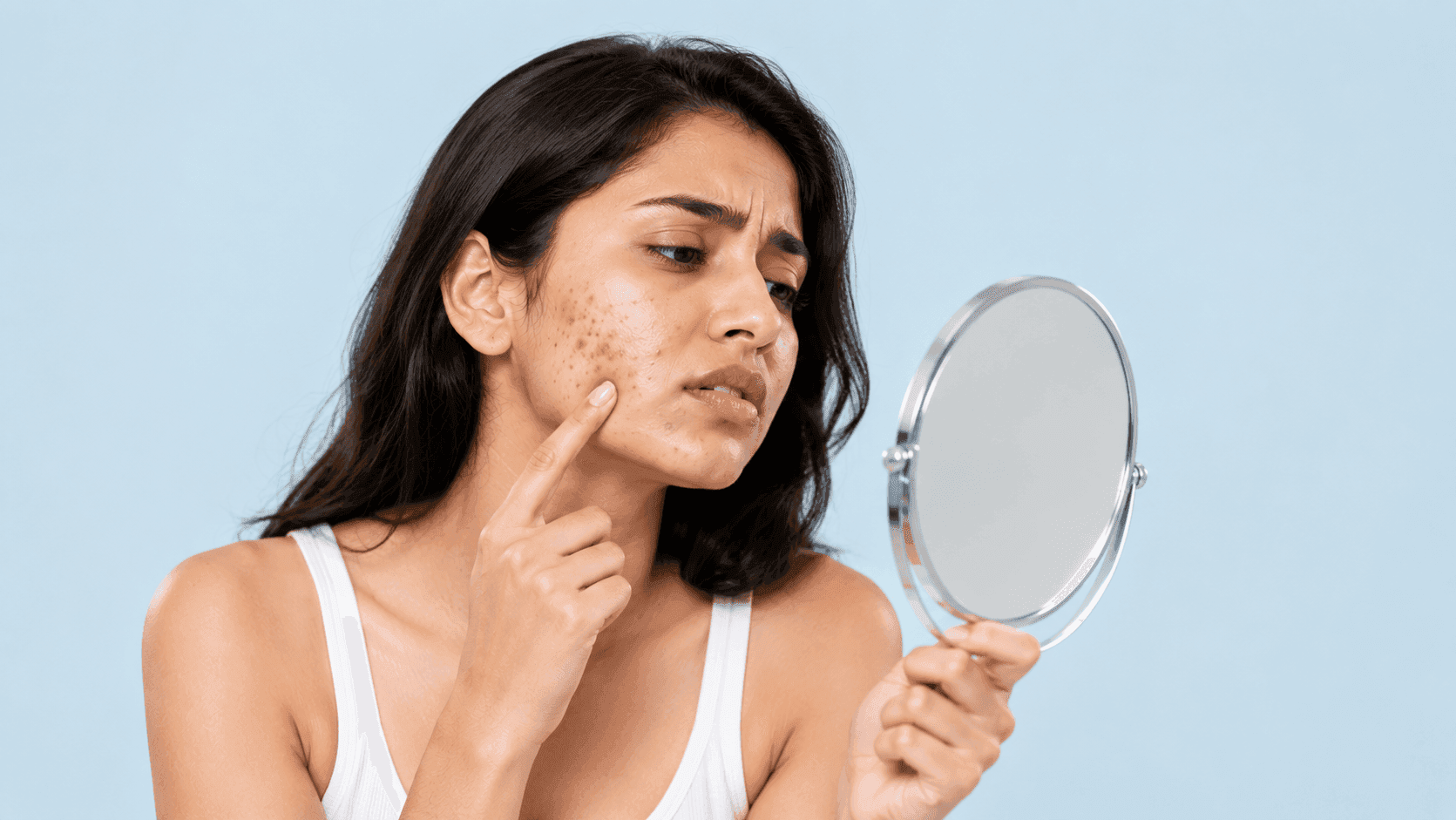
Dark marks left by acne are known as post-inflammatory hyperpigmentation (PIH). They occur because inflammation triggers excess melanin production during the healing process. These spots aren't permanent scars, but they can take months or even years to fade on their own because the excess pigment is deeply embedded. To fade acne marks, you need sun protection, gentle, hydrating ingredients, chemical exfoliants to speed up skin cell turnover, and dermatologist-prescribed topical creams.
- Caused by inflammation triggering excess melanin production
- Fades with sun protection, gentle actives, and chemical exfoliation
- Can take months or years without a consistent routine
Why Does Acne Leave Dark Marks?
When a pimple disappears, a brown or dark patch stays behind; this is commonly known as acne pigmentation.
When acne causes inflammation, your skin responds by triggering the pigment-making cells (melanocytes). This process produces more melanin, the pigment responsible for skin colour. In some people, this excess pigment remains in the area even after the acne has healed completely. This is called post-inflammatory hyperpigmentation (PIH).
The deeper or more inflamed the breakout, the higher the chance of a noticeable mark. Picking, squeezing, or repeatedly touching pimples can increase inflammation and make these marks darker and even slower to fade.
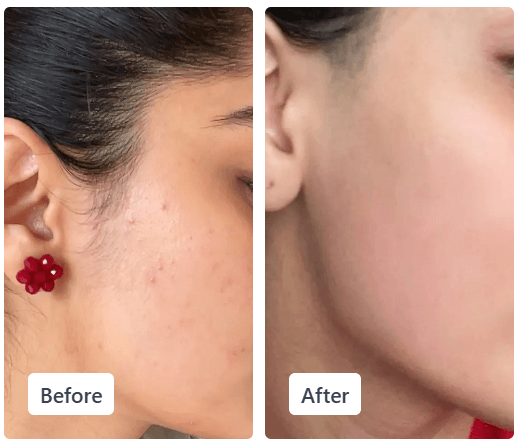
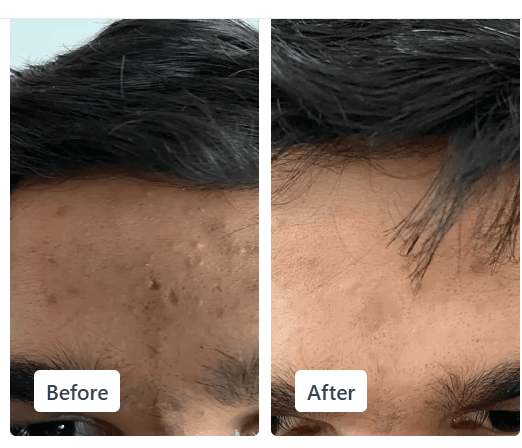
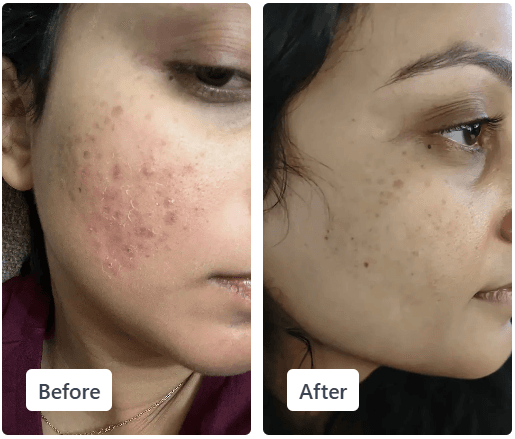
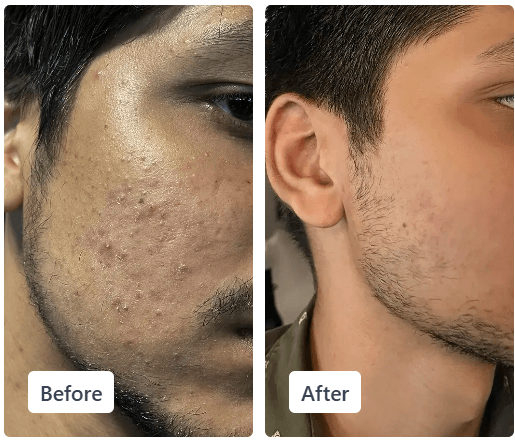
See real results, then start your own
Take the free Clear Ritual Skin Test and get a personalized routine built for your skin's unique patterns.
What Causes Acne Pigmentation?
The main causes of acne pigmentation are inflammation, excess melanin production, and how the skin heals after a breakout.
Inflamed Acne
Red, swollen pimples, pustules, nodules, and cysts can trigger a stronger inflammatory response. This may stimulate melanocytes, the cells that produce melanin, leaving behind dark marks once the breakout settles.
Picking or Popping Pimples
Squeezing a pimple can increase inflammation and damage the surrounding skin. It may also prolong healing, making post-acne pigmentation more likely.
Sun Exposure
UV and visible light exposure can make existing pigmentation appear darker and more persistent. This is why daily sun protection is an essential part of any acne pigmentation treatment or skincare routine.
Skin Tone
People with medium to deeper skin tones may be more prone to post-inflammatory hyperpigmentation because their melanin-producing cells under the skin are more active naturally. However, people with lighter skin tones have more visible pigmentation marks, as the surrounding skin is lighter than the marks.
Repeated Breakouts
When new pimples continue appearing before the older marks have faded, pigmentation can build up over time, creating stubborn marks. Treating active acne is therefore just as important as treating the marks it leaves behind.
Who Is Most Prone to Acne Pigmentation?
Anyone can develop dark marks after acne, but some people are more likely to experience persistent pigmentation. You may be more prone if you:
- Have medium to deeper skin tones.
- Frequently experience inflamed or cystic acne.
- Pick, squeeze, or scratch your pimples.
- Spend time in the sun without adequate protection.
- Experience recurring breakouts in the same areas.
- Use harsh skincare that repeatedly irritates the skin.
Your tendency to develop pigmentation also depends on how strongly your skin responds to inflammation. Two people can have similar breakouts but heal with very different levels of discolouration.
See real results, then start your own
Take the free Clear Ritual Skin Test and get a personalized routine built for your skin's unique patterns.
Acne Pigmentation vs Acne Scars: What's the Difference?
Acne pigmentation and acne scars are often used interchangeably, but they are not the same. The table below shows how acne pigmentation and types of acne scars differ.
| Concern | What It Looks Like | What Happens to the Skin | Can It Fade Naturally? |
|---|---|---|---|
| Acne pigmentation | Flat brown, dark, or greyish marks | Excess melanin remains after inflammation | Often, yes |
| Red post-acne marks | Flat pink, red, or purple marks | Damaged or dilated blood vessels remain visible | Often, yes |
| Atrophic acne scars | Pits, depressions, or craters | Structural collagen and tissue are lost | Usually not without clinical procedures |
| Raised scars | Thick, raised, or bumpy areas | Excess scar tissue forms during healing | Usually requires professional dermatological care |
Note: While brown or dark marks are caused by excess pigment (Post-Inflammatory Hyperpigmentation or PIH), flat red or pink marks are caused by dilated blood vessels near the skin surface. This is known as Post-Inflammatory Erythema (PIE).
Another simple way to tell the difference is to look at the skin's texture. If the area is flat but discoloured, it is more likely to be pigmentation. If the skin is indented or raised, it may be a true acne scar.
How Long Does Acne Pigmentation Take to Fade?
Acne pigmentation can take anywhere from a few weeks to several months to fade. Deeper or older marks may take longer. Here's a timeline that you can expect for the most common acne pigmentation marks to fade away:
- Fresh, mild marks: Typically fade within four to eight weeks.
- Moderate pigmentation: Usually takes two to six months to improve.
- Dark or persistent pigmentation: May take six to 12 months or longer to fade, especially without treatment or sun protection.
Note: These timelines are not fixed. Your skin tone, skin type, depth of pigmentation, sun exposure, active acne, and skincare routine can all affect how quickly marks improve.
If new acne continues to develop, you may also keep getting new marks while older ones are fading. This can make the overall pigmentation appear unchanged. A dermatologist's treatment or procedure often helps in maintaining skin health and treating acne and pigmentation issues.
How to Treat Acne Pigmentation
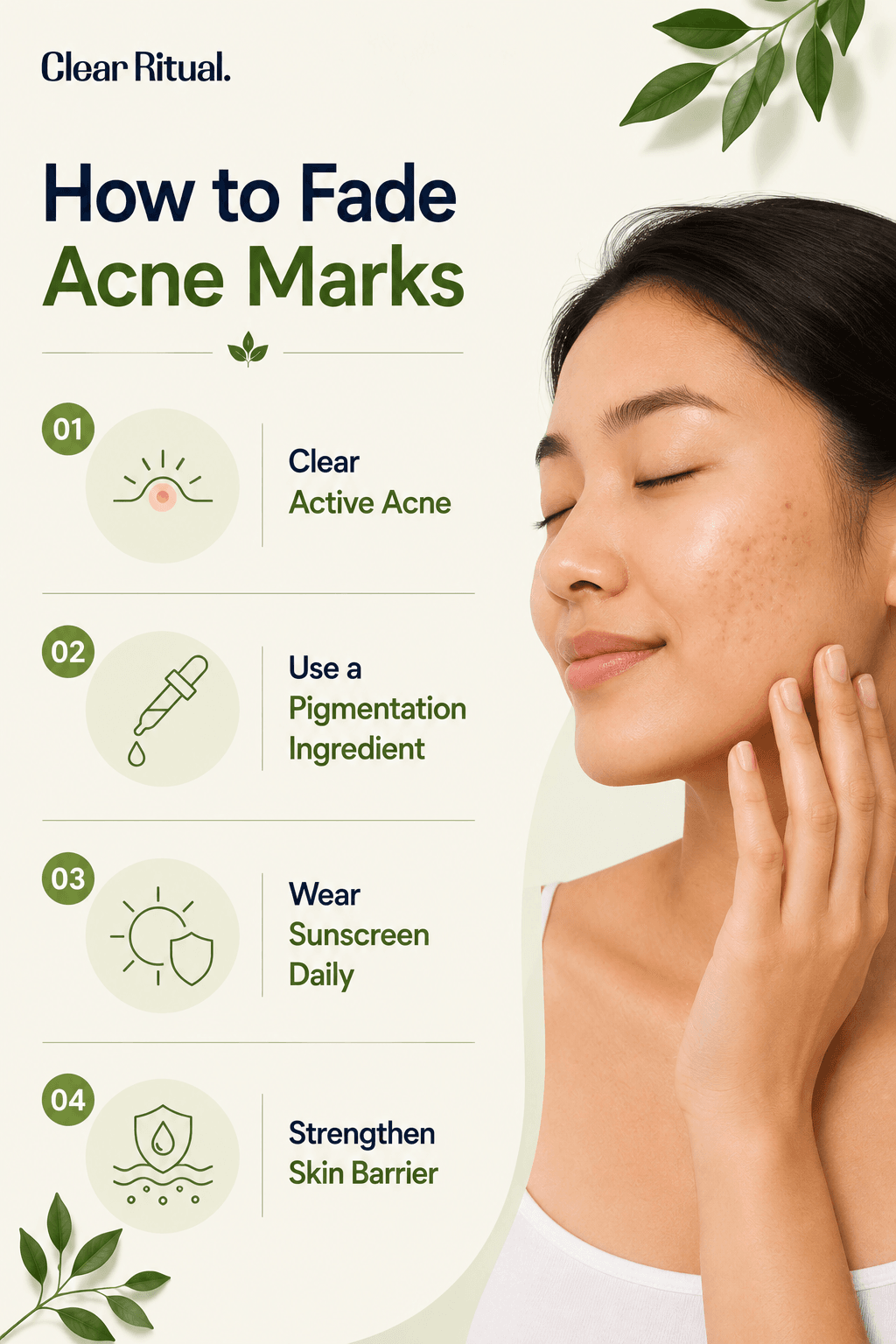
To treat acne pigmentation, the first step is to treat both the existing marks and the acne that causes them. Here are a few simple steps that can help you treat acne pigmentation.
Control Active Acne
Fading old marks while new breakouts continue to appear can become a frustrating cycle. A suitable acne routine can help reduce inflammation and lower the risk of new pigmentation.
Depending on your skin, ingredients such as salicylic acid, azelaic acid, or dermatologist-recommended acne treatments may help.
Use a Targeted Pigmentation Ingredient
Ingredients such as niacinamide, azelaic acid, vitamin C, and retinoids may gradually improve uneven pigmentation. The right choice depends on your skin type, sensitivity, and existing routine.
Alternating your treatments, such as using a retinoid two to three nights a week, a brightening serum twice a week, and an AHA/BHA exfoliant based on your skin's needs, will deliver more effective results without overwhelming your skin barrier.
Wear Sunscreen Every Day
Sun protection is one of the most important parts of acne pigmentation treatment. Without it, UV exposure can darken existing marks and make treatment less effective.
Use a broad-spectrum sunscreen daily and reapply when you are outdoors for extended periods.
Keep Your Skin Barrier Healthy
Using several strong actives at once does not necessarily fade pigmentation faster. In fact, more actives can cause irritation, trigger more inflammation, and potentially worsen discolouration.
A simple routine with a gentle cleanser, suitable treatment, moisturiser, and sunscreen is often easier to follow consistently.
Best Ingredients That Help Fade Acne Pigmentation
Several skincare ingredients can help improve post-acne marks. However, the best ingredient depends on your skin and the type of pigmentation you have. The table below shows how each ingredient works for treating acne pigmentation.
| Ingredient | How It May Help | Best Suited For |
|---|---|---|
| Niacinamide | Helps regulate pigment transfer and supports the skin barrier | Sensitive or acne-prone skin |
| Azelaic acid | Helps with acne and post-inflammatory pigmentation | Active acne with dark marks |
| Vitamin C | Provides antioxidant support and helps brighten uneven skin tone | Dullness and pigmentation |
| Retinoids | Support cell turnover and help improve acne and pigmentation | Persistent acne and marks |
| Salicylic acid | Unclogs pores and exfoliates the skin | Oily, congested, acne-prone skin |
| AHAs (Alpha Hydroxy Acids) | Exfoliate surface skin cells | Uneven tone and mild pigmentation |
While these ingredients are suited for treating acne pigmentation, there are certain side effects which you should be aware of:
- Niacinamide: Generally well tolerated and suitable for most skin types, including sensitive skin. Irritation is uncommon.
- Azelaic acid: May cause mild tingling, dryness, or irritation when first introduced, but these effects often improve with continued use.
- Vitamin C: Some formulations may irritate sensitive or actively inflamed skin, especially at higher concentrations.
- Retinoids: Can cause dryness, redness, peeling, irritation, and temporary purging during the initial weeks of use.
- Salicylic acid: May lead to dryness, peeling, or irritation, particularly if overused or combined with other exfoliating ingredients.
- AHAs (Alpha Hydroxy Acids): May cause temporary stinging, dryness, peeling, or irritation, especially when first introduced or used in high concentrations. They can also make the skin more sensitive to sunlight, so daily sunscreen is essential.
Note: Do a patch test before trying out any active ingredient to avoid the risk of irritation. When using active ingredients such as retinoids, AHAs, salicylic acid, vitamin C, azelaic acid, or niacinamide, apply a broad-spectrum sunscreen with SPF 30 or higher every morning.
Professional Treatments for Acne Pigmentation
When topical skincare does not provide enough improvement, a dermatologist may recommend professional treatment along with a regular skincare routine to get visible improvements. Some of the most common options include:
- Chemical peels: Use controlled exfoliating acids to improve superficial pigmentation.
- Laser and light-based treatments: Certain devices can target pigmentation, but the choice of laser is especially important for deeper skin tones.
- Microneedling: This procedure uses fine needles to trigger skin renewal. It may be considered when pigmentation occurs alongside certain textural concerns.
- Prescription treatments: Dermatologists may prescribe stronger retinoids, azelaic acid, hydroquinone (a prescription skin-lightening ingredient), or other pigment-targeting treatments when appropriate.
Professional procedures are not suitable for every skin type or every kind of pigmentation. An incorrect treatment can sometimes worsen post-inflammatory hyperpigmentation, particularly in pigment-prone skin. Always assess your skin with a dermatologist before you undergo a procedure.
Can Acne Pigmentation Be Prevented?
You may not be able to prevent every post-acne mark, but you can reduce the risk. Preventing new breakouts is an important part of preventing new pigmentation. You should focus on these habits:
- Treat acne early instead of waiting for it to become severely inflamed.
- Avoid picking, squeezing, or scratching pimples.
- Wear broad-spectrum sunscreen every day.
- Use acne treatments consistently rather than changing products frequently.
- Avoid over-exfoliating or combining too many strong actives at once.
- Support your skin barrier with a suitable moisturiser.
- Use a gentle face cleanser instead of a harsh physical scrub or cleansers that dry out your skin.
- Seek professional help for recurring, painful, or cystic acne.
When Should You See a Dermatologist?
Consider seeing a dermatologist if your pigmentation has not improved despite consistent care or occurs alongside painful or severe acne. Professional guidance is also useful if:
- You have deep nodules or cysts.
- Your acne is leaving both dark marks and indented scars.
- Over-the-counter treatments repeatedly irritate your skin.
- You are unsure whether your marks are pigmentation or true acne scars.
- Your acne keeps returning despite following a consistent routine.
- You are considering chemical peels, lasers, or other clinical procedures.
Early acne management can help reduce inflammation and lower the risk of persistent marks and permanent scarring.
How Clear Ritual Supports Personalized Skincare Decisions
Acne pigmentation is not viewed as an isolated dark-spot problem at Clear Ritual. If new breakouts continue to appear, simply fading existing marks may not be enough. Factors such as stress, diet, hormonal changes, and other individual triggers may influence acne patterns alongside external factors such as excess oil, clogged pores, and an unsuitable skincare routine.
The first step is understanding why your acne keeps returning. Acne pigmentation often fades gradually. Consistency, sun protection, a healthy skin barrier, and better control of recurring breakouts can make a meaningful difference over time.
The Clear Ritual Skin Test helps identify your acne concerns and potential triggers to build a more personalised approach. The goal is to support active acne management while using suitable skincare ingredients to improve the marks left behind.
See real results, then start your own
Take the free Clear Ritual Skin Test and get a personalized routine built for your skin's unique patterns.
Editorial Standards
Clear Ritual has Strict sourcing guidelines to ensure our content is accurate and current. We rely on peer-reviewed studies, academic research institutions, and medical associations. We strive to use primary sources and refrain from using tertiary references. See a mistake? Learn More about our Editorial Standards.