Acne on Neck: Why It Appears and How to Treat It by Cause
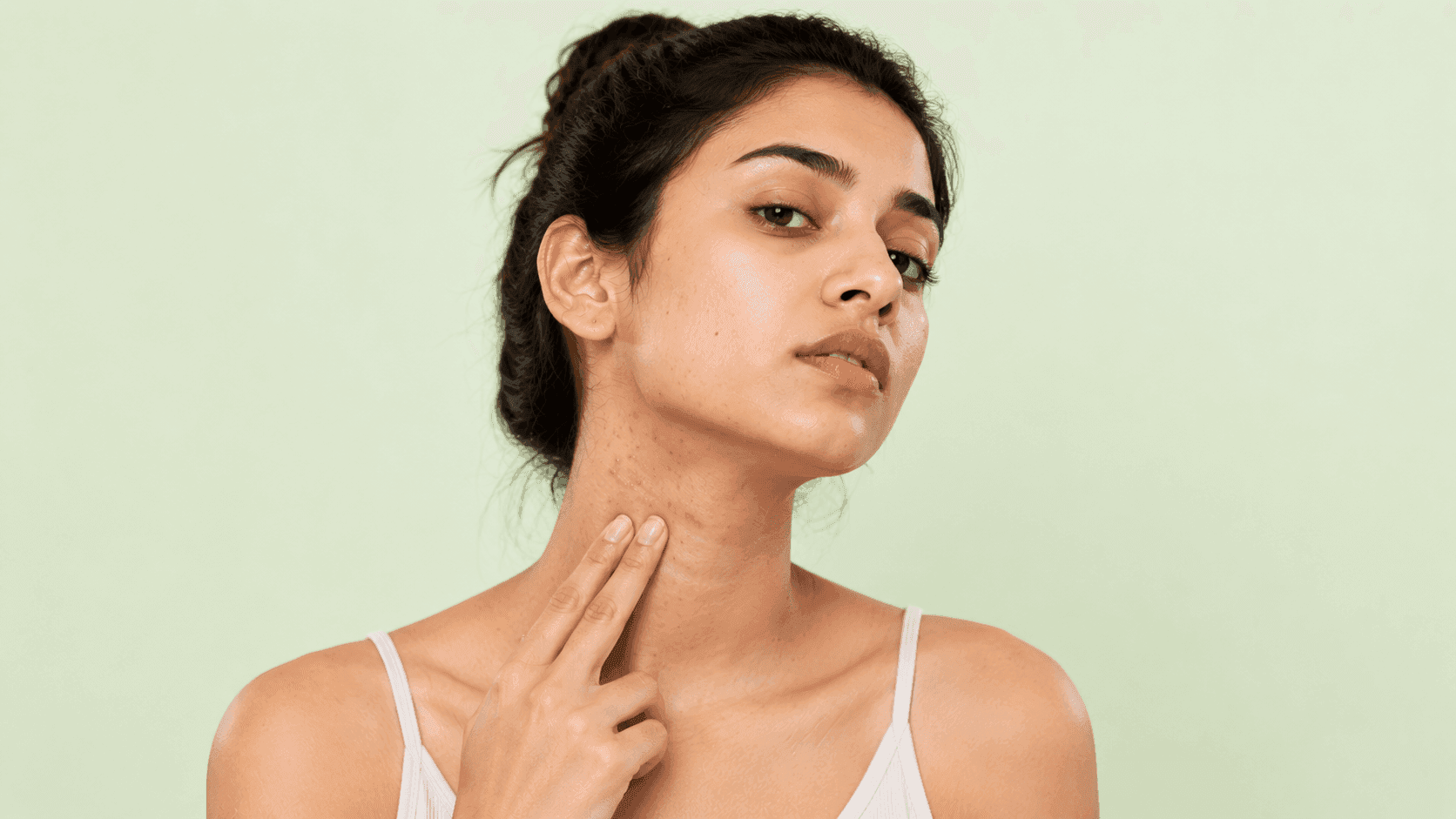
"<div style=""font-family:'Sofia Pro';font-size:16px;background-color:#E6E6FA;padding:20px;margin:25px 0;border-left:4px solid #1F3A34;border-radius:8px;""> <span style=""font-family:'Sofia Pro';font-size:16px;color:#1F3A34;font-weight:700;display:block;margin-bottom:10px;"">Quick Answer
Neck acne develops when hair follicles on the neck become clogged with excess oil, dead skin cells, and *Cutibacterium acnes* (*C. acnes*) bacteria, causing inflammation and breakouts. It may be influenced by hormones, friction from collars or tight clothing (acne mechanica), sweat, shaving habits, and skincare products. Scrubbing or washing too often can irritate the skin and worsen breakouts.
- Cleanse gently after sweating
- Use benzoyl peroxide or salicylic acid based products
- Choose non-comedogenic products
- Shave carefully and avoid open pimples
What Is Acne on the Neck?
If you are looking for the meaning of acne on the neck, it refers to pimples, inflamed bumps, or cysts that develop when hair follicles become clogged with excess oil, dead skin cells, and bacteria. This condition is also known as neck acne.
The most common types of neck acne are:
- Comedonal acne.
- Inflammatory acne.
- Cystic acne.
Although it affects the back of the neck, Acne Keloidalis Nuchae (AKN) is not a type of acne vulgaris. It is a chronic inflammatory condition of the hair follicles that causes firm bumps and keloid-like scars, most commonly on the nape of the neck.
See real results, then start your own
Take the free Clear Ritual Skin Test and get a personalized routine built for your skin's unique patterns.
What Causes Acne on the Neck?
Acne on the neck develops when hair follicles become clogged with excess oil, dead skin cells, and bacteria. Several internal and external factors can contribute to this process and trigger or worsen breakouts.
The most common causes and contributing factors for neck acne include a mix of external surface irritants and internal biological triggers:
Hormonal Changes
Fluctuations in androgen levels during puberty, menstruation, pregnancy, or PCOS increase sebum production.
Hair and Skincare Products
Heavy shampoos, conditioners, styling products, or moisturisers can clog pores and cause acne cosmetica.
Friction and Pressure
Tight collars, scarves, necklaces, sports equipment, or repeated phone contact can irritate the skin and trap sweat, resulting in acne mechanica.
Sweat and Delayed Cleansing
Sweat mixed with oil and dead skin cells can clog hair follicles, especially if it remains on the skin after exercise.
Stress
Increased cortisol levels may stimulate oil production and worsen existing acne.
Diet
High-glycaemic foods, dairy, and whey protein may worsen acne in some people.
Genetics
A family history of acne can increase your risk of developing acne.
How Is Neck Acne Different from Facial Acne?
Neck acne and facial acne develop through the same underlying process, but differences in skin characteristics and daily triggers mean they can appear and respond to treatment differently.
The table below highlights the key differences between facial acne and neck acne:
| Neck Acne | Facial Acne |
|---|---|
| More exposed to friction and pressure, making deeper breakouts, post-inflammatory hyperpigmentation, and scarring more common. | Higher density of oil glands, making clogged pores and excess oil more common. |
| Common triggers include friction from collars or sports gear, sweat, and residue from hair products. | Common triggers include excess oil, cosmetics, shaving, and frequent face touching. |
| Often appears as localised clusters or deeper, painful bumps along the neck or jawline. | More likely to affect the forehead, cheeks, nose, and chin with a mix of blackheads, whiteheads, and inflamed pimples. |
See real results, then start your own
Take the free Clear Ritual Skin Test and get a personalized routine built for your skin's unique patterns.
What Is the Best Neck Acne Treatment?
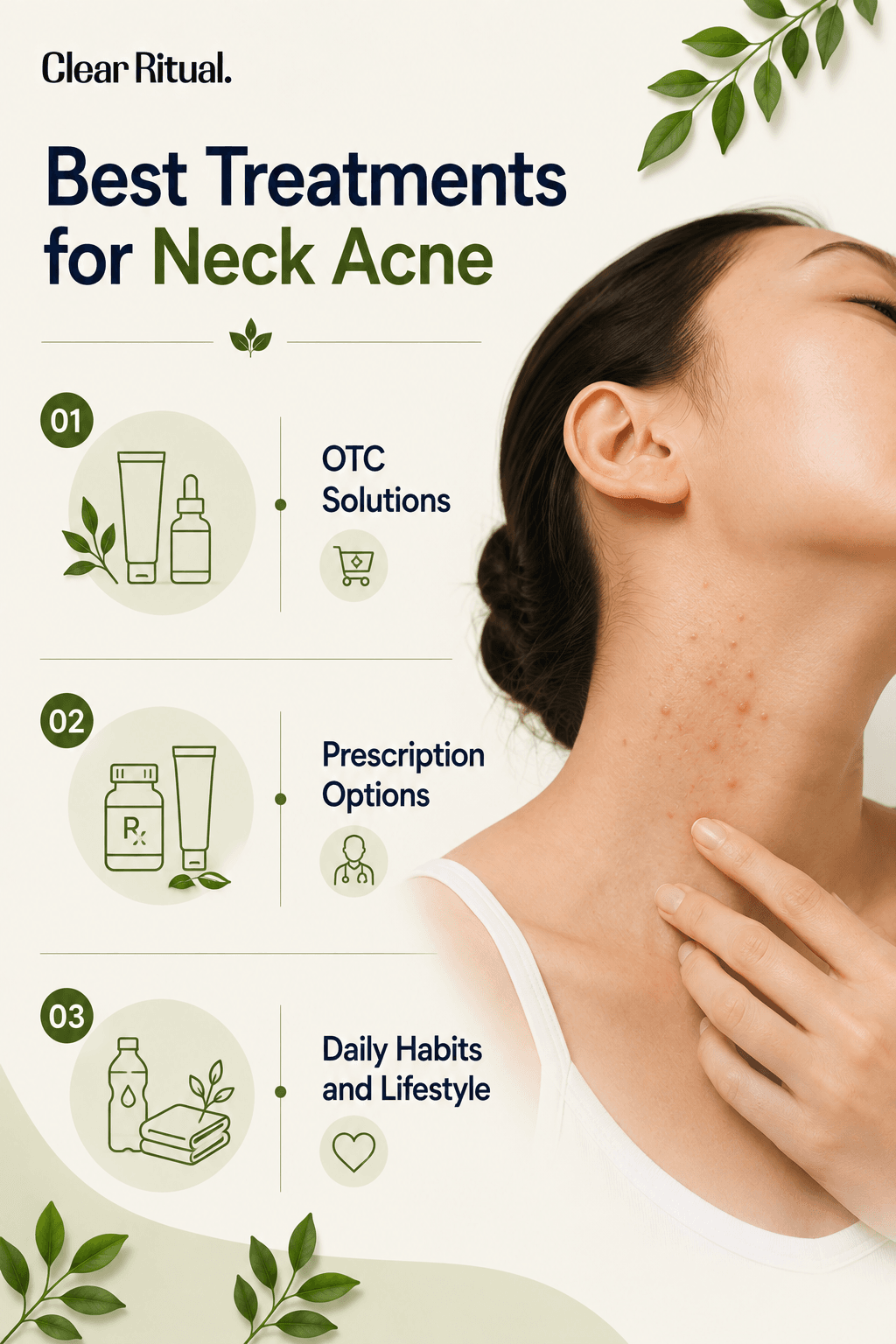
The best treatment for neck acne depends on its cause and severity. Mild breakouts often improve with over-the-counter products and daily skincare habits, while persistent or severe acne may require prescription treatment.
Depending on your symptoms, treatment options may involve OTC solutions, prescription medicines, and supportive daily habits.
OTC Solutions
Over-the-counter treatments are often effective for mild to moderate neck acne.
- What to use: Salicylic acid cleanser, benzoyl peroxide gel or spray, adapalene, or sulfur.
- How it helps: Unclogs pores, reduces C. acnes bacteria, and controls excess oil.
Prescription Options
If OTC treatments are not effective or your acne is severe, a dermatologist may recommend prescription medicines.
- What to use: Topical retinoids, oral retinoids, oral antibiotics, or hormonal therapies such as spironolactone.
- How it helps: Treats moderate-to-severe acne, cystic breakouts, and hormonal acne.
Daily Habits and Lifestyle
Simple daily habits can support treatment and help reduce future breakouts.
- What to do: Wear loose collars, rinse shampoo thoroughly, cleanse the neck after sweating, and use non-comedogenic products.
- How it helps: Reduces friction from acne mechanica, prevents pore-clogging product buildup, and supports clearer skin.
Consult a dermatologist if your neck acne is painful, leaves persistent dark marks or scars, or does not improve with over-the-counter treatment.
Raised, firm bumps on the back of the neck may indicate AKN, a separate condition that requires a different diagnosis and treatment.
How Can You Prevent Neck Acne?
You can help prevent neck acne by keeping your skin clean, reducing friction, and avoiding pore-clogging products.
These simple habits can lower the risk of future breakouts:
- Cleanse gently: Wash your neck once or twice daily with a mild cleanser.
- Wash after sweating: Wash away sweat after exercise or physical activity.
- Rinse hair products well: Prevent residue from clogging pores.
- Use non-comedogenic products: Choose oil-free skincare and hair products.
- Reduce friction: Wear loose collars and keep pillowcases and sports gear clean.
- Avoid picking pimples: This helps reduce inflammation, scarring, and dark marks.
Can You Get Rid of Neck Acne Overnight?
No. Neck acne cannot be completely cleared overnight.
However, the following may temporarily reduce redness and swelling:
- A spot treatment containing benzoyl peroxide.
- A salicylic acid spot treatment.
- A hydrocolloid patch.
- A warm compress for deep, painful blemishes.
Avoid picking or squeezing pimples, as this can worsen inflammation and increase the risk of scarring.
When Should You See a Doctor for Neck Acne?
See a doctor or dermatologist for neck acne if you notice any of the following signs:
- Severe lesions: Deep, painful nodules or cysts beneath the skin.
- Signs of infection: Bumps that become rapidly swollen, hot, or very tender.
- Skin damage: Scarring or persistent dark marks after breakouts.
- Treatment failure: No improvement after 6 to 8 weeks of consistent over-the-counter treatment.
- Mental health impact: Acne is affecting your confidence, emotional well-being, or daily life.
Neck acne is often linked to hormonal changes in adults and can be more prone to scarring than facial acne.
Seek prompt medical care if your bumps become rapidly swollen, hot, or painful, or if they leave persistent scars or dark marks.
How Clear Ritual Supports Personalized Skincare Decisions
<a href=""https://theclearritual.com/"" style=""color:#0066CC;text-decoration:underline;font-weight:500;"">Clear Ritual understands that acne on the neck is more than a surface issue. It is shaped by hormones, lifestyle, environment, and overall health, not just the products you apply.
Because neck acne forms when hair follicles become clogged with excess oil, dead skin cells, and bacteria, often triggered by friction, sweat, or hormonal changes, generic solutions rarely bring lasting improvement. Clear Ritual combines traditional Ayurvedic wisdom with modern science to address the underlying causes of neck acne and support your skin both inside and out.
The <a href=""https://theclearritual.com/skin-test"" style=""color:#0066CC;text-decoration:underline;font-weight:500;"">Clear Ritual Skin Test evaluates the habits and influences that may contribute to inflammatory acne, helping identify more focused and practical steps toward clearer, healthier skin and reducing neck acne recurrence.
See real results, then start your own
Take the free Clear Ritual Skin Test and get a personalized routine built for your skin's unique patterns.
Conclusion
Neck acne develops when hair follicles become clogged with excess oil, dead skin cells, and bacteria, with hormones, friction, sweat, hair products, stress, diet, and genetics all playing a role. While it shares the same underlying process as facial acne, neck acne is more exposed to friction and can be more prone to scarring. Treatment ranges from gentle daily habits and OTC products to prescription options for more severe or hormonal cases, and persistent, painful, or scarring breakouts should be evaluated by a dermatologist.
References
- <a href=""https://www.ncbi.nlm.nih.gov/books/NBK459173/"" style=""color:#0066CC;text-decoration:underline;font-weight:500;"">NCBI Bookshelf, Acne Vulgaris
- <a href=""https://www.ncbi.nlm.nih.gov/books/NBK459135/"" style=""color:#0066CC;text-decoration:underline;font-weight:500;"">NCBI Bookshelf, Acne Keloidalis Nuchae
- <a href=""https://www.nhs.uk/conditions/acne/causes/"" style=""color:#0066CC;text-decoration:underline;font-weight:500;"">NHS, Causes of Acne
- <a href=""https://www.aad.org/public/diseases/acne/derm-treat/treat"" style=""color:#0066CC;text-decoration:underline;font-weight:500;"">American Academy of Dermatology, Acne Treatment
Frequently Asked Questions
How do you stop your neck from breaking out?
Cleanse your neck daily with a gentle, non-comedogenic wash containing 2% salicylic acid or benzoyl peroxide. Keep hair off your neck, wash after sweating, and avoid friction from tight collars, scarves, or backpacks.
Is acne on the neck 100% curable?
No, neck acne is not 100% curable, but it is highly treatable and manageable. With consistent care and targeted treatment, most people can keep their skin clear.
Which organ is related to acne on the neck?
No single organ causes neck acne. It is most closely linked to the endocrine system, where androgen hormones stimulate the pilosebaceous units to produce excess sebum. Friction from collars or backpacks and pore-clogging hair or skincare products can also trigger breakouts.
Can diet affect or worsen neck acne?
Certain foods may worsen neck acne in some people by affecting hormone levels or increasing inflammation. These may include dairy products, especially skim milk; high-glycaemic foods, such as sugary drinks, white bread, pastries, and white rice; highly processed foods, which may contribute to inflammation; whey protein supplements; and milk chocolate and other high-sugar chocolate products.
Can drinking more water help acne?
Drinking more water alone will not clear acne. While staying hydrated supports a healthy skin barrier, acne is primarily influenced by hormones, excess oil, bacteria, and genetics.
Editorial Standards
Clear Ritual has Strict sourcing guidelines to ensure our content is accurate and current. We rely on peer-reviewed studies, academic research institutions, and medical associations. We strive to use primary sources and refrain from using tertiary references. See a mistake? Learn More about our Editorial Standards.