Best Sunscreen for Acne-Prone Skin: Complete Guide
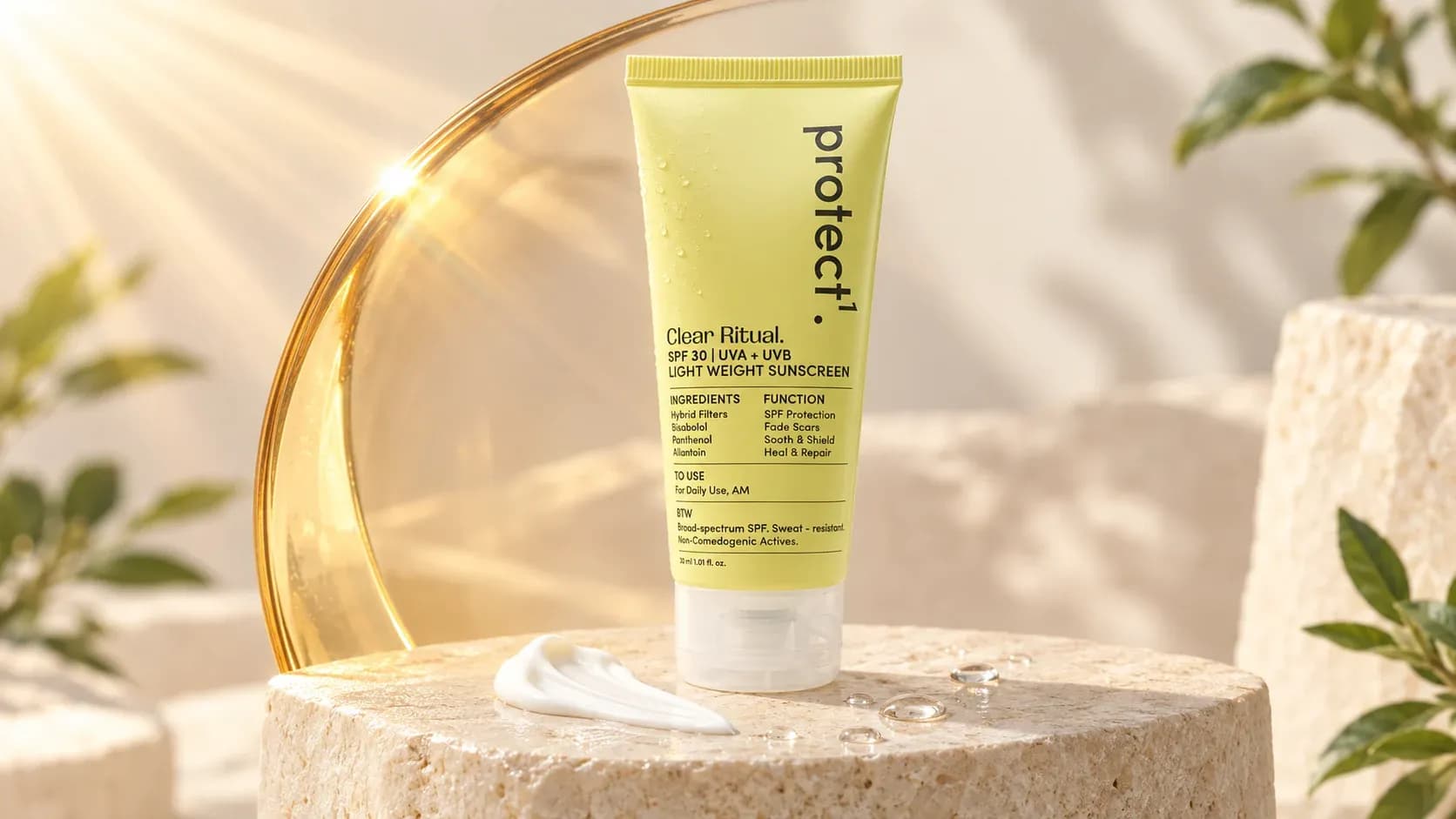
The best sunscreen for acne-prone skin is a non-comedogenic, lightweight formula that protects against UV damage without clogging pores or triggering breakouts. For oily and acne-prone skin, dermatologists typically recommend oil-free, gel-based, or mineral sunscreens with SPF 30 or higher. Choosing the wrong sunscreen can worsen acne, increase oiliness, and cause post-inflammatory hyperpigmentation: making this one of the most important skincare decisions for acne-prone individuals.
What Is the Best Sunscreen for Acne-Prone Skin?
The best sunscreen for acne-prone skin is a UV-protective formula specifically designed to shield skin from UVA and UVB rays without introducing comedogenic (pore-blocking) ingredients that trigger breakouts.
Standard sunscreens often contain heavy oils, silicones, and emollients suited to dry skin types. These ingredients can trap sebum in follicles, creating the anaerobic environment where Cutibacterium acnes bacteria thrive: directly worsening acne.
Key characteristics of a suitable sunscreen for acne-prone skin:
- Non-comedogenic (clinically tested to not block pores)
- Oil-free or low-oil formulation
- Broad-spectrum SPF 30 or higher
- Lightweight texture: gel, fluid, or water-based
- Fragrance-free or minimal fragrance
- Contains calming actives such as niacinamide, centella asiatica, or zinc oxide
According to Clear Ritual's formulation team, sunscreen for oily acne-prone skin should also be mattifying: excess shine from a heavy sunscreen can signal that the product is sitting on top of the skin rather than absorbing properly.
How the Best Sunscreen for Acne-Prone Skin Works: The Complete Breakdown
Sunscreen for acne-prone oily skin works by creating a UV-filtering layer on the skin surface that either absorbs UV radiation or scatters it, depending on the filters used. A suitable formula should provide protection without unnecessarily disrupting the skin barrier.
Step-by-Step Mechanism
- Application to clean skin: The sunscreen film distributes across skin, filling microscopic surface irregularities. A non-comedogenic formula does this without blocking follicular openings.
- UV absorption or reflection: Chemical filters such as avobenzone and octisalate absorb UV photons and release them as heat. Mineral filters: zinc oxide and titanium dioxide: scatter and reflect UV photons away from the skin.
- Sebum management: Oil-free formulations contain mattifying agents (silica, kaolin clay) that absorb excess sebum, preventing the greasy film that can trap bacteria and dead skin cells.
- Skin barrier support: Quality sunscreens for sensitive acne-prone skin include barrier-supporting ingredients such as ceramides or hyaluronic acid, which prevent trans-epidermal water loss: a factor linked to increased acne severity.
- Re-application sustains protection: UV filters degrade with sun exposure. Reapplying every 2 hours maintains efficacy and prevents UV-induced inflammation that can trigger post-acne marks.
Common Misconception Cleared Up
Many people with acne-prone skin skip sunscreen believing it worsens breakouts. However, choosing a suitable formulation and using it correctly can help you protect your skin without unnecessary heaviness or congestion.
Key Benefits of the Best Sunscreen for Acne-Prone Skin
Using the right sunscreen for oily and acne-prone skin delivers benefits beyond UV protection. Clear Ritual's dermatology advisory team identifies the following clinically observed outcomes:
Short-Term Benefits (Within 2–4 Weeks)
- Protection for post-acne marks: Regular sun protection can help limit UV-related darkening of post-inflammatory hyperpigmentation.
- Controlled shine: Mattifying sunscreens reduce excess oil appearance within 20–30 minutes of application
- Calmer skin tone: Mineral formulations containing zinc oxide deliver mild anti-inflammatory effects from day one
Long-Term Benefits (3–6 Months and Beyond)
- Fewer active breakouts: Consistent UV protection reduces skin inflammation: a primary acne trigger
- Faded acne scars: Sun protection slows melanin overproduction in PIH marks, visibly fading them over 8–12 weeks
- Preserved skin barrier: Daily SPF use has been associated with a measurable improvement in skin hydration levels over 90 days
- Prevention of premature ageing: UV exposure is responsible for approximately 80% of visible skin ageing: protecting acne-prone skin early prevents long-term photo-damage
Who Benefits Most?
Sunscreen for acne-prone skin is particularly beneficial for individuals with:
- Active inflammatory acne (papules, pustules)
- Post-acne dark spots or PIH
- Oily T-zone with combination skin
- Sensitive skin prone to redness or rosacea alongside acne
Types of Sunscreen for Acne-Prone Skin: Which Is Right for You?
There are three primary sunscreen types relevant to acne-prone and oily skin. Each works differently, and the best choice depends on skin sensitivity, daily activity, and cosmetic preference.
Is Mineral Sunscreen Better for Acne-Prone Skin Than Chemical Sunscreen?
Mineral sunscreens (zinc oxide, titanium dioxide) sit on top of the skin and physically block UV rays. Chemical sunscreens absorb into the upper skin layers and convert UV energy into heat. For acne-prone skin, mineral sunscreens are often preferred because:
- Zinc oxide has documented anti-inflammatory and antibacterial properties
- Mineral filters do not generate heat within pores (relevant for heat-sensitive, inflamed acne)
- They are less likely to cause contact sensitivity reactions
However, mineral sunscreens can leave a white cast: a cosmetic concern for deeper skin tones. Hybrid formulas (mineral + low-load chemical filters) offer a practical middle ground.
Is Gel Sunscreen Better for Acne-Prone Skin?
Gel sunscreens are water-based, absorb rapidly, and leave a minimal residue: making them one of the best textures for oily acne-prone skin. They typically contain no heavy oils, feel weightless, and do not interfere with makeup application. Gel sunscreens are particularly suitable for the Indian climate, where heat and humidity increase sebum production.
Comparison Table: Sunscreen Types for Acne-Prone Skin
| Type | How It Works | Best For | White Cast | Feel |
|---|---|---|---|---|
| Mineral (Zinc/Titanium) | Reflects UV | Sensitive, inflamed acne | Moderate | Slightly thick |
| Chemical | Absorbs UV as heat | Everyday wear, dark tones | None | Lightweight |
| Gel/Fluid Hybrid | Mineral + chemical blend | Oily, acne-prone in humid climates | Minimal | Weightless |
| Tinted Mineral | Reflects UV + colour-corrects | PIH, uneven tone | None (tinted) | Medium weight |
Best Sunscreen for Acne-Prone Skin vs. Top Alternatives: An Honest Comparison
Choosing the right sunscreen for acne-prone oily skin means comparing formulation philosophy, not just brand names. Below is a feature-by-feature comparison of the main categories of sunscreen available in India for acne-prone skin.
Feature-by-Feature Breakdown
| Feature | Gel-Based SPF (e.g., Clear Ritual Protect1) | Heavy Cream SPF | Tinted Mineral SPF | Matte Fluid SPF |
|---|---|---|---|---|
| Comedogenic risk | Very low | Moderate–High | Low | Low |
| Oiliness after application | None to minimal | High | Low | None |
| Suitable for sensitive acne-prone skin | Yes | Sometimes | Yes | Yes |
| White cast | Minimal | Low | None | None |
| Active skin benefit | Niacinamide, zinc | Moisturisation | Colour correction | Matte finish |
| Reapplication comfort | Easy | Greasy | Moderate | Easy |
| Price range (India) | ₹400–₹900 | ₹300–₹700 | ₹500–₹1,200 | ₹350–₹900 |
| Ideal for | Oily, acne-prone | Dry skin | Hyperpigmentation | Combination skin |
Which Sunscreen Is Best for Acne-Prone Skin in India?
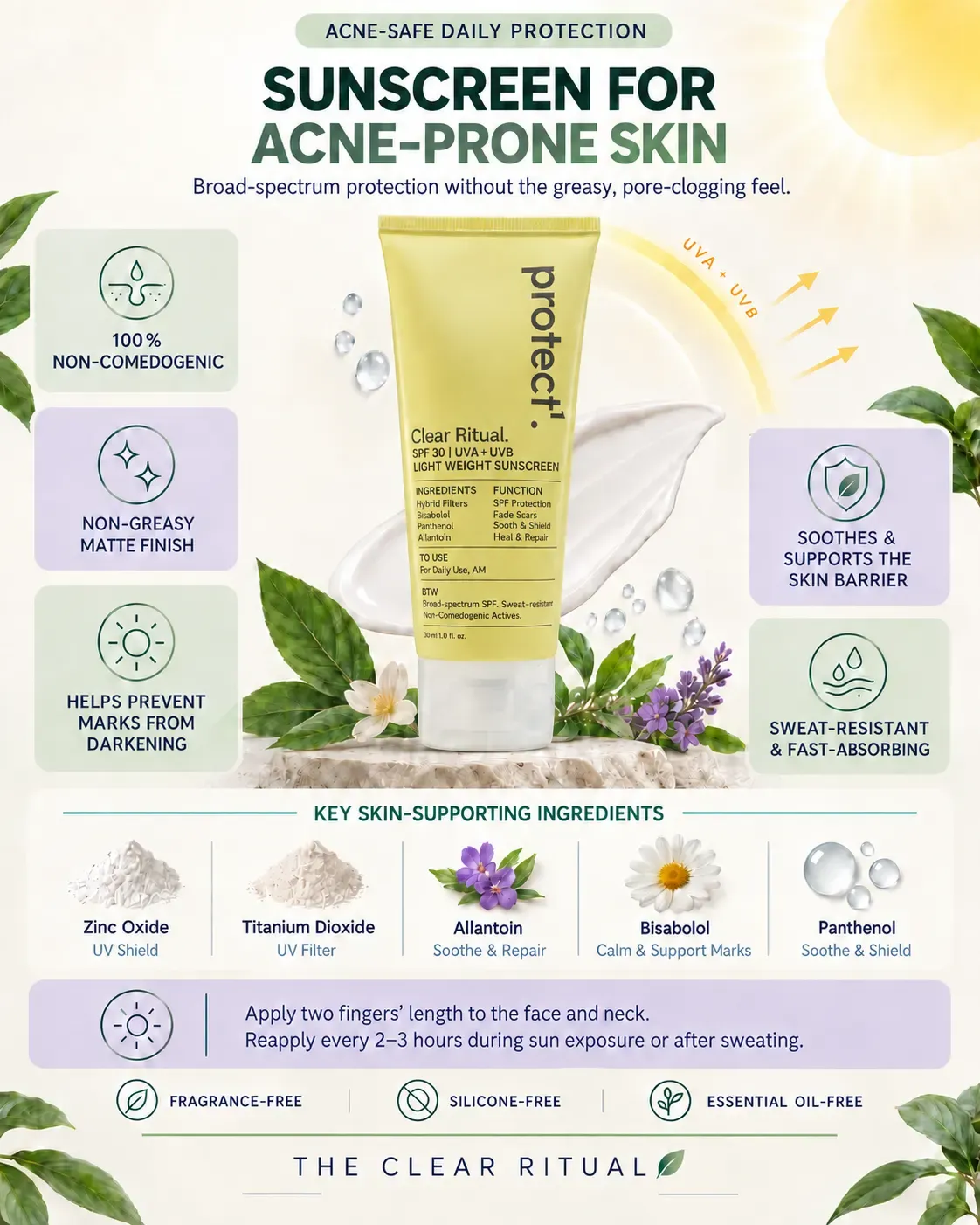
For the Indian climate: characterised by high UV index, heat, and humidity: a gel-based or matte fluid sunscreen with SPF 50+ PA+++ is the most practical choice for sunscreen for oily and acne-prone skin. Heavy cream formulations designed for dry climates typically cause breakouts and excess shine in Indian summers.
Clear Ritual's Protect1 is formulated specifically for oily and acne-prone skin in humid conditions, combining broad-spectrum mineral-chemical hybrid filters with niacinamide and a zero white-cast gel texture.
Honest Pros and Cons
Gel-Based Sunscreen (Recommended for acne-prone skin)
- ✅ Absorbs quickly, no pore-clogging residue
- ✅ Comfortable for daily reapplication
- ✅ Works under makeup
- ❌ May need reapplication more frequently in water or heavy sweat
Heavy Cream Sunscreen
- ✅ Strong moisturisation
- ✅ Good for very dry or post-procedure skin
- ❌ High risk of clogging pores in acne-prone skin
- ❌ Increases shine in oily skin types
Tinted Mineral Sunscreen
- ✅ Covers PIH and redness
- ✅ Anti-inflammatory zinc oxide
- ❌ Limited shade range for diverse Indian skin tones
- ❌ Heavier texture than gel options
How to Use Sunscreen for Acne-Prone Skin: Step-by-Step Guide
Applying sunscreen for acne-prone skin correctly ensures maximum UV protection without increasing the risk of breakouts. Clear Ritual recommends the following routine sequence:
Prerequisites
- Clean, dry face (wash with a gentle, non-stripping cleanser)
- Serums or actives applied and fully absorbed (wait 60–90 seconds)
- No residual water on skin surface before sunscreen application
Step-by-Step Routine
- Dispense the correct amount: Use approximately ¼ teaspoon (1.5–2ml) for the face and neck. Under-applying reduces SPF efficacy by up to 50%.
- Dot onto five points: Forehead, both cheeks, nose, and chin. This distributes product evenly before blending.
- Blend with fingertips in gentle, outward strokes: Do not rub in circular motions: this disrupts the uniform film layer required for stated SPF.
- Let it absorb for 2–3 minutes before applying makeup or leaving the house. Gel formulas typically absorb within 90 seconds.
- Reapply every 2 hours when outdoors, or immediately after sweating heavily or swimming.
- At end of day, double cleanse: Use a micellar water or cleansing oil first, followed by a face wash, to remove sunscreen completely and prevent pore accumulation overnight.
Common Mistakes to Avoid
Mistake 1: Skipping sunscreen on cloudy days: UVA rays penetrate clouds and glass, causing cumulative skin damage year-round.
Mistake 2: Mixing sunscreen with moisturiser: Diluting sunscreen reduces SPF concentration and disrupts the protective film.
Mistake 3: Applying too little: Most people apply 25–50% of the required amount, effectively halving their protection.
Mistake 4: Not reapplying: A single morning application does not last all day. UV filters degrade with light exposure and sweating.
Who Should Use Sunscreen for Acne-Prone Skin?
| Ideal For | Not Ideal For (Use a Different Formulation) |
|---|---|
| Oily and acne-prone skin | Very dry, flaking skin (needs richer moisturising SPF) |
| Combination skin with oily T-zone | Post-procedure skin requiring occlusive protection |
| Sensitive skin prone to breakouts | Skin with active open wounds |
| Skin with post-acne hyperpigmentation | Individuals seeking tinted coverage (use tinted SPF instead) |
| Daily urban commuters in high-UV environments | Newborns and infants (require specific paediatric SPF) |
Sunscreen for sensitive acne-prone skin is suitable for most adults and teenagers experiencing acne. Clear Ritual's Protect1 is dermatologist-tested for acne-prone skin profiles and suitable for daily use from teenage years onward.
Best Practices for Using Sunscreen on Acne-Prone Skin
Following these practices, as recommended by Clear Ritual's dermatology team, maximises the benefit of any sunscreen for oily acne-prone skin:
- Choose SPF 50+ PA+++: In India's high UV index environment, SPF 30 may be insufficient for extended outdoor exposure. PA+++ indicates strong UVA protection: critical for PIH prevention.
- Consider niacinamide in the formula: Niacinamide, also known as vitamin B3, can support the skin barrier and may suit oily or acne-prone skin.
- Store sunscreen correctly: Heat and direct sunlight degrade UV filters. Store below 30°C, away from direct sun, to maintain stated SPF efficacy.
- Patch test new formulas: Even non-comedogenic products can cause reactions in highly sensitive skin. Apply to the inner arm for 24 hours before full-face use.
- Use a dedicated sunscreen: not SPF in foundation: Foundation with SPF is applied in too thin a layer to deliver meaningful UV protection. Use a standalone sunscreen and apply foundation over it.
- Do not skip on days you use retinol or AHAs: These actives increase photosensitivity. Sunscreen use is non-negotiable when using exfoliating or resurfacing skincare.
- Keep a travel-size for midday reapplication: Consistency of reapplication matters more than the SPF number on the bottle.
Common Mistakes to Avoid
- Applying sunscreen only in summer: UV damage is cumulative and year-round
- Using a body sunscreen on the face: formulations differ significantly in comedogenic risk
- Assuming "natural" or "organic" sunscreens are automatically non-comedogenic
What the Evidence Says About Sunscreen for Acne-Prone Skin
Research consistently supports daily sunscreen use as part of acne management: not just sun protection.
Skin barrier and sunscreen: A 2021 study in the Journal of Investigative Dermatology found that daily broad-spectrum SPF use for 12 weeks improved skin hydration by an average of 23% and reduced trans-epidermal water loss: a known acne-aggravating factor.
UV and acne inflammation: Research published in Photochemistry and Photobiology (2019) demonstrated that UVB radiation increases sebum oxidation, triggering inflammatory acne pathways independent of bacterial activity. This confirms that UV exposure directly worsens acne, not just PIH.
PIH and SPF: A 2020 clinical review in the Journal of the American Academy of Dermatology found that consistent SPF 30+ use reduced the rate of new PIH lesion formation by 46% in individuals with Fitzpatrick skin types III–V: the skin tones most prevalent in India.
Underapplication of sunscreen: A widely cited study in Photodermatology, Photoimmunology & Photomedicine established that most individuals apply only 25–50% of the recommended sunscreen quantity, reducing real-world SPF by approximately half.
Key takeaway: The evidence supports using sunscreen for acne-prone oily skin as a therapeutic measure: not merely a cosmetic one. Clear Ritual's Protect1 was developed with reference to this research base.
Limitations of Sunscreen for Acne-Prone Skin: What to Know Before You Start
No sunscreen, including those specifically formulated for acne-prone skin, is without limitations.
What Sunscreen for Acne-Prone Skin Cannot Do
- Sunscreen does not treat active breakouts on its own.
- A non-comedogenic label cannot guarantee that every formula will suit every person.
- Sunscreen cannot replace shade, hats or protective clothing during prolonged exposure.
- Water-resistant sunscreen is not waterproof and still needs reapplication.
- Sunscreen cannot remove established scars or dark marks immediately.
Possible Side Effects and Suitability Issues
A formula may occasionally cause stinging, redness, dryness, eye irritation, pilling or a visible cast. These effects depend on the filters, supporting ingredients, texture and individual skin sensitivity.
Patch test a new formula if your skin is highly reactive. Stop using it and seek professional advice if irritation is persistent or severe.
How to Choose a Sunscreen for Your Skin
| Skin concern | What to look for |
|---|---|
| Oily or acne-prone skin | A lightweight gel, fluid or light lotion with non-comedogenic labelling |
| Sensitive skin | A fragrance-free formula with a short, well-tolerated ingredient list |
| Dry, acne-prone skin | A light moisturising lotion that does not feel overly occlusive |
| Post-breakout marks | Broad-spectrum protection used consistently; a tinted formula may also be considered |
| Outdoor activity | A water-resistant formula that can be reapplied as directed |
The best option is the sunscreen you can apply in an adequate amount and use consistently. Texture preferences and tolerance can be more useful than choosing a formula solely because it is labelled mineral, chemical or hybrid.
When Should You See a Dermatologist?
Seek professional advice if every sunscreen seems to trigger significant irritation, your breakouts are painful or persistent, or you have an ongoing rash around the eyes or hairline.
A dermatologist can help distinguish a reaction to a product from acne, contact dermatitis or another skin concern and recommend a suitable care plan.
Clear Ritual’s Perspective on Sunscreen for Acne-Prone Skin
Acne-prone skin still needs daily sun protection. The goal is to find a broad-spectrum formula that feels comfortable, works with your routine and does not encourage you to skip application.
Introduce one new sunscreen at a time, observe how your skin responds and avoid changing several products together. This makes it easier to identify what works for your skin.
Build a Routine That Suits Your Skin
Take the Clear Ritual Skin Test to understand your skin concerns and receive routine guidance designed around your needs.
Take the Free Skin Test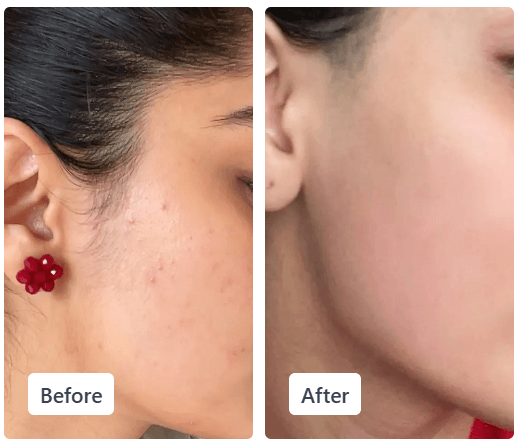
Frequently Asked Questions
1. What is the best sunscreen for acne-prone skin?
Choose a broad-spectrum SPF 30 or higher sunscreen with a lightweight texture and non-comedogenic labelling. The best formula is one your skin tolerates and that you can use consistently.
2. Can sunscreen cause breakouts?
Some formulas may contribute to breakouts or irritation in certain people, but sunscreen itself does not automatically cause acne. Introduce one product at a time and monitor your skin.
3. Is gel sunscreen better for oily, acne-prone skin?
Gel sunscreens often feel lighter and may be comfortable for oily skin, but texture alone does not determine suitability. Check the complete formula and your individual response.
4. Is SPF 30 or SPF 50 better for acne-prone skin?
Both can be suitable when broad-spectrum and applied correctly. SPF 50 provides a higher level of UVB protection, while consistent application and reapplication remain essential.
5. How much sunscreen should you apply?
Apply enough to cover all exposed skin evenly. For the face and neck, the two-finger method is a practical guide, then reapply according to the label, especially after sweating or prolonged outdoor exposure.
6. Can sunscreen fade post-breakout marks?
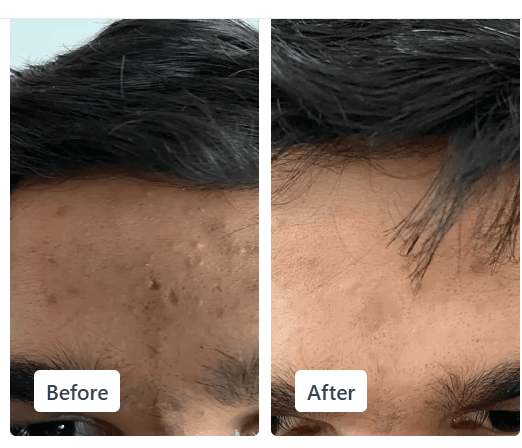
Sunscreen does not directly erase marks, but it can help prevent UV exposure from making them look darker and supports a broader pigmentation care routine.
References
- American Academy of Dermatology. How to select a sunscreen.
- American Academy of Dermatology. How to apply sunscreen.
- U.S. Food and Drug Administration. Sunscreen: How to help protect your skin from the sun.
Disclaimer
This article is intended for general informational purposes and is not a substitute for personalised professional advice, diagnosis or care. If you have persistent breakouts or irritation, consult a qualified dermatologist.
Editorial Standards
Clear Ritual has Strict sourcing guidelines to ensure our content is accurate and current. We rely on peer-reviewed studies, academic research institutions, and medical associations. We strive to use primary sources and refrain from using tertiary references. See a mistake? Learn More about our Editorial Standards.
Related Articles
Pimples After Waxing: Causes, Treatment, and Prevention
Published 12 October 2026

Acne and Diet: What’s the Real Link Between Food and Breakouts?
Published 21 July 2026

Acne Caused by Makeup: Understanding Acne Cosmetica
Published 17 July 2026
Aanya’s Blemish-Prone Skin Journey With Clear Ritual
Published 9 September 2026