What Is the Role of Hair Products in Causing Back Acne?

Hair products like heavy conditioners, oils, and styling products can cause back acne, also known as acne cosmetica, when ingredients such as heavy oils and butters, silicones, waxes, comedogenic esters, polymers, and sulfates transfer onto the skin.
These ingredients can clog pores or irritate the skin, creating conditions that increase the risk of back acne. The residue can mix with sebum (natural skin oil), sweat, and dead skin cells, blocking hair follicles and causing breakouts on the upper back, shoulders, and along the hairline.
How Do Hair Products Cause Back Acne?
Hair products can contribute to back acne by leaving residue on the skin that blocks hair follicles and creates an environment for breakouts.
The risk depends on the product's ingredients, how often it comes into contact with your back, and how your skin responds.
The main ways hair products contribute to back acne include:
Comedogenic Ingredients
Some conditioners, hair masks, serums, and styling products can leave a residue on the skin that traps excess sebum (oil) and dead skin cells, increasing the risk of blocked hair follicles.
Run-Off and Hair-to-Skin Transfer
Hair products can wash over the shoulders and back during rinsing or transfer throughout the day from long hair, increasing skin exposure to product residue.
Inflammation and Bacterial Growth
When hair follicles become blocked, trapped sebum (oil) and dead skin cells allow Cutibacterium acnes (C. acnes) bacteria to multiply.
This can trigger inflammation that causes redness, swelling, and pimples.
Which Ingredients in Hair Products Can Cause Back Acne?
Not every ingredient affects the skin in the same way. Some are more likely to leave residue, while others may trap excess sebum (oil), irritate the skin, or increase the likelihood of blocked hair follicles.
Common culprits include:
- Heavy oils and butters.
- Silicones.
- Waxes.
- Sulfates.
- Comedogenic esters.
- Polymers.
Each ingredient can affect the skin differently.
Heavy Oils and Butters
Heavy oils and butters can contribute to back acne by leaving an occlusive layer on the skin that may trap sebum and dead skin cells.
This can contribute to blocked hair follicles and inflammation, increasing the risk of breakouts.
Some examples include:
- Coconut oil.
- Cocoa butter.
- Palm oil.
- Wheat germ oil.
If you are prone to back acne, consider choosing lightweight, non-comedogenic alternatives, such as jojoba oil or non-comedogenic moisturisers, which are less likely to clog pores.
Silicones
Silicones are not generally considered inherently pore-clogging.
However, silicone-containing hair products may leave residue on the back, which can contribute to product build-up, especially when combined with sweat and sebum.
Some common examples include:
- Dimethicone.
- Cyclopentasiloxane.
- Cyclomethicone.
Rather than avoiding silicones altogether, choose lightweight, non-comedogenic hair products and rinse them thoroughly to help minimise product build-up on the back.
Waxes
Waxes can leave an occlusive layer on the skin that may contribute to product build-up and trap sebum and dead skin cells.
In acne-prone skin, this may increase the likelihood of blocked hair follicles and breakouts.
Some common examples include:
- Beeswax.
- Carnauba wax.
- Candelilla wax.
- Microcrystalline wax.
Sulfates
Sulfates can irritate the skin and disrupt its natural moisture barrier, particularly in sensitive skin.
This irritation may worsen inflammation and make acne-prone skin more susceptible to breakouts.
Some common examples include:
- Sodium lauryl sulfate (SLS).
- Sodium laureth sulfate (SLES).
Comedogenic Esters
Certain esters can contribute to back acne by mixing with sebum and dead skin cells, increasing the likelihood of blocked hair follicles.
In acne-prone skin, these blockages can promote inflammation and lead to breakouts.
Some common examples include:
- Isopropyl myristate.
- Isopropyl palmitate.
- Octyl palmitate.
Polymers
Polymers are commonly used in hair products to provide hold, conditioning, or to create a film around the hair.
Some polymer-containing products may leave residue on the skin, which can contribute to product build-up when not thoroughly washed away.
Some common examples include:
- Polyquaternium-10.
- Polyquaternium-11.
- PVP (polyvinylpyrrolidone).
- VP/VA copolymer.
- Acrylates copolymer.
Can Hair Products Cause Back Acne? Myths vs Facts
Yes, hair products can contribute to back acne, sometimes referred to as acne cosmetica, especially when product residue comes into contact with acne-prone skin.
The table below addresses some common myths and facts.
| Myth | Fact |
|---|---|
| Back acne is caused by poor hygiene. | Back acne has many causes, including hormones, excess sebum, sweat, and clogged pores. Hair product residue can also contribute. |
| All hair products are safe for acne-prone skin. | Some products may leave residue, clog pores, or irritate the skin, increasing the risk of breakouts. |
| If a product does not cause facial acne, it will not cause back acne. | Hair products can transfer directly onto the shoulders and back, where residue may contribute to breakouts. |
| You should wash your body before rinsing your hair. | Washing your back after rinsing shampoo and conditioner helps remove product residue from the skin. |
How Can You Prevent Back Acne Caused by Hair Products?
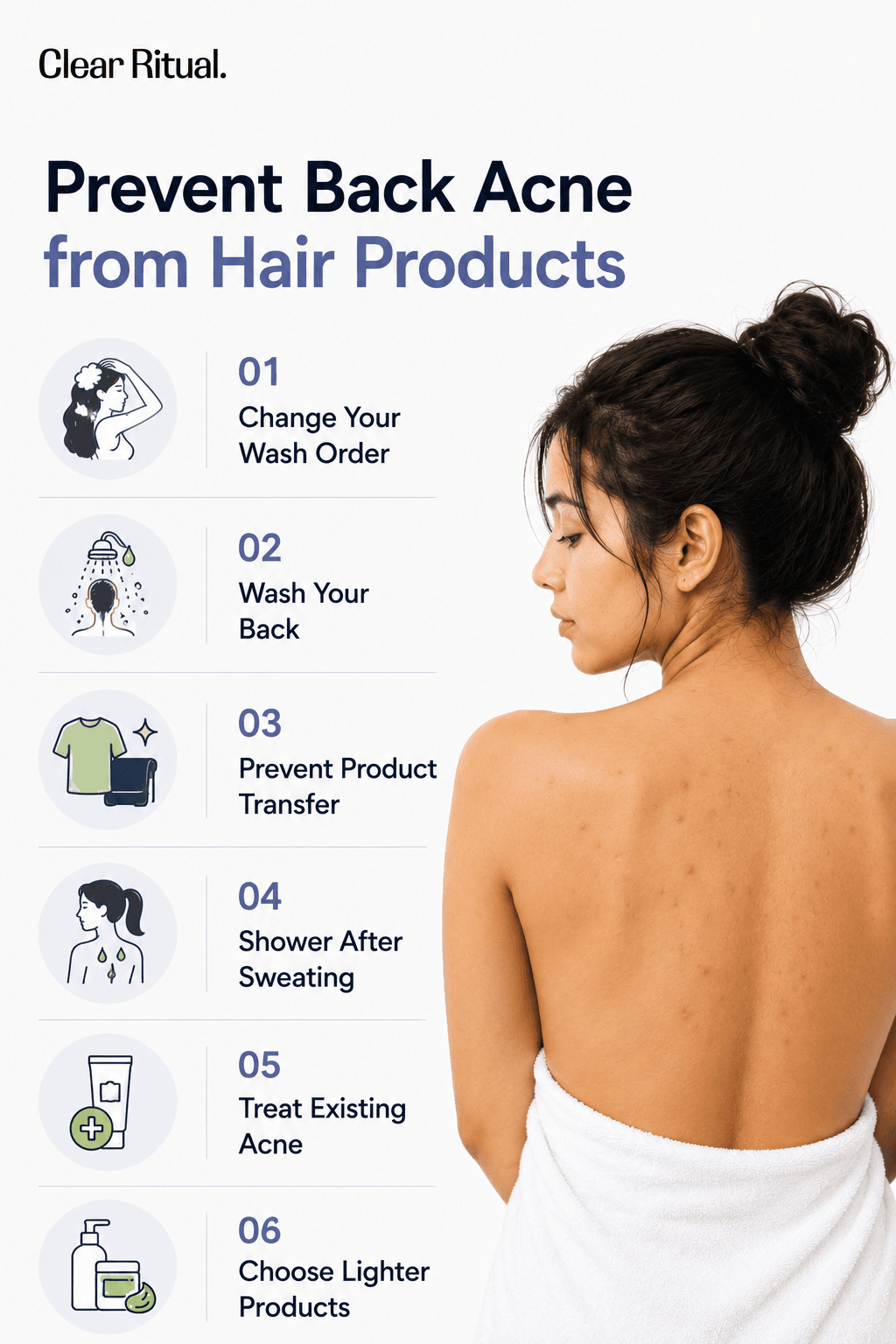
You can help prevent hair product-related back acne by reducing product residue and preventing it from transferring onto your back.
The following habits may help:
Change Your Wash Order
Wash and rinse your hair completely before washing your body.
If you have long hair, bring it forward while rinsing to prevent conditioner and other products from running down your back.
Wash Your Back
After rinsing your hair, wash your back and shoulders with a gentle cleanser or body wash to remove any lingering product residue.
Prevent Product Transfer
Keep long or product-coated hair away from your back, and wash your hands after applying hair oils, serums, or styling products.
Shower After Sweating
Cleanse your skin after workouts or heavy sweating to remove sweat, excess sebum (oil), and any product residue.
Treat Existing Acne
Consider an over-the-counter body wash containing salicylic acid to help unclog pores or benzoyl peroxide to reduce acne-causing bacteria.
Follow the product directions before rinsing.
Choose Lighter Products
Check shampoos, conditioners, and styling products for heavy or potentially pore-clogging ingredients.
Choose lightweight, non-comedogenic products.
Clear Ritual's Perspective on the Role of Hair Products in Causing Back Acne
Back acne is not always caused by hair products alone.
At Clear Ritual, we understand that multiple triggers, including hormones, sweat, friction, lifestyle habits, and individual skin sensitivity, can also influence breakouts.
The Clear Ritual Skin Test helps you better understand your skin concerns by identifying possible triggers and providing insights for a more personalised approach to skin health.
Frequently Asked Questions
Do Hair Products Cause Back Acne?
Yes, hair products can contribute to back acne, also known as bacne.
Heavy oils, waxes, and certain other ingredients in shampoos, conditioners, and styling products may leave residue on the back that can clog pores and contribute to breakouts.
Why Do Hair Products Give You Acne?
Hair products can contribute to acne when residue containing heavy oils, waxes, or other pore-clogging ingredients transfers onto your skin.
This can block hair follicles and trap sebum and dead skin cells, leading to inflammation and breakouts.
How Can You Stop Your Hair From Giving You Acne?
Keep product-coated hair off your skin, rinse hair products thoroughly, and wash your body afterwards to remove residue that may contribute to breakouts.
Does Back Acne Mean PCOS?
No, back acne does not necessarily mean you have PCOS.
While hormonal changes associated with PCOS can contribute to acne, breakouts may also result from sweat, friction, genetics, or pore-clogging products.
What Is the Biggest Cause of Back Acne?
Hormonal changes are one of the biggest causes of back acne because they increase sebum production.
However, heavy hair products, sweat, and friction from clothing can also contribute to clogged hair follicles and trigger breakouts.
References
Editorial Standards
Clear Ritual has Strict sourcing guidelines to ensure our content is accurate and current. We rely on peer-reviewed studies, academic research institutions, and medical associations. We strive to use primary sources and refrain from using tertiary references. See a mistake? Learn More about our Editorial Standards.