Acne on the Temples: Causes, Types, and How to Clear It
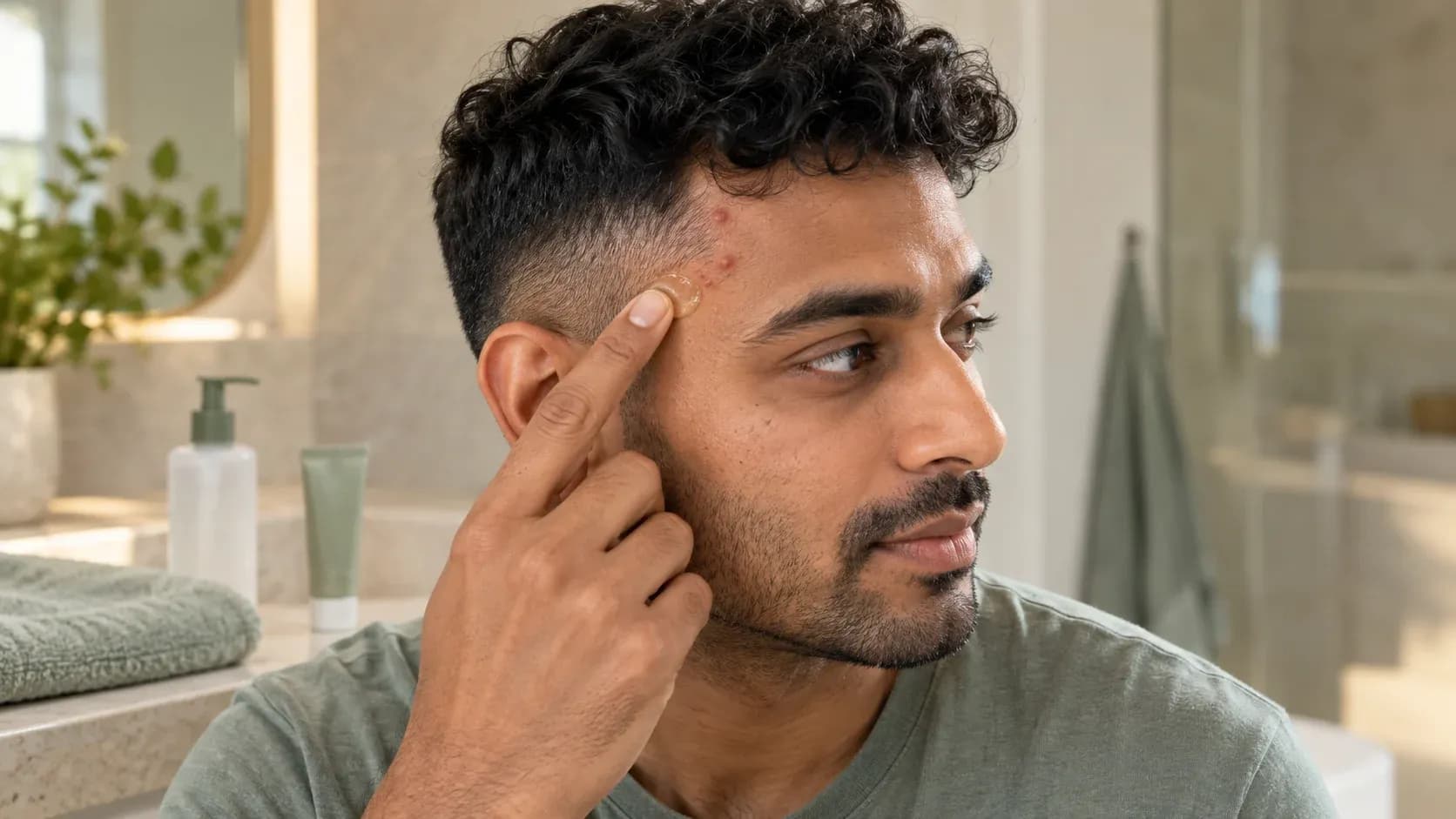
Temple acne is not random, and it is not impossible to stop. Most people breaking out on their temples are dealing with two things at once: something touching their skin (hair products, hats, phones) and something happening inside it (hormones, stress, inflammation). Remove the external triggers, support the internal ones, and most temple breakouts respond within four to twelve weeks.
What Is Acne on the Temples?
Temple acne is a form of facial acne that develops along the sides of the forehead, between the eye and the hairline. It ranges from small comedones (blackheads or clogged pores) to red papules, pus-filled pustules, and deep painful cysts.
The skin in this zone is thinner than the central face, sits adjacent to active sebaceous glands along the hairline, and is constantly in contact with hair, headwear, and hands, making it one of the more reactive areas on the face.
Clinically, temple acne is classified as acne vulgaris affecting the temporal facial region. It shares the same core pathophysiology as all inflammatory acne: follicular obstruction, Cutibacterium acnes overgrowth, and immune-mediated inflammation. (British Journal of Dermatology, 2022)
What Does Acne on the Temples Mean? A Face Mapping Perspective
Face mapping is a practice rooted in traditional Chinese medicine and Ayurveda that links recurring acne locations to internal imbalances. According to this framework, temple breakouts are associated with:
- Liver and gallbladder stress, reflecting sluggish detoxification, often linked to a high-fat diet, alcohol, or processed food intake
- Hormonal fluctuation, androgens and cortisol affecting oil production in the temporal zone
- Poor circulation, reduced blood flow to the temporal region, sometimes connected to dehydration or sedentary habits
Face mapping is not a diagnostic tool, and modern dermatology does not validate it as a clinical system. However, it can serve as a useful prompt. If you consistently break out on your temples and nowhere else, it is worth examining your digestion, stress levels, and diet alongside your external skincare habits.
From a dermatological standpoint, the temples are uniquely vulnerable because:
- Hair product residue migrates here during rinsing and sweating
- Headwear occludes the skin and traps bacteria
- Hairline sebaceous glands respond to androgen fluctuations
- Phone screens contact this exact zone repeatedly throughout the day
What Are the Different Types of Temple Acne?
Not all temple acne is the same. Identifying the type you are dealing with determines which approach will actually work.
| Type | What It Looks Like | Common Driver | Self-Manage? |
|---|---|---|---|
| Comedonal | Small bumps, blackheads, no redness | Hair products, pore blockage | Yes, consistent cleansing and salicylic acid |
| Inflammatory (papules/pustules) | Red, raised, sometimes with pus | Bacteria, friction, hormones | Yes, with targeted actives |
| Cystic / nodular | Deep, painful, no visible head | Hormonal, genetic, severe inflammation | Dermatologist recommended |
| Fungal folliculitis | Itchy, uniform bumps along hairline | Yeast overgrowth, heat, occlusion | Antifungal treatment, see a doctor |
Comedonal acne responds well to consistent cleansing and salicylic acid. Cystic acne requires a different approach entirely and often needs prescription treatment. Fungal folliculitis is frequently misidentified as standard acne, standard acne treatments do not resolve it.
Why Does Acne Show Up on the Temples Specifically?
You get pimples on your temples, and not on your cheeks or nose, because of where this skin sits and what it touches. The temple zone is uniquely exposed to four overlapping triggers that rarely affect the central face at the same intensity.
The four root drivers of temple acne:
External contact and friction, Hair, headwear, phone screens, and pillowcases repeatedly press against this skin throughout the day. Each contact transfers oils, bacteria, and product residue. Repeated friction disrupts the skin barrier, leading to inflammation and blocked pores.
Comedogenic hair products, Shampoos, conditioners, gels, and leave-in treatments contain silicones, mineral oils, and heavy emollients. During rinsing or sweating, these migrate onto the temples and sit inside the pore, preventing sebum from escaping. The result is a clogged pore that becomes a blackhead, papule, or cyst.
Androgen-driven oil production, Androgens, including testosterone and its derivative DHT (dihydrotestosterone), stimulate sebaceous gland activity. The hairline glands are particularly androgen-sensitive. When hormone levels fluctuate during menstrual cycles, ovulation, stress, or adolescence, oil production in this zone can spike.
Cortisol and chronic stress, Cortisol, the primary stress hormone, does two damaging things simultaneously: it increases sebum production and weakens the skin barrier by reducing ceramide synthesis. A compromised barrier cannot regulate moisture or resist bacteria, making breakouts more frequent and harder to resolve.
Why the temples and not elsewhere? The skin here is thinner than the T-zone, sits in constant proximity to oil-laden hair, and is frequently occluded by accessories. The same level of internal hormonal activity that produces no visible inflammation on the cheeks can produce a clear breakout at the temples.
What Happens Inside the Skin During a Temple Breakout?
Acne begins when sebum, dead skin cells, and bacteria combine inside the pore. In the temples, this process is often accelerated by external irritants that disrupt the skin barrier.
When the barrier weakens, transepidermal water loss increases, and the skin compensates by producing more oil. Bacteria, particularly Cutibacterium acnes, thrive in this oil-rich, low-oxygen environment. They trigger an immune response, causing redness, swelling, and sometimes painful cystic lesions.
If the pore wall ruptures, the infection spreads deeper into the dermis. Repeated inflammation in the same spot can lead to post-inflammatory hyperpigmentation or scarring, particularly if you pick or press on the breakouts.
The skin in the temporal region has sebaceous glands that are highly responsive to androgenic hormones. When DHT levels are elevated due to genetics, stress, or conditions like polycystic ovary syndrome (PCOS), gland activity increases substantially in this zone, producing more sebum than can flow naturally through the follicle.
Is Diet Making Temple Acne Worse?
Diet alone does not cause acne, but it can amplify existing triggers. High-glycaemic foods, white bread, sugar, processed snacks, cause insulin spikes that stimulate IGF-1 (insulin-like growth factor 1), which in turn drives sebaceous gland activity. A study published in the American Journal of Clinical Nutrition (Smith et al., 2007) found that participants on a low-glycaemic-load diet had significantly fewer acne lesions after 12 weeks compared to controls, alongside a concurrent reduction in androgen bioavailability.
Dairy, particularly skimmed milk, has been associated with acne in multiple observational studies. Milk contains IGF-1 and androgen precursors that may stimulate oil production. This does not mean you must eliminate dairy, but if your temple acne coincides with high dairy intake, reducing it for four to six weeks is a reasonable experiment.
Dehydration thickens sebum, making it harder for oil to clear the pore naturally. Aim for eight glasses of water daily, more if you exercise or live in a warm climate.
What Is Cystic Acne on the Temples and Why Does It Form?
Cystic acne on the temples is a different problem from surface-level blackheads or papules. It forms deeper in the skin, takes longer to resolve, and does not respond to the same topical routines that clear comedonal or mild inflammatory acne.
What makes cystic temple acne different from other types:
- The blockage occurs deep inside the follicle, not at the surface
- Cutibacterium acnes bacteria trigger a pronounced immune response that ruptures the pore wall
- Infection spreads into the surrounding dermis, creating a large, painful nodule with no visible head
- The inflammatory cascade damages collagen fibres, increasing the risk of post-inflammatory scarring and hyperpigmentation
Why cysts form on the temples specifically: The temporal sebaceous glands are highly androgen-sensitive. When DHT levels are elevated, due to genetics, chronic stress, or hormonal conditions like PCOS, gland activity increases significantly in this zone. Combined with friction from hair or headwear that drives bacteria deeper into the pore, the conditions for cyst formation are met.
Do not squeeze, pop, or press on cystic lesions. The follicle wall has already ruptured below the surface. Applying external pressure spreads the infection laterally, worsens inflammation, and significantly increases scarring risk.
If you have had painful, deep temple cysts for more than eight weeks without improvement from topical care, a dermatologist consultation becomes genuinely necessary, not optional.
What Are the Most Effective Treatments for Cystic Temple Acne?
| Approach | How It Works | Realistic Timeline | Best For |
|---|---|---|---|
| Topical benzoyl peroxide (2.5-5%) | Kills C. acnes bacteria, reduces inflammation | 6-8 weeks for partial improvement | Mild to moderate cystic acne |
| Topical retinoids (tretinoin / adapalene) | Accelerates cell turnover, prevents follicular blockage | 12-16 weeks for visible improvement | Comedonal and early cystic acne |
| Oral antibiotics (doxycycline) | Reduces bacterial load and inflammation systemically | 6-12 weeks | Moderate to severe inflammatory acne |
| Oral isotretinoin | Shrinks sebaceous glands, reduces sebum production by up to 80% | 4-6 months full course | Severe, treatment-resistant cystic acne |
| Intralesional corticosteroid injection | Directly reduces inflammation in a single cyst | 24-72 hours for visible reduction | Individual painful cysts, immediate relief |
| Hormonal therapy (combined oral contraceptives, spironolactone) | Reduces androgen-driven sebum production | 3-6 months | Hormonal cystic acne in females |
How to Get Rid of Temple Acne: A Step-by-Step Guide
Clearing temple acne requires working on two fronts simultaneously, removing the external irritants that trigger breakouts and supporting the skin from within. Most people who follow these steps consistently see a meaningful reduction in new breakouts within four to six weeks.
Step 1: Audit what touches your temples. Before adding any new product, eliminate the primary irritants. Check your shampoo, conditioner, and leave-in treatments for silicones (dimethicone, cyclomethicone), mineral oil, or heavy emollients. Switch to lightweight, non-comedogenic formulas. Apply all hair products at least two centimetres away from the hairline.
Step 2: Cleanse your temples twice daily, correctly. Use a gentle, sulfate-free cleanser morning and night. Focus on the hairline and temple zone. Rinse with lukewarm water, hot water strips the barrier and increases oil production. Pat dry with a clean towel. Cleansing removes the product residue and sweat that would otherwise sit in your pores for hours.
Step 3: Add one targeted active ingredient. Choose based on your acne type:
- Salicylic acid (0.5-2%), best for blackheads and clogged pores; dissolves debris inside the follicle
- Niacinamide (5-10%), reduces oil production, calms inflammation, and fades post-acne marks
- Benzoyl peroxide (2.5%), kills C. acnes bacteria; use sparingly on thin temple skin to avoid dryness
- Azelaic acid (10%), reduces inflammation and hyperpigmentation; a gentler option for sensitive skin
Step 4: Moisturise, even if your skin is oily. Skipping moisturiser is one of the most common mistakes in acne management. A depleted skin barrier produces more oil to compensate. Use a lightweight, non-comedogenic moisturiser with ceramides or niacinamide. Apply after your active ingredient has absorbed.
Step 5: Change your contact habits. Wipe your phone screen daily with an antibacterial wipe. Change pillowcases every two to three days. Wash hats and headbands weekly. Pull hair back during workouts and wash your face immediately after sweating. Each step removes a source of bacterial recontamination.
Step 6: Address the internal drivers. If temple acne persists despite clean external habits, the driver is likely internal, hormonal, inflammatory, or nutritional. Lifestyle adjustments around sleep, stress management, and diet matter more at this stage than adding new skincare products.
Common Mistakes That Make Temple Acne Worse
Many people inadvertently worsen their temple acne through well-intentioned but counterproductive habits. The following mistakes are among the most frequently observed:
- Over-exfoliating, using salicylic acid daily on thin temple skin causes barrier damage and triggers rebound oil production
- Using heavy sunscreens or oils on this zone when already comedone-prone adds a comedogenic layer on top of existing irritants
- Leaving conditioner residue on the temples, inadequate rinsing after hair washing is one of the most overlooked acne triggers
- Treating the temples identically to the rest of your face, this zone is thinner and more reactive; it needs gentler, more targeted care
- Switching routines too frequently, most topical actives require a minimum of four weeks before any measurable change occurs; abandoning a routine at two weeks is the single most common reason temple acne does not clear
What Does the Research Say About Temple Acne Triggers?
The academic literature on acne does not always isolate the temple region specifically, but the mechanisms it documents map directly onto why the temples are a recurring problem zone.
Key research findings relevant to temple acne:
Friction and occlusion cause follicular inflammation. A 2016 review in the International Journal of Dermatology confirmed that acne mechanica, caused by repeated friction and pressure from equipment or accessories, is a well-documented subtype. Helmets, headbands, and tight hats are named triggers, and the temples are one of the most commonly affected sites.
Hair products are a primary comedogenic source. Research published in the Journal of the American Academy of Dermatology established that pomade acne, triggered by hair product ingredients migrating onto the face, predominantly affects the forehead, temples, and hairline. Mineral oil, petrolatum, and heavy silicones were the most frequently implicated ingredients.
Stress elevates cortisol and worsens acne. A 2003 study from Stanford University (Chiu et al., Archives of Dermatology) found that acne severity increased significantly during high-stress exam periods, correlating with elevated cortisol levels rather than changes in diet or sleep alone. The authors concluded that cortisol directly stimulates sebaceous gland activity.
Low-glycaemic diets reduce acne lesion counts. A randomised controlled trial published in the American Journal of Clinical Nutrition (Smith et al., 2007) found that participants on a low-glycaemic-load diet had significantly fewer acne lesions after 12 weeks, with a concurrent reduction in androgen bioavailability.
The skin microbiome matters. Cutibacterium acnes is not inherently pathogenic. Research shows that certain strains are associated with healthy skin, while others are associated with inflammatory acne. The balance is disrupted by over-cleansing, antibiotic overuse, and barrier damage, all of which are common mistakes in temple acne management. (British Journal of Dermatology, 2022)
The practical takeaway from the research: Temple acne is not primarily a hygiene problem. It is a multi-factor inflammatory condition driven by mechanical, hormonal, and microbial triggers. Addressing one factor in isolation, for example, cleansing more aggressively, often makes the overall situation worse by damaging the skin barrier and disrupting the microbiome.
How Long Does It Take for Temple Acne to Clear? A Realistic Timeline
How long temple acne takes to clear depends on what is driving the breakouts. Removing an external irritant resolves acne faster than treating a hormonal imbalance.
| Timeline | What Usually Happens | What You Should Be Doing |
|---|---|---|
| Week 1-2 | No visible improvement yet, this is normal. Skin needs time to adjust. Some people experience initial purging with salicylic acid. | Audit irritants, start gentle cleansing twice daily, introduce one active ingredient |
| Week 3-4 | New breakouts may start to slow. Existing spots begin to flatten and fade. | Consistent routine, no picking |
By weeks five to eight, product-related and friction-related breakouts should show clearer improvement if the trigger has been removed. Hormonal or cystic temple acne may need eight to twelve weeks or longer, especially when prescription care is involved.
If new lesions continue appearing after eight weeks, reassess the products and objects touching the area and consider whether the diagnosis could be folliculitis, contact irritation, or another condition.
How Can You Prevent Acne on the Temples?
- Keep hair oils, pomades, waxes, and leave-in conditioners away from the temples.
- Clean your phone screen regularly and avoid pressing it against the face.
- Wash hats, helmet liners, headbands, and pillowcases frequently.
- Rinse the temples after sweating and cleanse after washing out hair products.
- Avoid picking or squeezing bumps, particularly deep or painful lesions.
- Introduce one active ingredient at a time and give it several weeks to work.
- Use a lightweight, non-comedogenic moisturiser to support the skin barrier.
When Should You See a Dermatologist?
See a dermatologist if temple acne is deep, painful, itchy, spreading, repeatedly returning, or leaving scars. Professional assessment is also useful when consistent care has not reduced new breakouts after eight to twelve weeks.
Small uniform itchy bumps may be folliculitis rather than acne. Deep nodules and cysts can also carry a higher risk of scarring and may require prescription treatment.
Clear Ritual's Perspective on Acne on the Temples
Temple acne often sits at the intersection of skincare, haircare, contact habits, and internal factors. Instead of changing your full routine at once, look closely at what repeatedly touches the area and how the breakouts behave.
At Clear Ritual, we believe identifying the dominant trigger is the first step towards choosing suitable care. A simple, consistent routine is usually more useful than layering several strong products on this thinner, reactive area.
Understand your temple breakouts
Take the Clear Ritual Skin Test to identify your breakout pattern and build a routine suited to your skin.
Take the Skin Test
Frequently Asked Questions
1. What causes acne on the temples?
Temple acne can result from hair-product residue, scalp oil, friction from headwear, phone contact, sweat, hormonal changes, stress, and clogged follicles.
2. Can hair products cause temple acne?
Yes. Heavy oils, waxes, pomades, silicones, and leave-in products can migrate onto the temples and contribute to follicular blockage.
3. How do you get rid of acne on the temples?
Remove likely contact triggers, cleanse gently, use one suitable acne ingredient consistently, moisturise, and avoid picking. Persistent or painful breakouts should be assessed professionally.
4. How long does temple acne take to clear?
New product-related breakouts may decrease within four to six weeks, while hormonal, cystic, or recurring temple acne can require eight to twelve weeks or longer.
5. Can stress cause acne on the temples?
Stress can contribute by influencing hormones, inflammation, sleep, and oil production. However, temple acne often involves contact triggers and other factors as well.
References
- Are your hair care products causing breakouts?, American Academy of Dermatology.
- Acne: Tips for managing, American Academy of Dermatology.
- Acne, NHS.
Disclaimer
This article is intended for general informational purposes and is not a substitute for personalised medical advice, diagnosis, or treatment. Consult a qualified dermatologist if your temple acne is persistent, painful, itchy, or leaving scars.
Editorial Standards
Clear Ritual has Strict sourcing guidelines to ensure our content is accurate and current. We rely on peer-reviewed studies, academic research institutions, and medical associations. We strive to use primary sources and refrain from using tertiary references. See a mistake? Learn More about our Editorial Standards.
Related Articles
Eyebrow Acne: Causes, Triggers, Treatment and Prevention
Published 11 September 2026

Acne Around the Mouth: Causes, Triggers and Treatment Options
Published 16 July 2026
Pimple in the Ear: Causes, Treatment and When to See a Doctor
Published 11 September 2026

Neck Acne: Causes, Hormonal Links and Treatment Guide
Published 16 July 2026