Skin Barrier Damage and Acne: Causes, Signs, and How to Repair It
Quick Answer
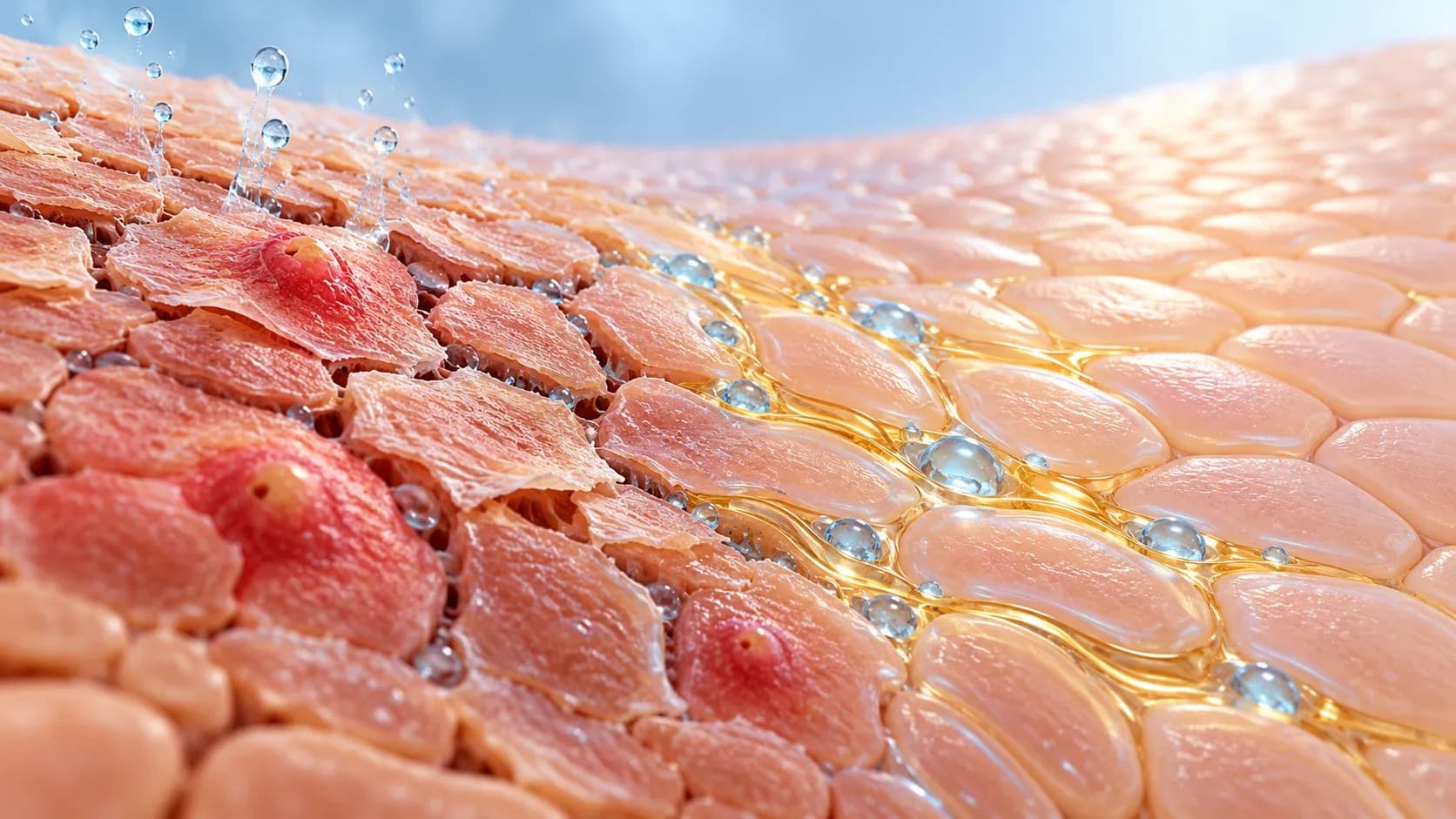
Skin barrier damage happens when the outer lipid layer breaks down from over-cleansing, hot water, harsh actives, or environmental stress. This increases water loss and triggers excess oil production, which combines with dead skin cells to clog pores. Inflammation and a rising skin pH then allow acne bacteria to thrive. Recovery typically takes four to six weeks of gentle, consistent care.
- Barrier damage increases transepidermal water loss and drives compensatory sebum overproduction
- Shifting skin pH and deeper bacterial penetration create conditions where breakouts become more likely
- Repair takes four to six weeks with a simplified, gentle routine
What the Skin Barrier Actually Does
The skin barrier is the outermost layer of the epidermis, made up of dead skin cells held together by lipids, primarily ceramides, cholesterol, and fatty acids. This structure keeps water inside the skin and blocks bacteria, pollutants, and irritants from entering.
When the barrier works properly, skin stays hydrated, balanced, and less reactive. When it breaks down, gaps form in that protective structure. Water escapes faster than the skin can replace it, and the body reads this as a threat, triggering a chain of responses that directly raise the risk of breakouts.
According to Clear Ritual's dermatology team, barrier integrity is one of the most consistently overlooked factors in recurring acne, particularly in people who actively treat their skin with multiple products.
How Skin Barrier Damage Triggers Oil Production and Breakouts
When the skin barrier is compromised, transepidermal water loss (TEWL) increases significantly. The skin registers this moisture loss and responds by ramping up sebum production to create a compensatory protective film. This compensation rarely works as intended.
The oil produced during barrier distress can be thicker, stickier, and more likely to combine with dead skin cells that are not shedding properly. This mixture clogs pores and creates microcomedones, the earliest stage of a breakout.
At the same time, a compromised barrier allows Cutibacterium acnes bacteria to penetrate deeper into follicles. These bacteria feed on the excess sebum and trigger an immune response, producing the red, inflamed bumps that characterise acne.
The sequence runs as follows:
- Barrier disruption → increased TEWL
- TEWL → compensatory sebum overproduction
- Excess sebum + irregular cell shedding → pore blockage
- Elevated skin pH + deeper bacterial penetration → inflammation
- Inflammation → more reactive sebaceous glands → more breakouts
What Causes Skin Barrier Damage?
Most skin barrier damage happens gradually through daily habits that appear harmless. The following are the most common causes, according to Clear Ritual's skin science team.
Over-cleansing strips natural oils and disrupts the lipid layer. Using a cleanser more than twice daily, or scrubbing too firmly, physically removes the protective film the skin depends on. Skin that feels tight or squeaky after washing is experiencing lipid loss, not effective cleansing.
Hot water dissolves lipids faster than lukewarm water. Combined with soap-based cleansers, this creates near-ideal conditions for barrier breakdown during everyday showering.
Chemical exfoliants used too frequently thin the stratum corneum before it can rebuild. Glycolic acid, salicylic acid, and similar actives help when used correctly, but daily use or layering multiple acids prevents the skin from regenerating its protective layers between sessions. The skin needs approximately 28 days to complete one lipid regeneration cycle.
Environmental stressors compound the damage:
- UV radiation degrades ceramides and collagen while triggering localised inflammation
- Pollution particles penetrate weakened barriers and generate free radicals that damage cell membranes
- Cold, dry air increases water loss through the skin surface
- Indoor heating strips ambient humidity, accelerating surface drying
Harsh or high-pH skincare products push skin toward alkalinity, disrupting both the lipid layer and the microbial environment that supports barrier function.
The Inflammation Connection: How Barrier Damage Sustains Breakouts
Skin barrier damage creates a state of chronic low-grade inflammation that directly promotes acne. When irritants penetrate a compromised barrier, the immune system releases inflammatory cytokines, signalling molecules that direct increased blood flow and immune mediators to the area.
This inflammatory environment makes sebaceous glands more reactive. Inflammation increases the activity of enzymes that produce sebum and alters the lipid composition of that oil. It also disrupts how skin cells shed: instead of exfoliating smoothly, inflamed skin produces stickier cells that clump together and block pores.
Stress hormones amplify this process. Elevated cortisol, from sleep deprivation or chronic stress, increases oil production while suppressing the skin's natural repair mechanisms. This makes it harder for the barrier to recover while simultaneously generating more breakout triggers.
Why Skin Feels Dry But Still Breaks Out
Skin can feel tight, flaky, and dehydrated while simultaneously producing oily patches and developing pimples. This paradox confuses many people, but it has a clear physiological explanation.
Dehydration reflects water content inside skin cells. When the barrier cannot retain moisture, cells contract and skin feels rough and uncomfortable. The body responds by producing more sebum, but oil cannot hydrate. It only sits on the surface or mixes with dead cells inside pores.
The result is what dermatologists describe as dehydrated oily skin: flaky, tight texture coexisting with clogged pores and active breakouts. Many people respond by applying harsher acne treatments that strip further moisture, worsening barrier damage and creating a self-perpetuating cycle.
Clear Ritual's clinical team notes that this pattern, dry-feeling skin with persistent oiliness and breakouts, is one of the clearest indicators that barrier disruption, rather than excess oil production alone, is the primary driver.
What Happens to the Skin Microbiome After Barrier Damage
The skin hosts billions of beneficial bacteria that help maintain barrier function and compete with harmful microbes. When the barrier breaks down, this microbial balance shifts in ways that directly promote acne.
A healthy skin barrier maintains a slightly acidic surface pH of approximately 4.5 to 5.5. This acidity supports beneficial bacteria and keeps pathogens in check. Cleansers with high pH, over-exfoliation, and barrier damage all push skin surface pH toward alkalinity.
Research confirms that Cutibacterium acnes grows optimally at pH 6.0–7.0 and is significantly inhibited at the skin's natural acidic pH. Cleansers with a pH above 6.0 measurably shift skin surface pH for up to two hours after washing, creating a window of increased bacterial susceptibility with every use.
A 2021 microbiome study found that after experimentally induced barrier disruption, acne-associated bacterial strains became disproportionately dominant within 72 hours. Normal microbial diversity took approximately 14 days to restore.
Beneficial bacteria also produce lipids and antimicrobial peptides that strengthen the barrier. When barrier damage disrupts this ecosystem, these protective outputs are lost, slowing recovery and increasing breakout frequency.
Signs Your Skin Barrier Is Compromised
| Sign | What It Means | Related Breakout Risk |
|---|---|---|
| Increased sensitivity to products | Irritants penetrating deeper into skin | Inflammatory acne more likely |
| Persistent redness or flushing after cleansing | Chronic low-grade inflammation present | Cystic breakouts possible |
| Rough, uneven texture | Dead cells not shedding properly | Comedones forming |
| Tight, uncomfortable feeling after cleansing | Lipids stripped from the surface | Oil overproduction beginning |
| Products that once worked now sting | Barrier too thin to protect nerve endings | Reactive breakouts common |
| Simultaneous dryness and oiliness | TEWL elevated, sebum compensating | Mixed comedonal and inflammatory acne |
| Breakouts worsen after using actives | Barrier cannot tolerate exfoliation load | Widespread inflammation likely |
What Does Damaged Skin Barrier Acne Look Like?
Damaged skin barrier acne has a recognisable pattern. It tends to appear alongside visible skin distress rather than in isolation, which is what separates it from purely hormonal or genetic breakouts.
Signs that suggest barrier-related acne specifically:
- Small, clustered whiteheads or closed comedones across cheeks, forehead, or chin, forming when excess sebum and sticky dead cells block pores en masse after barrier disruption
- Red, sensitive bumps that sting when products are applied, the stinging is a reliable indicator, since a healthy barrier does not transmit product chemicals to nerve endings in the same way
- Persistent rough texture that does not smooth out even between active breakouts
- Simultaneous dryness and oiliness, flaky patches in some areas, shiny clogged pores in others, often on the same face
- Breakouts that worsen after using actives that previously worked, glycolic acid, retinol, or salicylic acid causing more inflammation than improvement
- Redness or flushing that persists for hours after cleansing, a healthy barrier returns to baseline quickly; a compromised one stays reactive
Barrier-related acne often looks worse immediately after showering and improves slightly when all products are paused for a few days. That pattern, reactive to everything, better with rest, is a reliable indicator that the barrier is the primary problem.
A 2021 review in the Journal of Dermatological Science noted that stratum corneum integrity directly affects follicular hyperkeratosis, the abnormal cell shedding inside the pore that creates comedones. When the barrier is weakened, this shedding process becomes irregular, making closed comedones more likely even without increased oil production.
Broken Skin Barrier vs. Active Acne: What Is Actually Different?
A damaged skin barrier is a structural problem; acne is one of the symptoms it can produce. The relationship runs in both directions, which is why distinguishing the two matters for treatment.
A damaged barrier leads to acne through excess TEWL, compensatory sebum, shifted pH, and deeper bacterial penetration. But active acne also breaks down the barrier. Inflamed lesions disrupt the stratum corneum, increase local TEWL, and release inflammatory mediators that degrade surrounding lipid layers. Each condition worsens the other.
| Feature | Damaged Skin Barrier | Active Acne With Intact Barrier |
|---|---|---|
| Primary cause | Lipid depletion, over-cleansing, UV, harsh actives | Excess sebum, hormonal DHT activity, Cutibacterium acnes |
| Skin feel | Tight, sensitive, stinging on product application | Often normal to oily, not particularly sensitive |
| Breakout pattern | Scattered, comedone-heavy, worse after actives | Jawline/chin hormonal pattern or oily T-zone blackheads |
| Response to simplified routine | Often improves significantly within two weeks | Minimal change or worsens without targeted treatment |
| pH status | Elevated, alkaline shift measurable | Variable, often within normal range |
| Response to gentle moisturiser | Significant relief within days | Minimal change |
| Who it affects most | People who over-treat skin, use many actives, or have eczema-prone skin | Teenagers, adults with hormonal fluctuation, those with genetic predisposition |
Research published in Acta Dermato-Venereologica (2020) demonstrated that inflammatory acne lesions measurably reduce stratum corneum cohesion in surrounding tissue, creating a widening zone of barrier dysfunction beyond the individual lesion. This is why treating active acne without simultaneously supporting barrier repair frequently creates a self-perpetuating cycle.
Understand What Is Disrupting Your Skin
Identify your breakout pattern and build a routine that supports your skin barrier.
Take the Skin Test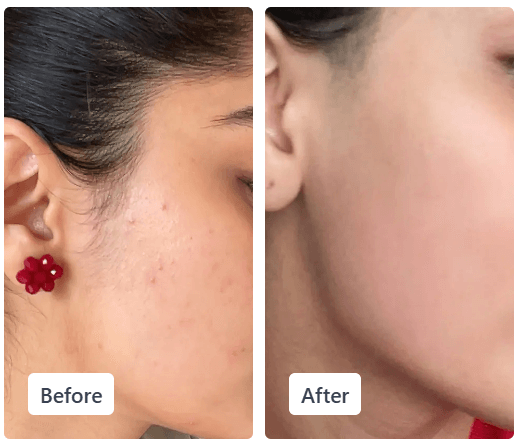
Does Repairing the Skin Barrier Actually Help Acne?
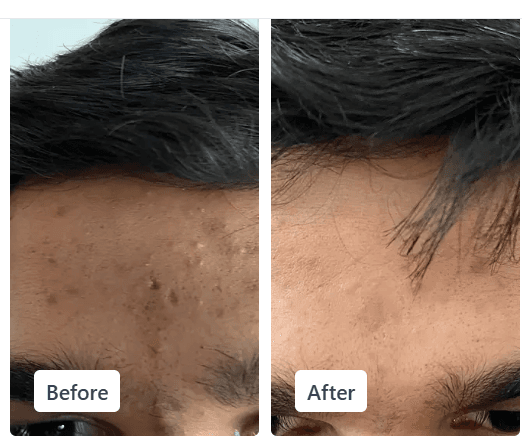
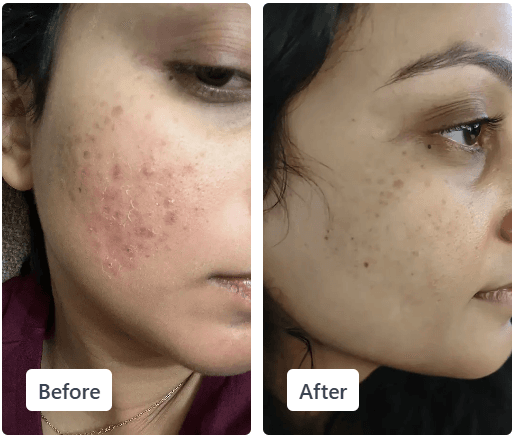
Yes, repairing the skin barrier reduces acne frequency, severity, and the risk of post-inflammatory hyperpigmentation, but only when barrier damage is a contributing driver. It is not a standalone treatment for hormonal or cystic acne with an intact barrier.
What the research shows:
- A 2022 study in the British Journal of Dermatology found that participants who added a ceramide-dominant moisturiser to standard acne treatment (benzoyl peroxide or adapalene) saw approximately 30% fewer new lesions and significantly less skin irritation compared to those using acne treatment alone
- Niacinamide at 4% concentration has been shown in randomised controlled trials to reduce sebum excretion rate within 2–4 weeks of consistent use
- Restoring barrier function reduces the TEWL that drives compensatory oil production, making less sebum available to combine with dead cells and block pores
What barrier repair does for acne:
- Reduces the inflammatory environment that makes sebaceous glands overreactive
- Lowers skin pH back toward its natural acidic range (4.5–5.5), suppressing Cutibacterium acnes growth
- Restores normal corneocyte shedding, reducing comedone formation
- Makes acne medications more tolerable so they can work without triggering reactive breakouts
- Reduces post-breakout redness and marks by supporting faster tissue repair
What barrier repair does not do:
- It does not address hormonal drivers of acne such as DHT sensitivity, insulin resistance, or elevated androgens
- It does not treat established cystic lesions that require antibiotics or isotretinoin
- It does not replace targeted acne treatment when internal triggers are the primary cause
The realistic outcome for most people: if over-treatment or environmental damage is the dominant driver, four to six weeks of consistent barrier repair can reduce new acne by a meaningful amount. If acne is primarily hormonal, barrier repair reduces irritation and post-inflammatory marks but does not clear breakouts independently.
How to Repair the Skin Barrier When You Have Acne: Step-by-Step
Repairing a damaged skin barrier while managing active acne requires a different approach than standard barrier recovery. Most barrier-repair advice assumes heavy occlusives are appropriate, on acne-prone skin, that can worsen congestion. These steps balance both needs.
Step 1: Stop adding damage (Days 1–7)
Remove all exfoliating acids, glycolic, lactic, salicylic, mandelic, and retinoids from your routine temporarily. Reduce cleansing to once daily: a water rinse in the morning and a gentle cleanser at night. This single change often reduces new breakouts within one week because it stops stripping the lipids the skin is actively trying to rebuild. The skin regenerates its lipid layer approximately every 28 days; every exfoliation session within that window delays the rebuild cycle.
Step 2: Simplify to three products maximum (Days 1–14)
Use: pH-balanced gentle cleanser → water-based humectant serum (hyaluronic acid or glycerin) → lightweight ceramide moisturiser. That is the complete routine for the first two weeks. Every additional product is a potential irritant that makes it harder to identify what is and is not helping. Research on skincare-induced dermatitis shows that routines above three products significantly increase the probability of cumulative irritation in compromised barrier states.
Step 3: Add niacinamide at 4–5% (Week 2)
Once skin is no longer stinging on basic products, introduce niacinamide. It stimulates ceramide synthesis, regulates sebum, and has anti-inflammatory effects, the only single ingredient that addresses both sides of the barrier–acne equation simultaneously. Apply once daily, morning or evening. Niacinamide measurably increases ceramide production in human keratinocytes within three days of topical application and reduces TEWL within 2–4 weeks of consistent use.
Step 4: Choose non-comedogenic barrier ingredients (Ongoing)
| Ingredient | Barrier Benefit | Pore Safety for Acne-Prone Skin |
|---|---|---|
| Ceramides (1, 3, 6-II) | Directly replenishes the lipid bilayer | High, non-comedogenic |
| Niacinamide 4–5% | Stimulates ceramide production, reduces sebum | High, also reduces oil |
| Glycerin | Humectant, draws water into skin | High, lightweight, no occlusion |
| Hyaluronic acid | Binds water in the epidermis | High, no comedogenic risk |
| Squalane (plant-derived) | Lightweight emollient, skin-identical lipid | High, does not block pores |
| Shea butter | Heavy occlusive, good for very dry skin | Low for acne-prone skin, can congest pores |
| Petroleum jelly | Strong occlusive, seals moisture effectively | Low, can trap bacteria in compromised skin |
| Coconut oil | Occlusive with antimicrobial properties | Low, high comedogenicity rating |
Step 5: Protect the barrier from environmental damage (Ongoing)
Apply a mineral or chemical SPF 30+ daily. UV radiation degrades ceramides directly, measurably reducing ceramide content in the stratum corneum within 24 hours of unprotected exposure, undoing repair progress in real time. Use a formulation labelled non-comedogenic. Keep face washing to lukewarm water for under three minutes.
Step 6: Reintroduce acne actives slowly (Week 4 onwards)
Once the skin no longer stings, flushes, or feels tight after cleansing, reintroduce one acne active at a time. Start once or twice weekly and increase only if the skin remains comfortable. Do not restart exfoliating acids and retinoids together because irritation makes it difficult to identify which product the barrier can tolerate.
If burning, prolonged redness, or widespread bumps return, stop the newest active and return to the simplified routine until the skin settles.
How Long Does Skin Barrier Repair Take?
Mild barrier disruption may begin feeling more comfortable within one to two weeks. Visible improvement in dryness, stinging, and reactive oiliness commonly requires four to six weeks of consistent care. More severe damage can take longer, particularly when eczema, dermatitis, active acne, or repeated over-exfoliation is present.
Recovery is not always linear. A product that feels comfortable during the first few uses can still cause cumulative irritation, so assess the overall pattern over several weeks rather than judging the routine after one application.
When Should You See a Dermatologist?
Seek professional guidance if the skin is painful, cracked, bleeding, persistently swollen, or developing widespread rashes. Assessment is also important when breakouts are deep, cystic, scarring, or not improving after six to eight weeks of gentle barrier-focused care.
A dermatologist can distinguish barrier-related acne from eczema, contact dermatitis, rosacea, fungal folliculitis, and other conditions that may need a different approach.
Clear Ritual's Perspective on Skin Barrier Damage and Acne
When acne and barrier damage occur together, adding more strong products can make both concerns harder to manage. The first priority is to reduce irritation and restore the skin's ability to retain moisture before gradually returning to targeted acne care.
At Clear Ritual, we focus on the pattern behind the breakouts, including product use, sensitivity, oil production, hormonal influences, and daily habits. This helps build a routine that supports the barrier without ignoring the factors contributing to acne.
Frequently Asked Questions
1. Can a damaged skin barrier cause acne?
Yes. Barrier damage can increase water loss, irritation, compensatory oil production, and irregular skin-cell shedding, creating conditions that make clogged pores and inflamed breakouts more likely.
2. How do you know if acne is related to barrier damage?
Barrier-related acne commonly appears with stinging, tightness, flaking, persistent redness, sensitivity to familiar products, and simultaneous dryness and oiliness.
3. Should you stop acne actives while repairing the skin barrier?
A temporary pause may help when acids, retinoids, or other active products cause burning, redness, or worsening irritation. Reintroduce one active slowly after the skin feels comfortable again.
4. How long does a damaged skin barrier take to recover?
Mild damage may feel better within one to two weeks, while more noticeable recovery often takes four to six weeks of gentle and consistent care.
5. What ingredients support an acne-prone skin barrier?
Ceramides, glycerin, hyaluronic acid, niacinamide, and lightweight squalane can support hydration and barrier function when used in formulas suitable for acne-prone skin.
References
- American Academy of Dermatology. Moisturizer: Why you may need it if you have acne. Read guidance
- American Academy of Dermatology. Acne: Tips for managing. Read guidance
- Sukanjanapong S, et al. Skin Barrier Parameters in Acne Vulgaris versus Normal Skin. View study
- DermNet. Acne. Read reference
Disclaimer
This article is intended for general informational purposes and is not a substitute for personalised skincare advice, diagnosis, or care. Consult a qualified dermatologist if irritation or acne is persistent, painful, rapidly worsening, or leaving scars.
Editorial Standards
Clear Ritual has Strict sourcing guidelines to ensure our content is accurate and current. We rely on peer-reviewed studies, academic research institutions, and medical associations. We strive to use primary sources and refrain from using tertiary references. See a mistake? Learn More about our Editorial Standards.