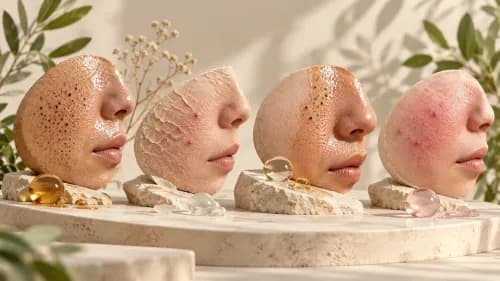
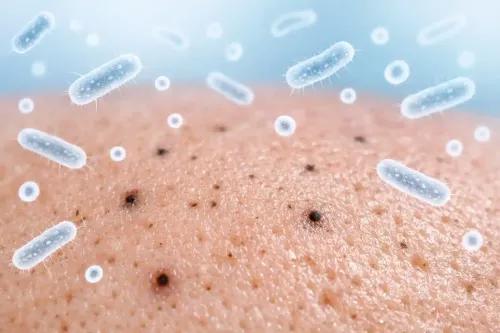
Small Bumps on Your Face That Are Not Acne: Causes, Types & Treatments
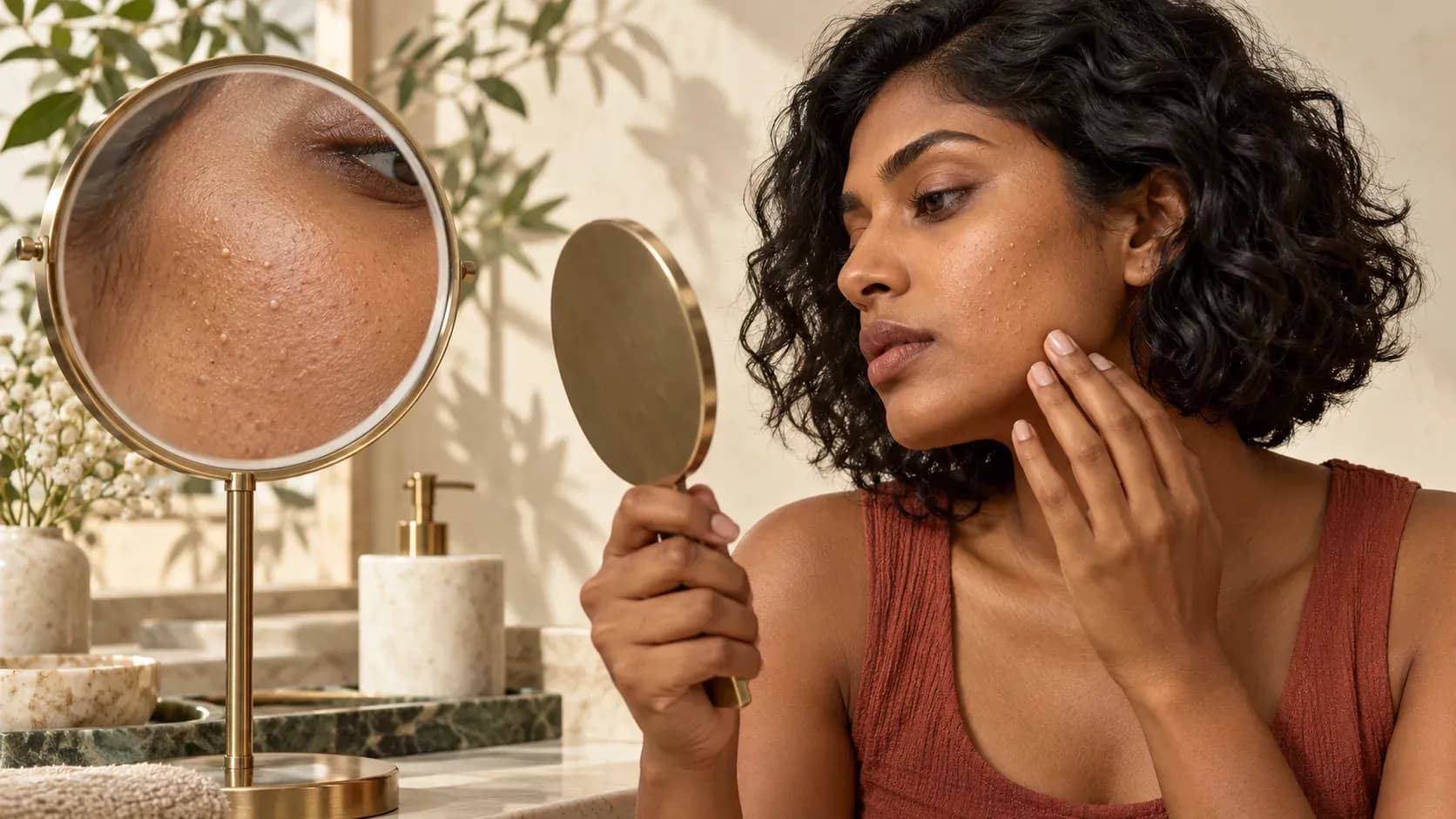
Those small bumps on your face are probably not acne. Closed comedones, milia, fungal acne, and folliculitis all produce bumps that look almost identical to pimples - but each has a completely different cause and requires a different treatment. Applying a standard spot treatment to the wrong bump type will not work and may make the skin worse.
What Are Small Bumps on the Face That Are Not Acne?
Small bumps on the face are tiny raised spots that develop when pores or hair follicles become blocked, irritated, or inflamed - and they are not always caused by acne.
According to current evidence published in StatPearls: Acne Vulgaris, many facial lesions begin within the pilosebaceous unit - the hair follicle and its attached oil gland. When excess sebum, dead skin cells, or inflammation disrupt normal follicle function, bumps form. However, several different conditions can produce this result, and each one requires a different approach to treat.
The most common non-acne bumps include:
- Milia - tiny, hard, pearl-like white bumps caused by trapped keratin beneath intact skin
- Closed comedones - soft, flesh-coloured or whitish bumps from blocked pores
- Fungal acne (Malassezia folliculitis) - small, uniform, intensely itchy bumps caused by yeast overgrowth inside hair follicles
- Folliculitis - red or pus-filled bumps centred around individual hair follicles
- Allergic or irritant contact dermatitis - itchy, red patches triggered by a skincare ingredient or allergen
The Clear Ritual's clinical perspective is straightforward: getting the right treatment starts with identifying which type of bump you actually have.
What Causes Small Bumps to Develop on the Face?
Small bumps on the face are a symptom rather than a diagnosis. They develop when pores become blocked, hair follicles become inflamed, or the skin reacts to irritation, hormones, or infections.
The most common causes include:
- Clogged pores (closed comedones) - excess oil and dead skin cells block hair follicles, forming small white or skin-coloured bumps
- Milia - keratin, a fibrous skin protein, becomes trapped beneath an unbroken layer of skin
- Allergic or irritant contact dermatitis - exposure to an allergen or a harsh skincare ingredient triggers small, itchy, red bumps
- Folliculitis - bacteria, yeast, sweat, friction, or shaving inflames hair follicles
- Fungal acne (Malassezia folliculitis) - an overgrowth of naturally occurring Malassezia yeast inflames follicles and produces uniform, itchy bumps
- Hormonal changes - puberty, menstruation, pregnancy, menopause, or conditions such as PCOS increase oil production and clog follicles
- Comedogenic skincare products - heavy or pore-clogging ingredients such as coconut oil or isopropyl myristate block hair follicles
- Heat, sweat, and friction - create warm, moist conditions that encourage clogged pores or inflamed follicles
Each of these causes triggers bump formation through a different mechanism, which is why treatment must be matched to the cause.
How Can You Tell What Type of Small Bump You Have?
You can often identify the type of small bump on your face by examining its colour, texture, size, location, and whether it itches, hurts, or shows signs of inflammation.
| Type | How It Looks | Common Cause |
|---|---|---|
| Closed comedones | Small, flesh-coloured or smooth white bumps | Trapped sebum and dead skin cells blocking hair follicles |
| Milia | Tiny, hard, pearl-like white bumps | Keratin trapped beneath intact skin surface |
| Folliculitis | Red or pus-filled bumps centred on hair follicles | Inflamed follicles from bacteria, yeast, sweat, or friction |
| Fungal acne (Malassezia folliculitis) | Small, uniform, intensely itchy bumps in clusters | Overgrowth of naturally occurring Malassezia yeast |
| Allergic or irritant contact dermatitis | Itchy, red bumps, patches, or sudden rash | Exposure to an allergen or irritating skincare product |
Key distinctions to remember:
- Milia are firm and cannot be expressed with gentle pressure - closed comedones are softer and may release content
- Fungal acne bumps are notably uniform in size and markedly itchy - regular acne bumps vary in size
- Folliculitis bumps are centred directly around a visible hair follicle
- Irritant or allergic reactions typically appear after introducing a new skincare product
Note: If your bumps are painful, spreading rapidly, or accompanied by swelling or fever, consult a dermatologist for an accurate diagnosis rather than attempting to self-treat.
Why Small Bumps Form on Specific Areas of the Face
The location of small bumps on your face can help narrow down the likely cause. Different facial zones are exposed to different triggers, and the same bump type can develop for different reasons depending on where it appears.
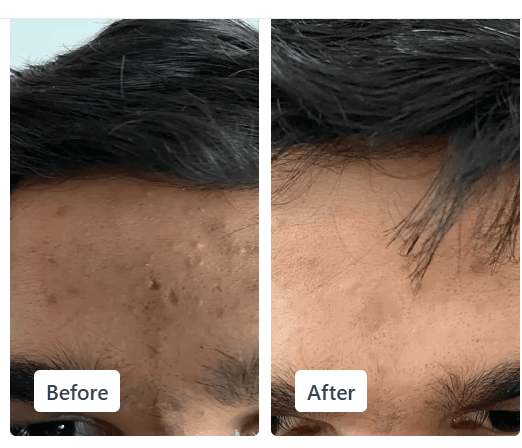
Forehead The forehead has a high density of sebaceous glands and is frequently covered by hair, hats, or fringe - all of which trap heat and sweat. The most common causes of small bumps on the forehead are fungal acne (Malassezia folliculitis), closed comedones from comedogenic hair products (sometimes called pomade acne), and milia in people who apply heavy moisturisers or sunscreens to this area.
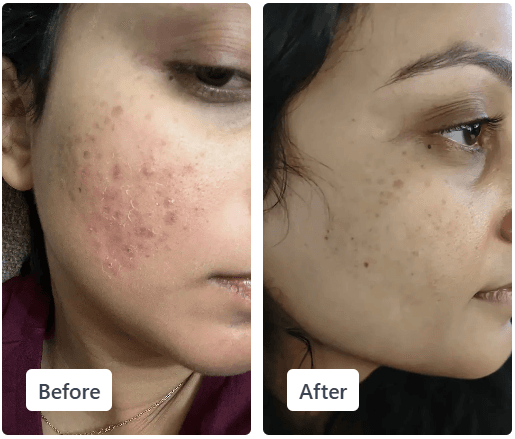
Cheeks Small bumps on the cheeks are frequently caused by milia, closed comedones, or keratosis pilaris. Cheeks are also a common site for irritant or allergic contact dermatitis - particularly in people who sleep on fabric washed with fragranced detergent. If the bumps feel rough, like sandpaper, and are symmetrical, keratosis pilaris is a strong possibility.
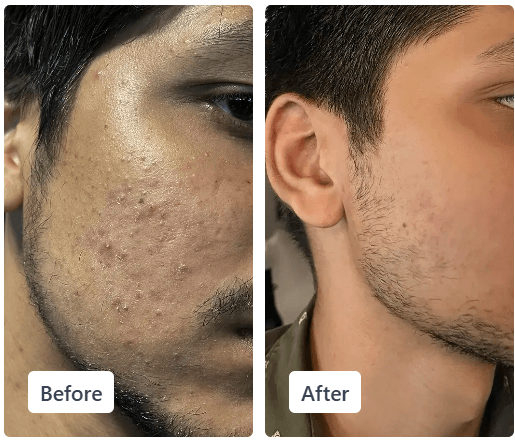
Chin and Jawline Bumps on the chin and jawline that are not inflammatory acne are most likely closed comedones driven by hormonal fluctuations, folliculitis from shaving, or milia. In people with PCOS or other hormonal conditions, the chin and jawline are the most common sites for sebum overproduction that leads to clogged follicles.
Temples The temples are a common site for fungal acne and folliculitis, often triggered by sweat during exercise, helmet use, or hair products applied near the hairline. Milia can also develop on the temples, particularly in people who apply sunscreen generously in this area.
Identifying location alongside texture, colour, and itch is the most reliable way to narrow down the cause before selecting a treatment.
What Happens Beneath the Skin for Each Bump Type
Understanding the mechanism behind each bump type explains why different treatments are required and why using the wrong one produces no results.
Closed comedones: when oil gets trapped without oxidising Closed comedones form when excess sebum and dead skin cells block the opening of a hair follicle before air can reach the plug. Because the plug never oxidises, it stays white or flesh-coloured - which is why it looks different from a blackhead. Hormonal surges increase sebum production, which is why these bumps often cluster on the jawline, chin, and forehead during hormonal shifts.
Milia: when keratin builds up under intact skin Milia develop when keratin becomes trapped beneath an unbroken layer of skin. This happens most often in areas where the skin is thin, such as under the eyes and on the cheeks. Unlike acne, milia have no open pore - which is why salicylic acid and benzoyl peroxide have no effect on them. They require physical extraction or exfoliating acids that dissolve surface skin cells over time.
Fungal acne: when yeast overgrows inside a follicle Fungal acne is caused by an overgrowth of Malassezia, a yeast that naturally lives on the skin. Heat, sweat, and oil-rich skincare products create the warm, nutrient-rich environment that Malassezia needs to proliferate. When it overgrows inside a follicle, it triggers inflammation that produces small, uniform, itchy bumps - typically across the forehead and cheeks. Standard antibacterial acne treatments do not work for fungal acne because bacteria are not involved.
Folliculitis: when a hair follicle becomes infected Folliculitis occurs when bacteria - most commonly Staphylococcus aureus - or yeast enter a damaged or irritated hair follicle. Shaving, tight clothing, or friction against the skin creates micro-tears that allow infection to develop. The result is a red, tender bump centred directly around a hair follicle, often with a small pustule at the tip.
Allergic and irritant reactions: when skincare disrupts the skin barrier Allergic contact dermatitis and irritant contact dermatitis both produce small, itchy, red bumps - but for different reasons. An allergic reaction is an immune response to a specific ingredient such as a fragrance or preservative. An irritant reaction results from repeated exposure to a harsh ingredient that strips the skin barrier. Identifying and removing the trigger ingredient typically produces visible improvement within one to two weeks.
How to Treat Small Bumps on the Face: A Step-by-Step Approach
Treating small bumps on the face requires matching the treatment to the underlying cause. Using the wrong active ingredient - such as applying benzoyl peroxide to milia or fungal acne - will produce no results and may worsen irritation.
Identify the type of bump (Days 1-2) Use the comparison table above to match your bump's colour, texture, location, and whether it itches. If you are unsure, take a close-up photograph in natural light and consult a dermatologist before starting any active ingredient.
Audit your current skincare routine (Days 1-3) Remove comedogenic moisturisers, heavy oils, or fragranced products. Simplify to a gentle cleanser, a non-comedogenic moisturiser, and SPF. This step eliminates potential triggers before introducing actives.
Introduce one active ingredient at a time (Weeks 1-2) Choose the ingredient that matches your specific bump type:
- Closed comedones: 1-2% salicylic acid, used 2-3 times per week
- Milia: low-strength AHA (5-7% glycolic or lactic acid), 2-3 times per week
- Fungal acne: antifungal wash containing zinc pyrithione or ketoconazole
- Folliculitis: gentle antibacterial cleanser; reduce friction in affected areas
- Irritant dermatitis: remove the suspected trigger; apply a barrier-restoring moisturiser
Always perform a patch test before applying any new active to your full face.
Allow treatment time to work (Weeks 4-12) Closed comedones typically improve within 4-8 weeks of consistent salicylic acid use. Milia may take 6-12 weeks to soften with AHA exfoliation - and some milia never resolve without professional extraction. Fungal acne often improves within 2-4 weeks of appropriate antifungal treatment.
Reassess and escalate if needed (After 8 weeks) If bumps have not improved after 8 weeks of consistent home treatment, or if they are spreading, becoming painful, or accompanied by redness and swelling, consult a dermatologist. Stubborn milia, persistent folliculitis, and hormonally driven comedones respond more reliably to professional treatments.
Common mistake: Exfoliating too frequently or combining multiple actives too early. Over-exfoliation strips the skin barrier and can trigger more breakouts. Start 2-3 times per week and increase frequency only if your skin tolerates it well.
Which Ingredients Treat Which Type of Bump?
Not all active ingredients work for all bump types. This is the most common reason home treatments fail - the ingredient is correct in principle, but the target is wrong.
| Ingredient | Works Best For | Does NOT Work For | Typical Onset |
|---|---|---|---|
| Salicylic acid (BHA) | Closed comedones, oily clogged pores | Milia (no open pore to penetrate), fungal acne | 4-8 weeks |
| Glycolic or lactic acid (AHA) | Milia, rough skin texture, dull skin | Fungal acne (oil-based formulas may worsen it) | 6-10 weeks |
| Retinoids (adapalene, retinol) | Closed comedones, hormonally driven bumps | Milia without combined AHA, active folliculitis | 8-12 weeks |
| Antifungal agents (ketoconazole, zinc pyrithione) | Fungal acne (Malassezia folliculitis) | Bacterial folliculitis, milia, comedones | 2-4 weeks |
| Azelaic acid | Sensitive skin with comedones, post-inflammatory pigmentation | Milia, fungal acne as a primary treatment | 6-8 weeks |
| Antibacterial cleanser (benzoyl peroxide) | Bacterial folliculitis, inflamed comedones | Fungal acne, milia, irritant dermatitis | 3-6 weeks |
If you have used one ingredient consistently for 6-8 weeks without any improvement, the most likely explanation is that you are treating the wrong type of bump - not that the ingredient is ineffective.
For bumps resistant to home treatment, professional options such as manual extraction for milia, chemical peels for comedones, or prescription antifungals for fungal acne produce faster and more reliable results.
What Professional Treatments Can Remove Small Facial Bumps?
Professional treatments may be recommended when small bumps on the face do not improve with skincare, or when the underlying cause requires specialist care.
- Manual extraction - removes trapped keratin or clogged pores using sterile instruments; most effective for milia and stubborn closed comedones
- Chemical peels - use higher-strength salicylic acid or glycolic acid to exfoliate dead skin cells and clear blocked pores
- Microdermabrasion - gently exfoliates the skin's surface to improve texture and reduce superficial clogged pores
- Laser resurfacing - improves overall skin texture and may help treat selected persistent bumps by resurfacing the upper layers of skin
The most appropriate professional treatment depends on the underlying cause. A dermatologist can recommend the safest and most effective option after examining the skin.
How Long Does It Take for Small Bumps to Clear?
Small bumps on the face do not all clear at the same rate. The timeline depends entirely on what is causing them.
| Bump Type | Expected Timeline with Home Treatment | Signs of Improvement | When to Seek Professional Help |
|---|---|---|---|
| Closed comedones | 4-8 weeks with salicylic acid | Bumps become smaller and less raised | No improvement after 8 weeks, or spreading |
| Milia | 6-12 weeks with AHA; some never resolve at home | Surface appears smoother; bumps flatten slightly | Persistent milia after 12 weeks - professional extraction is more reliable |
| Fungal acne | 2-4 weeks with antifungal wash | Itching reduces first; bumps shrink within 2-3 weeks | No improvement after 4 weeks - may need prescription antifungal |
| Folliculitis | 1-3 weeks with antibacterial cleanser and reduced friction | Redness reduces; pustules resolve | Spreading, recurring, or painful - may require antibiotic treatment |
| Irritant contact dermatitis | 1-2 weeks after removing the trigger | Itching and redness reduce quickly | Persists despite removing the suspected product |
| Hormonal comedones | Gradual improvement over 3-6 months | Fewer new bumps forming | No change after 3 months - consider hormonal assessment |
The single most important variable in clearing bumps faster is correctly identifying the type. Treating milia with salicylic acid, for example, produces no improvement because salicylic acid cannot penetrate the intact skin covering a milium. Most people who correctly identify and treat the cause of their bumps see visible improvement within 4-8 weeks.
Can You Prevent Small Bumps From Forming on the Face?
You can help prevent small bumps on the face by keeping pores clear, protecting the skin barrier, and following a consistent skincare routine.
To reduce the risk of future bumps:
- Cleanse gently twice daily to remove excess oil, dirt, and impurities without stripping the skin
- Avoid comedogenic skincare and makeup products - check labels for ingredients such as coconut oil, isopropyl myristate, and heavy silicones
Prevention should match the underlying tendency. Learning how skin type affects acne can help you choose products that are less likely to create congestion or irritation.
If bumps are associated with sensitivity, stinging, or sudden dryness, review whether skin barrier damage and acne may be occurring together.
When Should You See a Dermatologist?
Consult a dermatologist when small facial bumps are painful, intensely itchy, spreading, recurring, producing pus, or leaving dark marks or scars. You should also seek professional advice if the bumps have not improved after six to eight weeks of consistent care.
Clinical assessment is particularly useful when several conditions look alike. For example, causes of comedonal acne differ from the causes of milia, folliculitis, dermatitis, and yeast-related follicular bumps.
If identical itchy bumps are concentrated near the hairline, compare the pattern with fungal acne on the forehead. Do not begin prescription-strength antifungal, antibiotic, or retinoid treatment without professional guidance.
Clear Ritual's Perspective on Small Facial Bumps
The correct treatment begins with the correct identification. Texture alone is not enough because several conditions can create bumps of a similar size and colour. Itch, firmness, inflammation, location, timing, and response to previous products all provide useful clues.
Clear Ritual recommends assessing the complete pattern before adding more actives. The guides to tiny pimples on the face and symptoms of acne-prone skin can help you compare common patterns without assuming every raised spot is acne.
Understand What Your Skin Needs
Take the Clear Ritual Skin Test to identify your skin type, concerns, and potential triggers before building your routine.
Take the Free Skin Test
Frequently Asked Questions
Q. Why do I have small bumps on my face that are not acne?
A. Small facial bumps may be caused by milia, closed comedones, folliculitis, Malassezia folliculitis, contact dermatitis, or another skin condition. Their appearance, texture, location, and symptoms help distinguish them.
Q. How can I tell milia from closed comedones?
A. Milia usually feel firm and pearl-like because keratin is trapped beneath intact skin. Closed comedones are generally softer and form when oil and dead skin cells block a follicle.
Q. Why are the small bumps on my face itchy?
A. Itchy uniform bumps may suggest Malassezia folliculitis, while a sudden itchy rash may indicate allergic or irritant contact dermatitis. A dermatologist can confirm the cause.
Q. Can exfoliation remove small facial bumps?
A. Exfoliation may help some closed comedones and superficial milia, but excessive exfoliation can damage the skin barrier and worsen irritation.
Q. Should I squeeze small bumps on my face?
A. No. Squeezing or scraping unidentified bumps can cause inflammation, infection, dark marks, and scarring.
Q. How long do small bumps on the face take to clear?
A. The timeline depends on the cause. Irritant reactions may improve within one to two weeks, while closed comedones and milia may require several weeks or professional treatment.
References
- DermNet. Milium.
- DermNet. Folliculitis.
- DermNet. Malassezia folliculitis.
- American Academy of Dermatology Association. Contact dermatitis.
Disclaimer: This article is for general educational purposes and does not replace personalised medical advice. Consult a qualified dermatologist for persistent, painful, infected, spreading, or recurrent facial bumps.
Editorial Standards
Clear Ritual has Strict sourcing guidelines to ensure our content is accurate and current. We rely on peer-reviewed studies, academic research institutions, and medical associations. We strive to use primary sources and refrain from using tertiary references. See a mistake? Learn More about our Editorial Standards.