Tiny Pimples on Face: What They Are and How to Get Rid of Them
Quick Answer:
Tiny pimples on the face are small, raised bumps most often caused by acne (clogged pores), milia (keratin-filled cysts), or fungal acne (yeast overgrowth). Treatment depends on the cause: salicylic acid or benzoyl peroxide help clear acne-related bumps, while milia and fungal acne require different care. Avoid picking or popping, and consult a dermatologist if bumps persist beyond 6 to 8 weeks, itch, or appear in unusual locations.
What Are Tiny Pimples on the Face?
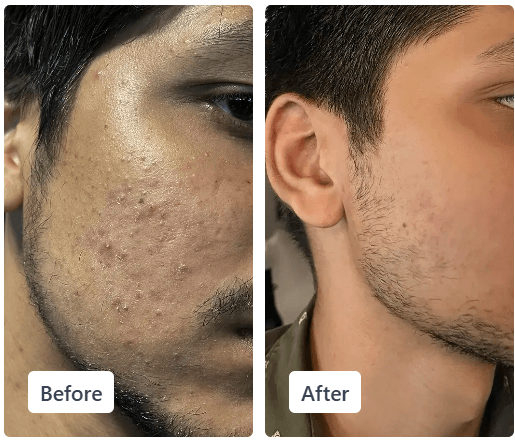
Tiny pimples on the face are small, raised skin bumps that form when pores become clogged, hair follicles become inflamed, or keratin or yeast accumulates beneath the skin's surface. Not every tiny bump is acne: the term covers several distinct skin conditions, each with a different cause and a different recommended treatment.
The three most common types of tiny pimples on the face are:
- Acne: small, flesh-coloured or red bumps caused by clogged pores, typically appearing on the face, chest, shoulders, or back
- Milia: tiny, firm, pearly-white bumps caused by trapped keratin, most common around the eyes, cheeks, and forehead
- Fungal acne (Malassezia folliculitis): clusters of small, uniform, itchy pustules caused by yeast overgrowth, typically appearing on the forehead, chest, or upper back
Identifying the correct type is the first step toward effective treatment. Using a standard acne product on milia or fungal acne can be ineffective: or in some cases, make the condition worse.
How Do You Identify the Type of Tiny Pimples on Your Face?
The appearance, location, and whether the bumps itch can help distinguish between the most common causes of tiny pimples on the face.
| Type | How It Looks | Common Location | Itchy? |
|---|---|---|---|
| Acne (closed comedone) | Flesh-coloured, slightly raised, no redness | Face, chest, shoulders, back | No |
| Acne (whitehead) | Small white tip, mild inflammation | Face, chest, back | No |
| Milia | Firm, pearly-white, dome-shaped, no pore opening | Around eyes, cheeks, forehead | No |
| Fungal acne | Uniform in size, clustered, small pustules | Forehead, hairline, chest, upper back | Yes |
| Inflammatory acne | Red, raised, may contain pus | Face, chest, back | No |
According to the Clear Ritual dermatology team, one of the most reliable distinguishing signs is whether the bumps itch. Itchy, uniform clusters of small bumps: especially near the forehead or hairline: are a strong indicator of fungal acne rather than standard acne, and require a different treatment approach entirely.
What Causes Tiny Pimples on the Face?
Tiny pimples on the face develop through several distinct biological processes depending on the underlying cause. Although acne is the most common cause, fungal overgrowth, keratin accumulation, and friction can each produce small facial bumps.
Common causes of tiny pimples on the face include:
- Clogged pores (acne): dead skin cells and excess sebum block the hair follicle, forming whiteheads or closed comedones
- Fungal overgrowth (fungal acne): Malassezia yeast multiplies within hair follicles, causing itchy, uniform bumps
- Trapped keratin (milia): slowed skin cell turnover seals keratin beneath the surface, forming firm white cysts
- Friction or pressure (acne mechanica): repeated contact from helmets, masks, or tight clothing triggers breakouts
- Rosacea: facial redness accompanied by small, acne-like bumps that do not respond to standard acne treatment
For acne-related tiny pimples specifically, four biological processes are typically involved:
- Hyperkeratinisation: dead skin cells accumulate and block the hair follicle
- Seborrhea: oil glands overproduce sebum, contributing to pore blockage
- Cutibacterium acnes growth: acne-causing bacteria multiply within the blocked follicle
- Inflammation: the immune system responds, producing red or white bumps at the surface
Hormonal fluctuations, high-glycaemic diets, comedogenic skincare products, and humid environments can accelerate any of these processes, according to the American Academy of Dermatology.
What Causes Tiny Bumps on the Face That Are Not Acne?
Not every tiny bump on the face is caused by acne. Misidentifying the cause and applying the wrong treatment: such as using salicylic acid on milia: can delay improvement and sometimes worsen the condition.
Milia: Tiny White Keratin Cysts
Milia form when keratin becomes trapped beneath a thin layer of skin instead of shedding naturally. Unlike whiteheads, milia have no pore opening: they are enclosed cysts that do not respond to salicylic acid or benzoyl peroxide, because they contain no bacteria or excess oil.
Milia commonly form around the eyes and cheeks, and can be triggered by heavy skincare products, sun damage, or skin resurfacing procedures. A gentle retinoid applied consistently may resolve milia over 8 to 12 weeks by accelerating skin cell turnover. Persistent milia are best removed by a dermatologist using sterile needle extraction.
Fungal Acne (Malassezia Folliculitis): Itchy, Uniform Clusters
Fungal acne is an overgrowth of Malassezia yeast within the hair follicles: not a bacterial condition. It produces small, uniform, itchy pustules that typically appear in clusters on the forehead, hairline, chest, and shoulders. The key distinguishing feature is that fungal acne bumps itch, and they are consistent in size.
Many standard acne treatments and oil-heavy moisturisers contain fatty acids that Malassezia yeast feeds on, which can accelerate yeast growth rather than resolve it. Ketoconazole shampoo (1–2%) used as a face wash for 5 minutes before rinsing is a well-supported first-line option. A dermatologist can confirm the diagnosis and prescribe topical or oral antifungal medication for persistent cases.
Closed Comedones: Flesh-Coloured Bumps Without Redness
Closed comedones are clogged pores that have not yet become inflamed. They appear as small, flesh-coloured or slightly raised bumps: the skin feels rough or uneven but shows no visible pus or redness. These bumps do respond well to 2% salicylic acid applied consistently across the full affected area.
How to Get Rid of Tiny Pimples on the Face: A Step-by-Step Routine
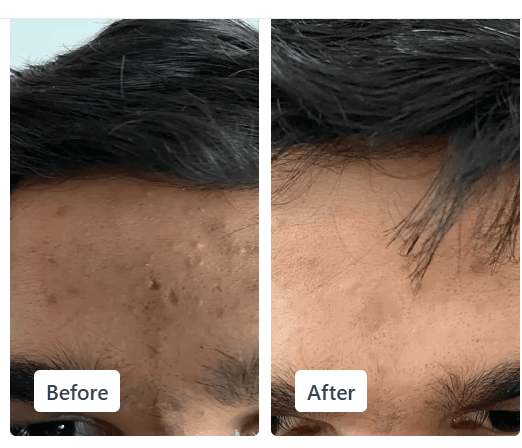
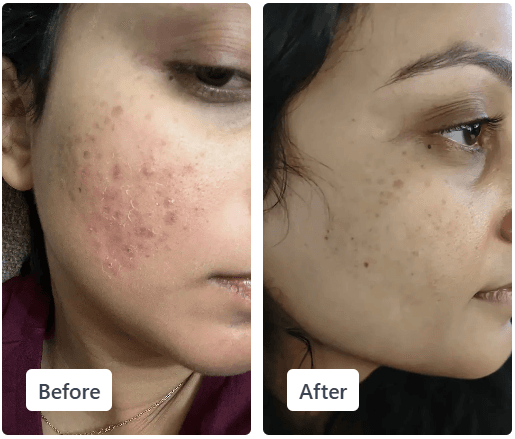
Most tiny pimples on the face do not resolve overnight. With a consistent, targeted routine, most people see a meaningful reduction in active bumps within 4 to 6 weeks. The key is treating the entire affected area: not just individual spots: to prevent new pimples from forming.
Clear Ritual recommends the following five-step routine for acne-related tiny pimples:
Step 1: Cleanse twice daily with a gentle, non-comedogenic cleanser Wash morning and night using lukewarm water and a mild, fragrance-free cleanser. Avoid harsh soaps: these strip the skin's natural barrier and trigger a sebum rebound, which leads to more clogged pores. Massage gently for 30 to 60 seconds, then pat dry with a clean towel.
Step 2: Apply a 2% salicylic acid treatment to the full affected area Salicylic acid is a beta-hydroxy acid (BHA) that penetrates oil-filled pores and dissolves the dead skin and sebum buildup responsible for whiteheads and closed comedones. Apply after cleansing to the entire affected area: not just individual bumps: to prevent new pimples from forming. If new to salicylic acid, begin every other day and increase to daily use over two weeks.
Step 3: Use a benzoyl peroxide spot treatment on inflamed pimples For bumps that are already red or raised, apply a 2.5% to 5% benzoyl peroxide spot treatment after the salicylic acid step has dried. Benzoyl peroxide kills Cutibacterium acnes by creating an oxygen-rich environment bacteria cannot survive in. Start at 2.5%: this concentration is as effective as higher strengths with significantly less dryness.
Step 4: Moisturise: even if skin feels oily Skipping moisturiser is one of the most common mistakes made by people with small pimples. Dehydrated skin signals sebaceous glands to produce more oil, creating more clogged pores. Use a lightweight, oil-free, non-comedogenic moisturiser: gel-based formulas work well for oily or acne-prone skin.
Step 5: Apply SPF 30+ every morning Salicylic acid and benzoyl peroxide both increase the skin's sensitivity to UV radiation. Sun exposure without protection can darken post-acne marks and slow healing. Use a non-comedogenic mineral sunscreen (zinc oxide or titanium dioxide) and reapply every two hours if outdoors.
Dr. Divya's tip: If your tiny pimples are itchy, uniform in size, and appear in clusters: particularly on the forehead or hairline: standard acne treatment may not be sufficient. These are common signs of fungal acne, which responds to antifungal treatment rather than salicylic acid or benzoyl peroxide. Confirm with a dermatologist before proceeding.
Build a Routine Around Your Skin
Understand your skin type and concerns before choosing products for recurring breakouts.
Take the Skin Test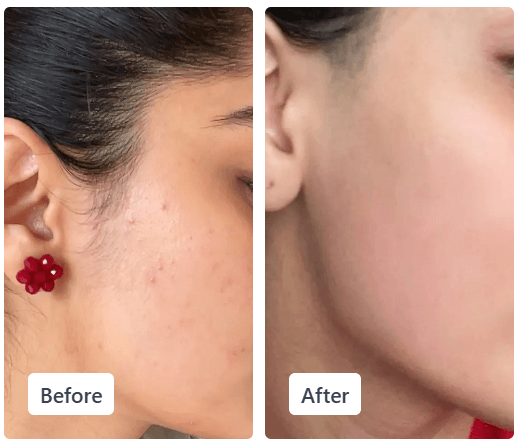
What Is the Best Treatment for Tiny Pimples on the Face?
The best treatment for tiny pimples on the face depends on the underlying cause. The table below outlines evidence-backed options for acne-related tiny pimples and how each works.
| Treatment | How It Works | Best For |
|---|---|---|
| 2% salicylic acid (serum or toner) | Penetrates pores, dissolves dead skin and oil buildup | Whiteheads, closed comedones, widespread congestion |
| Benzoyl peroxide (2.5%–5%) | Kills acne-causing bacteria by creating an oxygen-rich environment | Inflamed, red, or pus-filled pimples |
| Hydrocolloid patch | Absorbs excess fluid and protects the pimple while it heals | Individual pimples that are active or recently formed |
| Salicylic acid cleanser | Exfoliates skin surface and helps keep pores clear | Daily maintenance for acne-prone skin |
| Retinoid (topical) | Accelerates skin cell turnover | Milia, persistent closed comedones |
| Ketoconazole shampoo (1–2%) | Controls Malassezia yeast overgrowth | Fungal acne on forehead, hairline, or chest |
| Avoiding picking or popping | Prevents scarring, infection, and further inflammation | All types of tiny pimples |
Consistent daily use of 2% salicylic acid reduces non-inflammatory acne lesions: including whiteheads and closed comedones: in most users within 4 to 8 weeks, according to a review published in the Journal of Clinical and Aesthetic Dermatology.
What Are Effective Home Remedies for Tiny Pimples on the Face?
Some mild, acne-related tiny pimples may respond to home remedies that help soothe inflammation and reduce redness. These remedies are most appropriate for occasional or mild breakouts: persistent tiny pimples typically require evidence-based over-the-counter products or dermatologist-guided treatment.
Home remedies that may help manage mild pimples:
- Diluted tea tree oil: Mix 1 drop of tea tree oil with 9 drops of a carrier oil (such as jojoba oil). Dab onto the affected area with a cotton swab. Tea tree oil has antimicrobial properties that may reduce surface bacteria.
- Ice compress: Wrap an ice cube in a clean cloth and hold it against the affected area for 3 to 5 minutes. This can temporarily reduce redness and swelling by constricting blood vessels.
- Pure aloe vera gel: Apply a thin layer of pure aloe vera gel to the affected area and allow it to absorb. Aloe vera has soothing and anti-inflammatory properties.
Important: Patch-test all natural ingredients on a small area of skin for 24 hours before applying them to the face, particularly essential oils such as tea tree oil. Skin reactions to undiluted essential oils are common and can worsen inflammation.
Home remedies do not address the underlying causes of tiny pimples: blocked pores, bacterial overgrowth, or yeast imbalance. They may provide temporary comfort alongside a proper skincare routine but are not a substitute for targeted treatment.
What to Expect: A Realistic Timeline for Treating Tiny Pimples
Tiny pimples rarely disappear within a few days. The timeline below reflects what most people experience when following a consistent, appropriate treatment routine for acne-related tiny pimples.
| Week | What Typically Happens |
|---|---|
| Week 1–2 | Mild purging is possible as salicylic acid brings congestion to the surface. Total pimple count may temporarily increase. |
| Week 3–4 | Active inflammation begins to reduce. Fewer new pimples form. Existing bumps begin to flatten. |
| Week 6–8 | Most people see a clear reduction in new tiny pimples. Post-inflammatory marks may still be visible. |
| Week 12+ | Skin texture improves significantly. A maintenance routine helps prevent recurrence. |
Results vary depending on the underlying cause. Hormonal acne, fungal acne, and milia each require adjustments to this baseline routine. If improvement is not visible after 6 to 8 weeks of consistent treatment, a dermatologist can identify whether a different cause: such as fungal acne, milia, or a hormonal trigger: is responsible.
Salicylic Acid vs. Benzoyl Peroxide for Tiny Pimples: Which Should You Use?
Salicylic acid and benzoyl peroxide are both effective for tiny pimples on the face, but they work through different mechanisms and are best suited to different types of bumps.
| Feature | Salicylic Acid (2%) | Benzoyl Peroxide (2.5%–5%) |
|---|---|---|
| Mechanism | Oil-soluble; penetrates pores and dissolves dead skin and sebum | Creates an oxygen-rich environment that kills acne bacteria |
| Best for | Non-inflamed bumps: whiteheads, closed comedones, widespread congestion | Inflamed, red, pus-filled pimples |
| Application | Entire affected area | Targeted spot treatment on inflamed pimples only |
| Risk of dryness | Mild | Moderate: start at 2.5% |
| Effective for milia? | No | No |
| Effective for fungal acne? | No | No |
For widespread tiny pimples on the face that include both non-inflamed and inflamed bumps, using salicylic acid as an all-over treatment and benzoyl peroxide as a targeted spot treatment gives the best combined results for most people, according to Clear Ritual's skincare team.
When Should You See a Dermatologist for Tiny Pimples?
Most tiny pimples on the face improve with consistent skincare or over-the-counter treatment within 6 to 8 weeks. Some bumps, however, are not caused by standard acne and require a different diagnosis and treatment plan.
Consult a dermatologist if:
- Breakouts do not improve after 6 to 8 weeks of consistent over-the-counter treatment
- Healing pimples leave persistent dark spots or scars
- Bumps appear in unusual locations such as the armpits, groin, or thighs
- Pimples itch, burn, ooze, or crust over
- Many bumps appear suddenly, or shortly after starting a new medication
- A bump is hard, fixed, painless, or slowly growing: this should always be evaluated to rule out non-acne skin conditions
- The condition affects confidence or emotional well-being
Early dermatologist input can prevent months of using the wrong treatment and reduce the risk of post-inflammatory scarring.
Frequently Asked Questions About Tiny Pimples on the Face
Q: Why do I keep getting tiny pimples on my face even after washing it twice a day?
A: Washing more than twice a day can actually worsen tiny pimples by stripping the skin's natural oils and triggering increased oil production. Clogged pores, unsuitable skincare products, hormones, milia, or fungal acne may also be responsible.
Q: How can I identify fungal acne on the face?
A: Fungal acne usually appears as clusters of small bumps that are similar in size and often itchy. It commonly affects the forehead and hairline.
Q: Can salicylic acid remove tiny pimples?
A: Salicylic acid may help tiny pimples caused by clogged pores, whiteheads, or closed comedones. It does not treat milia or fungal acne.
Q: How long do tiny pimples take to clear?
A: Acne-related tiny pimples may begin improving within 4 to 8 weeks when the correct treatment is used consistently. Other causes may require different care.
Q: Should I pop tiny pimples on my face?
A: No. Picking or popping can increase inflammation and raise the risk of infection, dark marks, or scarring.
Editorial Standards
Clear Ritual has Strict sourcing guidelines to ensure our content is accurate and current. We rely on peer-reviewed studies, academic research institutions, and medical associations. We strive to use primary sources and refrain from using tertiary references. See a mistake? Learn More about our Editorial Standards.