Fungal Acne on Forehead: Why It Appears and How to Treat It
Quick Answer:
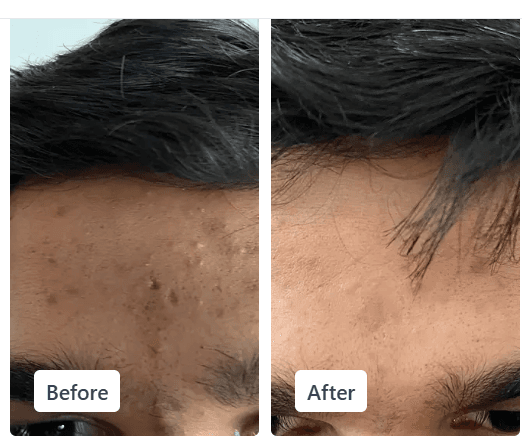
Fungal acne appears more frequently on the forehead because this area produces high amounts of sebum and traps sweat and oils under hair, hats, and headbands. The yeast Malassezia thrives in these warm, oily conditions, multiplying inside hair follicles and causing small, uniform bumps that don't respond to standard acne treatments.
What Is Fungal Acne on the Forehead?
Fungal acne on the forehead is not technically acne. The medical term is Malassezia folliculitis (also called pityrosporum folliculitis). It occurs when yeast organisms from the Malassezia family overgrow inside hair follicles: not when bacteria multiply inside clogged pores, as happens with bacterial acne.
Malassezia naturally lives on everyone's skin as part of the normal skin microbiome. Under balanced conditions, it causes no problems. When the skin environment shifts: through increased oil, heat, moisture, or disrupted microbial competition: Malassezia multiplies rapidly, triggering follicular inflammation that produces visible bumps.
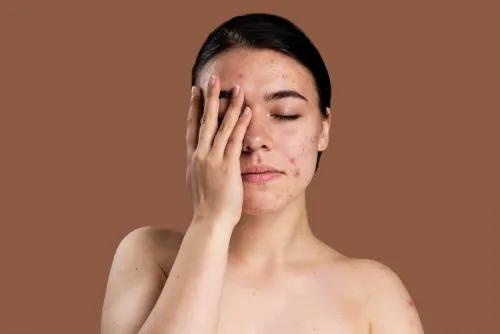
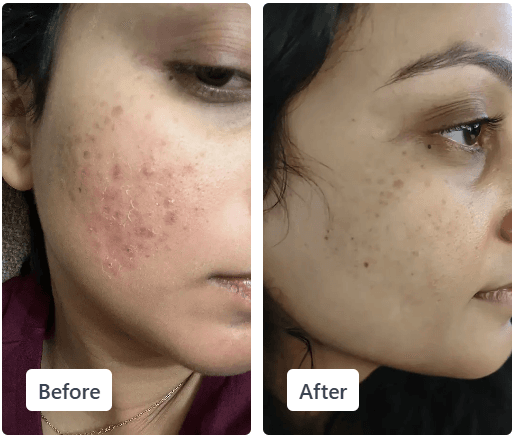
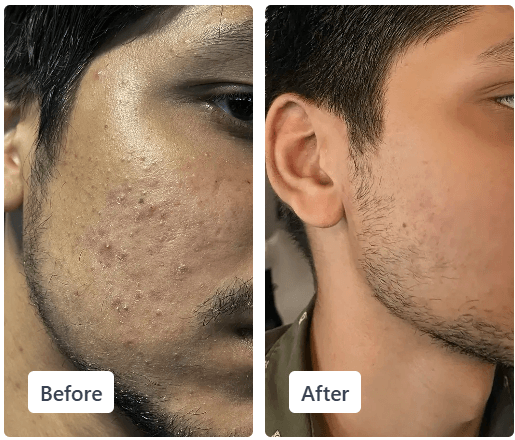
The confusion with regular acne is understandable: both conditions produce small raised bumps. However, fungal acne creates a distinct pattern of small, uniform pustules that cluster together, often accompanied by itching. Bacterial acne produces varied lesion types: blackheads, whiteheads, larger pimples: that appear more randomly distributed.
Why Does Fungal Acne Appear on the Forehead Specifically?
The forehead provides near-ideal conditions for Malassezia overgrowth due to a specific combination of anatomical and lifestyle factors.
High sebaceous gland density. The forehead sits within the T-zone, where sebaceous glands are particularly concentrated. These glands continuously produce sebum: an oily substance containing the fatty acids and triglycerides that Malassezia feeds on directly. More oil production naturally supports larger yeast populations.
Hair and styling product occlusion. Hair falling across the forehead, combined with leave-in conditioners, hair oils, and styling creams, traps heat and moisture against the skin while depositing oils and silicones that Malassezia thrives on. Even hair briefly touching the skin throughout the day creates a warmer local microenvironment.
Sweat accumulation. The forehead sweats readily during exercise, heat exposure, and stress. Sweat increases skin surface humidity and slightly raises pH: both of which encourage yeast multiplication. When sweat mixes with sebum and sits on the skin under hair or headwear, it creates an optimal fungal environment.
Headwear occlusion. Hats, headbands, visors, and bike helmets trap heat and moisture while preventing air circulation. The constant friction also irritates follicles, making them more susceptible to yeast invasion. Dermatologists refer to this mechanism as occlusion: a key driver of forehead-specific Malassezia overgrowth.
According to The Clear Ritual's skin science team, no single factor causes fungal acne on the forehead in isolation. It is typically the convergence of sebum density, physical occlusion, and disrupted microbial balance that tips the condition into a visible flare.
What Happens Inside the Follicle During Fungal Acne?
Understanding the internal follicle environment explains why fungal acne behaves differently from bacterial acne.
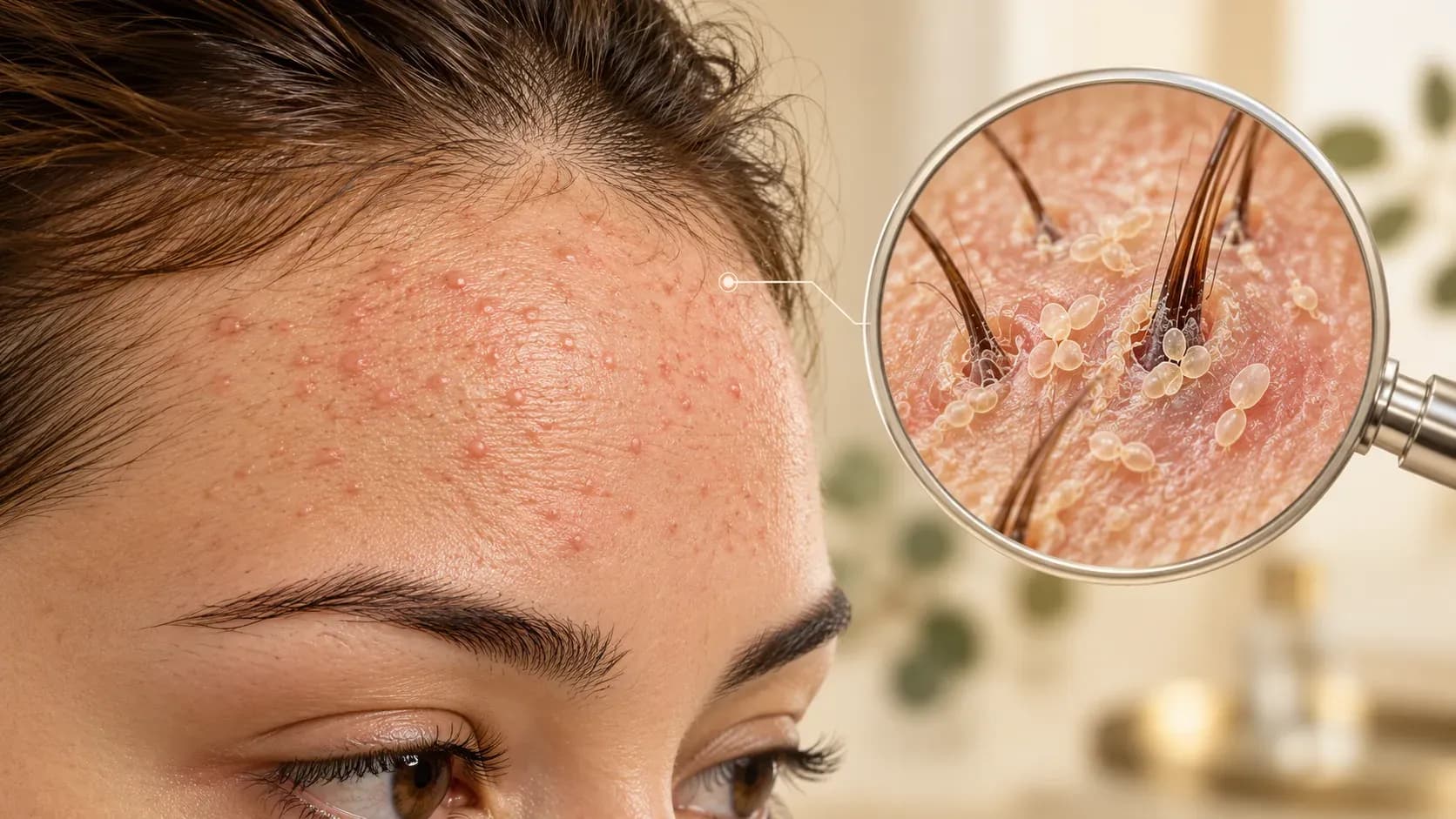
Each hair follicle contains a shaft surrounded by a sebaceous gland that empties sebum into the follicle canal. Normally, sebum flows upward and out onto the skin surface. When Malassezia populations expand, yeast organisms colonize the follicle interior, feeding on sebum lipids and producing metabolic byproducts that irritate the follicle walls.
The immune system recognizes this overgrowth as abnormal and dispatches inflammatory cells to the area. This immune response: rather than the yeast itself: creates the visible bumps and redness. Because the inflammation occurs deep within the follicle, fungal acne rarely develops the surface openings (whiteheads) or oxidized plugs (blackheads) common in bacterial acne.
The follicle becomes congested with yeast cells, sebum, and inflammatory debris, but without the bacterial enzymes that produce the purulent material seen in traditional pimples. This is why fungal acne bumps feel firmer and more uniform than bacterial pimples when touched.
What Are the Main Triggers of Forehead Fungal Acne?
Several specific behaviors and conditions shift the skin environment toward Malassezia overgrowth on the forehead.
- Heavy cosmetic use. Thick foundations, primers, and sunscreens applied to the forehead create an occlusive barrier. Products containing oils, fatty acids, and certain esters provide direct nutrition for yeast while trapping moisture underneath.
- Antibiotic use. Topical or oral antibiotics for bacterial acne eliminate competing bacteria that naturally keep yeast populations in check. When bacterial numbers drop, Malassezia can multiply unchecked: fungal acne often emerges during or after antibiotic treatment.
- Hot, humid environments. Heat and humidity accelerate sweat production and raise skin surface moisture. Tropical climates, humid summers, and heated indoor environments consistently trigger flares.
- Workout habits. Sweat sitting on the forehead during or after exercise: particularly under headbands or hats: creates warm, moist, nutrient-rich conditions for rapid yeast multiplication.
- Immunosuppression. Medications, chronic illness, or elevated cortisol from stress can reduce the skin's ability to regulate microbial populations, allowing opportunistic organisms like Malassezia to proliferate.
- High-carbohydrate diet. Some evidence suggests elevated blood glucose and insulin levels alter sebum composition in ways that favor yeast growth, though more research is needed on this mechanism.
How Is Fungal Acne Different From Bacterial Acne?
Recognizing the differences between fungal and bacterial acne prevents months of ineffective treatment.
| Feature | Fungal Acne (Malassezia Folliculitis) | Bacterial Acne |
|---|---|---|
| Appearance | Uniform small bumps, tight clusters | Varied sizes, random distribution |
| Itching | Common, often intense | Rare or mild |
| Response to acne treatments | Worsens or no improvement | Usually improves |
| Comedones (blackheads/whiteheads) | Absent | Usually present |
| Lesion size | Consistently small, 1–2 mm | Ranges from small to large |
Itching is the most diagnostically important difference. Bacterial acne may feel tender or painful but rarely itches. Fungal acne typically produces persistent itching that worsens with heat, sweating, and occlusion.
Many people apply benzoyl peroxide, salicylic acid, or take oral antibiotics for what they assume is regular acne: only to see the condition persist or worsen. Benzoyl peroxide and antibiotics target bacteria but do not address yeast. Some acne treatments also contain ingredients that directly feed Malassezia, actively accelerating the problem.
What Happens When You Treat Fungal Acne With the Wrong Products?
Using conventional acne treatments on fungal acne creates a frustrating cycle that typically makes the condition worse.
Topical antibiotics eliminate surface bacteria that compete with Malassezia for resources. Without bacterial competition, yeast populations expand rapidly. People often notice their breakouts change character during antibiotic treatment: more uniform, itchy bumps replacing their previous varied acne lesions.
Oil-based treatments and heavy moisturizers prescribed to counter dryness from acne medications provide additional nutrition for yeast. Products containing fatty acids, esters, and certain oils literally feed the organisms causing the problem.
Occlusive spot treatments, particularly when applied under makeup or sunscreen, trap moisture and create the exact environment Malassezia prefers. The skin may initially appear to improve as inflammation temporarily decreases, but the underlying yeast overgrowth continues.
Physical extraction of fungal acne bumps typically proves futile because the lesions lack extractable content. Squeezing and picking only damages the follicle wall, spreads inflammation, and potentially introduces secondary bacterial infection.
How to Get Rid of Fungal Acne on the Forehead: Step-by-Step
Getting rid of fungal acne on the forehead requires targeting yeast, not bacteria: and removing what feeds it before treatment can work.
Step 1: Stop feeding the yeast (Days 1–3)
Before any treatment can work, remove what Malassezia feeds on.
- Pull hair completely off the face: even a fringe resting on skin transfers oils and creates warmth.
- Pause all face oils, oil-based serums, and heavy moisturizers on the forehead. Ingredients like lauric acid, myristic acid, oleic acid, and most fatty esters directly feed Malassezia.
- Wash pillowcases every 2–3 days. Pillowcases accumulate sebum and yeast transfer overnight.
- Skip hats and headbands until the flare clears. If unavoidable, choose 100% cotton and wash after every use.
Step 2: Apply an antifungal active (Days 1 onward)
Three antifungal ingredients are clinically proven to reduce Malassezia folliculitis:
| Active Ingredient | Typical Form | How to Use | Evidence Level |
|---|---|---|---|
| Ketoconazole 2% | Shampoo or cream | Leave on skin 3–5 minutes before rinsing; use 3×/week | High: multiple RCTs |
| Zinc pyrithione | Shampoo or cleanser | Use as a face wash daily or every other day | Moderate: clinical studies |
| Selenium sulfide 2.5% | Shampoo | Apply to forehead as a mask for 10 minutes, 2×/week | Moderate: dermatology guidelines |
The most common starting approach: Use a ketoconazole 2% shampoo as a facial cleanser. Apply to a damp forehead, leave for 3–5 minutes, then rinse. Every other day for the first two weeks. A 2019 study in the Journal of Clinical and Aesthetic Dermatology confirmed that ketoconazole 2% applied topically produced significant reduction in Malassezia folliculitis lesions within 4 weeks.
Step 3: Simplify your skincare routine (Weeks 1–2)
Fungal acne on the forehead often persists because the surrounding skincare routine keeps refeeding the yeast.
- Use a gentle, non-comedogenic, oil-free cleanser morning and evening.
- Switch to a lightweight moisturizer with glycerin, hyaluronic acid, or niacinamide: these do not feed Malassezia.
- Use a mineral or chemical sunscreen that is oil-free and free of fatty acids and esters.
- Check all current products against a fungal-acne ingredient checker before reintroducing them.
Step 4: Adjust your post-workout routine (Ongoing)
- Cleanse the forehead within 20–30 minutes of finishing exercise.
- If a full wash is not possible, use a micellar water wipe to remove sweat before it accumulates.
- Replace headbands with a clean one each session, or skip them entirely during the treatment period.
Step 5: Escalate to oral antifungals if needed (After 4 weeks)
Topical treatment resolves most cases of forehead fungal acne. If bump count has not meaningfully reduced after 4 weeks of consistent topical antifungal use, a dermatologist may prescribe oral fluconazole or itraconazole. A 2021 study in the International Journal of Dermatology showed 80% clearance with a short oral fluconazole course compared to 55% with topical treatment alone. Oral antifungals are prescription-only and carry potential interactions: never self-prescribe.
How Long Does Fungal Acne on the Forehead Take to Clear?
Most forehead fungal acne cases clear significantly within 4–8 weeks of correct treatment, but the pattern of improvement matters as much as the endpoint.
Week 1: Bumps may look angrier or more pronounced after starting antifungal treatment. This is normal. Dying yeast cells temporarily increase local inflammation before it subsides. This initial flare typically peaks around day 5 and begins subsiding by day 10.
Weeks 2–4: Bump count typically drops by 40–60%. Existing lesions begin to flatten. Itching usually decreases first: often before bumps visibly shrink. If zero change occurs after 3 full weeks of consistent antifungal use, reassess the routine for hidden feeding triggers: new products, pillowcase hygiene, hair oils.
Weeks 4–8: Most topical cases reach significant clearance. Post-inflammatory marks (flat pink or brown spots) may remain: these are not active acne and will fade over 6–12 weeks without targeted treatment.
Beyond 8 weeks: Persistent bumps at this stage signal either an incorrect diagnosis, an uneliminated hidden trigger, or a need for oral antifungal treatment. A dermatologist can confirm with a KOH preparation test.
The Clear Ritual's clinical team notes that fungal acne on the forehead clears faster than cystic bacterial acne: but it recurs easily if the underlying triggers are not permanently addressed. Treatment clears it; sustained routine changes prevent it coming back.
Could It Be Something Else? Conditions That Mimic Fungal Acne on the Forehead
Not every cluster of small forehead bumps is fungal acne. Several conditions look almost identical, and treating the wrong one extends the problem by weeks.
| Condition | Appearance | Itching? | Key Difference |
|---|---|---|---|
| Fungal acne (Malassezia folliculitis) | Uniform small pustules, clusters | Yes, common | Worsens with antifungal-feeding products; improves with ketoconazole |
| Bacterial folliculitis | Mixed sizes, yellow-centred pustules | Mild | Improves with topical antibiotics; does not itch |
| Milia | White, dome-shaped, very firm | No | Not follicle-based; no inflammation; unresponsive to any acne treatment |
| Contact dermatitis | Red, flat, itchy patches | Yes, intense | Triggered by a specific product; appears exactly where product was applied |
| Rosacea (papulopustular) | Red bumps, visible redness, flushing | Rarely | Flushing and facial redness present; no comedones; worsened by heat and alcohol |
| Flat warts (verruca plana) | Flesh-coloured, very flat, appearing in lines | No | Appear in scratch-lines; caused by HPV; require dermatologist diagnosis |
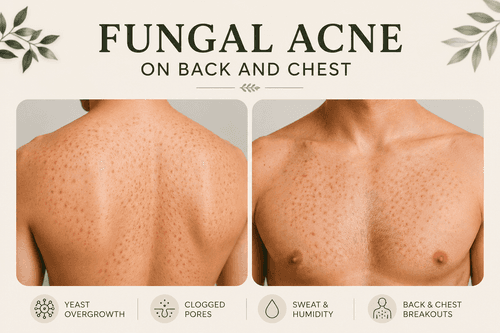
Fungal acne can appear only on the forehead. This is a common presentation: isolated forehead involvement simply reflects where personal triggers (hair contact, headwear, specific products) are concentrated. It does not need to spread to the chest, back, or shoulders to qualify as Malassezia folliculitis.
Fungal acne between the eyebrows follows the same mechanism as forehead fungal acne. The inter-brow zone shares T-zone sebaceous density and is particularly vulnerable to occlusion from eyebrow products: gels, pomades, and pencils. Check these products for fatty acids or oils if bumps concentrate in this area.
The simplest self-test: Use an antifungal shampoo as a cleanser on the area for 2 weeks. If bumps reduce, it is almost certainly Malassezia folliculitis. If no change, see a dermatologist for a KOH preparation test.
What Does the Research Say About Fungal Acne Treatments?
Malassezia folliculitis has a clear body of dermatological research supporting specific treatments. The evidence is more straightforward than for many skin conditions.
Ketoconazole 2% is the best-studied topical treatment. A systematic review published in Dermatology and Therapy (2020) confirmed ketoconazole 2%: applied as a shampoo or lotion: as a first-line topical option for Malassezia folliculitis, with clearance rates of 60–75% at four weeks of consistent use.
Oral fluconazole outperforms topical options in moderate-to-severe cases. A comparative study in the International Journal of Dermatology (2021) found 80% clearance with oral fluconazole (150 mg weekly for 4 weeks) versus 55% with topical ketoconazole alone.
Antibiotics make fungal acne worse: this is not just anecdotal. Research consistently identifies broad-spectrum antibiotic use as a significant risk factor for Malassezia folliculitis. Published dermatology reviews note that antibiotic exposure can alter the skin microbiome and reduce bacterial competition, allowing Malassezia yeast to multiply more easily.
Diagnosis matters before escalation. A dermatologist may examine the bumps closely, use dermoscopy, or perform a potassium hydroxide preparation to look for yeast. This is especially useful when the forehead bumps do not improve with a properly followed antifungal routine.
How Can You Prevent Forehead Fungal Acne From Returning?
Recurrence is common because Malassezia is a normal part of the skin microbiome. Prevention focuses on keeping the forehead cool, clean, and free from ingredients that repeatedly support yeast overgrowth.
- Cleanse after sweating: Wash the forehead soon after exercise or prolonged heat exposure.
- Keep hair products away from the skin: Apply oils, conditioners, and styling products away from the hairline.
- Wash headwear regularly: Clean hats, helmet liners, and headbands after use.
- Change pillowcases frequently: Replace them every 2 to 3 days during an active flare.
- Choose lightweight products: Avoid heavy, oily, or highly occlusive formulas on the forehead.
- Use maintenance care when advised: A dermatologist may recommend intermittent antifungal cleansing for recurrent cases.
Do not continue daily antifungal treatment indefinitely without professional guidance. Once the flare settles, the aim is to use the least frequent maintenance routine that prevents recurrence without irritating the skin.
When Should You See a Dermatologist?
See a dermatologist if the forehead bumps remain unchanged after 3 to 4 weeks of consistent topical antifungal care, spread rapidly, become painful, or occur with extensive redness and swelling. Professional assessment is also important if you are pregnant, immunosuppressed, taking multiple medicines, or considering oral antifungal tablets.
A dermatologist can confirm whether the bumps are Malassezia folliculitis, bacterial folliculitis, comedonal acne, contact dermatitis, or another condition before recommending further treatment.
Clear Ritual’s Perspective on Forehead Fungal Acne
Uniform, itchy forehead bumps that worsen with sweat, oils, and antibiotics may require a different approach from ordinary acne. The first step is identifying the pattern correctly, simplifying the routine, and removing triggers that support yeast overgrowth.
The Clear Ritual Skin Test can help you understand your skin type and concerns before you select products for a simplified routine.
Understand What Your Skin Needs
Identify your skin type and concerns to build a focused routine without unnecessary product overload.
Take the Free Skin Test
Frequently Asked Questions
1. What causes fungal acne on the forehead?
Forehead fungal acne can develop when Malassezia yeast multiplies in warm, oily, and sweaty follicles. Hair products, headwear, humidity, antibiotics, and trapped sweat may contribute.
2. How can you tell if forehead bumps are fungal acne?
Fungal acne usually causes small, uniform, itchy bumps without blackheads or whiteheads. A dermatologist can confirm the diagnosis when the appearance is unclear.
3. What treatment helps forehead fungal acne?
Topical antifungal ingredients such as ketoconazole, zinc pyrithione, or selenium sulfide may help when used appropriately. A dermatologist may recommend oral treatment for persistent cases.
4. How long does forehead fungal acne take to clear?
Many cases improve within 4 to 8 weeks when the diagnosis is correct, triggers are removed, and antifungal treatment is used consistently.
5. Can regular acne products make fungal acne worse?
Some antibiotics, heavy oils, and occlusive products may worsen Malassezia folliculitis. Standard acne ingredients also may not address the yeast responsible for the condition.
References
- DermNet. Malassezia folliculitis.
- National Center for Biotechnology Information. Malassezia infections.
- American Academy of Dermatology. Acne-like breakouts could be folliculitis.
- Merck Manual. Folliculitis.
Disclaimer
This article is intended for general informational purposes and is not a substitute for personalised medical advice, diagnosis, or treatment. Consult a qualified dermatologist before using prescription antifungal medicines or if the bumps are persistent, painful, spreading, or worsening.
Editorial Standards
Clear Ritual has Strict sourcing guidelines to ensure our content is accurate and current. We rely on peer-reviewed studies, academic research institutions, and medical associations. We strive to use primary sources and refrain from using tertiary references. See a mistake? Learn More about our Editorial Standards.