Acne Scars vs Post-Inflammatory Hyperpigmentation: Explained
Acne scars and post-inflammatory hyperpigmentation (PIH) both appear after acne heals, but they are different conditions. Acne scars are permanent texture changes, such as indents or raised bumps, caused by collagen damage and usually need professional treatments like chemical peels, lasers, or microneedling. PIH is a flat, discoloured patch caused by excess melanin production after inflammation, and it typically improves with the right skincare routine, active ingredients, and lifestyle changes, though severe cases may need chemical peel treatment.
- Acne scars: textural changes needing professional treatment
- PIH: flat discoloration that often fades with the right skincare
What Are Acne Scars?
Acne scars are the result of healed acne breakouts.
When acne heals, the body repairs the damaged area, but sometimes the skin texture does not return to normal. Instead, it forms permanent or long-lasting textural changes.
These scars are often red, brown, or uneven in texture and may fade slightly over time, but they usually do not disappear completely without treatment.
Main types of acne scars include:
- Ice pick scars
- Rolling scars
- Boxcar scars
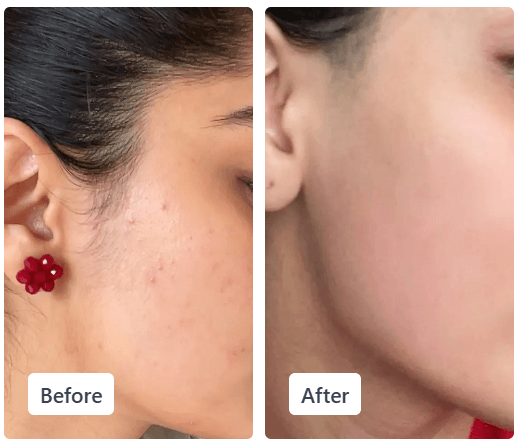
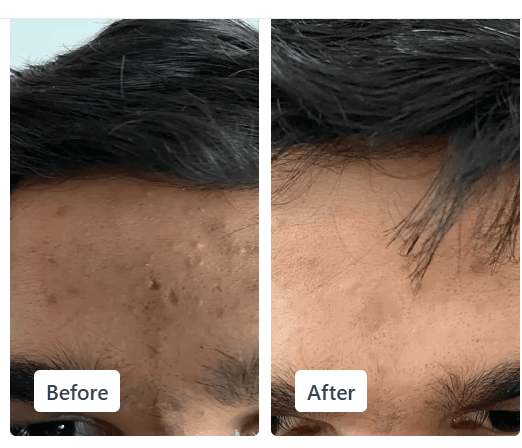
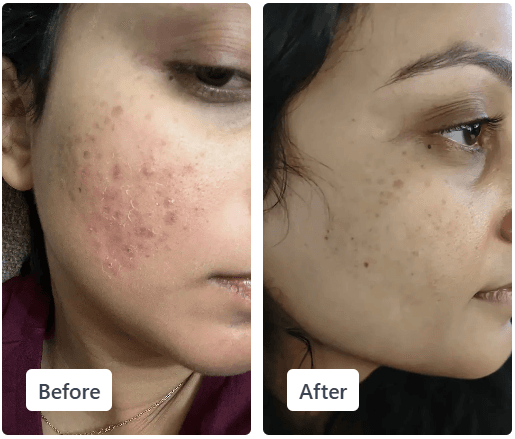
See real results, then start your own
Take the free Clear Ritual Skin Test and get a personalized routine built for your skin's unique patterns.
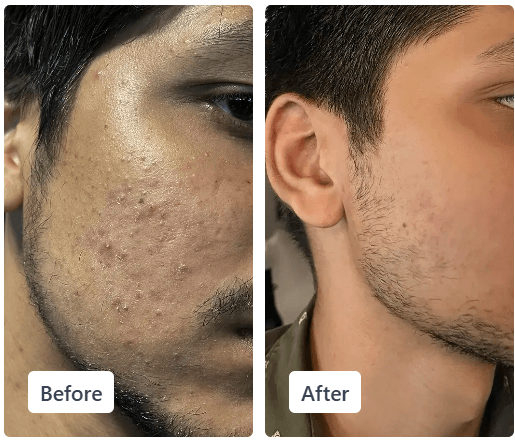
What Is Post-Inflammatory Hyperpigmentation (PIH)?
Post-inflammatory hyperpigmentation appears as flat dark patches on the skin after acne heals.
It happens because inflammation triggers excess melanin production, which darkens the affected area.
PIH is especially common in medium to darker skin tones and after acne, irritation, or excessive sun exposure.
Unlike acne scars, PIH does not change the texture of the skin.
Acne Scars vs Hyperpigmentation
Acne scars and hyperpigmentation often appear after acne clears, which makes them easy to confuse.
Here is the difference between acne scars and PIH.
| Acne Scars | Hyperpigmentation |
|---|---|
| Permanent skin texture changes caused by collagen damage | Flat dark patches after acne heals |
| Usually indented or raised | Smooth red or brown spots |
| Caused by collagen loss or overproduction | Caused by excess melanin production |
| Common in all skin types | More common in medium to darker skin tones |
| Often follows severe or inflamed acne | Can happen after mild or severe acne |
| Requires professional treatments like chemical peels, laser, fillers, or microneedling | Managed with skincare like niacinamide, vitamin C, retinoids, and sunscreen |
| Needs professional help for significant improvement | Often improves with a proper skincare routine |
See real results, then start your own
Take the free Clear Ritual Skin Test and get a personalized routine built for your skin's unique patterns.
How to Get Rid of Acne Scars
Treating acne scars is more complex than treating pigmentation.
You usually cannot remove true acne scars at home. Professional treatments are needed.
Before starting scar treatment, make sure active acne is fully under control to avoid new scarring.
1. Chemical Peel Treatment
Chemical peels use acid solutions to remove the top layer of skin and reveal fresher skin underneath.
Types of chemical peels:
- Superficial peel (for mild acne scars)
- Medium peel
- Deep peel (for severe acne scarring)
2. Laser Treatment
Laser resurfacing helps improve acne scars, pigmentation, and skin texture.
It works by removing damaged skin layers and stimulating collagen production.
Main types include:
- Ablative laser
- Non-ablative laser
A dermatologist will decide which option suits your skin and scar type.
3. Microneedling
Microneedling creates controlled micro-injuries in the skin to stimulate collagen production.
This helps improve acne scars over time.
When combined with heat energy, it is called microneedling radiofrequency.
How to Get Rid of Hyperpigmentation
Hyperpigmentation is often easier to manage than acne scars.
It usually improves with skincare, sun protection, and lifestyle changes.
Common treatment recommendations include:
- Avoiding excess sun exposure
- Using sunscreen daily
- Wearing protective clothing
- Using products with azelaic acid
- Using salicylic acid
- Using glycolic acid
- Prescription creams like hydroquinone
- Prescription retinoids like tretinoin
- Corticosteroids when inflammation is severe
For severe PIH, doctors may also recommend:
- Chemical peels
- Laser skin resurfacing
- Cryotherapy
How Clear Ritual Supports Personalized Skincare Decisions
Clear Ritual understands that acne scars and post-inflammatory hyperpigmentation are more than a surface issue. They are shaped by genetics, skin renewal cycles, environmental factors, and the products you use.
Because acne scars and PIH form when collagen is damaged or inflammation triggers excess melanin production, generic solutions rarely bring lasting improvement. Everyone's acne has different triggers, whether hormonal, lifestyle-related, stress-based, or internal, and understanding the root cause helps reduce future breakouts and lowers the chance of long-term marks. Clear Ritual combines Ayurveda, modern science, and advanced formulas to address the underlying causes of acne scars and PIH rather than only treating the surface.
The Clear Ritual Skin Test analyses your skin's unique patterns and daily influences to help identify the best routine for supporting healthy skin and reducing acne scars and PIH recurrence.
See real results, then start your own
Take the free Clear Ritual Skin Test and get a personalized routine built for your skin's unique patterns.
Conclusion
Once acne fades, acne scars and post-inflammatory hyperpigmentation are two of the most common concerns people face. If your skin loses collagen, acne scars may form. If inflammation causes excess melanin production, PIH may develop. Both conditions need different treatment strategies, and trying to treat them without understanding the difference can delay healing and create more skin issues. Professional guidance is the safest way to improve both conditions effectively.
Reference Links
- https://my.clevelandclinic.org/health/diseases/21222-acne-scars#management-and-treatment
- https://my.clevelandclinic.org/health/diseases/21885-hyperpigmentation#management-and-treatment
- https://slmdskincare.com/blogs/learn/are-acne-scars-hyperpigmentation-the-same-thing
- https://en.wikipedia.org/wiki/Acne
- https://en.wikipedia.org/wiki/Hyperpigmentation
Frequently Asked Questions
How do I know if I have hyperpigmentation or acne scars?
Check the texture. If there is skin indentation or uneven texture, it is likely acne scarring. If the skin feels smooth but looks red or brown, it is usually post-inflammatory hyperpigmentation.
How long does hyperpigmentation last?
Untreated hyperpigmentation can last 6 to 18 months. With proper skincare and treatment, fading may begin within 3 to 6 months. Chemical peels may speed up results.
Does scarring go away?
Scarring usually does not disappear completely. However, professional dermatology treatments can improve appearance significantly, often by 60 to 90%.
Why do I get hyperpigmentation so easily from acne?
PIH can happen even after mild acne. It is more common with higher inflammation, sun exposure, and medium to darker skin tones.
Is hyperpigmentation worse than acne?
Both acne scars and hyperpigmentation can be harder to treat than acne itself. Both require the right treatment approach to prevent long-term issues.
Which face wash can remove acne scars?
Face washes with ingredients like kojic acid, niacinamide, and salicylic acid may help improve acne marks and support PIH fading. True acne scars usually need stronger professional treatment.
Are acne marks the same as acne scars?
No. Acne marks are flat and discoloured. Acne scars involve texture changes like pits, dents, or raised areas.
What can help in PIH treatment at home?
Some supportive home remedies include aloe vera gel, turmeric paste, green tea extract, rice water, and apple cider vinegar. These may help mild pigmentation, but consistent skincare works better long term.
Editorial Standards
Clear Ritual has Strict sourcing guidelines to ensure our content is accurate and current. We rely on peer-reviewed studies, academic research institutions, and medical associations. We strive to use primary sources and refrain from using tertiary references. See a mistake? Learn More about our Editorial Standards.
Related Articles
What Is Papules Acne? Causes, Treatment & Prevention Guide
Published 11 September 2026

All About Body Acne: Causes, Prevention, and Treatments
Published 17 September 2026
Fungal Acne vs Acne Vulgaris: Clinical Differences
Published 17 July 2026
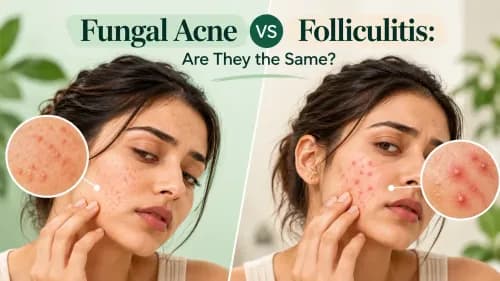
Fungal Acne vs Folliculitis: Are They the Same?
Published 15 October 2026