How Skin Type Affects Acne: A Complete Guide

Quick Answer:
Acne-prone skin is not defined by oiliness alone. Every skin type: oily, dry, combination, and sensitive: can develop acne, but each has different triggers, different acne patterns, and requires a different treatment approach. Understanding how your specific skin type drives breakouts is the first step to choosing a routine that actually works.
What Is Acne-Prone Skin?
Acne-prone skin is a skin condition, not a skin type. It describes skin that breaks out more frequently and recovers more slowly than average: regardless of whether the skin is oily, dry, combination, or sensitive.
According to the American Academy of Dermatology, acne affects up to 50 million people annually in the US alone, making it the most common skin condition worldwide. Not all of those people have oily skin.
Acne-prone skin is defined by three core characteristics:
- Frequent breakouts: pimples, blackheads, or whiteheads that appear regularly, not just occasionally
- Slow recovery: existing breakouts take longer to heal, and marks linger after the pimple clears
- High reactivity: skin responds more intensely to hormonal changes, diet shifts, stress, or product ingredients
Citable definition: Acne-prone skin is skin that breaks out more frequently and recovers more slowly, regardless of whether it is oily, dry, or combination.
How to Know If You Have Acne-Prone Skin: 6 Clear Signs
Acne-prone skin follows recognisable patterns that distinguish it from occasional breakouts. Here are six signs that your skin is chronically acne-prone:
You break out in the same spots repeatedly. The same pores clog and the same areas flare up. If your chin, forehead, or cheeks consistently produce pimples, that is a pattern, not a coincidence.
New breakouts appear before old ones fully heal. Active pimples and forming ones appear at the same time: your skin's recovery rate is slower than its rate of new inflammation.
Your skin reacts quickly to changes. A new product, a stressful week, or a few days of poor diet produces visible breakouts within days. Acne-prone skin has a lower threshold for common triggers.
You have post-acne marks that take weeks to fade. Acne-prone skin often produces more post-inflammatory hyperpigmentation (PIH): dark or red spots left after a pimple clears.
Your skin has persistent open or closed comedones. Blackheads and whiteheads present even when skin appears calm are early-stage acne and a defining sign of acne-prone skin.
Your skin reacts to comedogenic ingredients. Certain makeup, sunscreens, or oils reliably trigger breakouts: meaning your follicles are susceptible to pore-clogging.
Important distinction: You can have acne-prone skin without oily skin. Dry, dehydrated skin can be just as prone to breakouts: the triggers are simply different.
How Acne Forms: The Mechanism Behind Every Breakout
Every pimple: regardless of skin type: follows the same four-step sequence.
Step 1: Excess sebum or dead skin cells accumulate in the follicle. Sebaceous glands produce sebum to protect skin. When sebum production is high, or when dead skin cells are not shed properly, they collect inside the follicle and create a plug.
Step 2: The follicle becomes blocked and a comedone forms. A blocked follicle is a comedone. If the pore stays open, it becomes a blackhead (the dark colour comes from oxidation, not dirt). If the pore closes over, it becomes a whitehead. Both are non-inflammatory at this stage.
Step 3: Cutibacterium acnes bacteria multiply inside the blocked follicle. C. acnes is a naturally occurring skin bacterium that feeds on sebum. Inside a blocked, oxygen-depleted follicle, it multiplies rapidly.
Step 4: The immune system responds with inflammation. The body recognises the bacterial overgrowth as a threat and sends immune cells to the area. This produces the redness, swelling, and pain of a papule or pustule. In severe cases, inflammation goes deeper: resulting in nodules or cysts.
For acne-prone skin, this cycle happens more easily and more frequently because follicles are more sensitive, sebum composition may differ, or the skin's inflammatory response is more reactive.
Citable one-liner: Acne forms when a blocked follicle creates an oxygen-depleted environment where C. acnes bacteria multiply, triggering the immune system's inflammatory response.
How Different Skin Types Affect Acne
Not every acne-prone skin type looks or behaves the same way. Each skin type has distinct acne triggers and breakout patterns.
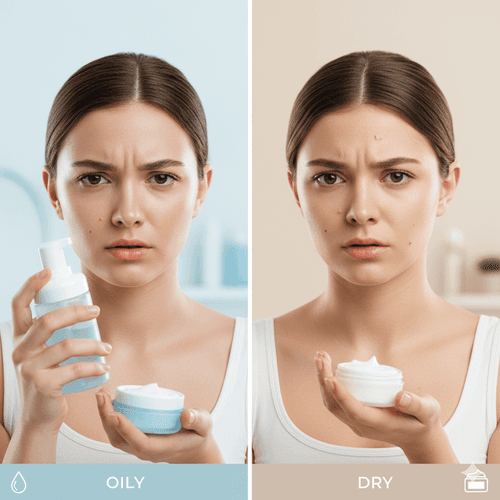
Oily Skin and Acne
Oily skin is the most common acne-prone skin type. Excess sebum production enlarges pores, which trap dead skin cells and debris: creating the conditions for comedones and inflammatory breakouts. Acne on oily skin typically appears on the nose, forehead, and chin, and tends toward whiteheads, blackheads, and cystic lesions.
Common triggers for oily acne-prone skin include:
- Excess oil production
- Clogged pores
- Hot climates
- Hormonal fluctuations
- Stress
- Comedogenic makeup
Dry Skin and Acne
Dry skin is just as prone to acne as oily skin: the triggers are different. When the skin lacks adequate moisture, the body signals sebaceous glands to produce more oil as a compensatory response. If that rebound oil is produced in excess, it can clog pores and trigger breakouts.
Additionally, dry skin produces flaky dead skin cells that physically block follicles: the same mechanism as excess sebum, but driven by dehydration rather than overproduction.
Common triggers for dry acne-prone skin include:
- Lack of natural oil and moisture
- Flaky skin cells blocking pores
- Skipping moisturiser
- Harsh chemical products
- Over-exfoliation
Combination Skin and Acne
Combination skin presents both oily and dry characteristics simultaneously: the T-zone (forehead, nose, chin) is oily, while the cheeks and outer areas tend to be dry. Acne primarily occurs in the T-zone due to excess sebum, while the dry zones can develop irritation, redness, and breakouts from accumulated dead skin cells.
Common triggers for combination acne-prone skin include:
- Blocked pores in the T-zone
- Dead skin cells accumulating on dry, flaky areas
- Poor diet and lifestyle habits
- Imbalanced skincare products
Sensitive Skin and Acne
Sensitive skin is primarily driven by inflammation, product reactions, and environmental triggers. Acne on sensitive skin tends to be reactive rather than pattern-driven: a new product, a weather change, or stress can trigger breakouts without any increase in oil production.
Common triggers for sensitive acne-prone skin include:
- Harsh chemicals and fragrances in skincare products
- Over-exfoliation
- Extreme sun exposure
- Weather and environmental changes
- Stress
Acne-Prone Skin vs Oily Skin: What Is the Difference?
Oily skin and acne-prone skin are frequently confused: but they are not the same condition.
- Oily skin describes how much sebum the skin produces. It is a biological characteristic, largely determined by genetics and hormones.
- Acne-prone skin describes how the skin responds to its environment: whether pores clog easily, whether follicles inflame quickly, whether breakouts occur in response to triggers.
Oily skin creates conditions that make acne more likely. But oily skin alone does not cause acne. The presence of Cutibacterium acnes bacteria, follicular inflammation, and individual skin sensitivity all play a role.
According to research published in Clinical, Cosmetic and Investigational Dermatology, hormonal androgens trigger excess sebum production that can affect any skin type: not just oily skin.
Dry Skin Acne vs Oily Skin Acne: Key Differences
| Feature | Oily Skin + Acne | Dry Skin + Acne |
|---|---|---|
| Root cause | Excess sebum clogs pores | Flaky skin cells block pores; dehydration triggers rebound oil |
| Acne type | Whiteheads, blackheads, cystic acne | Smaller pimples, comedones, surface-level breakouts |
| Skin feel | Greasy, shiny: especially by midday | Tight, rough, sometimes flaky between breakouts |
| Common mistake | Over-stripping with harsh cleansers (worsens rebound oil) | Skipping moisturiser (triggers more oil and breakouts) |
| Best ingredient | Salicylic acid, niacinamide, clay | Hyaluronic acid, ceramides, gentle lactic acid |
| Worst ingredient | Heavy occlusives, comedogenic oils | Alcohol-based toners, harsh physical scrubs |
Citable one-liner: Oily skin describes sebum output; acne-prone skin describes how easily follicles become inflamed and clogged: the two are related but not the same.
Skincare Tips and Triggers by Skin Type
The right treatment approach for acne-prone skin depends entirely on which skin type is driving the breakouts.
| Skin Type | Common Triggers | Recommended Approach |
|---|---|---|
| Oily Skin | Excess oil, clogged pores, hot climate, stress, hormones, comedogenic makeup | Oil-control cleanser with salicylic acid; non-comedogenic moisturiser; clay mask once weekly; wash face twice daily only |
| Dry Skin | Lack of natural moisture, flaky skin cells, skipping moisturiser, harsh products | Ceramide and hyaluronic acid moisturiser; sulfate-free and paraben-free products; stay hydrated; avoid over-exfoliation |
| Combination Skin | Blocked T-zone pores, dead skin accumulation on dry areas, poor diet | Lightweight hydrating moisturiser with balanced ingredients; exfoliate twice weekly only |
| Sensitive Skin | Harsh chemicals, fragrances, over-exfoliation, stress, environmental triggers | Fragrance-free products; soothing ingredients like aloe vera and green tea extract; always apply SPF |
Prevention Tips That Apply to All Acne-Prone Skin Types
Regardless of skin type, the following habits help reduce breakout frequency:
- Wash your face with a mild, non-stripping cleanser
- Use a hydrating, non-comedogenic moisturiser daily
- Apply non-comedogenic makeup and sunscreen products
- Avoid touching your face frequently
- Avoid over-exfoliating your skin
- Manage stress through regular physical activity, meditation, or other practices
- Drink adequate water daily: approximately 2–3 litres for most adults
What to Expect: A Realistic Timeline for Acne-Prone Skin Improvement
Understanding when to expect improvement helps avoid abandoning a routine too early: or continuing one that is not working.
Weeks 1–2: Adjustment phase When a new active ingredient like salicylic acid or niacinamide is introduced, a brief purging period may occur: existing congestion is brought to the surface faster. This can look like more breakouts initially, but it typically means the product is working on clogged follicles.
Weeks 3–6: Active breakout reduction Consistent use of appropriate actives typically begins to reduce new breakout frequency within 4–6 weeks. A 2019 review in the Journal of Clinical and Aesthetic Dermatology found that salicylic acid-based cleansers showed significant reduction in comedones within 4–8 weeks of twice-daily use.
Weeks 8–12: Post-acne mark fading begins Post-inflammatory hyperpigmentation typically begins to fade within 8–12 weeks of consistent sun protection and gentle brightening actives. Without SPF, this process can extend to 6 months or longer.
Months 3–6: Skin pattern stabilisation For acne-prone skin driven by hormonal or chronic triggers, meaningful stabilisation: fewer breakouts, reduced severity, faster recovery: typically takes 3–6 months of consistent routine management.
Key variables that affect this timeline:
- Severity of acne (comedonal vs inflammatory vs cystic)
- Whether root causes (hormones, diet, stress) are also being addressed
- Consistency of the routine: even occasional skipping can reset progress
- Daily SPF use: without sun protection, post-acne marks deepen and mask routine improvement
If you have followed a consistent, skin-type-appropriate routine for 12 weeks with no improvement, a dermatologist can assess whether prescription treatment: such as topical retinoids or antibiotics: is needed.
When to Consult a Dermatologist for Acne
A well-matched skincare routine addresses mild to moderate acne-prone skin effectively. However, clinical evaluation is warranted in the following cases:
- Acne persists after 12 weeks of consistent, appropriate skincare and dietary changes
- Breakouts are cystic or nodular: deep, painful, with no visible head
- Acne is multiplying or shows signs of infection
- Breakouts leave resistant dark spots, widespread scarring, or deep pitting
- Acne appears suddenly and severely after years of clear skin: which can signal an underlying hormonal condition
Over-the-counter actives are effective for mild to moderate acne. Severe, persistent, or scarring acne requires clinical intervention.
How Clear Ritual Supports Personalised Skincare for Acne-Prone Skin
Clear Ritual understands that acne is more than a surface issue. Breakouts are shaped by genetics, skin renewal cycles, environmental factors, hormonal patterns, and the products used daily.
Because acne forms when excess oil production, clogged pores, bacterial activity, and inflammatory response combine with stress, dietary habits, and lifestyle factors: generic solutions rarely produce lasting improvement. According to Clear Ritual's clinical approach, matching the treatment to the specific skin type and its triggers is the single most important factor in reducing acne recurrence.
The Clear Ritual Skin Test analyses your skin's unique patterns: including skin type, acne history, hormonal indicators, and lifestyle factors: to identify a personalised routine built to reduce breakout frequency and support long-term skin stability.
Clear Ritual combines evidence-based dermatological science with a systematic understanding of individual skin behaviour, so that recommendations are specific to your skin: not a generalised skin category.
Frequently Asked Questions About Acne-Prone Skin
Q1. Can normal skin be acne-prone?
Yes. Normal skin: neither particularly oily nor dry: can absolutely be acne-prone. Hormonal fluctuations, stress, diet, or sensitivity to specific ingredients can trigger regular breakouts even on balanced skin. If normal skin breaks out in predictable patterns and zones, it is acne-prone regardless of oil levels.
Q2. Is acne-prone skin oily or dry?
Acne-prone skin is most commonly oily, because excess sebum is the most direct route to clogged pores. However, dry skin is also frequently acne-prone: dehydration triggers rebound oil production, and flaky dead skin cells physically block follicles. The difference lies in the trigger: oily acne-prone skin needs oil control, while dry acne-prone skin needs hydration first, then gentle exfoliation.
Q3. My skin is not oily, but I keep breaking out. Why?
Several non-oiliness causes make skin acne-prone: hormonal shifts (particularly androgens during your cycle or under stress), friction from pillowcases or phone screens, comedogenic ingredients in makeup or sunscreen, and dehydration-driven rebound oil production. If skin feels dry or normal but breaks out consistently, check whether your moisturiser, sunscreen, or makeup contains pore-clogging ingredients like isopropyl myristate, coconut oil, or certain silicones.
Q4. What skincare habits make acne-prone skin worse?
The most common mistakes include: over-washing the face (strips the moisture barrier and triggers rebound oil), using physical scrubs on active breakouts (spreads bacteria and worsens inflammation), skipping moisturiser on dry or combination acne-prone skin (causes dehydration and rebound sebum), and using comedogenic products without checking ingredient labels. Touching the face frequently also transfers bacteria from hands to follicles.
Q5. How long does it take for acne-prone skin to improve?
Most people see a meaningful reduction in new breakouts within 4–8 weeks of a consistent, skin-type-appropriate routine. Post-acne marks begin to fade within 8–12 weeks with daily SPF use. Full stabilisation of the breakout pattern typically takes 3–6 months. If there is no improvement after 12 consistent weeks, consult a dermatologist to assess whether prescription actives are needed.
Q6. Which skin type is most prone to acne?
Oily skin is commonly associated with acne because excess sebum can contribute to clogged pores. However, dry, combination, sensitive, and normal skin can also be acne-prone. The most important factor is how easily follicles clog and become inflamed, not oiliness alone.
Understand What Your Skin Needs
Identify your skin type and concerns to build a focused routine without unnecessary product overload.
Take the Free Skin Test
References
- American Academy of Dermatology. Acne: Who gets and causes.
- American Academy of Dermatology. Skin care tips for acne-prone skin.
- National Institute for Health and Care Excellence. Acne vulgaris: Management.
- National Health Service. Acne.
Disclaimer
This article is intended for general informational purposes and is not a substitute for personalised medical advice, diagnosis, or treatment. Consult a qualified dermatologist if acne is persistent, painful, severe, or leaving scars.
Editorial Standards
Clear Ritual has Strict sourcing guidelines to ensure our content is accurate and current. We rely on peer-reviewed studies, academic research institutions, and medical associations. We strive to use primary sources and refrain from using tertiary references. See a mistake? Learn More about our Editorial Standards.
Related Articles
Microbiome & Blackheads: How Skin Bacteria Influence Pore Health
Published 20 July 2026
Dry Skin and Pimples: Can Dehydration Cause Breakouts?
Published 8 October 2026

Oily Skin and Pimples: How to Manage Excess Sebum
Published 20 July 2026
Whiteheads on Oily vs Dry Skin: Treatment Differences Explained
Published 20 July 2026