

Blind Pimple: Causes, Treatment, and Home Remedies
Quick Answer:
A blind pimple is a painful acne bump that develops under the skin’s surface without a visible head. It can form due to hormonal changes, excess sebum (oil) production, comedogenic (pore-clogging) skincare products, and friction. Genetics may also play a role.
Blind pimples may take time to settle, but simple home remedies such as using warm compresses may help quicken the process. Over-the-counter products such as benzoyl peroxide, topical retinoids, and acne patches with salicylic acid can help manage the breakouts.
What Is a Blind Pimple?
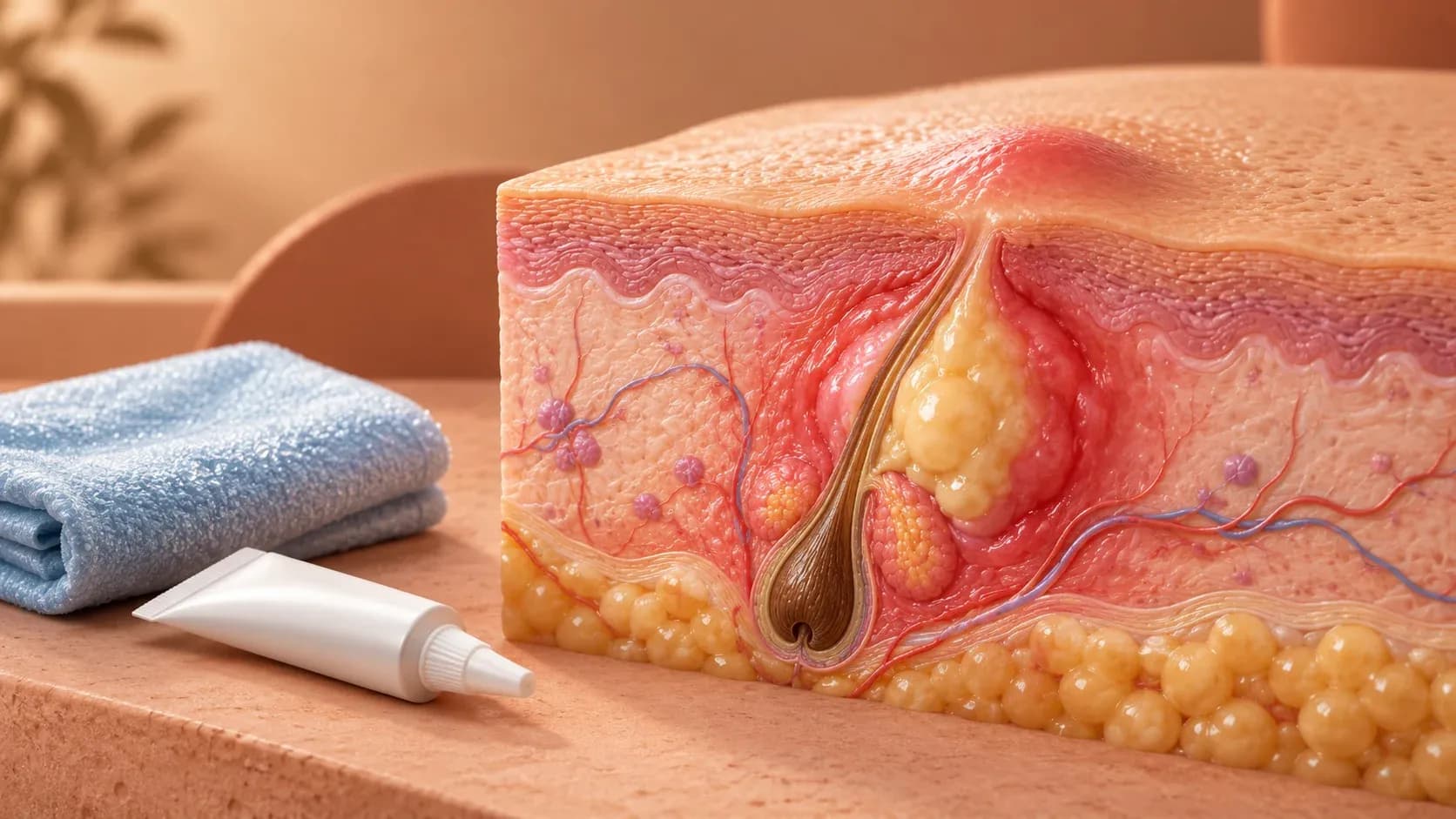
A blind pimple is a bump that forms deep inside a clogged hair follicle. However, unlike a regular pimple, it may not have a visible head (this is called a closed comedo). So you may be able to feel it before you can see it.
What Do Blind Pimples Feel and Look Like?
Blind pimples often feel like small, firm lumps beneath the skin. Depending on how they develop, you may notice the following symptoms:
- A raised bump on the skin without a visible whitehead or blackhead.
- Redness, swelling, or inflammation around the area.
- Pain or tenderness when you touch the bump.
- A visible red or pus-filled spot when the pimple eventually moves closer to the skin’s surface.
What Causes Blind Pimples?
Like other acne, blind pimples develop when sebum and dead skin cells build up inside a hair follicle and clog it. This blockage can trigger inflammation deep beneath the skin.
While clogged pores remain the key cause of blind pimples (or any acne, for that matter), there are many factors that can contribute to these blockages.
- Hormonal Changes
Hormone fluctuations during puberty, menstruation, or pregnancy can increase oil production and make breakouts more likely.
- Genetics
If blind pimples are a common occurrence in your family, you may be more likely to develop them.
- Certain Skincare Products
Using pore-clogging products can also contribute to breakouts. Look for skincare products labelled ‘non-comedogenic,’ since they are designed not to clog pores.
- Sweat and Friction
Sweat trapped beneath tight clothing, helmets, or other equipment can aggravate acne-prone skin. Likewise, friction from those materials, rough shaving techniques, and harsh wiping with towels can also contribute to breakouts.
- Certain Medicines
Some medications, including corticosteroids and lithium, may trigger or worsen acne (including blind pimples) in some people.
Stress may aggravate acne, but it may not be a direct cause of it.
How Can You Treat Blind Pimples?
You can manage blind pimples with warm compresses and over-the-counter treatments, such as salicylic acid, benzoyl peroxide, and topical retinoids. Avoid squeezing them, as this can worsen inflammation and increase the risk of scarring.
Blind pimples may also disappear on their own without any intervention. In case of minimal discomfort, you can wait for the breakouts to settle by themselves.
Home Remedies for Blind Pimples
You can try the following home remedies to ease the discomfort and pain that comes with blind pimples, or nudge the breakouts closer to healing:
- Apply a warm (not hot) compress to the bump. This may help move the blind pimple closer to the skin’s surface and drain.
- Apply ice to the inflamed area. Wrap an ice pack in a clean cloth and apply it briefly to ease pain and swelling.
- Keep your skincare routine gentle. Wash your face with a mild cleanser and use a non-comedogenic moisturiser. Avoid scrubbing or repeatedly touching the bump.
Over-the-Counter Treatments for Blind Pimples
When looking for over-the-counter products for blind pimples or acne, look for the ones with either of the following active ingredients:
| Active ingredient | How it helps |
|---|---|
| Salicylic acid | Loosens dead skin cells and clears pores. |
| Benzoyl peroxide | Reduces acne-causing bacteria and inflammation. |
| Adapalene (topical retinoid) | Prevents clogged pores and new breakouts. |
| Acne patches (with salicylic acid) | May help loosen dead skin cells and clear clogged pores. |
Introduce only one ingredient to your skin at a time and follow the product instructions carefully. Before trying an active ingredient for the first time, perform a patch test to check if it suits your skin.
When Should You Consult a Dermatologist for Blind Pimples?
Consult a dermatologist if your blind pimples are very painful, keep returning, appear in clusters, or do not improve with home care or over-the-counter products.
Deep, recurring bumps may need prescription treatment such as antibiotics and oral retinoids (isotretinoin) to control inflammation and reduce the risk of scarring.
Seek prompt medical advice if you notice rapidly worsening redness or swelling, fever, or severe pain, particularly if the area is close to your eye. A dermatologist can assess the cause and recommend suitable treatment.
Clear Ritual’s Perspective on Blind Pimples
A deep, painful pimple can be frustrating, especially when it takes time to settle. But trying to force it to the surface can leave your skin more inflamed and increase the risk of marks or scars.
While there are quite a few home remedies and over-the-counter treatments that you can try for blind pimples, none of them address their root cause.
At Clear Ritual, we believe that treating a skin concern starts with understanding the skin type and the root cause. Without that, the problems may keep coming back.
Take the Clear Ritual Skin Test to know your skin better and identify areas that may need attention.
Understand What Your Skin Needs
Take the Clear Ritual Skin Test to identify your skin concerns and explore a plan for your routine.
Take the Free Skin Test
Frequently Asked Questions
Q. How can you treat a blind pimple on the nose?
A. To treat a blind pimple on the nose, you can try simple home remedies such as applying a warm compress for 10 to 15 minutes, thrice a day, or over-the-counter products such as salicylic acid acne patches, benzoyl peroxide, or topical retinoids. Consult a dermatologist if the breakout becomes very painful, worsens, or does not improve.
Q. What causes blind pimples on the chin?
A. Blind pimples on the chin can develop when oil and dead skin cells block hair follicles. Hormonal fluctuations may contribute to breakouts in this area, but other factors, including genetics and pore-clogging products, can also play a role.
Q. Does ice get rid of blind pimples?
A. No, ice does not remove a blind pimple, but it may temporarily ease pain and swelling. Wrap the ice in a clean cloth before applying it, and avoid placing it directly against your skin.
Q. Should you squeeze a blind pimple?
A. No. Squeezing a blind pimple can worsen inflammation, damage surrounding skin, and increase the risk of infection and scarring. Use a warm compress instead and let the bump settle naturally, or consult a dermatologist if it is particularly painful.
Q. Will a blind pimple go away on its own?
A. Yes, many blind pimples eventually settle without treatment, although some can take weeks or longer to disappear. If it persists, becomes very painful, or keeps returning, consult a dermatologist.
References
- Medical News Today. (2025). How to Get Rid of a Blind Pimple. Medical News Today.
- WebMD. (2023). What to Know About Blind Pimples. WebMD.
- Cleveland Clinic. (2022). Blind Pimple: Symptoms, Causes & Treatment. Cleveland Clinic.
- Cleveland Clinic. (2022). Nodular Acne: What It Looks Like, Causes & Treatment. Cleveland Clinic.
- American Academy of Dermatology Association. (2023). Tips to Treat a Deep, Painful Pimple. AAD.
Disclaimer: This article is for general information only and is not a substitute for diagnosis or treatment from a qualified dermatologist. Follow your product label and your clinician’s advice, especially during pregnancy, breastfeeding, or when treating a diagnosed skin condition.
Editorial Standards
Clear Ritual has Strict sourcing guidelines to ensure our content is accurate and current. We rely on peer-reviewed studies, academic research institutions, and medical associations. We strive to use primary sources and refrain from using tertiary references. See a mistake? Learn More about our Editorial Standards.
Related Articles
Acne Around the Mouth: Causes, Triggers and Treatment Options
Published 16 July 2026
Acne Diet Chart: Simple Food Plan for Clear Skin
Published 22 July 2026
Aanya’s Blemish-Prone Skin Journey With Clear Ritual
Published 9 September 2026

Acne Breakout: Why It Happens All at Once and How to Calm It
Published 8 August 2026