What Is the Role of Dandruff in Forehead Acne Breakouts?
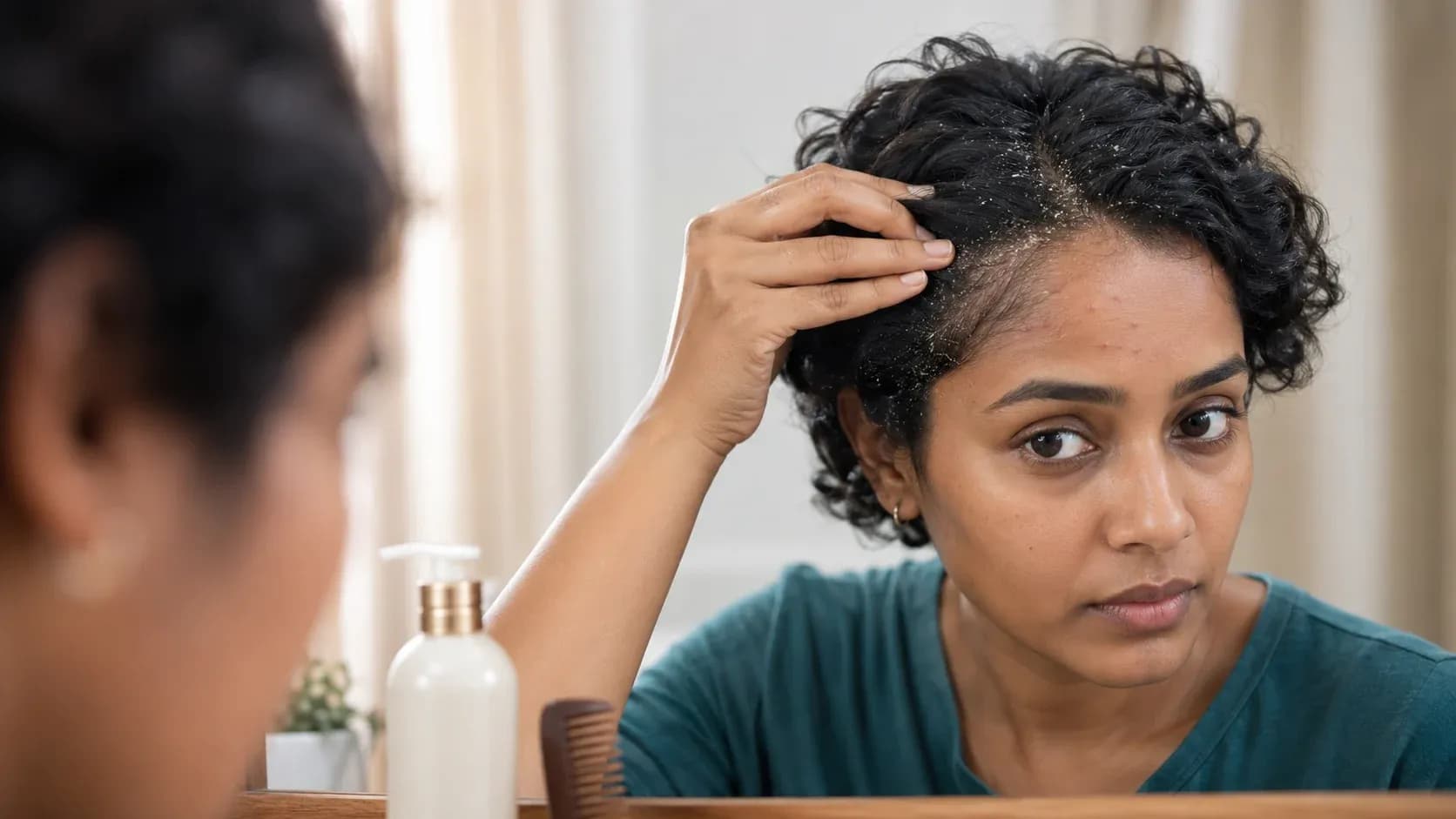
Dandruff does not directly cause forehead acne, but scalp oil, flakes, and hair-product buildup can contribute to breakouts, while related conditions such as Malassezia folliculitis can cause acne-like bumps around the hairline.
Can Dandruff Cause Acne on Your Forehead?
Not directly. Dandruff does not automatically cause acne, but the scalp environment associated with dandruff can overlap with factors that contribute to forehead breakouts.
Malassezia yeast is strongly associated with dandruff, and it can also cause Malassezia folliculitis, a separate condition that may look like acne. The connection becomes more relevant when you notice:
- Scalp oil and flakes: Sebum and scalp scaling can affect the hairline and surrounding skin.
- Hair-product transfer: Oils and styling products can reach the forehead and clog pores.
- Malassezia folliculitis: This can cause small, similar-looking, itchy bumps around the hairline and forehead and is often mistaken for acne.
So, forehead acne due to dandruff is not a diagnosis on its own. If your forehead bumps are itchy, uniform, or do not respond to usual acne treatment, confirm whether Malassezia folliculitis or another condition is involved.
Why Can Dandruff Be Linked to Forehead Acne?
Dandruff and forehead breakouts can overlap because the scalp and hairline share oil, hair follicles, and the same skin environment.
Dandruff involves scalp flaking and is associated with Malassezia, sebum, and individual skin sensitivity, while Malassezia can also cause folliculitis that resembles acne.
How Can Scalp Oil and Flakes Reach Your Forehead?
Scalp oil and loose flakes can reach the hairline and nearby forehead, but this does not mean they directly cause acne. The more important connection is the shared oily environment and the possibility of Malassezia folliculitis around the hairline.
Can Hair Products Make Forehead Breakouts Worse?
Yes, some hair products can contribute to forehead acne when they transfer onto the skin and obstruct hair follicles. This is known as pomade acne and is a recognised form of acne associated with hair-care products.
Could Your Forehead Bumps Be Something Other Than Acne?
Yes. Forehead bumps that look like acne can sometimes be caused by conditions such as Malassezia folliculitis. Recognising the pattern matters because Malassezia folliculitis usually needs a different treatment approach from acne vulgaris.
What Does Malassezia Folliculitis Look Like?
Malassezia folliculitis typically causes small, similar-looking, itchy bumps or pustules around hair follicles. It can affect the face and hairline and may be mistaken for acne.
How Is It Different From Acne?
The main clues are itch, uniformity, and the absence of comedones. Acne vulgaris commonly has a mixture of blackheads, whiteheads, papules, and pustules, whereas Malassezia folliculitis tends to produce more uniform, itchy follicular bumps without comedones.
If your forehead bumps are very itchy, all look similar, or keep returning despite appropriate acne treatment, consider seeing a dermatologist rather than assuming they are acne.
How Can You Treat Forehead Acne Linked to Dandruff?
Treatment depends on whether you have acne, dandruff-related seborrheic dermatitis, or Malassezia folliculitis. Treating the underlying scalp condition can help when dandruff is part of the problem, while true acne may need standard acne treatment.
How Can You Control the Dandruff?
Controlling dandruff can help manage the scalp environment and reduce associated flaking and inflammation. Evidence-based treatments for dandruff and seborrheic dermatitis commonly include topical antifungal treatments, with maintenance treatment sometimes needed because the condition can recur.
Which Acne Treatments Can Help?
If your forehead bumps are true acne, established acne treatments can help depending on the type and severity. Benzoyl peroxide and topical retinoids have strong evidence, while salicylic acid and azelaic acid are also supported options. If irritation is making breakouts worse, understanding skin barrier damage may help you avoid an overly harsh routine.
When Might You Need Antifungal Treatment?
Antifungal treatment may be appropriate when a dermatologist suspects or confirms Malassezia folliculitis rather than ordinary acne. Because the two can look similar, persistent, itchy, and uniform bumps should be assessed before you start treating them as “dandruff acne” on your own.
How Can You Prevent Dandruff-Related Forehead Breakouts?
You can reduce the chance of recurring forehead breakouts by treating dandruff, limiting product buildup, and avoiding unnecessary contact between hair products and your forehead.
Keep Your Scalp and Hairline Clean
Follow a consistent scalp-care routine to manage flaking and oil without over-washing or irritating the skin. Dandruff can be recurrent, so you may need ongoing control.
Keep Hair Products Away From Your Forehead
Limit contact between styling products and your forehead, particularly products that are oily or occlusive and may contribute to follicular blockage.
Reduce Sweat and Product Buildup
Cleanse gently after heavy sweating, and avoid letting sweat, oil, and styling products remain on your hairline for long periods. Lifestyle factors such as sleeping late may also influence acne in some people.
Choose Non-Comedogenic Hair and Skincare Products
Where possible, choose products labelled non-comedogenic, particularly if you are prone to acne. This can help reduce the chance of product-related pore blockage.
When Should You See a Dermatologist?
Not every forehead bump needs a dermatologist, but persistent or unusual breakouts deserve a closer look. Consider an assessment if your bumps do not improve, keep returning, or behave differently from your usual acne. You may benefit from professional evaluation if you notice:
- Bumps that keep coming back
- Persistent itching or irritation
- Breakouts that worsen despite treatment
- Small, similar-looking bumps without blackheads or whiteheads
- Uncertainty about the underlying cause
This can help determine whether you are dealing with acne, seborrheic dermatitis, Malassezia folliculitis, or another skin condition that needs a different approach.
Clear Ritual’s Perspective on the Role of Dandruff in Forehead Acne Breakouts
Forehead breakouts can have different triggers, so instead of adding more products, focus on what may be contributing to them, whether that means managing dandruff, limiting hair-product exposure, or choosing suitable acne care.
At Clear Ritual, we believe understanding why your forehead is breaking out is the first step towards choosing the right skincare approach.
The Clear Ritual Skin Test can help you identify your skin type and concerns, making it easier to build a routine suited to your skin’s needs.
Clear Ritual Skin Test
Understand What Is Triggering Your Forehead Breakouts
Take the free skin test to assess oiliness, acne patterns, sensitivity, and other concerns, then get a routine suited to your skin.
Take the Free Skin Test
Frequently Asked Questions
1. Can dandruff cause acne on your forehead?
Dandruff does not directly cause acne. However, scalp oil, hair-product buildup, and related conditions such as Malassezia folliculitis can contribute to acne-like bumps around the forehead and hairline.
2. How can you tell if forehead acne is due to dandruff?
Very itchy, small, uniform bumps around the hairline may suggest Malassezia folliculitis rather than typical acne. A dermatologist can help distinguish between these conditions.
3. How do you get rid of forehead acne due to dandruff?
Treatment depends on the cause. Controlling dandruff may help, while true acne needs acne treatment. Malassezia folliculitis may require antifungal treatment after appropriate assessment.
4. Can hair products cause acne on the forehead?
Yes. Oily or occlusive hair products can transfer to the forehead and contribute to blocked follicles, potentially causing product-related acne.
5. Is dandruff acne on the forehead actually fungal acne?
Not necessarily. Fungal acne commonly refers to Malassezia folliculitis, which is different from acne vulgaris. Similar-looking bumps need assessment because both conditions can occur together.
References
Seborrheic dermatitis and dandruff: An overview of pathogenesis, role of Malassezia spp., and natural treatment approaches - Journal of Medical Mycology, 2026.
Malassezia Folliculitis Presentation, Diagnosis, and Treatment: A Review of “Fungal Acne” - Journal of Drugs in Dermatology, 2026.
Malassezia Folliculitis: An Underdiagnosed Mimicker of Acneiform Eruptions - Journal of Fungi, 2025.
Editorial Standards
Clear Ritual has Strict sourcing guidelines to ensure our content is accurate and current. We rely on peer-reviewed studies, academic research institutions, and medical associations. We strive to use primary sources and refrain from using tertiary references. See a mistake? Learn More about our Editorial Standards.