What Causes Hairline Acne? Triggers, Treatments & Clear Timelines
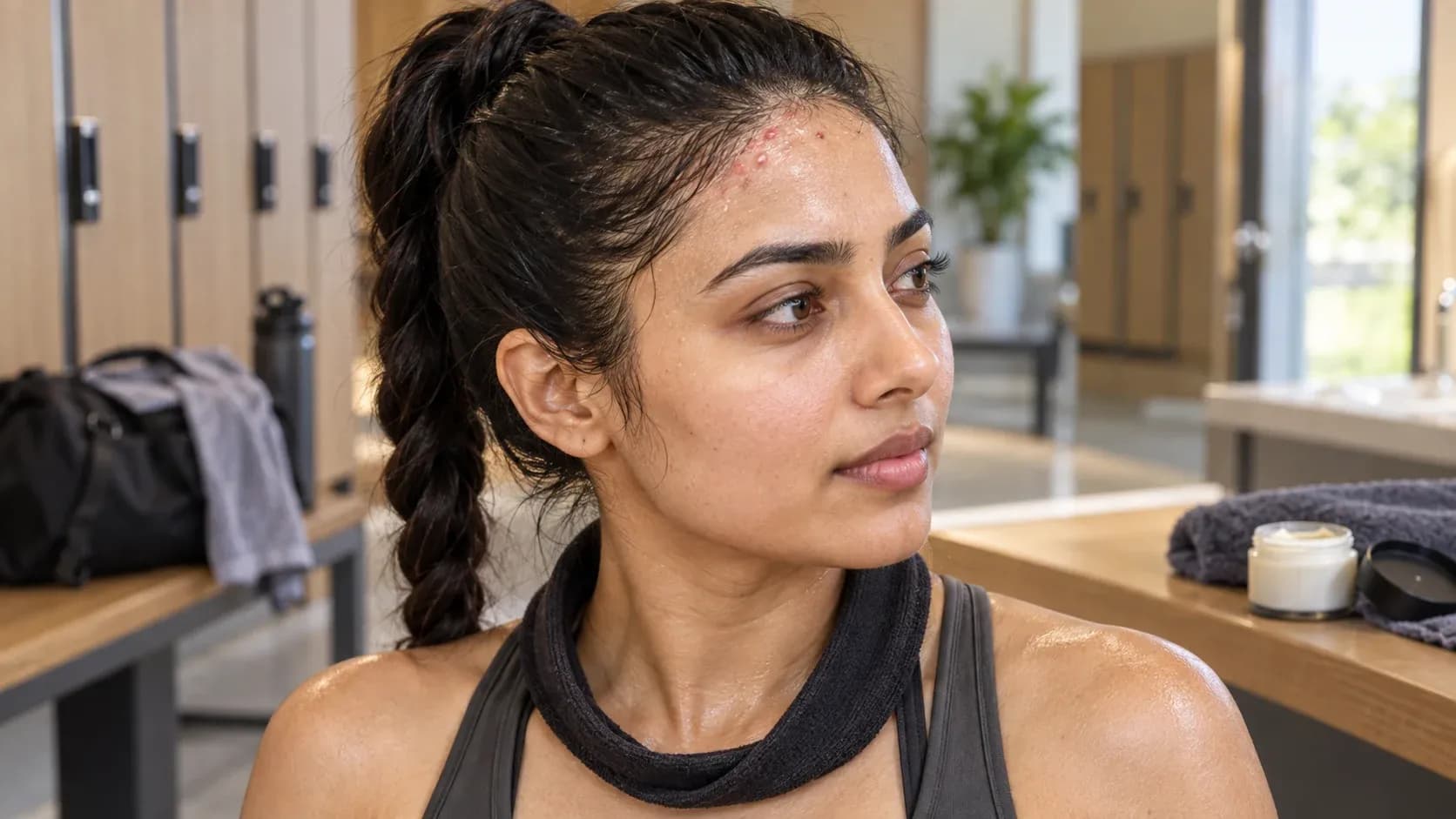
Hairline acne develops when hair product residue, scalp oils, and sweat migrate onto the skin where your hair meets your forehead, clogging pores that are already dense with oil glands. Friction from hair strands, hats, and headbands then drives those substances deeper into follicles, triggering bacterial growth and inflammation. Most cases improve meaningfully within 4 to 8 weeks once the primary trigger is removed.
What Is Hairline Acne? A Clear Definition
Hairline acne is a predictable skin response to a specific set of conditions at the junction where your hair meets your forehead. It is not a sign that your skincare routine has failed , it reflects a unique microenvironment that accumulates oil, product residue, and friction simultaneously.
According to Clear Ritual's skin science team, three facts define hairline acne from the outset:
- The hairline zone has one of the highest concentrations of sebaceous (oil-producing) glands on the face
- Ingredients like dimethicone and petroleum-based waxes do not rinse away with water alone , they build up over days inside follicle openings
- Hairline acne typically responds to habit changes within 2 to 4 weeks, though clearing all existing lesions takes 4 to 8 weeks
Hairline acne appears in a narrow band , typically within 1 to 2 centimetres of where hair meets skin. Breakouts in this zone often begin as small whiteheads or closed comedones before progressing to inflamed papules or pustules. This pattern distinguishes hairline acne from mid-forehead acne, which is more commonly driven by hormonal sebum surges than by product transfer.
What Makes the Hairline Zone Vulnerable to Acne?
The hairline is uniquely vulnerable because it sits at the intersection of facial skin and scalp, creating conditions no other area of the face experiences to the same degree.
High sebaceous gland density is the foundational issue. The forehead T-zone, including the hairline, contains a significantly higher density of oil-producing glands than the cheeks or neck. A 2019 study in the Journal of Investigative Dermatology confirmed that sebum excretion rate is measurably higher in the T-zone, making it disproportionately prone to comedone formation under the same environmental conditions as other facial areas.
Beyond oil production, the hairline faces three additional pressures:
- Constant product exposure , conditioners, gels, serums, and oils travel from the scalp toward the forehead throughout the day. These formulations contain heavy emollients, silicones, and film-forming agents designed to coat hair strands. When they transfer onto facial skin, they create an occlusive layer that traps oil, sweat, and dead skin cells inside pores.
- Sustained hair contact , strands constantly brush against the hairline, depositing scalp oils and styling products directly onto follicle openings. Bangs or fringes create hours of sustained contact, essentially pressing these substances deeper into pores.
- Heat and moisture retention , the hairline zone, often covered or bordered by hair, retains warmth and moisture more than open facial areas. This creates the warm, low-oxygen environment that bacteria prefer.
Clear Ritual's structured skin assessments consistently identify the hairline zone as one of the most multi-factorial acne sites on the body , rarely driven by a single cause, and rarely resolving with a single change.
What Are the Six Main Causes of Hairline Acne?
Hairline acne rarely has a single cause. Most cases involve two or three of the following triggers operating simultaneously.
1. Hair product migration Conditioners, leave-in treatments, gels, and oils travel from your scalp toward your forehead throughout the day. Ingredients designed to coat hair strands do the same to your pores. Silicones like dimethicone and cyclopentasiloxane, petroleum-based waxes, and heavy emollients do not rinse away with water alone , they accumulate in follicle openings and mix with sebum to form a dense, sticky plug.
2. High sebum production The forehead's sebaceous glands naturally produce more oil than most other facial areas. Hormonal shifts , puberty, menstrual cycles, stress-related cortisol spikes, perimenopause , push sebum output higher and increase the likelihood that follicles become blocked.
3. Physical friction and occlusion (acne mechanica) Hats, headbands, helmets, and bangs press oils and debris into follicle openings through repeated mechanical contact. This clinically recognised subtype, called acne mechanica, was formally documented in dermatological literature and confirmed in a 2022 review in Clinical, Cosmetic and Investigational Dermatology as a distinct trigger independent of hormonal or product-related causes.
4. Sweat and heat The forehead sweats readily during exercise, heat exposure, and stress. Sweat itself does not cause acne, but it spreads product residue across a wider area, raises local skin temperature, and creates the moist, warm environment that Cutibacterium acnes bacteria thrive in. Salt from perspiration also irritates the follicle lining, triggering low-grade inflammation.
5. Inadequate rinsing Rinsing hair with your head tilted forward allows product-rich water to run across your face. Washing your face before rinsing conditioner means residue settles onto freshly cleaned skin. This sequence error is one of the most commonly overlooked hairline acne triggers.
6. Barrier disruption Over-exfoliating or using harsh cleansers strips the skin's protective lipid layer, triggering compensatory sebum production and making follicles more vulnerable to irritation from hair product ingredients. The skin along the hairline is thinner and more reactive than the cheeks or chin, making it particularly susceptible to this cycle.
One-line summary: Hairline acne develops where excess oil, product residue, and friction combine , remove one of those three and most breakouts improve significantly.
How Does the Pore-Clogging Mechanism Work at the Hairline?
Hairline acne follows a specific biological sequence that begins with a blocked follicle and ends with visible inflammation.
Stage 1 , Comedone formation A follicle opening becomes plugged when dead skin cells inside the pore stick together instead of shedding normally. Sebum production continues beneath this blockage. In the hairline area, product residue accelerates this process: ingredients like dimethicone, petroleum, and beeswax accumulate inside follicle openings, mixing with sebum to form a dense, sticky plug. This produces a blackhead (open comedone) or whitehead (closed comedone).
Stage 2 , Bacterial activity Once a pore is clogged, the oxygen-poor, oil-rich environment inside favours Cutibacterium acnes, a bacterium that naturally lives in follicles. Research published in Science Translational Medicine (2018) identified distinct strains of C. acnes that differ significantly in inflammatory potential, which helps explain why two people with equivalent pore blockage can experience very different levels of inflammation. As bacteria multiply, they produce lipases that break down sebum into irritating free fatty acids.
Stage 3 , Immune response and inflammation The immune system detects bacterial activity and responds by sending white blood cells to the area. This produces the redness, swelling, and tenderness of an inflamed papule or pustule. The confined space near the hairline , often covered by hair that maintains warmth and moisture , sustains bacterial growth and prolongs the inflammatory response.
Stage 4 , Post-inflammatory marks After a lesion resolves, pink or brown flat marks often remain. These are not scars but post-inflammatory hyperpigmentation, and they fade separately over 4 to 12 weeks depending on skin tone. Deep, inflamed nodules carry a higher risk of permanent scarring if picked or squeezed.
Product vs. Hormonal vs. Friction: Which Type of Hairline Acne Do You Have?
Knowing which category drives your specific hairline breakouts determines which intervention will actually work. The three dominant cause clusters look similar on the surface but respond to different approaches.
Is It Product-Driven Hairline Acne?
Product-driven hairline acne appears in a concentrated band right where hair touches skin. It tends to be non-inflamed at first , small whiteheads or bumps rather than red, painful cysts. It worsens after introducing a new styling product, colour-treating your hair, or increasing dry shampoo use. Eliminating or relocating the product typically produces visible improvement within 2 to 3 weeks.
Is It Hormone-Driven Hairline Acne?
Hormonal hairline acne tends to be deeper, more inflamed, and cyclical. It often appears in the week before a period, spikes during high-stress periods, and may cluster at the temples as well as along the frontal hairline. Research published in the Journal of the American Academy of Dermatology (2023) confirms that androgen-driven sebum surges are a primary mechanism in adult female acne, including along the hairline and jaw. If breakouts are deep, recurring, and appear alongside irregular periods, unexplained weight changes, or new facial hair growth, discussing PCOS, thyroid function, or adrenal hormones with a healthcare provider is a reasonable step.
Is It Friction-Driven Hairline Acne (Acne Mechanica)?
Friction-driven breakouts appear specifically where something repeatedly contacts the skin , under a headband, beneath a helmet strap, or where tight bangs press against the forehead. These tend to be small, clustered, and uniform in size. Removing the physical contact for 10 days typically confirms the cause, because the area begins to clear without any product change.
| Cause Type | Where It Appears | Key Trigger | Typical Response Time |
|---|---|---|---|
| Product migration | Frontal hairline band | New styling product or increased use | 2-3 weeks after removal |
| Hormonal | Hairline and temples, cyclical | Androgen surge | 6-12 weeks with targeted care |
| Friction (acne mechanica) | Under hats, headbands, bangs | Repetitive physical contact | 1-2 weeks after contact removed |
Citable one-liner: Hairline acne falls into three distinct categories , product-driven, hormone-driven, and friction-driven , and each responds to a different intervention.
Which Hair Products Most Commonly Cause Hairline Acne?
Not all hair products carry equal risk. Understanding which ingredients and formulations most frequently trigger hairline acne allows for targeted substitution rather than eliminating all styling products entirely.
| Product Type | Common Triggering Ingredients | Why They Cause Problems |
|---|---|---|
| Hair oils | Coconut oil, argan oil, mineral oil | High molecular weight, slow absorption, transfer easily to skin |
| Styling gels | Polyquaterniums, PVP polymers | Film-forming agents that flake and settle onto skin |
| Pomades and waxes | Petroleum, beeswax, lanolin | Highly occlusive; do not rinse with water alone |
| Dry shampoos | Starches, talc, aerosol propellants | Powder particles become airborne and settle on forehead during application |
| Leave-in conditioners | Silicones, fatty alcohols | Designed to coat and protect hair strands , applies the same coating effect to pores |
Even products labelled "lightweight" or "non-greasy" can contribute to hairline acne if they contain pore-clogging (comedogenic) ingredients. The term "comedogenic" describes substances that promote follicle blockage, though individual reactions vary based on skin type and application technique.
Clear Ritual's skin science team notes that dry shampoo is one of the most commonly underappreciated triggers: starch and talc particles become airborne during application and settle onto the hairline. If you use dry shampoo regularly and notice small, uniform bumps along your hairline that do not respond to typical acne treatments, switching to a rinse-out shampoo for two weeks functions as a useful diagnostic test.
What Physical Habits Make Hairline Acne Worse?
Beyond hair products, specific physical behaviours and environmental conditions directly contribute to hairline acne development.
Hats, headbands, and athletic equipment Hats, headbands, and sweatbands create friction and pressure against the hairline through a mechanism called acne mechanica. Repeated rubbing irritates follicles and pushes surface oils and debris deeper into pores. The occlusion these accessories create also traps heat and moisture against the skin. If a sweatband is not cleaned regularly, bacteria from previous wear transfer back onto the skin during the next use.
Sleep position and pillowcases Sleeping face-down or on your side with your forehead against a pillow creates hours of sustained pressure and oil transfer each night. Pillowcases absorb hair products, scalp oils, and skincare residue, then press these substances back into your pores. Changing pillowcases every two to three days meaningfully reduces this accumulation. If daily changes feel impractical, placing a clean t-shirt or small towel over your pillow and rotating it nightly achieves a similar result.
Touching the forehead Touching the hairline throughout the day , rubbing when stressed, pushing hair back, wiping sweat , transfers oils, dirt, and bacteria from hands. This unconscious habit both introduces new contaminants and presses existing surface oils deeper into pores.
Shower sequencing Washing your face before rinsing shampoo and conditioner means product-rich water runs across freshly cleaned skin. This single sequence error re-contaminates the hairline immediately after cleansing and is one of the most straightforward correctable triggers in Clear Ritual's skin assessment framework.
How Does Sebum Production Affect Hairline Acne?
The forehead's sebaceous glands produce more oil than most other facial areas, and several factors push that output higher.
During adolescence, increased androgen levels stimulate sebaceous glands to enlarge and produce more oil , which explains why teenage acne clusters on the forehead and T-zone. However, hormonal fluctuations throughout adulthood, including menstrual cycles, pregnancy, perimenopause, and stress-related cortisol spikes, can trigger similar increases in sebum production at any life stage.
High ambient humidity makes oil production more noticeable because sweat mixes with sebum on the skin surface, creating a heavier film that spreads more readily into pores. In contrast, dehydration can alter sebum composition, making it thicker and more likely to form a plug.
Paradoxically, over-washing the hairline can worsen oil production. When harsh cleansers or excessive scrubbing strip the skin's natural lipid barrier, sebaceous glands compensate by producing more oil. This rebound effect creates a cycle where the skin feels oily shortly after cleansing, prompting more washing , and more stripping.
Maintaining a skin barrier that is intact and correctly hydrated is one of the most effective long-term strategies for managing hairline sebum levels. Clear Ritual's approach to sebum regulation addresses both the external triggers and the internal hormonal factors that determine baseline oil production.
Can Diet Cause Hairline Acne?
Diet influences hairline acne through hormonal and inflammatory pathways, though its effect is secondary to external triggers for most people.
High-glycaemic foods , refined sugars, white bread, and processed snacks , cause rapid blood sugar spikes that trigger insulin release. Insulin influences hormone production and can increase both sebum output and systemic inflammation markers. A 2020 meta-analysis in the Journal of the Academy of Nutrition and Dietetics found that low-glycaemic dietary intervention produced statistically significant reductions in total lesion count, with the strongest effect observed in inflammatory lesions.
Dairy products, particularly skim milk, have shown associations with acne in research studies. The proposed mechanism involves hormones naturally present in milk and bioactive molecules that may influence human hormone signalling. Individual responses to dairy vary significantly, and the mechanistic evidence remains debated.
Dehydration affects skin barrier function. When the body lacks adequate water, skin receives less hydration, which can alter sebum composition, making it thicker and more likely to create a plug. The skin's natural moisturising factors require adequate hydration to function properly.
These dietary factors are worth addressing when topical changes produce only partial improvement , particularly for people whose hairline acne has an inflammatory or hormonal component.
What Does Healthy Skin Barrier Function Have to Do With Hairline Acne?
The skin barrier is a protective structure of lipids, proteins, and natural moisturising factors that regulates water loss and defends against external irritants. Hairline acne frequently develops or worsens when this barrier is compromised.
Over-exfoliation is a common driver of barrier damage. Physical scrubs with rough particles or excessive chemical exfoliant use, multiple salicylic acid or glycolic acid products simultaneously, strips the barrier faster than it can rebuild. The resulting damage increases water loss from the skin, triggers compensatory oil production, and makes the hairline more reactive to hair product ingredients.
A compromised barrier can also make otherwise tolerable products sting or cause redness. This may lead to further cleansing and exfoliation, creating a cycle of irritation, oiliness, and recurring congestion.
Support barrier function with a gentle cleanser, a lightweight non-comedogenic moisturiser, and fewer overlapping active ingredients. If the area feels tight, burns after cleansing, or flakes around active breakouts, reduce exfoliation until the skin settles.
How Can You Treat Hairline Acne?
Treatment works best when you address both the clogged follicles and the trigger that keeps reintroducing oil, residue, or friction. Changing only your facial cleanser may not be enough if a pomade, conditioner, helmet, or unwashed headband continues contacting the area.
A practical approach includes:
- Remove the likely trigger: Pause one suspected hair product for two to four weeks and observe whether new bumps decrease.
- Cleanse after hair care: Rinse shampoo and conditioner fully, then wash the face and hairline gently.
- Use salicylic acid carefully: It can enter oily follicles and help loosen congestion, but excessive use may damage the barrier.
- Consider benzoyl peroxide: A low-strength benzoyl peroxide wash may help inflammatory bumps when used according to product directions.
- Choose lighter products: Keep heavy oils, waxes, and leave-in conditioners away from facial skin.
- Reduce friction: Clean hats, helmet liners, and headbands regularly and avoid wearing them longer than necessary.
Introduce one change at a time. This makes it easier to identify what is helping and reduces the likelihood of irritation from multiple new products.
How Long Does Hairline Acne Take to Clear?
The timeline depends on lesion type and whether the main trigger has been removed. New product-related bumps may decrease within two to four weeks, while existing inflamed lesions can take four to eight weeks to settle.
| Hairline Concern | Typical Improvement Timeline | Important Action |
|---|---|---|
| Small closed comedones | 4 to 8 weeks | Remove residue and use consistent pore-clearing care |
| Inflamed papules or pustules | 6 to 12 weeks | Control inflammation and avoid picking |
| Product-related breakouts | 2 to 4 weeks after removing the trigger | Change one suspected product at a time |
| Friction-related breakouts | 1 to 2 weeks after reducing contact | Clean and adjust hats, headbands, or helmets |
If new lesions continue appearing after eight weeks despite consistent changes, reassess the diagnosis and contributing factors rather than adding several stronger products at once.
How Can You Prevent Hairline Acne?
- Keep oils, waxes, pomades, and leave-in products away from the forehead.
- Wash your face after rinsing shampoo and conditioner.
- Clean pillowcases, hats, headbands, and helmet liners regularly.
- Rinse sweat from the hairline after exercise.
- Avoid touching, squeezing, or repeatedly rubbing the area.
- Use non-comedogenic skincare and introduce active ingredients gradually.
- Keep bangs clean and avoid allowing heavily coated hair to rest on the forehead.
When Should You See a Dermatologist?
Seek an assessment if hairline breakouts are painful, deep, itchy, spreading, leaving scars, or not improving after six to eight weeks of consistent care. Uniform itchy bumps may represent folliculitis rather than acne and can require a different approach.
A dermatologist can distinguish between comedonal acne, inflammatory acne, folliculitis, contact reactions, and other conditions that can affect the hairline.
Clear Ritual's Perspective on Hairline Acne
Hairline acne is often shaped by several small factors rather than one obvious mistake. The location of the bumps, the products touching the area, and the timing of new breakouts can help identify the most likely trigger.
At Clear Ritual, we believe that understanding this pattern should come before adding more products. A targeted routine that reduces residue, friction, and unnecessary irritation is more useful than repeatedly changing your entire skincare routine.
Find what may be triggering your breakouts
Take the Clear Ritual Skin Test to understand your breakout pattern and build a routine suited to your skin.
Take the Skin Test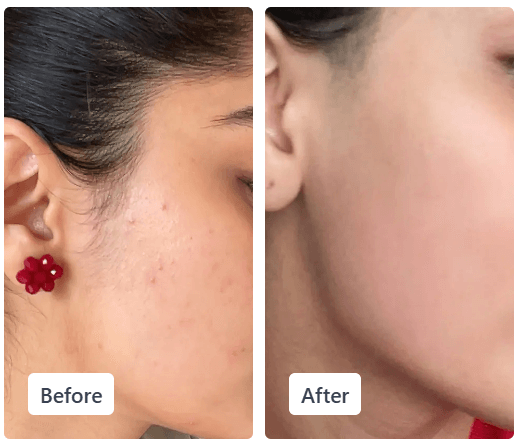
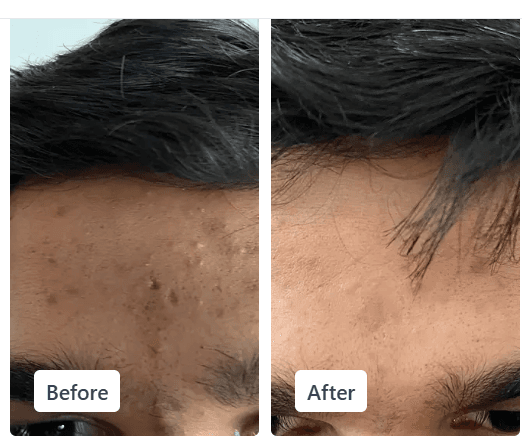
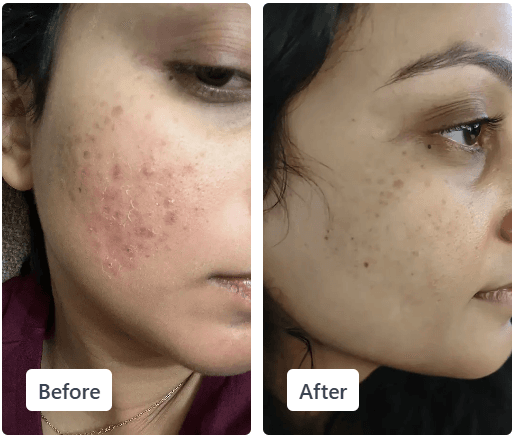
Frequently Asked Questions
1. Why am I getting acne near my hairline?
Hairline acne commonly develops when scalp oil, sweat, hair-product residue, and friction collect around follicle openings. Hormonal oil production and barrier irritation can also contribute.
2. Can hair products cause forehead acne?
Yes. Oils, pomades, waxes, gels, dry shampoos, and leave-in conditioners can transfer to the forehead and contribute to clogged follicles.
3. How can I tell if a hair product is causing my acne?
Product-related breakouts often cluster close to the hairline. Stop one suspected product for two to four weeks while keeping the rest of your routine consistent and monitor new bumps.
4. How long does hairline acne take to clear?
New bumps may reduce within two to four weeks after the main trigger is removed. Existing comedones or inflamed lesions may need four to twelve weeks to settle.
5. Can dandruff cause hairline acne?
Dandruff does not directly cause acne, but scalp oil, flakes, product buildup, and related folliculitis can contribute to bumps near the hairline.
References
- Are your hair care products causing breakouts?, American Academy of Dermatology.
- Acne: Tips for managing, American Academy of Dermatology.
- Acne, NHS.
Disclaimer
This article is intended for general informational purposes and is not a substitute for personalised medical advice, diagnosis, or treatment. Consult a qualified dermatologist if your hairline breakouts are persistent, painful, itchy, or leaving scars.
Editorial Standards
Clear Ritual has Strict sourcing guidelines to ensure our content is accurate and current. We rely on peer-reviewed studies, academic research institutions, and medical associations. We strive to use primary sources and refrain from using tertiary references. See a mistake? Learn More about our Editorial Standards.