

Best Ingredients to Treat Whiteheads (Dermatologist-Approved)

Quick Answer: Salicylic acid and topical retinoids target clogged pores and abnormal cell shedding in whiteheads. Niacinamide, azelaic acid, ceramides, glycerin and panthenol can support a gentler routine. Introduce active ingredients gradually, moisturise regularly and use sunscreen. Persistent or uncertain bumps should be checked by a dermatologist.
Whiteheads are closed comedones: sealed pores packed with sebum and dead skin cells that surface treatments cannot reach. Squeezing them ruptures the follicle wall and causes inflammation. The ingredients that actually work penetrate inside the pore, dissolve the blockage, and normalise how fast skin cells shed.
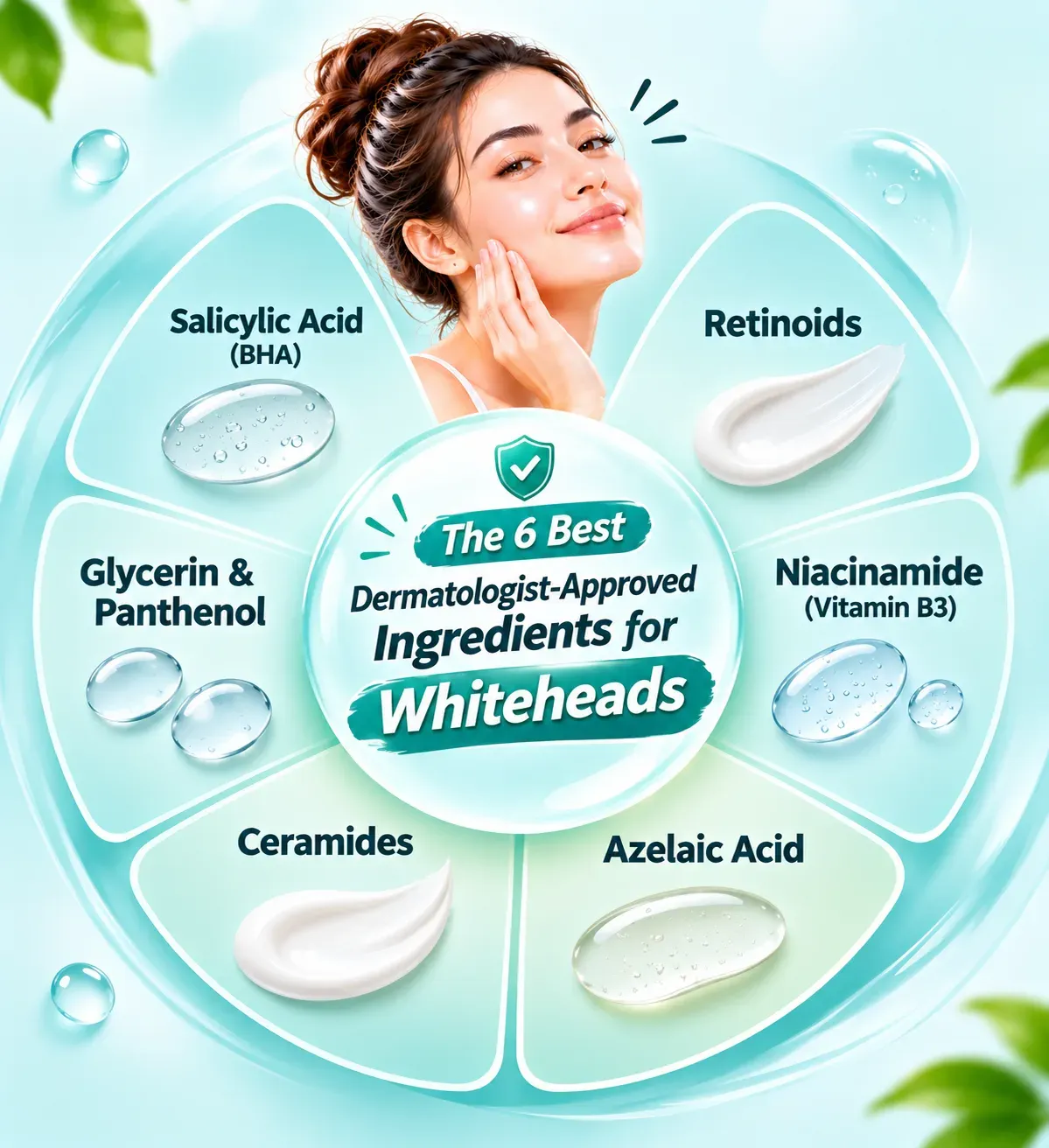
The best dermatologist-approved ingredients for whiteheads are: salicylic acid, retinoids (particularly adapalene), niacinamide, azelaic acid, ceramides, and glycerin or panthenol. Used correctly: one exfoliating active at a time, supported by barrier-protecting ingredients and daily SPF: these produce measurable reduction in whiteheads within 6-12 weeks.
What Are Whiteheads and Why Do Most Treatments Fail?
Whiteheads are closed comedones: a mix of sebum and dead skin cells trapped inside a fully sealed pore. Because the pore opening is blocked, the content has no air exposure and cannot oxidise: which is why whiteheads stay white or flesh-coloured rather than turning dark like blackheads.
Surface-level treatments fail because they cannot reach inside a sealed pore. Squeezing applies pressure to a closed space: the follicle wall ruptures before the plug exits, spilling trapped material into surrounding tissue and triggering inflammation. A 2022 review in the Journal of Clinical and Aesthetic Dermatology noted that comedonal acne is the most common form of acne in adolescents and young adults, yet is frequently undertreated because patients reach for surface-level fixes that don't address the core mechanism: follicular hyperkeratinization.
Follicular hyperkeratinization means dead skin cells inside the follicle shed too slowly, accumulate, and mix with sebum to form a plug. Effective ingredients interrupt this process from inside the pore.
Whiteheads require ingredients that:
- Penetrate the sealed pore, not just sit on the skin surface
- Reduce dead skin cell buildup inside the follicle
- Regulate sebum production
- Protect the skin barrier to prevent oil-rebound congestion
Whiteheads are not the same as milia. Milia are small keratin-filled cysts beneath the skin surface, often caused by skin trauma or heavy product use. They do not respond to salicylic acid or retinoids and require professional treatment. If whiteheads have not responded after 10-12 weeks of correct ingredient use, milia are worth ruling out.
How Whiteheads Form: The Mechanism Every Ingredient Targets
Every whitehead follows the same five-step formation chain. Understanding where each ingredient intervenes explains why some work faster than others: and why using too many actives at once makes congestion worse, not better.
The whitehead formation chain:
- Sebum overproduction: the sebaceous gland produces excess oil, triggered by androgens, stress, or a disrupted skin barrier
- Follicular hyperkeratinization: dead skin cells inside the follicle fail to shed normally and start accumulating
- Pore sealing: accumulated cells mix with sebum and block the pore opening
- Closed comedone forms: with no air exposure, the content stays white or flesh-coloured
- Barrier disruption: irritated or dry skin increases oil production to compensate, restarting the cycle at step 1
Where each ingredient intervenes:
- Salicylic acid: interrupts steps 2 and 3 by dissolving the keratin-sebum plug from inside the pore
- Retinoids: interrupt steps 1 and 2 by normalising cell turnover at the follicular level
- Niacinamide: interrupts step 1 by reducing sebum production and step 5 by reinforcing the skin barrier
- Azelaic acid: interrupts step 2 by encouraging dead cell shedding and step 1 by reducing follicular bacteria
- Ceramides, glycerin, and panthenol: interrupt step 5 by keeping the barrier intact and preventing oil rebound
The principle Clear Ritual's skincare team consistently returns to: treat the cause, protect the barrier, and let the pore clear itself.
The 6 Best Dermatologist-Approved Ingredients for Whiteheads
1. Salicylic Acid (BHA): The Fastest-Acting Comedolytic
Salicylic acid is oil-soluble, which means it can penetrate the lipid-rich environment inside a clogged pore: the defining quality that makes it effective for whiteheads. Alpha hydroxy acids like glycolic acid are water-soluble and cannot do this.
Why it works:
- Penetrates sebum-filled pores and dissolves the keratin-oil plug from within
- Reduces formation of new closed comedones over time
- Produces measurable reduction in whitehead count within 2-4 weeks at 1-2% concentration
How to use it safely:
- 2-3 times per week is typically sufficient; daily use increases barrier disruption risk
- Use leave-on formulations (serums or lotions) rather than cleansers: rinse-off products have significantly less contact time with the pore
- Always follow with a non-comedogenic moisturiser containing ceramides or glycerin
- Apply SPF every morning: salicylic acid increases photosensitivity
A 2017 review in the Journal of Clinical and Aesthetic Dermatology confirmed that BHA-based formulations at 0.5-2% produce statistically significant reductions in comedonal count with twice-weekly use.
2. Retinoids (Adapalene, Tretinoin): The Most Effective Long-Term Treatment
Retinoids normalise keratinocyte differentiation inside the follicle: meaning they correct the abnormal cell-shedding process that causes whiteheads to form in the first place. This makes them the most studied long-term treatment for persistent comedonal acne.
Why dermatologists recommend them:
- Normalise skin cell turnover at the follicular level
- Clear existing whiteheads by accelerating the expulsion of trapped material
- Prevent new closed comedones from forming long-term
What the research shows:
A landmark 12-week randomised controlled trial (Journal of Drugs in Dermatology, 2021) found adapalene 0.1% gel reduced closed comedone count by approximately 54% compared to vehicle control. Adapalene 0.1% is available OTC; tretinoin requires a prescription and tends to cause more initial irritation.
How to introduce retinoids safely:
- Apply every third night for the first two weeks, then alternate nights
- Apply to dry skin to reduce irritation risk
- Never combine with salicylic acid on the same night when first starting out
- Avoid during pregnancy; use with caution on very sensitive skin or early-stage rosacea
The full comedolytic effect of retinoids is typically visible at 10-12 weeks: not in days or weeks. According to Clear Ritual's clinical advisory approach, patience with retinoid introduction consistently produces better outcomes than aggressive use.
3. Niacinamide (Vitamin B3): Barrier Support and Sebum Regulation
Niacinamide does not unclog pores directly. What it does is reduce sebum production, strengthen the skin barrier, and decrease the irritation that makes whitehead-prone skin more reactive: making it an essential supporting ingredient for every whitehead routine.
How niacinamide helps with whiteheads:
- Reduces sebum excretion rate, lowering the raw material for pore congestion
- Increases ceramide synthesis in the skin, improving barrier integrity
- Reduces transepidermal water loss, preventing the dryness that triggers oil rebound
- Improves tolerance to salicylic acid and retinoids when used alongside them
A 2006 randomised, double-blind study (International Journal of Cosmetic Science) found that 2% niacinamide significantly reduced sebum excretion rate over 8 weeks compared to vehicle. A 2021 systematic review in Dermatology and Therapy confirmed its barrier-repair role, citing increased ceramide synthesis and reduced transepidermal water loss.
Use niacinamide at 4-10% in the morning routine, applied after cleansing. It suits all skin types and has no significant contraindications when used topically.
4. Azelaic Acid: The Gentlest Option for Sensitive or Reactive Skin
Azelaic acid is a naturally occurring dicarboxylic acid (found in wheat, rye, and barley) that has FDA approval for both acne and rosacea treatment. It addresses whiteheads through two mechanisms: gentle encouragement of dead cell shedding and inhibition of Cutibacterium acnes: the bacterial factor that can convert simple comedones into inflammatory lesions.
Benefits of azelaic acid for whiteheads:
- Supports follicular keratinization normalisation (gentler than salicylic acid)
- Reduces inflammatory conversion of closed comedones
- Addresses post-inflammatory hyperpigmentation simultaneously: particularly useful when whiteheads and pigmentation marks coexist
- Well tolerated on sensitive, reactive, and rosacea-prone skin
A 2020 review in Dermatology Research and Practice highlighted azelaic acid's particular suitability for patients with both comedonal acne and post-inflammatory hyperpigmentation.
OTC concentration is up to 10%; higher concentrations require prescription. Results are typically visible at 4-8 weeks of consistent use. Clear Ritual's approach positions azelaic acid as the preferred first active for sensitive skin types before considering salicylic acid.
5. Ceramides: Essential for Preventing Whitehead Recurrence
Ceramides do not remove whiteheads directly. They repair and maintain the skin barrier: the physiological structure that, when compromised, triggers oil overproduction and restarts the whitehead formation cycle.
Why ceramides matter for whitehead-prone skin:
- A 2019 study in the Journal of the European Academy of Dermatology and Venereology found that patients with acne had measurably lower ceramide levels in the stratum corneum compared to controls: suggesting barrier deficiency is a contributing factor, not just a consequence of treatment
- Healthy barrier function reduces the oil-rebound mechanism that feeds follicular hyperkeratinization
- Ceramide-rich moisturisers improve skin's tolerance to salicylic acid and retinoids, allowing consistent long-term use
Use a ceramide moisturiser daily: morning and evening: regardless of which exfoliating active you're using. Oily skin still needs hydration; skipping moisturiser worsens oil rebound and congestion.
6. Glycerin and Panthenol: The Most Underrated Ingredients in Acne Care
Glycerin and panthenol are humectants and skin-soothing agents that maintain hydration without clogging pores. They are frequently overlooked in acne care because they don't have comedolytic activity: but their role in barrier maintenance is clinically meaningful.
How glycerin and panthenol help with whiteheads:
- Maintain skin hydration without blocking follicles (non-comedogenic by nature)
- Support skin healing and reduce dryness caused by exfoliating actives
- Glycerin specifically helps maintain a balanced stratum corneum water content, which supports even, normalised dead cell shedding
Well-hydrated skin sheds dead cells more evenly: reducing the uneven accumulation inside follicles that contributes to whitehead formation. According to Clear Ritual's formulation philosophy, these ingredients are considered non-negotiable in any routine that includes an exfoliating active.
Ingredients That Don't Help Whiteheads (And Why They Feel Like They Do)
Some commonly used products feel effective in the short term but worsen whitehead recurrence over time by disrupting the skin barrier.
Ingredients and formats to avoid:
- Physical scrubs with grit or beads: exfoliate the skin surface only; cannot reach inside a closed pore; worsen barrier damage and trigger oil rebound
- Alcohol-dominant toners: accelerate transepidermal water loss, disrupting the barrier and increasing sebum production
- Heavily fragranced products: fragrance is the most common contact sensitiser in skincare and can cause the barrier disruption that perpetuates whitehead formation
- Harsh astringents formulated to "dry out" oil: reduce surface oil temporarily but trigger compensatory sebum overproduction
- Pore strips: physically remove surface-level content only; whiteheads are closed, so strips cannot access the blocked follicle
The feeling of tightness or "clean skin" after these products is typically a sign of barrier disruption, not effective treatment.
Salicylic Acid vs. Retinoids vs. Azelaic Acid: Which Is Right for Your Skin?
Not every whitehead-prone skin type responds to the same ingredient. Salicylic acid works fastest for oily skin with active congestion. Retinoids work best long-term for persistent or genetic comedonal acne. Azelaic acid is the safer starting point when sensitivity or redness is part of the picture.
| Ingredient | How Fast It Works | Best For | Use With Caution If | OTC or Prescription? |
|---|---|---|---|---|
| Salicylic acid (BHA) 1-2% | 2-4 weeks (visible unclogging) | Oily or combination skin, active whiteheads | Aspirin sensitivity, dry or compromised barrier | OTC |
| Adapalene 0.1% | 10-12 weeks (full effect) | Persistent comedonal acne, long-term prevention | Pregnancy, very sensitive skin, early rosacea | OTC |
| Tretinoin (Rx retinoid) | 10-12 weeks | Persistent whiteheads, clinical supervision | Pregnancy, sensitive skin | Prescription only |
| Azelaic acid 10% | 4-8 weeks | Sensitive skin, redness + whiteheads, hyperpigmentation | Rarely problematic; occasional tingling | OTC; higher % Rx |
| Niacinamide 4-10% | 4-6 weeks (oil regulation) | All skin types, supporting role alongside actives | No significant topical contraindications | OTC |
| Ceramide moisturiser | Ongoing (barrier repair) | All skin types: essential in every routine | No contraindications | OTC |
The honest comparison:
- If your priority is clearing existing whiteheads quickly, salicylic acid is the most evidence-backed first choice
- If your priority is preventing future whiteheads long-term, adapalene has the strongest OTC clinical evidence base
- If your skin is reactive or sensitive, azelaic acid is the safest starting point
- If your skin is dry or barrier-compromised, begin with ceramides and niacinamide before introducing any exfoliating active
Using all of these simultaneously is not more effective. Barrier disruption from over-treating worsens congestion by triggering sebum overproduction: the first step in the whitehead formation chain.
How to Build a Whitehead-Clearing Skincare Routine: Step-by-Step
The most common mistake in whitehead care is using too many products at once, too soon. A correctly sequenced simple routine outperforms a complex one because it protects the barrier while letting the active ingredient reach the pore.
Step 1: Choose one exfoliating active
Start with salicylic acid OR azelaic acid OR a retinoid: not all three simultaneously. Clear Ritual's approach recommends:
- Oily or combination skin → salicylic acid 1-2%
- Sensitive or reactive skin → azelaic acid 10%
- Persistent comedonal acne, age 18+ → adapalene 0.1%
Step 2: Morning routine
- Gentle, non-comedogenic cleanser: removes overnight sebum without stripping
- Niacinamide serum (4-10%): apply after cleansing to regulate oil and support barrier
- Lightweight, non-comedogenic moisturiser with ceramides or glycerin: prevents oil rebound
- SPF 30 or higher: essential every morning; retinoids and salicylic acid increase photosensitivity
Step 3: Evening routine
- Gentle cleanser: removes sunscreen and pollution
- Chosen exfoliating active: apply to dry skin 2-3 nights per week (not daily when starting)
- Barrier-repair moisturiser: ceramides, glycerin, or panthenol to restore hydration and soothe
Step 4: What to avoid
- Doubling up on exfoliants (for example, salicylic acid cleanser in the morning and retinoid at night) significantly increases barrier disruption risk: research consistently shows this triggers the same sebum overproduction that causes whiteheads
- Skipping SPF on retinoid days: retinoid-related photosensitivity increases
How Long Do Whitehead Treatments Take to Work?
Whiteheads usually improve gradually, rather than overnight. The response depends on the ingredient, how often it is applied, how many closed comedones are present, and whether the routine causes irritation. With consistent use, improvements may become noticeable over several weeks, while retinoid-based routines often need 8 to 12 weeks for a fair assessment.
Do not increase product strength or frequency simply because a bump has not disappeared after a few days. If the area becomes red, painful or unusually dry, simplify the routine and seek professional advice if symptoms persist.
When to See a Dermatologist for Whiteheads
- Closed bumps persist after 8 to 12 weeks of a well-tolerated routine.
- You are unsure whether a bump is a whitehead, milia or another skin condition.
- There is significant inflammation, pain, scarring or recurrent acne.
- Over-the-counter products cause persistent burning, scaling or irritation.
- You are pregnant or planning pregnancy and need advice about acne treatments.
Conclusion
Whiteheads develop when sebum and dead skin cells block follicles. Salicylic acid and retinoids are commonly used to address this process, while niacinamide, azelaic acid and barrier-supporting moisturisers can help shape a tolerable routine. Start with a manageable number of products, avoid squeezing closed bumps, and seek dermatology advice when progress stalls.
Understand What Your Skin Needs
Take the Clear Ritual Skin Test to identify your skin concerns and explore a plan for your routine.
Take the Free Skin Test
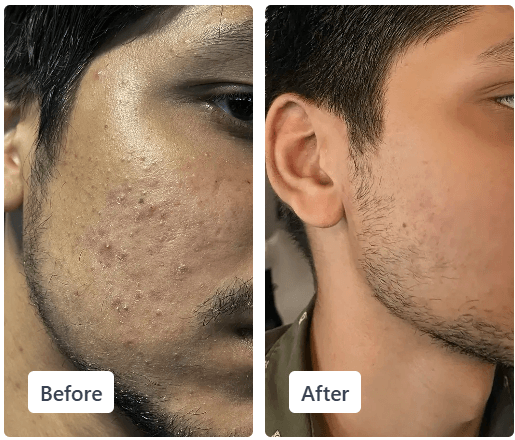
Frequently Asked Questions
Q: What is the best ingredient to treat whiteheads?
A: Salicylic acid is often used for whiteheads because it helps exfoliate inside oil-filled pores. Topical retinoids are another established option, especially for recurring closed comedones. The best choice depends on skin tolerance and medical history.
Q: Does adapalene help with closed comedones?
A: Yes. Adapalene is a topical retinoid that helps normalise skin cell turnover and can reduce both existing and new comedones over time. Introduce it gradually and follow medical or product guidance; avoid retinoids during pregnancy.
Q: Can niacinamide remove whiteheads?
A: Niacinamide does not directly clear the follicular plug. It can support the skin barrier and may help with excess oil or irritation, making it a useful supporting ingredient rather than a replacement for a comedolytic treatment.
Q: How long does it take to get rid of whiteheads?
A: Some people notice improvement within several weeks, but a routine may need around 8 to 12 weeks to assess properly. Results depend on the severity of the bumps and the treatment used.
Q: Can I use salicylic acid and a retinoid together?
A: Some dermatologist-designed routines include both, but using them together when starting can increase dryness and irritation. Begin with one active ingredient and ask a clinician how to combine them if needed.
Q: Are whiteheads the same as milia?
A: No. Whiteheads are closed comedones associated with clogged follicles, while milia are small keratin-filled cysts. Persistent firm bumps that do not respond to acne care may need a different diagnosis.
Editorial Standards
Clear Ritual has Strict sourcing guidelines to ensure our content is accurate and current. We rely on peer-reviewed studies, academic research institutions, and medical associations. We strive to use primary sources and refrain from using tertiary references. See a mistake? Learn More about our Editorial Standards.
Related Articles
Best Ingredients to Treat Pimples (Salicylic Acid, Benzoyl Peroxide, etc.)
Published 21 July 2026
Ajwain’s Role in Digestive Detox: A Skincare Super Ingredient?
Published 21 July 2026
Pimple Patches: Do They Actually Work?
Published 21 July 2026

Gut Cleanse for Acne: Does It Help Breakouts?
Published 21 July 2026