What Is Melasma and How Can You Recognise It?
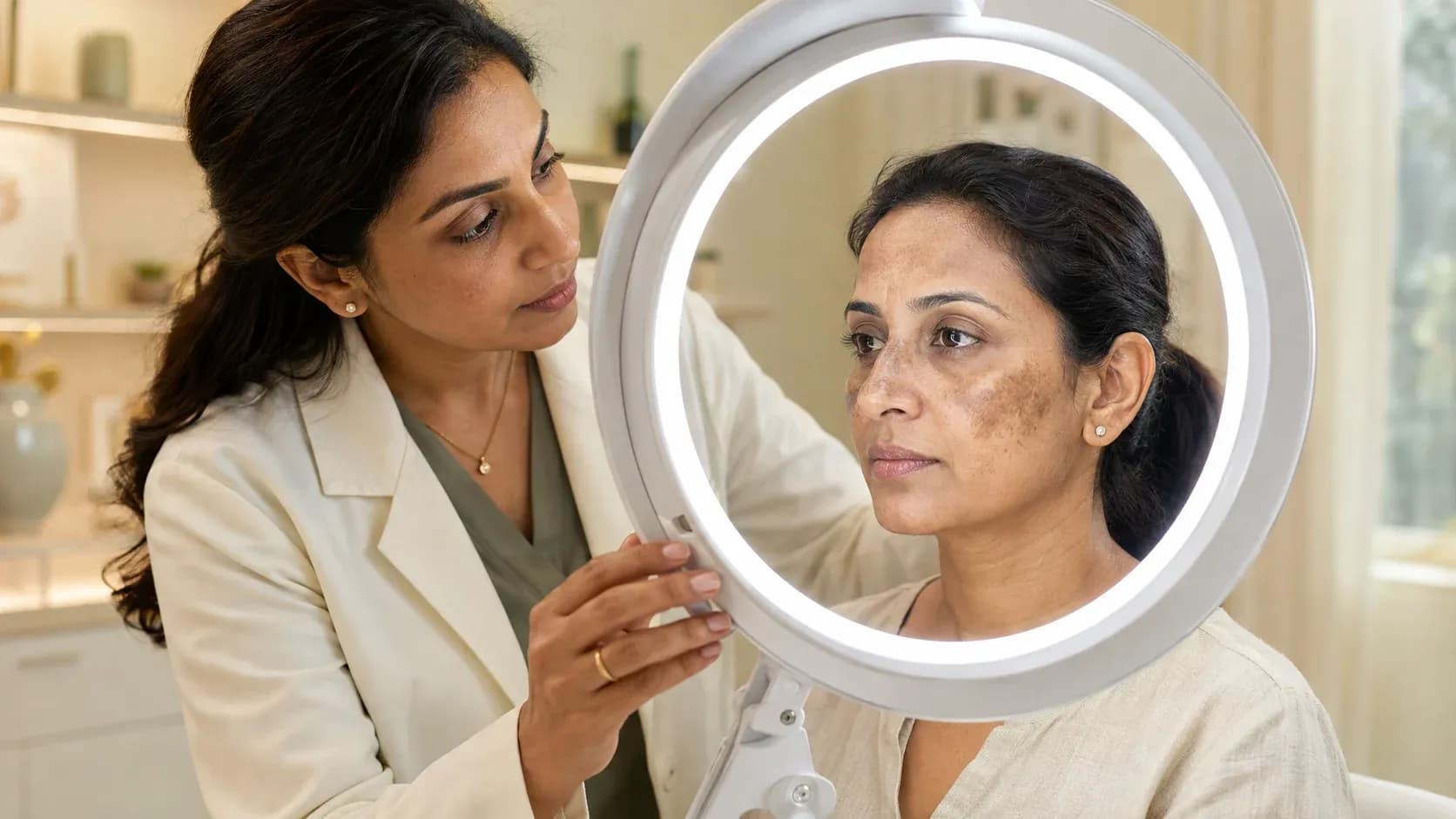
Melasma is a common pigmentation disorder that causes brown, tan, or grey-brown patches to develop on the face. You can recognise melasma by its flat, symmetrical patches that usually appear on both cheeks, the forehead, nose, upper lip, or chin.
Melasma can be classified by the pattern of pigmentation across the face. Recognising these patterns helps dermatologists identify melasma and track changes in pigmentation over time. It can appear in three main facial patterns, depending on where the pigmentation develops:
● Centrofacial: Affects the forehead, cheeks, nose, upper lip, and chin, making it the most common pattern of melasma.
● Malar: Affects the cheeks and nose, often forming a butterfly-like pattern across the face.
● Mandibular: Affects the jawline and chin, making it a less common pattern of melasma.
What Are The Types Of Melasma?
Melasma can be classified by the depth of excess melanin deposition in the skin.
Identifying the type of melasma helps dermatologists assess the depth of pigmentation, guide treatment choices, and estimate how well it may respond to treatment. The main types of melasma are:
| Type | Where Is The Pigment Found? | What Does It Look Like? |
|---|---|---|
| Epidermal melasma | In the upper layers of the skin | Dark brown patches with well-defined borders |
| Dermal melasma | In the deeper layers of the skin | Grey-blue or ashy patches with less distinct borders |
| Mixed melasma | In both the upper and deeper layers of the skin | Brown-grey patches showing features of both types |
| Indeterminate melasma | The pigment depth cannot be clearly classified | More commonly seen in darker skin tones, where determining pigment depth can be more challenging |
How Does Pigment Depth Affect Melasma Treatment?
Pigment depth can influence how melasma responds to treatment. Dermatologists may use a Wood's lamp examination and, in some cases, dermoscopy to assess the location of excess pigment.
In general, epidermal melasma may respond better to topical treatments because the pigment is closer to the skin's surface. Dermal and mixed melasma can be more difficult to treat and may require a combination of treatments.
What Causes Melasma?
Melasma develops when melanocytes, the pigment-producing cells in the skin, become overactive and produce excess melanin.
Several factors can trigger or worsen this excess pigmentation, with sun exposure, hormonal changes, genetics, heat, certain medications, and skin inflammation being the most common.
The key melasma triggers and causes include:
● Sun exposure: Ultraviolet (UV) radiation and visible light stimulate melanocytes to produce more melanin, which can darken existing melasma and trigger new pigmentation.
● Hormonal changes: Pregnancy, oral contraceptive pills, and hormone replacement therapy (HRT) can stimulate melanin production. Melasma that develops during pregnancy is often called chloasma.
● Genetics: A family history of melasma can increase your likelihood of developing the condition, suggesting that genetic factors influence how your skin responds to triggers.
● Heat and visible light: Heat exposure and visible light can worsen melasma by stimulating pigment production, even when the skin is not exposed to direct sunlight.
● Certain medications: Photosensitising medications and some hormone-based treatments can increase the risk of melasma or make existing pigmentation more noticeable.
● Skin irritation or inflammation: Harsh skincare products or cosmetic irritation can stimulate melanin production and worsen existing melasma.
● Thyroid disease: A 2019 systematic review and meta-analysis published in the International Journal of Dermatology found an association between melasma and certain thyroid disorders, although the exact relationship remains unclear.
How Do You Treat Melasma?
Melasma treatment focuses on reducing excess pigmentation, preventing recurrence, and maintaining long-term results.
While melasma can usually be improved significantly, it cannot always be permanently cured.
Most people achieve the best results with a combination of topical treatments, daily sunscreen, and professional care guided by a dermatologist.
Which Ingredients Help Treat Melasma?
Melasma treatment usually combines pigment-reducing ingredients with daily sun protection. The best treatment depends on the severity of your melasma, your skin type, and whether prescription medication is needed. Commonly recommended ingredients include:
Prescription Treatments
Prescription treatments are usually recommended for moderate to severe melasma or when over-the-counter products do not provide sufficient improvement. These medications should only be used under the guidance of a dermatologist.
● Triple Combination Cream: Combines hydroquinone, tretinoin, and a mild corticosteroid to treat moderate to severe melasma. It should only be used under medical supervision because prolonged use may increase the risk of skin thinning and irritation.
● Hydroquinone: Reduces melanin production to help fade stubborn dark patches and is widely prescribed as a first-line treatment for melasma.
Non-Hydroquinone Alternatives
Several non-hydroquinone ingredients have been shown to improve melasma and may be suitable for long-term use or for people who cannot tolerate hydroquinone. Common options include:
● Cysteamine: Helps improve persistent hyperpigmentation with daily short-contact use (typically applied for 15 minutes before washing off) and may be used as a long-term alternative to hydroquinone.
● Tranexamic Acid: Helps reduce excess pigment formation and may lower melasma recurrence by regulating pathways involved in pigmentation.
● Azelaic acid: Reduces pigmentation while calming inflammation and is generally considered safe during pregnancy under medical guidance.
Supporting Ingredients
Supporting ingredients can enhance melasma treatment by improving skin cell turnover, reducing oxidative stress, and limiting excess pigment production. These ingredients are often used alongside primary treatments:
● Retinoids (Tretinoin or Retinol): Increase skin cell turnover to help fade pigmentation faster while improving the penetration of other active treatments.
● Vitamin C: Brightens the skin and protects against oxidative stress caused by UV exposure.
● Niacinamide: Reduces melanin transfer and helps strengthen the skin barrier.
● Kojic Acid: Inhibits tyrosinase, the enzyme involved in melanin production, to help lighten pigmentation patches.
Note: Before starting any new active ingredient, perform a patch test and introduce products one at a time. Always pair your routine with a broad-spectrum sunscreen (SPF 30 or higher) every day. For added protection against visible light, consider a tinted sunscreen containing iron oxides, which can help shield the skin from both UV and visible light.
What Professional Treatments Help Improve Melasma?
Current evidence summarised in the American Academy of Dermatology (AAD) and international pigmentary disorder guidelines supports professional treatments for melasma when topical treatments and daily sun protection alone are not enough.
The most appropriate treatment depends on your melasma type and skin tone and should be selected by a dermatologist. Professional treatment options include:
● Chemical peels: Gently exfoliate pigmented skin and improve the absorption of topical treatments.
● Low-fluence laser therapy: Uses low-energy laser settings to reduce pigmentation while lowering the risk of post-inflammatory hyperpigmentation.
● Microneedling: Improves the penetration of prescription treatments and may enhance treatment outcomes.
● Combination therapy: Dermatologists often combine professional procedures with prescription treatments to improve results and reduce the recurrence of melasma.
Important: Melasma is a chronic condition that can return even after successful treatment. Daily broad-spectrum sunscreen and consistent maintenance skincare remain essential for managing melasma over time.
Can You Prevent Melasma From Returning?
You can reduce the risk of melasma recurrence by protecting your skin from UV and visible light, avoiding triggers, and maintaining a consistent skincare routine. To help prevent melasma from returning:
● Wear broad-spectrum sunscreen daily: Choose SPF 50+ and reapply when outdoors, sweating, or swimming.
● Choose tinted sunscreen with iron oxides: Helps protect against visible light, which can worsen melasma.
● Protect your skin from the sun: Wear a wide-brimmed hat and seek shade when possible.
● Avoid excessive heat: Heat can trigger or worsen pigmentation.
● Continue maintenance skincare: Follow your dermatologist's recommended treatment to reduce recurrence.
● Manage hormonal triggers: Discuss hormone-related medications, pregnancy planning, or thyroid conditions with your healthcare provider.
Clear Ritual's Perspective on What is Melasma
Managing melasma goes beyond fading existing pigmentation. Long-term improvement depends on daily sun protection, consistent use of suitable active ingredients, and addressing underlying triggers.
At Clear Ritual, we believe personalised, evidence-based skincare works better than a one-size-fits-all approach.
The Clear Ritual Skin Test can help identify your skin type and pigmentation concerns so you can build a routine suited to your skin.
Understand your pigmentation pattern
Take the free Clear Ritual Skin Test to assess your skin type, pigmentation concerns, and possible triggers, then build a personalised skincare routine.
Frequently Asked Questions
1. How do you know if you have melasma or not?
Melasma usually causes symmetrical brown or grey-brown patches on the face, especially the cheeks, forehead, nose, and upper lip. These are common melasma symptoms, but a dermatologist should confirm the diagnosis.
2. How can you remove melasma from your face?
You cannot always completely remove melasma, but you can fade pigmentation and control recurrence with sunscreen, topical treatments, and dermatologist-guided procedures. The best way to treat melasma depends on its severity and the depth of the pigment.
3. What is the main reason for melasma?
Sun exposure is the main trigger for melasma, while hormonal changes, genetics, heat, and certain medications can also contribute. UV and visible light stimulate melanocytes, increasing melanin production and darkening existing pigmentation.
4. Is melasma 100% curable?
Melasma is treatable but not considered permanently curable. Pigmentation can fade significantly with consistent treatment and sun protection, but it may return when triggers such as UV exposure or hormonal changes persist.
5. What is the meaning of melasma?
Melasma is a common skin condition that causes dark brown or grey-brown patches due to increased melanin production. It most often affects the face and can become darker with sun exposure, hormonal changes, and heat.
References
American Academy of Dermatology. Melasma: Causes. American Academy of Dermatology.
American Academy of Dermatology. Melasma: Diagnosis and treatment. American Academy of Dermatology.
McKinley-Grant L, et al. (2023). Melasma. StatPearls.
American Academy of Dermatology. Melasma: Overview. American Academy of Dermatology.
Editorial Standards
Clear Ritual has Strict sourcing guidelines to ensure our content is accurate and current. We rely on peer-reviewed studies, academic research institutions, and medical associations. We strive to use primary sources and refrain from using tertiary references. See a mistake? Learn More about our Editorial Standards.
Related Articles
Acne and Diet: What’s the Real Link Between Food and Breakouts?
Published 21 July 2026

Acne Diet Chart: Simple Food Plan for Clear Skin
Published 22 July 2026
Acne After Waxing: Why Skin Breaks Out After Hair Removal
Published 16 July 2026
Acne Around the Mouth: Causes, Triggers and Treatment Options
Published 16 July 2026