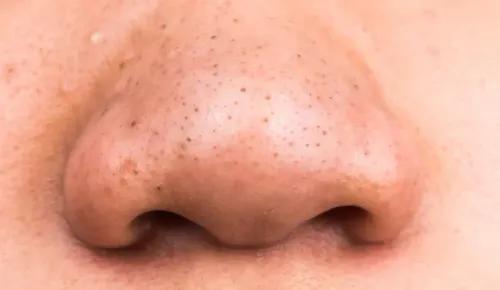
Closed Comedones on the Chin: Causes, Treatment & Timeline
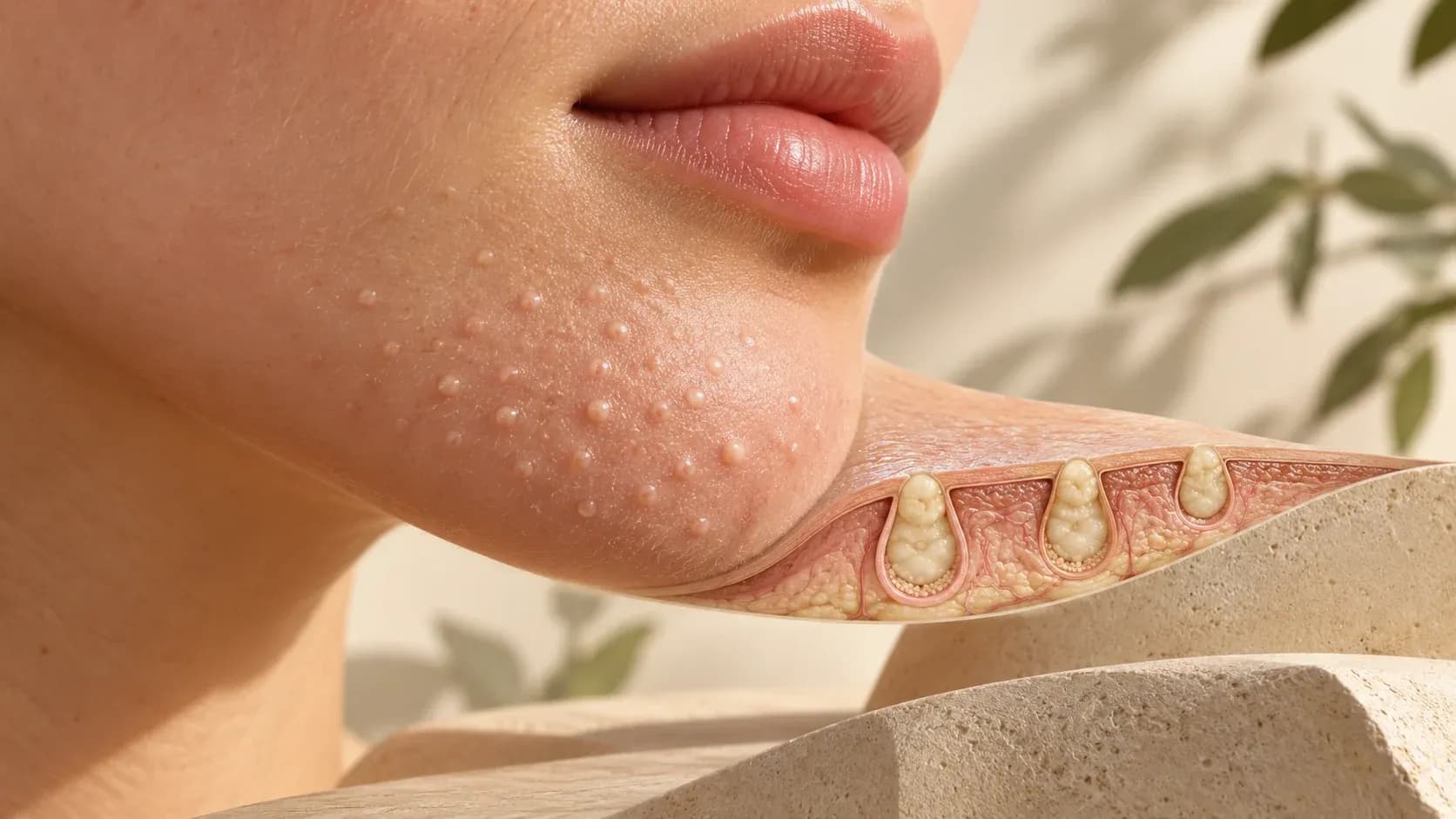
Quick Answer:
Closed comedones on the chin are small, flesh-coloured or white bumps formed when dead skin cells and excess sebum seal inside hormone-sensitive follicles. They are non-inflammatory: no redness, no swelling: unless the follicle wall ruptures. Salicylic acid, niacinamide, and retinoids resolve them over 6 to 12 weeks of consistent care.
What Are Closed Comedones on the Chin?
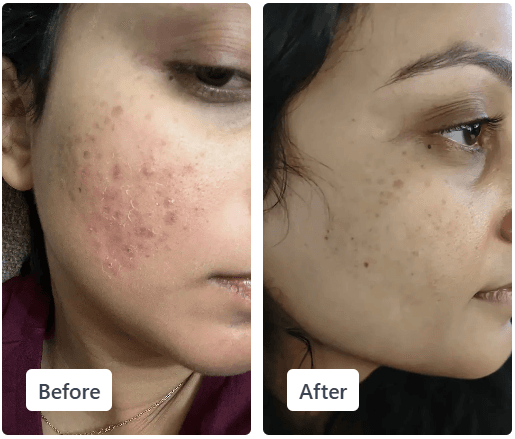
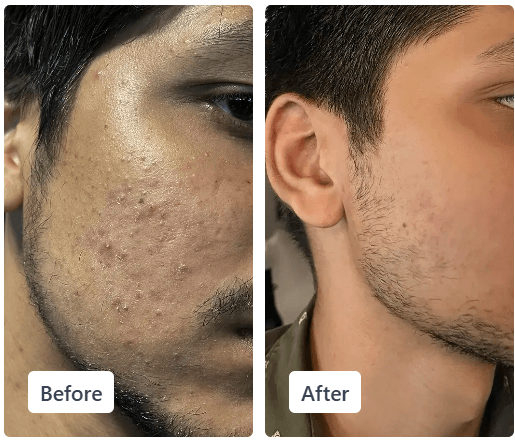
Closed comedones on the chin are a form of non-inflammatory acne where the follicle opening remains sealed, trapping oil and dead skin cells inside. They appear as small, flesh-toned or slightly white bumps that feel rough when you run a finger across the skin.
Unlike open comedones (blackheads), where the pore is exposed and sebum oxidises to a dark colour, closed comedones have no air contact. The follicle stays covered, pressure builds inside, and the plug cannot escape on its own.
Key facts about closed comedones on the chin:
- Form when dead skin cells clump with sebum instead of shedding naturally
- Stay non-red and non-swollen unless the follicle wall ruptures under pressure
- The chin and jawline are the most common facial locations due to androgen-sensitive sebaceous gland density
- Dozens of microcomedones can exist beneath the surface before becoming visible
- Consistent treatment typically takes 6 to 12 weeks: two to three full skin turnover cycles
According to Clear Ritual's dermatology team, the distinction between comedonal and inflammatory acne is clinically important: treatments that clear red, swollen breakouts often have no effect on sealed comedonal blockages.
What Is Comedonal Acne?
Comedonal acne is the earliest stage of acne formation. It refers specifically to non-inflammatory lesions: closed comedones (whiteheads) and open comedones (blackheads): that do not involve immune activation or visible redness.
Comedonal acne differs from inflammatory acne (papules, pustules, nodules, cysts) in one critical way: no inflammatory cascade has triggered yet. The follicle is blocked and stretched, but immune cells have not responded. If the follicle wall eventually ruptures from internal pressure, that same closed comedone can transform into an inflamed papule or cyst.
Many people have both comedonal and inflammatory acne simultaneously. Treatment must address both, but the priorities differ: comedonal acne requires normalising cell turnover and sebum flow, not targeting bacteria.
Why Does the Chin Develop Closed Comedones More Than Other Areas?
The chin develops closed comedones more readily than other facial areas because it contains a high density of sebaceous glands that respond directly to androgenic hormones.
During the luteal phase of the menstrual cycle: roughly 10 to 14 days before menstruation: progesterone levels rise and stimulate chin sebaceous glands to produce more oil. This cyclical hormonal signal explains why many people notice the same chin bumps appearing monthly, in the same location, at the same point in their cycle.
Beyond hormonal sensitivity, the chin faces several mechanical pressures other facial areas do not:
- Hand-to-chin contact transfers oils, bacteria, and environmental particles directly into pores
- Phone pressure against the jawline creates the same transfer repeatedly throughout the day
- Pillowcase friction during sleep disrupts the skin barrier and slows proper cell shedding
- Product accumulation: cleansers, moisturisers, and sunscreens run downward and collect along the jawline, depositing comedogenic ingredients in one concentrated zone
- Sweat during exercise causes dead skin cells to stick together rather than shed, and the salt residue left behind can further cement blockages inside follicles
These mechanical and environmental factors compound the hormonal sensitivity of the chin, making it disproportionately prone to closed comedone formation compared with the forehead or cheeks.
What Causes Closed Comedones on the Chin? The Six Root Triggers
Closed comedones on the chin form through a specific chain of events: not a single cause. The six primary triggers, in order of frequency:
Hormonal sebum overproduction: Androgens bind to receptors in chin sebaceous glands and signal increased oil production. This peaks during the luteal phase, producing the characteristic monthly flare pattern.
Retention hyperkeratosis: In acne-prone skin, dead cells become sticky and clump inside the follicle instead of shedding. The chin's fine pore openings make this cellular buildup especially likely to create a sealed plug.
Mechanical pressure: Repeated hand contact, phone use, and pillowcase friction transfer oils and disrupt the barrier across the same zone consistently.
Comedogenic product buildup: Products containing heavy silicones, occlusive waxes, or certain oils accumulate along the jawline and add pore-blocking material directly to hormone-sensitive follicles.
Elevated blood sugar and IGF-1: High-glycaemic foods spike insulin and insulin-like growth factor 1 (IGF-1), which signal sebaceous glands to increase oil output and accelerate cell proliferation: the same process that creates follicle blockages.
Compromised skin barrier: When harsh cleansers or over-exfoliation disrupt the barrier, the skin compensates by producing more sebum. Simultaneously, impaired cell shedding means dead cells remain inside pores longer than they should.
Does Stress Cause Closed Comedones on the Chin?
Chronic stress elevates cortisol, which increases sebaceous gland activity and thickens the follicular lining: narrowing pore openings. This combination produces more blockages. The effect is most pronounced on hormone-sensitive zones like the chin, where glands are already primed to respond to chemical signals. High-stress periods frequently coincide with worsening chin texture for this reason.
Can Diet Alone Cause Chin Comedones?
Diet does not cause closed comedones directly. However, consistent high-glycaemic eating creates an internal environment: elevated IGF-1, increased androgens, faster cell proliferation: that strongly favours comedone formation. Dairy, particularly skim milk, contributes through a similar IGF-1 pathway. Omega-3 deficiency and low zinc intake compound the problem by reducing the skin's ability to regulate inflammation and cell turnover.
What Happens Inside the Follicle When Closed Comedones Form?
Closed comedones form through two simultaneous processes inside the follicle: excess sebum production and abnormal cell retention.
Healthy skin sheds approximately 30,000 dead cells every minute. In acne-prone skin, these cells become sticky: a condition called retention hyperkeratosis: and clump inside the follicle instead of releasing. Sebum production increases when androgens bind to sebaceous gland receptors. The sebum itself is not harmful; it is a necessary protective lipid. But excessive sebum combined with retained dead cells creates a plug that stretches the follicle wall.
Unlike inflammatory acne, closed comedonal acne remains immunologically quiet at this stage. No redness appears because the blockage has not yet triggered an inflammatory cascade. However, if internal pressure eventually ruptures the follicle wall, sebum and dead cells spill into surrounding tissue: immediately activating the immune response that produces a red, swollen papule or cyst.
Insulin and IGF-1 directly influence this process. Blood sugar spikes from high-glycaemic foods elevate these hormones, which signal sebaceous glands to produce more oil and accelerate the cell proliferation that leads to follicle blockage. This creates a feedback loop where dietary patterns directly affect pore behaviour.
How Does a Compromised Skin Barrier Worsen Chin Comedones?
A compromised skin barrier accelerates closed comedone formation through two simultaneous mechanisms.
First, when the protective lipid layer is disrupted: by harsh cleansers, over-exfoliation, or environmental damage: transepidermal water loss increases. The skin compensates by producing more sebum to prevent dehydration. This reactive sebum, combined with an impaired barrier that cannot shed cells properly, still contributes to pore blockages even though it is driven by barrier disruption rather than hormones.
Second, barrier disruption affects skin pH. Healthy skin maintains a slightly acidic surface (pH 4.7 to 5.5) that supports beneficial microbiome bacteria. Alkaline cleansers raise this pH, causing dead cells to swell and become harder to dislodge from pores.
The stratum corneum: the outermost skin layer: relies on ceramides and natural moisturising factors to maintain cell flexibility. Without these components, dead cells become rigid and fragment irregularly, packing into pores more densely than flexible cells would. These rigid fragments create stubborn closed comedones that resist standard exfoliation.
Clear Ritual's skin science team notes that rebuilding barrier function is often the overlooked step in comedone treatment: without it, topical actives cannot work at their full efficacy.
Lifestyle Factors That Influence Closed Comedones on the Chin
Several lifestyle patterns consistently worsen chin comedonal acne by disrupting the internal conditions that govern sebum production and cell turnover.
Sleep deprivation elevates cortisol, which stimulates sebaceous activity and slows skin repair. Growth hormone peaks during deep sleep and facilitates cell turnover. Disrupting this cycle means dead cells accumulate faster than skin can clear them.
Chronic stress maintains elevated cortisol throughout the day. Beyond increasing oil production, cortisol also thickens the follicular lining, making pore openings narrower and more prone to blockage.
Dehydration affects sebum quality. When the body lacks adequate water, sebum becomes thicker and more likely to solidify inside pores rather than flowing freely to the surface.
Mask wearing for extended periods creates a humid microenvironment around the lower face. This humidity softens dead cells and makes them swell, increasing their likelihood of blocking pores. Mask-edge friction also disrupts the skin barrier through repeated mechanical contact.
Dietary patterns involving high-glycaemic foods, dairy (particularly skim milk), low omega-3 intake, and insufficient zinc all create internal conditions that favour comedone formation: through IGF-1 elevation, androgen stimulation, and impaired skin barrier function respectively.
Closed Comedones on the Chin vs Jawline: Are They the Same?
Closed comedones on the chin and jawline share the same root biology: androgen-sensitive sebaceous glands that run continuously along the lower face. Clear Ritual's clinical team observes that this entire zone responds to hormonal signals as a single region, which is why both areas tend to flare together.
| Location | Primary trigger | Secondary trigger | Pattern signal |
|---|---|---|---|
| Chin only | Hormonal (cyclical) | Product buildup, mechanical | Often pre-menstrual or monthly |
| Jawline only | Hormonal (androgen-dominant) | Shaving irritation, strap friction | Persistent, less cyclical |
| Chin and jawline together | Hormonal + barrier + mechanical | Diet, stress, product buildup | Most common; multi-trigger |
| Chin, jawline, and cheeks | Barrier-driven or systemic | Product, diet, internal | Consider hormonal panel |
The jawline faces additional triggers the chin does not:
- Chin strap friction from helmets, masks, or headwear creates sustained occlusion along the jawline
- Muscle movement from chewing and speaking creates slight skin shifting that disrupts follicular integrity differently from the more static chin zone
- Beard and shaving irritation in people who shave can mimic or worsen comedone patterns through mechanical barrier disruption
If closed comedones appear exclusively along the jawline: not the chin or cheeks: this pattern more strongly suggests androgenic or hormonal involvement and merits closer investigation.
Open Comedones vs Closed Comedones on the Chin: Key Differences
Open and closed comedones form through the same process, but the pore opening determines everything that follows: including appearance, inflammation risk, and treatment response.
| Feature | Closed comedone (whitehead) | Open comedone (blackhead) |
|---|---|---|
| Pore status | Sealed at the surface | Open to air |
| Colour | Flesh-toned or slightly white | Dark brown or black |
| Cause of colour | No oxidation occurs | Sebum oxidises on contact with air |
| Texture | Firm, slightly raised bump | Flat or slightly raised; softer plug |
| Inflammation risk | Higher: sealed follicle builds pressure | Lower: plug can release naturally |
| Location on chin | Clustered, often in groups | Scattered; also common on nose |
| Response to salicylic acid | Moderate: needs time to penetrate | Good: acid can access plug directly |
| Response to retinoids | Excellent: normalises cell turnover | Good |
| Safe to extract at home? | No: rupture risk is high | Rarely advisable; professional preferred |
On the chin specifically, closed comedones outnumber open ones. Chin pores are finer and more prone to sealing, and the hormonal sebum produced in this zone is thicker: making it less likely to remain fluid enough to oxidise at the surface.
Both types begin as microcomedones, invisible to the eye. Treating skin before these microscopic blockages develop into visible bumps is the most efficient approach: this is precisely what retinoids accomplish.
How to Treat Closed Comedones on the Chin: Step-by-Step Routine
Treating closed comedones on the chin requires consistent application over multiple skin cycles: not a rapid response to individual bumps. The skin's natural turnover cycle takes approximately 28 days, meaning what you see on the surface today reflects processes that began weeks ago.
Morning Routine
- Rinse with a gentle, low-pH cleanser (pH 4.5 to 5.5): avoid foamy, alkaline cleansers that disrupt the barrier
- Apply a niacinamide serum (5% to 10%) to regulate sebum production and strengthen barrier function
- Follow with a lightweight, non-comedogenic moisturiser
- Apply broad-spectrum SPF: choose fluid or gel textures rather than cream formulas for the lower face
Evening Routine
- First cleanse with a gentle cleansing oil or balm to dissolve sunscreen, makeup, and oil-soluble debris
- Second cleanse with a water-based, low-pH cleanser to remove sweat and water-soluble residue
- Apply salicylic acid treatment (0.5% to 2%) two to three times per week to exfoliate inside pores
- On non-salicylic acid nights, apply a retinoid: begin with retinol 0.025% to 0.05%; progress to prescription tretinoin if OTC options plateau after three months
- Apply moisturiser over the retinoid to buffer potential irritation
Weekly Add-On
- A BHA exfoliant mask once weekly for targeted pore decongestion, if skin tolerates it
Behaviours to avoid:
- Picking or squeezing closed comedones: ruptures the follicle wall and triggers inflammation
- Using pore strips: provides temporary satisfaction without addressing formation causes, and can traumatise skin
- Applying heavy occlusives over active comedones: traps material inside pores rather than allowing it to surface
Which Ingredients Work Best for Closed Comedones on the Chin?
| Ingredient | How it works | Best for | Time to see results | Key caution |
|---|---|---|---|---|
| Salicylic acid (0.5 to 2%) | Lipid-soluble; penetrates oil-filled pores; dissolves cellular cement between dead cells | Active closed comedones; oily skin | 4 to 6 weeks | Can over-dry; use 2 to 3x per week |
| Retinol (0.025 to 0.1%) | Normalises follicular keratinisation; prevents new comedone formation | Prevention + active comedones | 8 to 12 weeks | Introduce slowly; use SPF daily |
| Tretinoin (0.025 to 0.05%) | Prescription retinoid; accelerates cell turnover; most evidence for comedonal acne | Persistent or widespread closed comedones | 6 to 10 weeks | Requires prescription |
| Niacinamide (5 to 10%) | Regulates sebum; strengthens barrier; anti-inflammatory | Prevention; sensitive skin; barrier support | 4 to 8 weeks | None significant |
| AHA: glycolic or lactic acid | Surface exfoliation; improves cell shedding at skin level | Open comedones and texture | 4 to 6 weeks | Less effective inside sealed pores; avoid if skin is reactive |
| Benzoyl peroxide | Antibacterial; targets Cutibacterium acnes | Inflammatory acne; less relevant for pure comedones | 2 to 4 weeks | Can be drying; limited role in closed comedone treatment |
The consistent finding across dermatological research: no single ingredient resolves comedonal acne alone. Combinations that address cell turnover (retinoid), pore penetration (salicylic acid), and sebum regulation (niacinamide) perform significantly better than any monotherapy.
How Long Do Closed Comedones on the Chin Take to Clear?
Closed comedones usually improve gradually because treatment must clear existing plugs while preventing new ones from forming. Consistency matters more than using several strong products at once.
| Timeline | What You May Notice |
|---|---|
| Weeks 1 to 2 | Mild dryness or temporary purging may occur as cell turnover begins to change. |
| Weeks 3 to 6 | The skin may feel smoother, and fewer new bumps may appear. |
| Weeks 6 to 12 | Existing closed comedones may reduce noticeably with consistent use of suitable actives. |
| After 12 weeks | If there is little or no improvement, professional assessment may be needed. |
Progress may take longer when breakouts are strongly hormonal, the skin barrier is irritated, or products are used inconsistently. Avoid increasing application frequency rapidly, as irritation can delay improvement.
When Should You See a Dermatologist?
Consult a dermatologist when closed comedones persist after 12 weeks of consistent care, become red or painful, spread across the jawline and cheeks, or leave marks and scars. Professional assessment is also important when chin breakouts follow a strong monthly pattern or occur with other signs of hormonal imbalance.
A dermatologist can confirm whether the bumps are closed comedones, milia, folliculitis, or another condition. Depending on the diagnosis, they may recommend a stronger retinoid, a carefully selected chemical peel, professional extraction, or evaluation of underlying hormonal triggers.
Clear Ritual's Perspective on Closed Comedones on the Chin
Closed comedones on the chin usually reflect more than one trigger. Hormonal oil production, retained dead skin cells, product buildup, mechanical friction, and barrier disruption can overlap in the same area.
Rather than repeatedly squeezing individual bumps, focus on a consistent routine that supports cell turnover, keeps pores clear, and protects the skin barrier. The Clear Ritual Skin Test can help identify your skin type and concerns before you choose active ingredients.
Understand What Your Skin Needs
Identify your skin type and concerns to build a focused routine without unnecessary product overload.
Take the Free Skin Test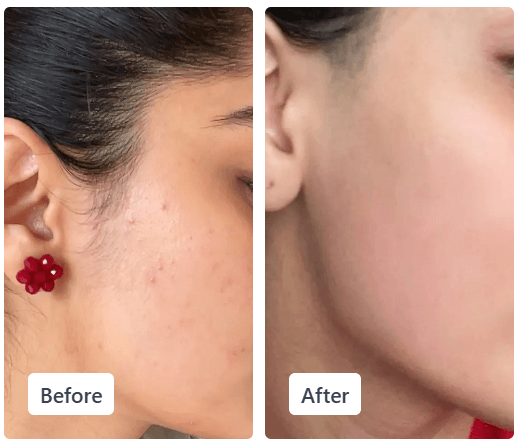
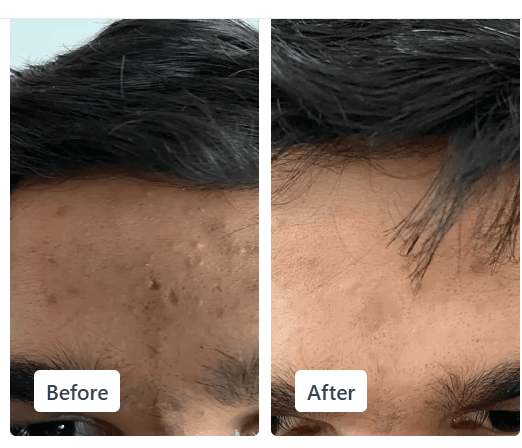
Frequently Asked Questions
Q: What do closed comedones on the chin look like?
A: They usually appear as small, flesh-coloured or white bumps without obvious redness or swelling. They may feel rough when you run a finger over the skin.
Q: Why do I keep getting closed comedones on my chin?
A: Recurrent chin comedones may be linked to hormonal sebum production, retained dead skin cells, product buildup, friction, stress, or skin barrier disruption.
Q: Can salicylic acid remove closed comedones?
A: Salicylic acid can enter oil-filled pores and loosen accumulated dead skin cells. Results usually require several weeks of consistent use.
Q: Should you squeeze closed comedones on the chin?
A: No. Squeezing can rupture the follicle wall, trigger inflammation, and increase the risk of dark marks or scarring.
Q: How long do closed comedones take to clear?
A: Many people notice improvement within 6 to 12 weeks, although hormonal patterns, irritation, and inconsistent product use can extend the timeline.
Q: Can closed comedones become inflamed?
A: Yes. If pressure ruptures the follicle wall, the trapped material can enter surrounding tissue and trigger a red, swollen papule, pustule, or deeper lesion.
References
- American Academy of Dermatology. Acne: Signs and symptoms.
- National Institute for Health and Care Excellence. Acne vulgaris: Management.
- National Health Service. Acne.
Disclaimer
This article is intended for general informational purposes and is not a substitute for personalised medical advice, diagnosis, or treatment. Consult a qualified dermatologist if closed comedones are persistent, painful, inflamed, or leaving marks.
Editorial Standards
Clear Ritual has Strict sourcing guidelines to ensure our content is accurate and current. We rely on peer-reviewed studies, academic research institutions, and medical associations. We strive to use primary sources and refrain from using tertiary references. See a mistake? Learn More about our Editorial Standards.