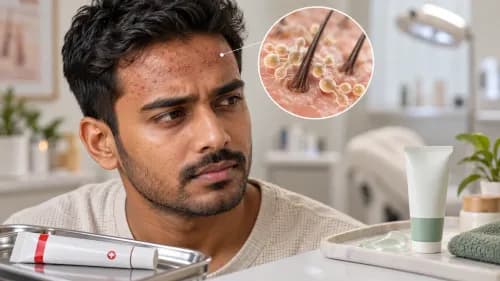
Hormonal Acne: What Causes It and How to Manage It
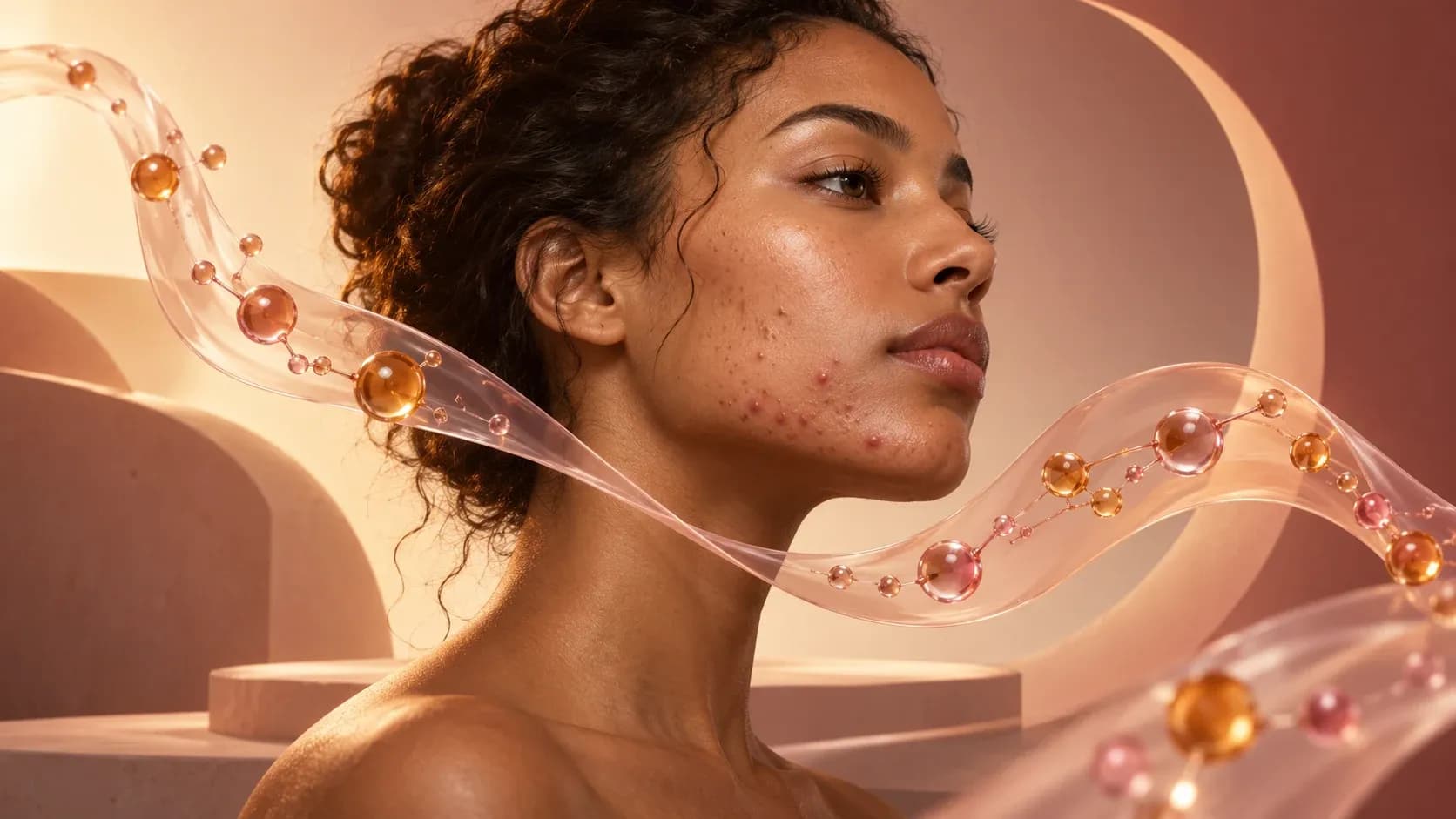
Quick Answer: Hormonal acne is caused by fluctuating hormone levels in your body, particularly androgens, which trigger your skin’s oil glands to produce extra sebum that contributes to clogged pores, inflammation, and deep, painful breakouts.
You may notice it around your chin, jawline or lower face, or see breakouts that repeatedly flare around your menstrual cycle. However, acne has several possible triggers, so the location or timing of your breakouts alone cannot confirm that they are hormonal.
What Is Hormonal Acne?
Hormonal acne is influenced by how your skin responds to hormonal changes. Androgens can trigger your sebaceous glands to produce more oil (sebum). When excess oil combines with dead skin cells, it can clog your pores and lead to acne. Your genetics, skincare, medications, stress, menstrual cycle and other factors can also affect your breakouts.
Your skin does not need to have an obvious hormone imbalance for hormones to influence acne. Sometimes, the way your oil glands respond to normal hormone levels can also contribute to breakouts.
What Does Hormonal Acne Look Like?
Hormonal acne can look different from person to person. You may notice small pimples, inflamed spots, or deeper and more painful lesions.
Hormonal Acne Symptoms
Hormonal acne breakouts may appear around your mouth on the lower part of your face, including your chin, jawline, cheeks or neck. Hormonal acne can also appear on your chest or back as flesh-coloured bumps that stay after pimples heal.
Some common signs can include:
Breakouts that keep returning in a similar pattern.
Deep, tender pimples or cysts.
Increased oiliness
Acne that flares around your period.
Adult acne that keeps returning.
Breakouts concentrated around your lower face.
Having one of these symptoms does not automatically mean your acne is hormonal.
What Are the Different Types of Hormonal Acne?
Hormones can influence different types of acne lesions.
Cystic hormonal acne is deeper, painful acne lesions that form beneath the skin.
Nodular hormonal acne is firm, deeper lesions that can feel painful or tender, take longer to settle, and may increase your risk of scarring.
Papules are small, raised, inflamed bumps, while pustules contain visible pus.
You may notice hormonal breakouts around the menstrual cycle. If the same pattern repeats across several cycles, it might signal that hormonal changes are contributing to your acne.
If hormonal activity contributes to your acne, you may experience recurring cyst-like breakouts and deep acne, along with more superficial lesions.
What Causes Hormonal Acne?
There is rarely one single hormonal acne cause. Instead, hormones interact with your oil production, pore-clogging processes, and inflammation.
Hormonal Fluctuations and Puberty
Androgens can stimulate your sebaceous glands and increase sebum production. More oil can make it easier for pores to become clogged, contributing to acne. During puberty, rising androgen activity can increase oil production. This is one reason acne commonly begins during the teenage years.
Menstrual Cycle and Period-Related Acne
Your hormone levels naturally change throughout your menstrual cycle. If your skin is sensitive to these fluctuations, you may notice acne appearing at a predictable point in your cycle.
Pregnancy and Postpartum Hormonal Changes
Pregnancy and the postpartum period involve substantial hormonal changes. Your skin may become more oily or acne-prone during these stages, although the response varies from person to person.
PCOS and Hormonal Acne
Polycystic ovary syndrome (PCOS) can be associated with higher androgen activity, which may contribute to acne. If your acne occurs alongside irregular periods, increased facial or body hair, or other signs of androgen excess, your doctor may need to evaluate you further.
Stress and Hormonal Acne
Ongoing stress can interact with biological pathways involved in acne and may make existing breakouts worse. Stress can also affect your sleep, eating habits and skincare routine, which may indirectly influence your skin.
Other Factors That Can Influence Acne
Your breakouts may also be affected by:
Genetics
Certain medications
Comedogenic or irritating products
Friction and occlusion
Skin-barrier disruption
Diet
Sleep and lifestyle factors
This is why treating hormonal acne is not always about treating hormones alone.
How to Treat Hormonal Acne
The best hormonal acne treatment depends on the type and severity of your acne and what is contributing to it. Your treatment may include topical medicines, hormonal treatments, lifestyle changes or a combination of approaches.
Topical Treatments for Hormonal Acne
Topical treatments can help manage the clogged pores and inflammation that occur even when hormones contribute to your acne.
Retinoids: Topical retinoids help prevent pores from becoming clogged and can reduce new acne formation. They are commonly used as part of long-term acne management.
Benzoyl Peroxide: Benzoyl peroxide helps reduce acne-causing bacteria and inflammation. It can be particularly useful when you have inflamed pimples.
Salicylic Acid: Salicylic acid helps exfoliate inside pores and can be useful for blackheads, whiteheads, and clogged pores.
Azelaic Acid: Azelaic acid can help with acne and post-acne marks. It may be a useful option if you are dealing with both breakouts and pigmentation left behind after acne.
Note: Your dermatologist may prescribe topical or oral antibiotics. If you experience any side effects, speak with your doctor before continuing or stopping the prescribed dosage.
Hormonal Treatments for Acne
If hormones are a significant part of your acne pattern, your dermatologist may consider prescription treatments.
Combined Oral Contraceptives: Certain combined oral contraceptives can help reduce androgen-related acne in some women. They are not suitable for everyone, so your doctor will consider your medical history and other factors before prescribing them.
Spironolactone: Spironolactone can reduce the effects of androgens and is sometimes prescribed for women with persistent hormonal-pattern acne.
Clascoterone: Clascoterone is a topical treatment that acts on androgen receptors in the skin. Your dermatologist can determine whether it is appropriate for you.
If you have moderate or severe acne, you may need other prescription treatments, which a dermatologist will monitor. Antibiotics can be used for inflammatory acne in appropriate cases, while isotretinoin may be considered for severe or treatment-resistant acne.
Note: Always consult a healthcare professional before starting acne treatments if you are pregnant, planning to become pregnant, or breastfeeding, as several common therapies carry severe risks of congenital disabilities (birth defects).
How to Control Hormonal Acne at Home
You cannot always prevent hormonal fluctuations, but you can reduce avoidable irritation and keep your acne treatment consistent. Start by building a simple, acne-friendly skincare routine.
In the Morning Routine:
Use a gentle cleanser.
Apply your recommended acne treatment.
Use a non-comedogenic moisturiser.
Finish with broad-spectrum sunscreen.
In the Evening Routine:
Cleanse gently.
Apply your prescribed or suitable acne treatment.
Moisturise to support your skin barrier.
Try not to:
Scrub active breakouts.
Pick or squeeze pimples.
Wash your face excessively.
Layer several strong actives without guidance.
Change your entire routine every few days.
A simple, consistent routine is often easier for your skin to tolerate and for you to maintain.
Can Diet and Lifestyle Help Hormonal Acne?
Lifestyle changes can support your overall skin health, but they should not replace evidence-based acne treatment when you need it.
Diet and Hormonal Acne
Some research suggests that high-glycaemic dietary patterns may be associated with acne in some people. Dairy has also been studied for its possible relationship with acne.
However, there is no single hormonal acne diet that works for everyone. Instead of unnecessarily eliminating multiple foods, focus on a balanced diet and notice whether you have consistent personal triggers.
Stress Management
If stress tends to coincide with your breakouts, make time for habits that help you manage it. Regular movement, relaxation techniques and adequate sleep can support your overall well-being.
Sleep and Daily Habits
Poor sleep can affect several processes involved in skin health. Aim for a consistent sleep schedule where possible.
Exercise and Skin Hygiene
Exercise itself does not cause acne. After sweating, gently cleanse your skin and change out of damp clothing when practical, particularly if you are prone to body acne.
Hormonal Acne Supplements: Do They Work?
You may come across zinc, omega-3, vitamin D and probiotics as hormonal acne supplements.
Zinc: Zinc has been studied for acne, but supplementation isn’t always necessary. Taking high doses without guidance can cause side effects.
Omega-3 Fatty Acids: Omega-3s have anti-inflammatory properties and are important nutrients, but they should not be treated as a guaranteed hormonal acne treatment.
Vitamin D: If you have a vitamin D deficiency, correcting it may be important for your overall health. It does not mean that everyone with acne needs vitamin D supplements.
Probiotics: Researchers are studying probiotics for their possible role in skin health, but evidence is still developing. Speak with your doctor before starting them.
Common Myths About Hormonal Acne
Several common beliefs about hormonal acne can make it harder to understand what is actually contributing to your breakouts. The table shows some common myths and what the evidence-based view suggests:
| Myth | Facts |
|---|---|
| All jawline acne is hormonal. | Jawline acne may be hormonal, but location alone cannot confirm it. |
| Hormonal acne means your hormones are imbalanced. | Skin sensitivity to hormones can also influence acne. |
| You need to detox your hormones. | Detox diets are not a proven treatment for acne. |
| Chocolate always causes hormonal acne. | Chocolate does not automatically cause acne. |
| Washing your face more will stop hormonal acne. | Over-cleansing can irritate your skin and affect the skin barrier. |
| Natural remedies can cure hormonal acne. | Natural remedies are not always effective or suitable. |
| Hormonal acne only happens to women. | Hormonal activity can influence acne in anyone. |
When Should You See a Dermatologist for Hormonal Acne?
Acne treatment takes time. You may not see a major change within the first few days or weeks. Give your treatment enough time to work, as advised by your dermatologist, and avoid switching products repeatedly because you aren’t seeing immediate results.
See a dermatologist if:
Your acne is painful or deep.
You are developing scars.
Breakouts are persistent or worsening.
Over-the-counter products are not helping.
Acne is affecting your confidence or daily life.
You develop sudden or severe adult acne.
Could Your Acne Be Linked to PCOS or Another Hormonal Condition?
If acne occurs alongside irregular periods, excess facial or body hair, or other signs of androgen excess, speak with your doctor. These symptoms may warrant an evaluation for an underlying hormonal condition.
Clear Ritual’s Perspective on Managing Hormonal Acne
Your acne may not have one simple cause. At Clear Ritual, we believe hormonal patterns, your menstrual cycle, stress, skincare, lifestyle and other factors can all influence how your skin behaves.
That is why understanding your pattern can be more useful than repeatedly switching products based on individual breakouts. The Clear Ritual Skin Test assesses your skin and makes more personalised skincare decisions, rather than treating every breakout in the same way.
Frequently Asked Questions
1. Can hormonal acne appear on the cheeks?
Yes. Hormonal acne can occur on the cheeks, but cheek acne can also have several other causes. The timing and pattern of your breakouts also matter.
2. Can hormonal acne be cured permanently?
Hormonal acne can often be controlled, but it may return when hormonal or other acne triggers change. Long-term management is often about preventing new breakouts and maintaining healthy skin.
3. How long does hormonal acne take to go away?
The timeline varies depending on your acne and treatment. Acne medicines generally need consistent use over time, so immediate results should not be expected.
4. Is hormonal acne only seen in women?
No. Hormonal activity can influence acne in both men and women.
5. How to get rid of hormonal acne?
Hormonal acne can often be managed with a consistent skincare routine, acne treatments such as retinoids or benzoyl peroxide and prescription hormonal treatments when appropriate. Avoid picking or frequently changing products, as this can worsen irritation and post-acne marks.
References
- American Academy of Dermatology Association. (2024). Acne clinical guideline. American Academy of Dermatology Association.
- American Academy of Dermatology Association. (2024). Acne: Diagnosis and treatment. American Academy of Dermatology Association.
- Del Rosso JQ, Kircik L. The cutaneous effects of androgens and androgen-mediated sebum production and their pathophysiologic and therapeutic importance in acne vulgaris. J Dermatolog Treat. 2024;35(1):2298878. doi:10.1080/09546634.2023.2298878
- Smith CA, Gosnell E, Karatas TB, Deitelzweig C, Collins EMB, Yeung H. Hormonal Therapies for Acne: A Comprehensive Update for Dermatologists. Dermatol Ther (Heidelb). 2025;15(1):45-59. doi:10.1007/s13555-024-01324-8
- Carmina E, Dreno B, Lucky WA, et al. Female Adult Acne and Androgen Excess: A Report From the Multidisciplinary Androgen Excess and PCOS Committee. J Endocr Soc. 2022;6(3):bvac003. Published 2022 Feb 6. doi:10.1210/jendso/bvac003
- Cruz S, Vecerek N, Elbuluk N. Targeting Inflammation in Acne: Current Treatments and Future Prospects. Am J Clin Dermatol. 2023;24(5):681-694. doi:10.1007/s40257-023-00789-1
Disclaimer
This article is intended for general informational purposes and is not a substitute for personalised medical advice, diagnosis or treatment. If your acne is persistent, painful, severe or causing scarring, consult a qualified dermatologist.
Editorial Standards
Clear Ritual has Strict sourcing guidelines to ensure our content is accurate and current. We rely on peer-reviewed studies, academic research institutions, and medical associations. We strive to use primary sources and refrain from using tertiary references. See a mistake? Learn More about our Editorial Standards.