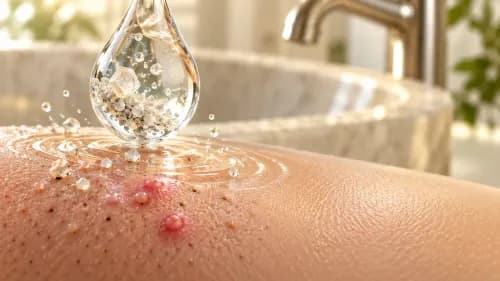
What Is Steroid-Induced Fungal Acne: Causes, Signs & Treatment
Quick Answer:
Steroid-induced fungal acne and steroid-induced bacterial acne are not the same condition. Treating one as the other is the primary reason most people stay locked in a cycle of ineffective products and worsening breakouts.
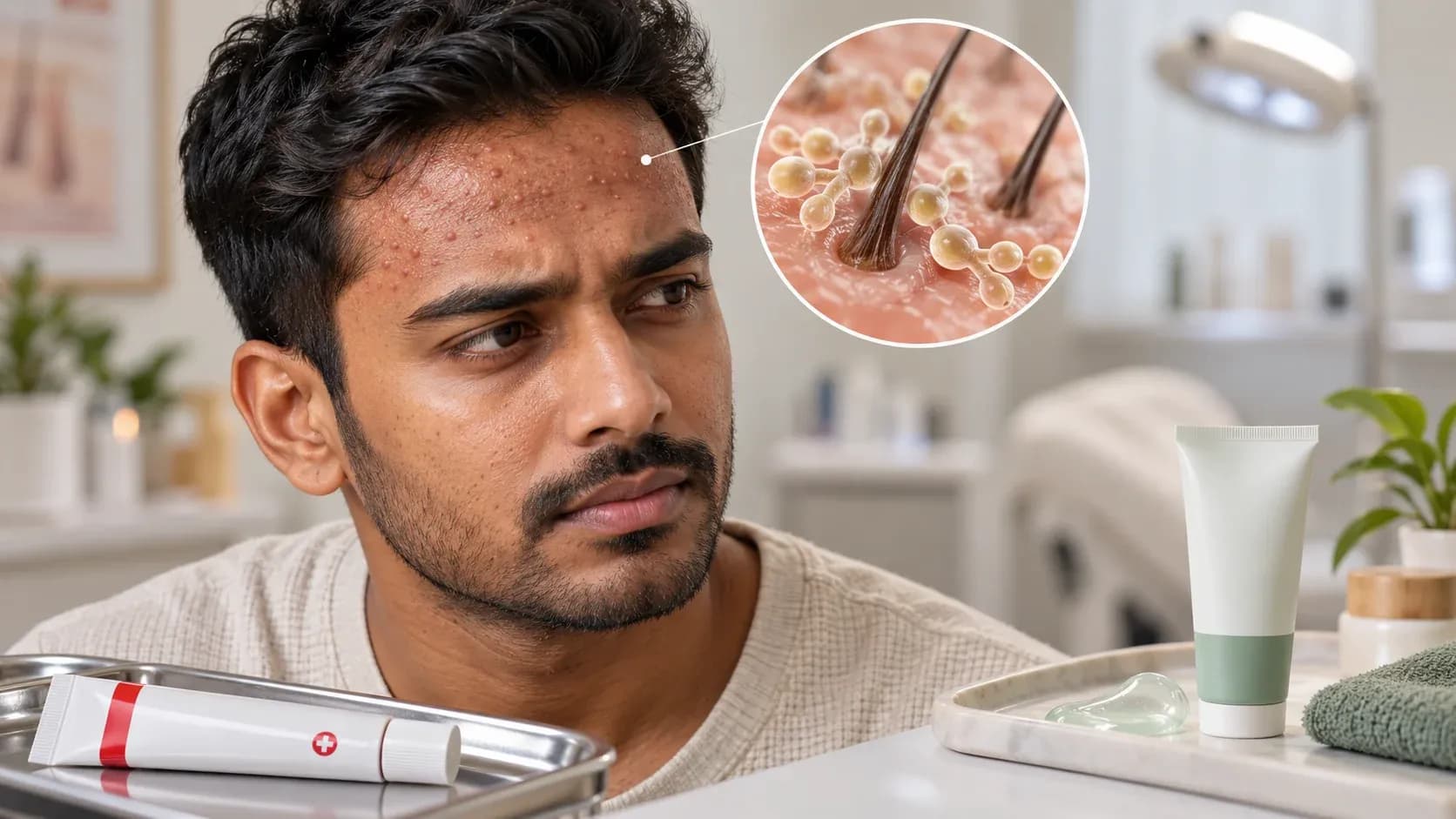
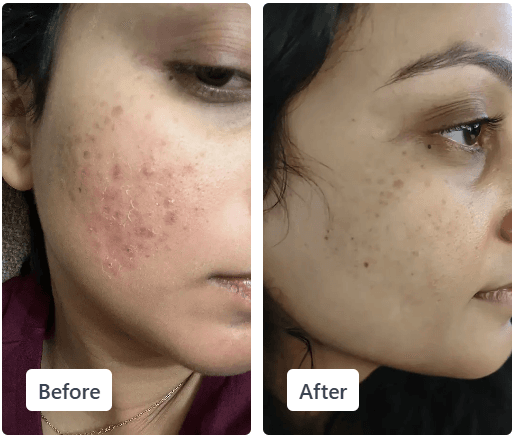
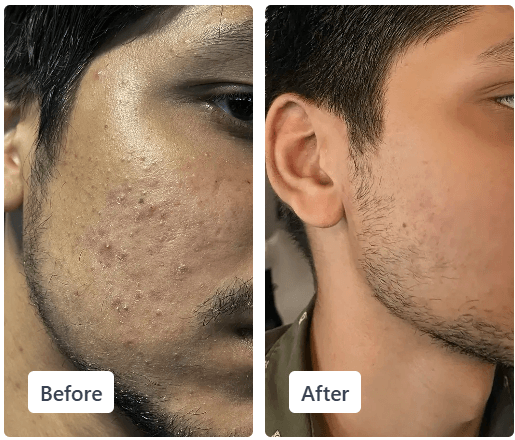
Steroid-induced fungal acne, clinically called Malassezia folliculitis, is a yeast overgrowth inside hair follicles triggered by corticosteroid use. Corticosteroids suppress local immune defences, allowing Malassezia yeast (present on everyone's skin in small amounts) to multiply rapidly inside oil-rich follicles. The result is uniform, intensely itchy papules that do not respond to conventional acne treatments and often worsen with them.
What Is Steroid-Induced Fungal Acne?
Steroid-induced fungal acne, clinically known as Malassezia folliculitis, develops when corticosteroid medications create conditions where yeast organisms thrive inside hair follicles. This condition mimics traditional acne in appearance but is driven by fungal overgrowth rather than Cutibacterium acnes bacteria, which causes common breakouts.
Corticosteroids prescribed for eczema, psoriasis, or systemic inflammation temporarily relieve symptoms but simultaneously suppress local immune responses in the skin. This immunosuppression allows Malassezia yeast, normally present in small, controlled amounts on every adult's skin, to multiply rapidly within the lipid-rich environment of hair follicles.
The resulting breakout looks similar to bacterial acne but behaves differently in two critical ways:
- Steroid-induced fungal acne does not respond to salicylic acid, benzoyl peroxide, or topical antibiotics
- Steroid-induced fungal acne typically worsens when conventional acne products are applied
According to The Clear Ritual's dermatology team, Malassezia folliculitis is one of the most commonly misdiagnosed skin conditions, not because it is rare, but because it is visually similar enough to bacterial acne that most people, and some clinicians, reach for the wrong treatment first.
How Do Steroids Trigger Fungal Acne? The Three-Mechanism Chain
Steroids cause steroid-induced fungal acne through three interlocking mechanisms, each one creating conditions that the next one exploits.
Mechanism 1: Immune Suppression (Removing the Guards)
Your skin's immune cells, neutrophils and macrophages, normally patrol hair follicles and keep Malassezia populations in check. Corticosteroids directly suppress these cells. Without them, Malassezia multiplies unchecked inside follicles within days to weeks of steroid exposure.
- Oral corticosteroids like prednisone create systemic immune suppression, making follicles across the body more vulnerable
- Topical steroids like betamethasone create localised suppression, most severe on the chest, back, and forehead where occlusion and warmth amplify the effect
Mechanism 2: Sebum Alteration (Feeding the Yeast)
Malassezia is lipophilic: it feeds on specific fats. Corticosteroids increase sebum production and alter its lipid composition, elevating levels of oleic acid and palmitic acid. These fatty acids are preferentially metabolised by Malassezia species, directly accelerating their growth rate inside follicles.
Mechanism 3: Barrier Disruption (Opening the Doors)
Long-term corticosteroid use thins the epidermis by inhibiting fibroblast activity and reducing collagen synthesis. This weakens the physical skin barrier, making follicles more permeable to deeper yeast colonisation. The damaged barrier also triggers compensatory sebum overproduction, which feeds directly back into Mechanism 2, creating a self-sustaining cycle.
The full cycle in sequence:
- Steroids suppress immune surveillance inside follicles
- Malassezia yeast multiplies in the now-unguarded, lipid-rich environment
- Steroid-increased sebum provides additional food for yeast proliferation
- Barrier disruption allows deeper follicular colonisation
- Yeast triggers an inflammatory response: producing the uniform, itchy papules visible on the skin surface
- The anti-inflammatory action of steroids masks early warning signs, delaying recognition by days to weeks
How to Recognise Steroid-Induced Fungal Acne: The Key Signs
Steroid-induced fungal acne presents with a distinctive pattern that separates it clearly from bacterial acne once you know what to look for.
Lesion appearance:
- Small, uniform papules or pustules measuring 1–3 mm across
- No comedones (blackheads or whiteheads), which are characteristic of bacterial acne
- Consistent size across affected area: no mixing of small bumps with large cysts
Location:
- Forehead, temples, chest, shoulders, and upper back: areas combining warmth, moisture, and occlusion
- Bacterial acne typically concentrates in the T-zone, jawline, and lower face
Sensation:
- Persistent, often intense itching: particularly in heat or after sweating
- Bacterial acne rarely causes itching unless severely inflamed
- The itch in Malassezia folliculitis stems from inflammatory mediators released as the immune system reacts to yeast inside follicles
Timeline:
- Steroid-induced fungal acne typically emerges within 2–8 weeks of starting a corticosteroid
- In some cases with high-potency topical steroids, onset may occur within days
- The timeline itself is a diagnostic clue: sudden uniform, itchy breakouts appearing during or shortly after steroid use should raise immediate suspicion of fungal involvement
| Feature | Bacterial Acne | Steroid-Induced Fungal Acne |
|---|---|---|
| Lesion appearance | Varied sizes, comedones present | Uniform 1–3 mm papules/pustules |
| Location | Face (T-zone), jawline | Forehead, chest, upper back |
| Itchiness | Minimal | Persistent, often intense |
| Response to typical acne products | Improves | Worsens or no improvement |
| Triggered by steroids | Possible | Yes: primary cause |
Why Traditional Acne Treatments Make Steroid-Induced Fungal Acne Worse
Steroid-induced fungal acne does not respond to conventional acne treatments, and in several cases, those treatments actively worsen the condition.
Benzoyl peroxide is the gold standard for bacterial acne. It has no antifungal properties and may alter skin pH and disrupt beneficial bacteria that otherwise compete with Malassezia, inadvertently supporting fungal proliferation.
Topical antibiotics: clindamycin, erythromycin: target bacteria specifically. They have zero effect on fungal organisms. By eliminating bacterial competitors, they can allow Malassezia populations to expand further without opposition.
Oral antibiotics: doxycycline, minocycline: create the same problem systemically. They reduce bacterial populations throughout the body while leaving fungal organisms free to proliferate.
Retinoids help bacterial acne by normalising follicular keratinisation, but they do not directly address yeast overgrowth. They will not resolve the underlying fungal colonisation driving steroid-induced fungal acne.
Heavy moisturisers and plant oil-based products containing fatty acids with carbon chain lengths of 11–24, including coconut oil, argan oil, olive oil, and sunflower oil, directly feed Malassezia organisms. These are common ingredients in products marketed as skin-calming, yet they can significantly worsen fungal acne.
The Clear Ritual's skin science team notes that many people remain in a frustrating cycle for months specifically because Malassezia folliculitis is treated with antibacterial products that eliminate the bacterial competition keeping yeast in check: making the fungal problem progressively harder to shift.
Steroid-Induced Fungal Acne vs Bacterial Acne vs Hormonal Acne: Full Comparison
Not all acne appearing during or after steroid use is the same. The three most commonly confused types differ significantly in cause, appearance, location, and treatment response.
| Feature | Steroid-Induced Fungal Acne | True Corticosteroid Acne | Hormonal Acne |
|---|---|---|---|
| Root cause | Malassezia yeast overgrowth | Androgen receptor stimulation by steroid | Sebum changes from hormonal fluctuation |
| Lesion type | Uniform 1–3 mm papules/pustules | Monomorphic papulopustules, no comedones | Mixed: papules, cysts, comedones |
| Location | Forehead, chest, upper back | Trunk, shoulders, less commonly face | Jawline, chin, lower face |
| Itchiness | Yes: often intense | Minimal | Minimal |
| Triggered by | Immunosuppressive corticosteroids | Any class of corticosteroid | Oestrogen/progesterone shifts, androgens |
| Responds to antibiotics? | No | Partially | Partially |
| Responds to antifungals? | Yes | No | No |
| Timeline | 2–8 weeks after steroid start | Weeks to months of steroid use | Cyclical: worse around menstrual cycle |
Does prednisone cause fungal or bacterial acne?
Prednisone and other oral corticosteroids can cause both. Breakouts that are itchy, uniform, and concentrated on the trunk are most likely fungal: Malassezia folliculitis. Breakouts that are larger, more variable in size, and on the face without itching are more likely true corticosteroid acne driven by androgen receptor stimulation. Both can occur simultaneously, which is why professional assessment matters when the picture is unclear.
Can topical steroid cream cause acne on the face?
Yes. Topical corticosteroids applied to the face, including betamethasone and hydrocortisone, can cause two distinct patterns: perioral dermatitis around the mouth, and Malassezia folliculitis on the forehead and temples. Facial skin is thinner and more sensitive to the immunosuppressive effects of topical steroids than body skin, making it more susceptible even with lower-potency preparations.
Who Is Most at Risk of Steroid-Induced Fungal Acne?
Steroid-induced fungal acne can affect anyone using corticosteroids, but several factors raise individual risk substantially.
Higher risk if you:
- Use high-potency topical corticosteroids: clobetasol, betamethasone: continuously for more than 4 weeks
- Take oral corticosteroids like prednisone for systemic conditions
- Apply topical steroids to occlusion-prone areas: chest, upper back, forehead, under clothing or dressings
- Live or exercise in hot, humid environments where sweating is frequent
- Already have naturally higher Malassezia baseline populations on your skin
- Have a history of seborrhoeic dermatitis or dandruff (both linked to Malassezia sensitivity)
- Have diabetes mellitus: elevated skin surface glucose may support fungal growth
- Have a compromised immune system from illness, other medications, or chronic stress
Lifestyle and environmental amplifiers:
- Wearing tight, synthetic fabrics on the chest and back during steroid courses
- Not showering promptly after exercise
- Using heavy, oil-rich skincare products on steroid-treated skin
- High-glycaemic diets that may increase sebum production and alter its composition
- Chronic stress, which elevates cortisol and compounds the immunosuppressive effect of prescribed steroids
How to Treat Steroid-Induced Fungal Acne: Step-by-Step
Treatment for steroid-induced fungal acne follows a clear, sequenced approach. Skipping steps or continuing conventional acne products during this process will delay resolution significantly.
Step 1: Stop or Reduce Steroid Exposure (Week 1–2)
Do not stop oral corticosteroids abruptly without medical guidance. Sudden discontinuation can trigger rebound inflammation and, in the case of systemic steroids, adrenal complications. Work with your prescriber to taper gradually.
For topical steroids: stopping application to the affected area is generally safe and should be the immediate first step. Continue applying only to the minimum necessary area.
Step 2: Begin Antifungal Treatment (Week 1–4)
For body areas (chest, back, shoulders):
- Ketoconazole 2% shampoo: apply, lather, leave on for 5 minutes, then rinse. Use 3–4 times per week initially
- Selenium sulfide 2.5% shampoo: effective alternative when ketoconazole is unavailable
- Zinc pyrithione 1–2% wash: milder option for maintenance or sensitive skin
For facial steroid-induced fungal acne:
- Ketoconazole 2% cream applied once or twice daily is the standard approach
- Reduced itching typically appears within 1–2 weeks; visible papule reduction within 4–6 weeks
Step 3: Audit and Adjust Your Skincare (Week 1 Onwards)
Remove any products containing fatty acids with carbon chain lengths of 11–24 from affected areas. This includes:
- Most plant oils: coconut oil, argan oil, sunflower oil, olive oil
- Oleic acid-dominant formulations
- Heavy occlusive creams and balms
Replace with Malassezia-safe alternatives:
- Squalane: carbon chain too short for Malassezia to metabolise efficiently
- Glycerin-based lightweight moisturisers
- Niacinamide serums: support barrier function without feeding yeast
Step 4: Address Environmental Triggers (Ongoing)
- Shower within 30 minutes of exercise: sweat creates the warm, moist environment Malassezia thrives in
- Switch to loose, breathable cotton fabrics on affected areas
- Change pillowcases every 2–3 days if facial fungal acne is present
- In humid climates, consider an antifungal powder on chest and back during summer months
Step 5: Escalate to Oral Antifungals If Necessary
If topical antifungal treatment shows no meaningful improvement after 6–8 weeks, a dermatologist may prescribe:
- Oral fluconazole: single dose or short course
- Oral itraconazole: short course for resistant cases
These must be prescribed and monitored by a clinician. Oral antifungals carry systemic considerations including hepatic monitoring requirements.
How Long Does Steroid-Induced Fungal Acne Take to Clear?
With consistent antifungal treatment, most people see measurable improvement within 4–6 weeks and full clearance within 8–12 weeks: even when the condition has persisted for months under ineffective conventional treatment.
| Timepoint | What to Expect |
|---|---|
| Week 1–2 | Itching reduces; new papule formation begins to slow |
| Week 4–6 | Existing papules begin to flatten; redness decreases |
| Week 8–12 | Significant clearance in most cases with consistent antifungal use |
| Month 4–6 | Post-inflammatory hyperpigmentation may persist: this is not active infection |
Factors that extend recovery time include:
- Continued steroid use during treatment
- Hot or humid conditions
- Malassezia-feeding skincare products still present in the routine
- Higher-potency steroid involvement before treatment started
- Delayed start of antifungal treatment
What Does the Research Show? Evidence on Steroids and Fungal Skin Infections
The relationship between corticosteroid use and Malassezia folliculitis is well-established in peer-reviewed dermatological literature.
Corticosteroids as a primary precipitating factor: A 2014 review published in the Journal of Clinical and Aesthetic Dermatology identified immunosuppressive medications, including systemic corticosteroids, as one of the primary precipitating factors for Malassezia folliculitis, alongside antibiotics, occlusive clothing, and humid climates.
Potency and duration matter: Research published in the Journal of the American Academy of Dermatology indicates that higher-potency fluorinated topical corticosteroids: clobetasol, betamethasone: carry greater risk of triggering Malassezia overgrowth compared to lower-potency preparations such as hydrocortisone 1%. Risk compounds significantly after 4 continuous weeks of application.
Antifungal treatment efficacy: A controlled clinical study published in Dermatology and Therapy found that ketoconazole 2% shampoo used as a 5-minute leave-on treatment three times weekly achieved significant improvement in Malassezia folliculitis in 79% of participants within 4 weeks.
Sebum composition link: Research on Malassezia biology confirms that these yeasts depend on external lipids for growth. This helps explain why oil-rich follicles and some lipid-heavy skincare products may support overgrowth in susceptible skin.
Evidence also shows that corticosteroids can cause, aggravate, or mask Malassezia folliculitis. Diagnosis remains important because fungal folliculitis, bacterial acne, steroid acne, and perioral dermatitis can appear similar but require different treatment approaches.
When Should You See a Dermatologist?
Seek medical evaluation if the bumps spread rapidly, become painful, develop crusting, or do not improve after several weeks of appropriate care. A dermatologist may use microscopy, a potassium hydroxide preparation, or another clinical test to distinguish Malassezia folliculitis from bacterial folliculitis and acne.
Professional guidance is especially important if you are taking oral corticosteroids. Do not stop systemic steroid treatment suddenly. Your prescriber may need to reduce the dose gradually to avoid rebound inflammation or adrenal complications.
Conclusion
Steroid-induced fungal acne develops when corticosteroid exposure creates conditions that allow Malassezia yeast to overgrow inside hair follicles. Uniform itchy bumps, the absence of comedones, and poor response to conventional acne products are important clues. Treatment usually involves reviewing steroid exposure with a clinician, using suitable antifungal therapy, avoiding yeast-feeding skincare products, and managing heat, sweat, and occlusion.
Understand What Your Skin Needs
Take the Clear Ritual Skin Test to identify your skin type, concerns, and potential triggers before building your routine.
Take the Free Skin Test
Frequently Asked Questions
Q. Can steroid cream cause fungal acne?
A. Yes. Topical corticosteroids can suppress local immune activity and may allow Malassezia yeast to overgrow, especially when potent products are used for extended periods.
Q. What does steroid-induced fungal acne look like?
A. It commonly appears as small, uniform, itchy papules or pustules on the forehead, chest, shoulders, or upper back. Blackheads and whiteheads are usually absent.
Q. How is fungal acne different from bacterial acne?
A. Fungal acne is caused by Malassezia yeast and often produces uniformly sized itchy bumps. Bacterial acne commonly includes mixed lesions such as blackheads, whiteheads, papules, and cysts.
Q. Should oral steroids be stopped if fungal acne develops?
A. Do not stop oral corticosteroids abruptly. Speak with the prescribing clinician, who can decide whether the treatment should be continued, adjusted, or gradually tapered.
Q. How long does steroid-induced fungal acne take to clear?
A. Itching may begin to improve within one to two weeks, while visible bumps may require four to twelve weeks of consistent treatment, depending on severity and ongoing triggers.
Q. Can steroid-induced fungal acne return?
A. Yes. Recurrence is possible if steroid exposure, humidity, sweating, occlusive products, or other predisposing factors continue.
References
- Rubenstein RM, Malerich SA. Malassezia (Pityrosporum) folliculitis. Journal of Clinical and Aesthetic Dermatology. 2014.
- Cohen PR. Malassezia folliculitis incognito. 2020.
- DermNet. Steroid acne.
- DermNet. Malassezia folliculitis.
- DermNet. Topical corticosteroids.
Disclaimer: This article is for educational purposes only and does not replace medical advice. Do not stop prescribed corticosteroids or begin oral antifungal treatment without guidance from a qualified clinician.
Editorial Standards
Clear Ritual has Strict sourcing guidelines to ensure our content is accurate and current. We rely on peer-reviewed studies, academic research institutions, and medical associations. We strive to use primary sources and refrain from using tertiary references. See a mistake? Learn More about our Editorial Standards.