Fungal Acne in Humid and Tropical Weather: Causes, Treatment, and Prevention
Quick Answer:
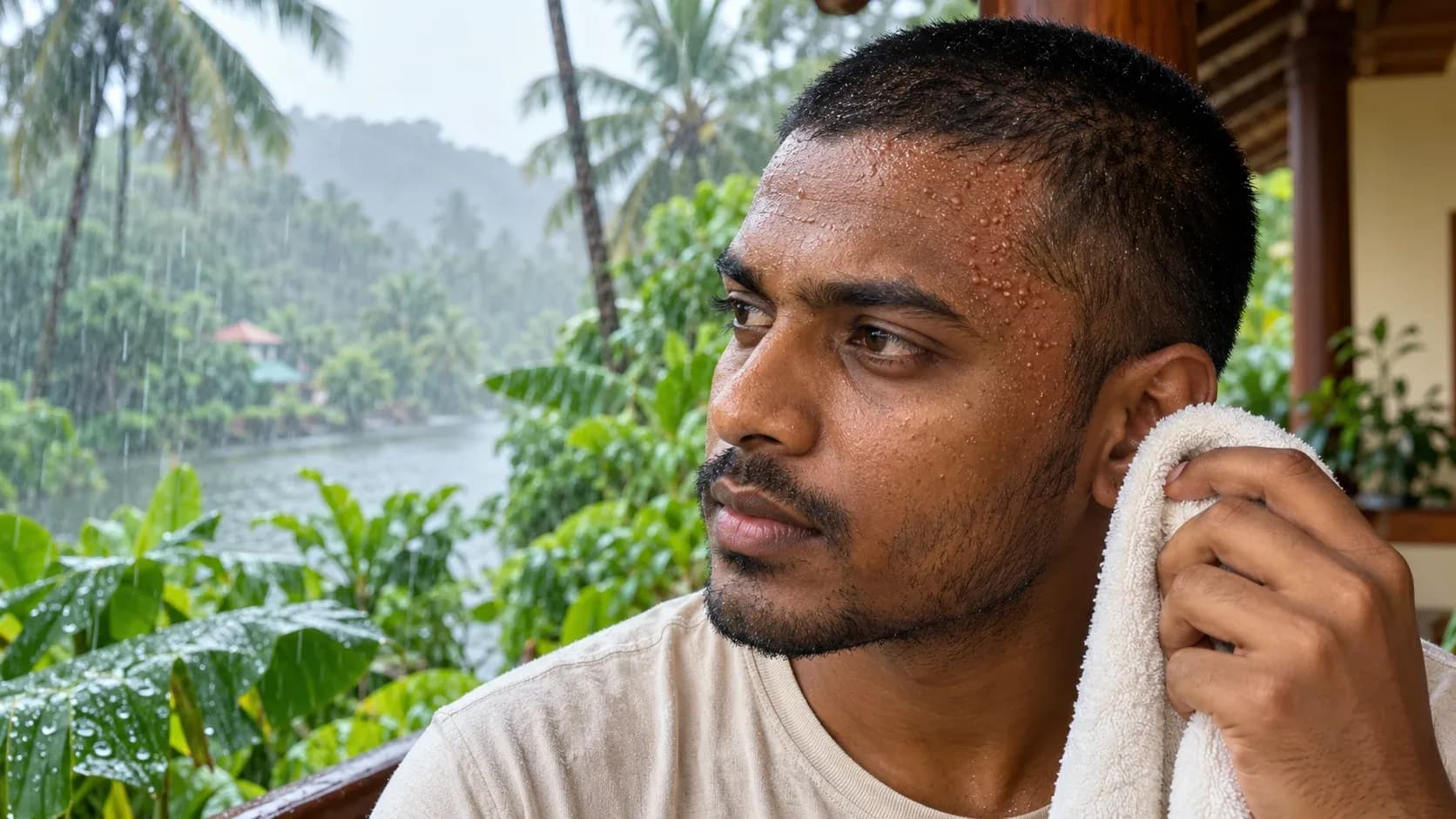
Fungal acne in humid and tropical weather usually refers to Malassezia folliculitis, which can cause clusters of similar-looking, itchy follicular bumps on the forehead, chest, back or shoulders. Heat, sweating, humidity and occlusion may encourage flares. Because it can resemble acne vulgaris or bacterial folliculitis, persistent cases should be assessed by a dermatologist before antifungal treatment is started.
What Is Fungal Acne in Humid and Tropical Weather?
Fungal acne in humid and tropical weather is not true acne. The clinical name is Malassezia folliculitis - an infection of hair follicles caused by Malassezia yeast, which lives naturally on human skin. In hot, humid conditions, this yeast multiplies beyond normal levels, blocks follicles, and triggers visible inflammation.
The bumps are typically 1–2 mm in size, uniform in shape, and grouped together. Itchiness is the most consistent distinguishing feature - bacterial acne is rarely itchy. Fungal acne is particularly common in tropical climates where humidity regularly exceeds 70–80%, including during India's monsoon and summer months.
Key features of fungal acne:
- Uniform, small, dome-shaped bumps (1–2 mm)
- Itchiness or mild burning sensation
- Concentrated on oily areas: fungal acne on forehead, chest, back, shoulders
- Does not respond to benzoyl peroxide or salicylic acid
- Worsens with sweating and occlusive skincare products
According to The Clear Ritual's dermatology team, Malassezia folliculitis is frequently misdiagnosed as bacterial acne, leading to ineffective treatment for weeks or months.
What Is Malassezia Folliculitis and How Is It Different From Regular Acne?
Malassezia folliculitis is the clinical name for fungal acne. Malassezia is a lipophilic (fat-loving) yeast that feeds on sebum - the skin's natural oil. When sebum production increases due to heat and humidity, Malassezia populations grow rapidly. The yeast penetrates the hair follicle wall, triggering an immune response that produces the characteristic bumps.
Studies suggest that Malassezia species are present on up to 90% of adult skin, but only cause visible folliculitis when environmental or internal conditions tip the balance toward overgrowth.
Regular bacterial acne (acne vulgaris) is caused by Cutibacterium acnes bacteria and produces variable lesions - whiteheads, blackheads, cysts - that respond to antibiotics and retinoids. Malassezia folliculitis produces uniform, itchy bumps that respond only to antifungal agents. Applying bacterial acne treatments to fungal acne will not clear it and may worsen skin irritation.
How Does Fungal Acne Develop in Humid and Tropical Climates?
Fungal acne develops in humid and tropical weather because heat and moisture create the exact conditions Malassezia yeast needs to overpopulate. The mechanism follows four stages:
- Heat increases sebum production. High temperatures cause sebaceous glands to produce more oil, providing Malassezia with additional fuel.
- Humidity traps moisture against the skin. Persistent moisture from sweat and environmental humidity keeps the skin surface warm and damp - ideal conditions for yeast proliferation.
- Occlusion accelerates the problem. Tight clothing, masks, or heavy skincare products trap heat and block airflow, accelerating follicle blockage.
- Follicle walls become inflamed. As Malassezia colonises the follicle, it breaks down fatty acids in sebum, producing byproducts that irritate follicle walls and trigger an immune response - visible as red, itchy bumps.
Research indicates that fungal skin infections are approximately 2–3 times more prevalent in tropical and subtropical regions compared to temperate climates. The Clear Ritual's clinical team notes that patients in high-humidity environments who wear non-breathable fabrics often experience flare-ups within 48–72 hours of sustained heat exposure.
Does Humidity Make Fungal Acne Worse?
Yes - humidity directly worsens fungal acne. High humidity prevents sweat from evaporating, keeping the skin surface consistently warm and moist. Malassezia yeast thrives in this environment and multiplies faster than the skin's natural defences can control.
In tropical cities where relative humidity sits above 75% for extended periods - including Mumbai, Chennai, Kolkata, and Bangkok - people with symptoms of acne-prone skin are at significantly higher risk of developing or experiencing recurring fungal acne.
Factors in humid weather that worsen fungal acne:
- Persistent sweating that is not washed off promptly
- Wearing synthetic, non-breathable fabrics
- Using heavy, oil-based moisturisers or sunscreens
- Not changing out of damp workout clothing within 30–60 minutes
- Sharing towels or gym equipment
Does Fungal Acne Get Worse in Heat?
Fungal acne typically worsens in heat. Elevated skin temperature accelerates Malassezia yeast activity and increases sebum secretion and sweat output simultaneously - providing both the food source and the moist environment that drive overgrowth.
Direct sun exposure is a more complex factor. While UV radiation has mild antifungal properties in controlled settings, prolonged sun exposure in tropical weather increases sweating, damages the skin barrier, and can trigger post-inflammatory pigmentation on existing fungal acne lesions. The net effect of sun exposure on fungal acne is negative for most people, as the sweat and heat consequences outweigh any mild UV antifungal benefit.
What sun exposure does to fungal acne:
| Effect of Sun Exposure | Helps or Hurts Fungal Acne? |
|---|---|
| Mild UV antifungal activity on skin surface | Marginally helps |
| Increased sweating during sun exposure | Hurts - feeds Malassezia |
| Post-sweat moisture trapped by heat | Hurts - ideal yeast environment |
| Skin barrier damage from UV radiation | Hurts - reduces natural defences |
| Post-inflammatory pigmentation on bumps | Hurts - dark marks worsen with UV |
| Increased sebum production in heat | Hurts - more fuel for yeast |
Does Humidity Cause Acne in General?
Humidity does not directly cause acne - but it creates skin conditions that make both fungal and bacterial acne significantly more likely to develop or worsen. Here is the mechanism:
- High humidity reduces sweat evaporation. Pores and follicles become warmer and more occluded.
- Sebaceous glands produce more oil in heat. More oil feeds both Cutibacterium acnes (bacterial acne) and Malassezia yeast (fungal acne).
- The skin barrier becomes compromised. Prolonged moisture exposure weakens the skin's acid mantle, reducing its ability to regulate microbial populations.
- Occlusion accelerates follicle blockage. Tight clothing, masks, and heavy skincare products trap the warm, humid microenvironment against the skin.
Humidity is particularly problematic for fungal acne because Malassezia is a moisture-dependent yeast - it cannot proliferate as rapidly in dry conditions. For bacterial acne, humidity acts as an accelerant rather than a primary cause.
People whose skin type affects acne patterns who live in cities with sustained humidity above 75% are at significantly higher risk of humidity-related breakouts. Those who notice acne worsening during monsoon or summer months and improving in cooler, drier seasons are likely experiencing humidity-driven flares.
What Is Tropical Acne (Acne Tropica) and How Does It Relate to Fungal Acne?
Acne tropica - also called tropical acne or acne tropicalis - is not the same as fungal acne, though the two conditions share a climate and frequently co-exist.
Acne tropica refers to a severe, inflammatory form of acne that develops specifically in people who move from temperate to tropical climates. It is caused by Cutibacterium acnes bacteria - the same organism behind ordinary bacterial acne - but heat, humidity, and heavy sweating dramatically accelerate its severity. Lesions are larger, deeper, and more painful than standard acne, and can appear on the trunk and buttocks in addition to the face.
Fungal acne (Malassezia folliculitis) is caused by a completely different organism - a yeast, not a bacterium - and produces smaller, uniform, itchy bumps without the deep cysts or nodules seen in acne tropica.
How to tell them apart:
| Feature | Acne Tropica | Fungal Acne (Malassezia Folliculitis) |
|---|---|---|
| Cause | Cutibacterium acnes bacteria | Malassezia yeast |
| Lesion type | Deep cysts, nodules, pustules | Small uniform dome-shaped bumps (1–2 mm) |
| Itchiness | Rare | Common |
| Location | Face, trunk, buttocks | Forehead, chest, back, shoulders |
| Who it affects | Often newcomers to tropical climates | Anyone in humid conditions |
| Treatment | Antibiotics, retinoids | Antifungal agents |
If you have searched for "acne tropica" or "tropical acne" and are seeing small, itchy, uniform bumps - Malassezia folliculitis is the more likely diagnosis. The distinction matters because the treatments are entirely different.
Fungal Acne vs. Bacterial Acne: Key Differences
Fungal acne and bacterial acne are two distinct conditions that are often confused because both produce bumps on the face, chest, and back. Treating one with the medication for the other will not work and may worsen the condition.
| Feature | Fungal Acne (Malassezia Folliculitis) | Bacterial Acne (Acne Vulgaris) |
|---|---|---|
| Cause | Malassezia yeast overgrowth | Cutibacterium acnes bacteria |
| Appearance | Uniform, small (1–2 mm), dome-shaped | Variable - whiteheads, blackheads, cysts |
| Itchiness | Common | Rare |
| Location | Forehead, chest, back, shoulders | Face, jawline, neck, back |
| Worsens with | Humidity, sweat, occlusion, fatty oils | Hormones, stress, clogged pores |
| Responds to | Antifungal treatments | Benzoyl peroxide, retinoids, antibiotics |
| Diagnosis | Skin scraping test | Clinical examination |
The Clear Ritual's skincare team consistently finds that patients who have used bacterial acne products for 4–6 weeks without improvement are more likely to have Malassezia folliculitis as the underlying cause.
What Else Triggers Fungal Acne Besides Humidity?
Humidity is the most common trigger for fungal acne in tropical climates, but it is rarely the only one. Understanding the causes of acne breakouts and your personal trigger profile is what separates temporary clearance from long-term control.
Antibiotics: Broad-spectrum antibiotics reduce bacterial competition on the skin. Malassezia - a yeast, not a bacterium - is unaffected by antibiotics and can proliferate rapidly when bacterial populations decline. People who develop acne-like bumps during or after an antibiotic course should consider Malassezia folliculitis as the cause.
High-sugar diet: Diets high in refined carbohydrates and sugars increase sebum production, indirectly providing more fuel for Malassezia yeast growth. Reducing refined sugar intake may help reduce outbreak frequency.
Stress: Chronic stress raises cortisol levels, which increases sebum production. In a humid climate, elevated sebum can be sufficient to tip a low-level Malassezia colonisation into a visible outbreak. People who notice flares during exam periods or high-pressure work months often have stress-driven sebum surges as the underlying mechanism.
Hormonal fluctuations: Hormonal changes that increase sebum production - puberty, PCOS, perimenopause, or certain contraceptive switches - can trigger fungal acne flares independently of weather.
Immunosuppression: Long-term steroid use, HIV, or other immunocompromising conditions reduce the skin's ability to regulate Malassezia populations, leading to more persistent and widespread infections.
Occlusive skincare products: Petroleum-based products, thick balms, and some SPF formulations not designed for tropical climates trap heat and moisture against the skin, accelerating follicle blockage.
Who Is Most at Risk of Fungal Acne in Humid Climates?
Fungal acne in humid weather can affect anyone, but certain profiles carry a significantly higher risk.
You are at higher risk if you:
- Have oily or combination skin
- Exercise frequently without immediately showering afterward
- Work outdoors or in hot, sweating-intensive environments (kitchens, construction, agriculture)
- Recently completed a course of oral antibiotics
- Wear tight, synthetic clothing for extended periods
- Use heavy or multi-step skincare routines in humid weather
- Have a history of seborrheic dermatitis or tinea versicolor - both Malassezia-related conditions
How to Manage Fungal Acne in Humid and Tropical Weather: Step-by-Step
Managing fungal acne in humid and tropical weather requires a consistent routine targeting the yeast overgrowth directly - not bacterial inflammation. The following steps are effective for most people when followed consistently.
Step 1: Confirm it is fungal acne. Fungal acne presents as uniform, itchy bumps that do not respond to standard acne treatments. If standard products have failed after 4–6 weeks, consult a dermatologist. A skin scraping test can confirm Malassezia folliculitis.
Step 2: Switch to a low-pH, antifungal cleanser. Use a gentle cleanser containing zinc pyrithione, ketoconazole, or selenium sulfide - all proven antifungal ingredients. Wash affected areas twice daily. Avoid cleansers containing coconut oil derivatives, as these can feed Malassezia.
Step 3: Apply a topical antifungal treatment. Topical antifungals such as ketoconazole 2% cream or clotrimazole 1% are first-line treatments. Apply to affected areas once or twice daily as directed. If topical treatment is insufficient after 4 weeks, a dermatologist may prescribe oral antifungals such as fluconazole or itraconazole.
Step 4: Use fungal-acne-safe moisturisers and sunscreen. Switch to water-based, oil-free, non-comedogenic formulations. Avoid products containing lauric acid, myristic acid, and oleic acid - fatty acids that Malassezia feeds on. The Clear Ritual recommends gel-based sunscreens with SPF 30 or higher for humid climates, applied each morning after cleansing.
Step 5: Modify clothing and lifestyle habits. Wear breathable, moisture-wicking fabrics such as cotton. Shower immediately after sweating. Change out of damp clothing within 30–60 minutes.
Step 6: Keep skin cool and dry between washes. In extremely humid conditions, a light dusting powder on the chest, back, and body folds can help absorb excess moisture and reduce Malassezia activity between wash sessions.
Common mistakes to avoid:
- Applying coconut oil or argan oil as a moisturiser - both feed Malassezia
- Using thick, occlusive creams in humid weather
- Treating fungal acne with benzoyl peroxide or salicylic acid alone
- Stopping antifungal treatment as soon as bumps fade, before completing the full course
- Introducing multiple new products simultaneously
Over-the-Counter vs. Prescription Treatments for Fungal Acne
| Treatment Type | Examples | Best For |
|---|---|---|
| OTC antifungal wash | Ketoconazole 1% shampoo used as body wash | Mild to moderate cases |
| OTC topical cream | Clotrimazole 1%, miconazole | Localised outbreaks |
| Prescription topical | Ketoconazole 2% cream | Moderate cases |
| Prescription oral | Fluconazole, itraconazole | Severe or resistant cases |
Oral antifungal medicines may be considered for widespread, persistent or recurrent Malassezia folliculitis, but they require a confirmed diagnosis and medical supervision because the appropriate medicine and treatment duration vary between patients.
What Does the Evidence Say About Fungal Acne Treatment?
Clinical reviews and dermatology guidance support antifungal treatment after Malassezia folliculitis has been identified. Topical options may be used for localised or milder cases, while a dermatologist may consider oral treatment for widespread, persistent or recurrent disease. Oral antifungals require medical supervision because of possible side effects, drug interactions and liver-related risks.
Diagnosis matters because Malassezia normally lives on healthy skin. Finding yeast alone does not automatically prove that it is causing the bumps. Dermatologists may use the appearance and distribution of lesions together with microscopy, dermoscopy, skin scraping or biopsy when the diagnosis is uncertain.
How Can You Prevent Fungal Acne in Humid Weather?
- Shower and change clothes after heavy sweating.
- Choose breathable clothing and avoid remaining in damp fabrics.
- Use lightweight skincare suited to your skin rather than assuming every oil is unsafe.
- Clean workout equipment, helmets, caps and frequently used towels.
- Avoid unnecessary antibiotic use and follow the prescribed course when antibiotics are medically required.
- Follow any maintenance plan recommended by your dermatologist because Malassezia folliculitis can recur.
When Should You See a Dermatologist?
Seek professional assessment if itchy follicular bumps are widespread, painful, recurrent, worsening or not improving with a simple routine. You should also consult a clinician if you are immunocompromised, pregnant, taking multiple medicines or considering an oral antifungal.
Urgent medical advice is appropriate when a rash spreads rapidly, is associated with fever or significant pain, or shows signs of a secondary bacterial infection.
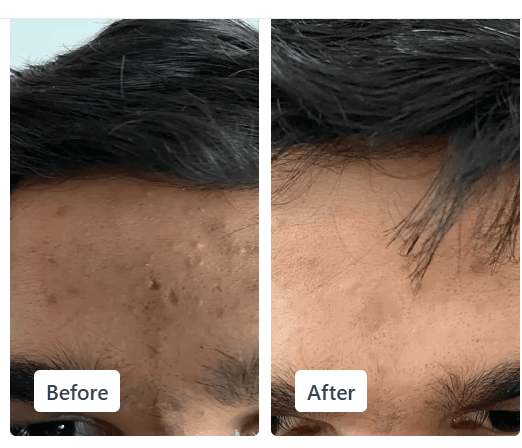
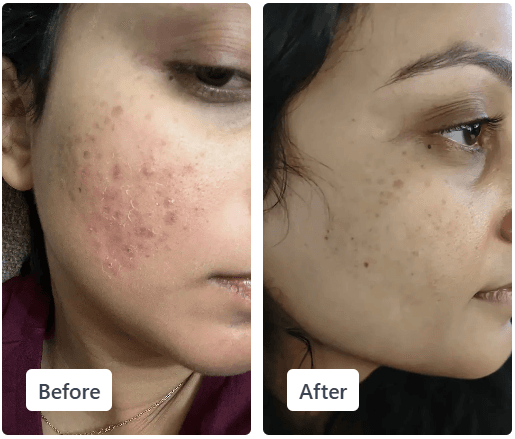
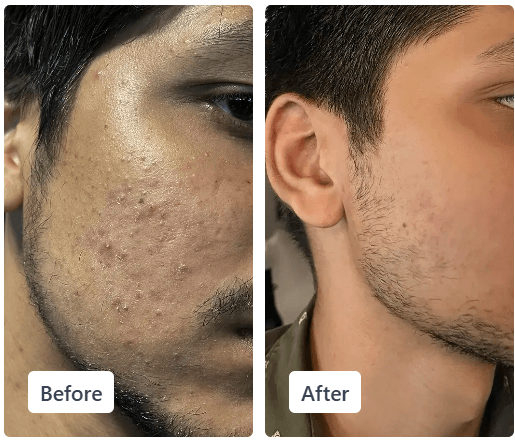
See real results, then start your own
Take the free Clear Ritual Skin Test and get a personalised routine built for your skin's unique patterns.
Take the Free Skin Test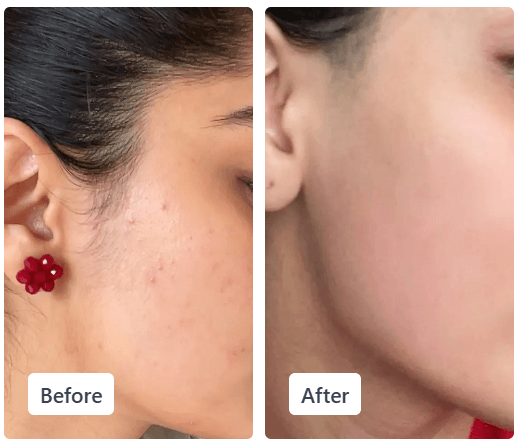
Frequently Asked Questions
Q: Can humid weather cause fungal acne?
A: Humidity does not create Malassezia, but heat, sweat and occlusion can encourage yeast overgrowth and make susceptible people more likely to flare.
Q: How can I tell fungal acne from regular acne?
A: Malassezia folliculitis often causes itchy, similar-looking follicular bumps without comedones. Regular acne may include blackheads, whiteheads, nodules and lesions of different sizes. A dermatologist can confirm the diagnosis.
Q: Does salicylic acid cure fungal acne?
A: Salicylic acid may reduce oil and follicular buildup, but it is not an antifungal medicine and should not replace diagnosis-based treatment.
Q: Can fungal acne and acne vulgaris occur together?
A: Yes. Both conditions can coexist, so some people may require a treatment plan that addresses Malassezia folliculitis and acne vulgaris separately.
Q: How long does fungal acne take to improve?
A: Improvement varies with severity, treatment and recurrence risk. A clinician should reassess the diagnosis if the condition does not respond as expected.
Q: Can fungal acne return after treatment?
A: Yes. Recurrence is possible, particularly when sweating, humidity, occlusion or other predisposing factors continue.
References
- Martínez-Ortega JI, et al. Malassezia Folliculitis: Pathogenesis and Diagnostic Challenges. View review
- Rubenstein RM, Malerich SA. Malassezia (Pityrosporum) Folliculitis. View article
- DermNet. Malassezia folliculitis. Read clinical guidance
- Cleveland Clinic. Malassezia folliculitis. Read overview
Editorial Standards
Clear Ritual has Strict sourcing guidelines to ensure our content is accurate and current. We rely on peer-reviewed studies, academic research institutions, and medical associations. We strive to use primary sources and refrain from using tertiary references. See a mistake? Learn More about our Editorial Standards.
Related Articles
How Helmets and Caps Trigger Forehead Acne: Causes, Prevention & Treatment
Published 15 October 2026
Pimples After Threading: Causes, Treatment & Prevention
Published 15 September 2026
Heat Pimples on Body: Causes, Prevention, and Treatment
Published 16 July 2026
Can Antibiotics Cause Fungal Acne? Causes, Treatment & Recovery
Published 15 October 2026