How Helmets and Caps Trigger Forehead Acne: Causes, Prevention & Treatment
Quick Answer:
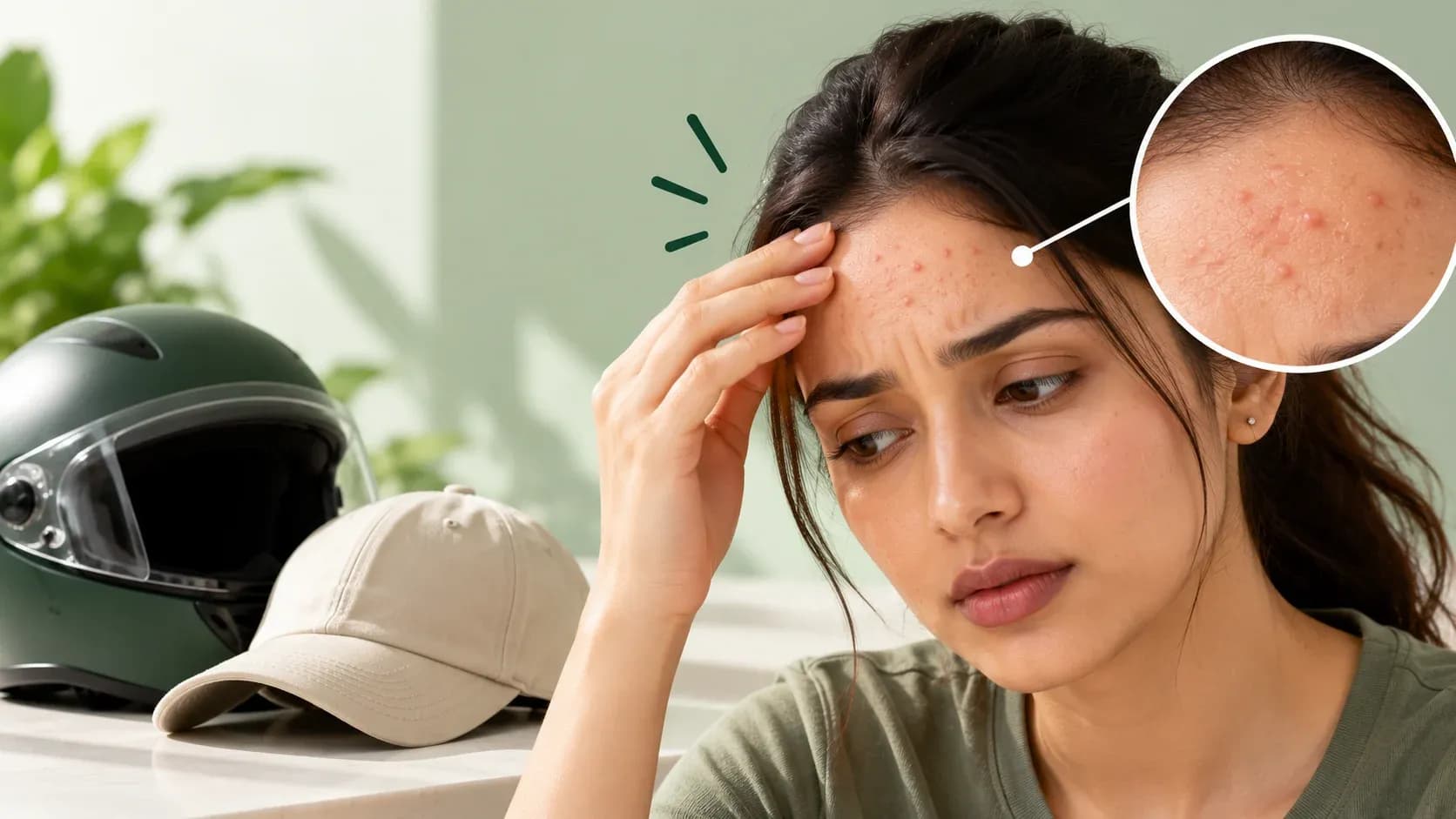
Wearing a helmet or cap does not directly cause acne on its own. But when headgear sits against your forehead for 30 or more minutes in warm conditions, the combination of heat, sweat, and friction creates a near-perfect environment for breakouts. Dermatologists call this acne mechanica: a specific subtype of acne triggered by physical factors rather than hormones. It is one of the most preventable forms of acne once you understand the mechanism.
What Is Acne Mechanica? A Clear Definition
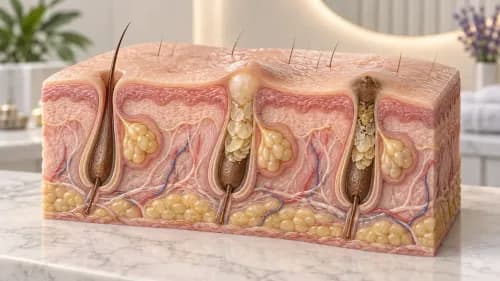
Acne mechanica is a subtype of acne caused by physical factors: heat, pressure, friction, and occlusion: rather than hormonal changes or excess oil production alone. When a helmet or cap sits against the forehead, it creates a sealed microenvironment that blocks airflow, traps sweat, and compresses dead skin cells and sebum into pores.
Acne mechanica is distinct from hormonal acne and requires a different treatment approach. It appears in a predictable pattern: exactly where the headgear contacts skin, along the forehead, temples, and hairline: not spread across the full face.
Key characteristics of acne mechanica:
- Caused by friction, heat, pressure, and occlusion from headgear
- Appears as small, uniform papules or pustules, not deep cysts
- Located precisely along the hat brim or helmet liner contact line
- Triggered by wearing headgear for 30 or more minutes in warm conditions
- Distinct from hormonal acne, which follows cyclical patterns and appears more diffusely
According to The Clear Ritual's skincare team, correctly identifying acne mechanica as the cause is the first step: because applying hormonal acne treatments to friction-triggered breakouts is one of the most common reasons treatment fails.
How Do Helmets and Caps Trigger Forehead Acne?
Helmets and caps trigger forehead acne through a four-step mechanical process that progressively blocks pores and promotes bacterial overgrowth. Each step builds on the previous one.
Step 1: Occlusion: The helmet or cap physically covers the forehead, blocking airflow. Skin temperature under the headgear rises by approximately 1 to 2°C compared to exposed skin.
Step 2: Sweat accumulation: Higher skin temperature stimulates sweat production. Because airflow is blocked, sweat sits on the skin surface rather than evaporating. This softens (macerates) the skin, making it more vulnerable to the next stage.
Step 3: Friction: Repeated micro-movement of the helmet lining or cap brim against the forehead creates friction. This friction disrupts the skin barrier and pushes debris: dead cells, oil, and sweat: into pores.
Step 4: Pore blockage and bacterial growth: Blocked pores trap sebum and keratin. Cutibacterium acnes, the bacteria responsible for inflammatory acne, thrives in this warm, oxygen-limited, oily environment. The result is the red, tender papules and pustules characteristic of acne mechanica.
This sequence explains why hat-triggered acne appears specifically at the contact line rather than spreading across the entire forehead.
Who Is Most Likely to Develop Helmet or Cap Acne?
Forehead acne from headgear can affect anyone who wears a helmet or cap regularly, but certain individuals face a significantly higher risk based on their lifestyle and skin type.
Higher-risk groups include:
- Daily motorbike or bicycle commuters wearing helmets for 30 or more minutes at a time
- Cricketers, cyclists, and contact sport athletes wearing helmets during training sessions
- Construction and industrial workers wearing hard hats in warm or humid environments
- People who wear baseball caps or beanies daily, particularly in humid weather
- Individuals with oily or combination skin, where sebum production is already elevated
- Teenagers and young adults, whose sebaceous glands are more active
- People who sweat heavily (hyperhidrosis), as moisture is the key accelerating factor in acne mechanica
Studies suggest that individuals with hyperhidrosis are at significantly higher risk of developing acne mechanica because sweat accumulation under occlusion speeds up every step of the four-stage process described above.
The Clear Ritual's clinical team notes that skin type and headgear habits together determine individual risk: oily skin combined with daily helmet use in warm conditions represents the highest-risk combination.
Does Helmet Material or Cap Fabric Affect Acne Risk?
Yes: the material in direct contact with the forehead significantly affects acne mechanica risk. Breathability and friction level are the two factors that matter most.
| Material / Lining | Breathability | Friction Level | Acne Risk |
|---|---|---|---|
| Synthetic foam lining (standard helmets) | Low | Medium to High | High |
| Nylon or polyester cap | Low | Medium | High |
| Cotton cap inner band | Medium | Low | Medium |
| Moisture-wicking fabric liner | High | Low | Low |
| Bamboo or natural fibre liner | High | Very Low | Low |
| Padded silicone insert | Low | Low | Medium |
Moisture-wicking and natural fibre liners reduce both sweat accumulation and friction simultaneously: addressing two of the four triggers in the acne mechanica mechanism. Research published in the Journal of the European Academy of Dermatology and Venereology (2019) found that moisture-wicking fabrics reduced friction coefficients and transepidermal water loss against facial skin compared with standard nylon, supporting their use as a first-line preventive measure.
How to Prevent Forehead Acne from Helmets and Caps
Preventing acne mechanica from headgear requires a consistent before-and-after skin routine combined with practical headgear hygiene. The Clear Ritual recommends addressing both sides of the equation simultaneously.
Before Wearing Your Helmet or Cap
- Cleanse your forehead with a gentle, non-comedogenic cleanser to remove excess oil and dead cells before they can be compressed into pores.
- Apply a lightweight, oil-free moisturiser. A well-hydrated skin barrier is more resistant to friction damage than dry or dehydrated skin.
- Place a thin cotton or moisture-wicking headband between your forehead and the helmet to absorb sweat and reduce direct friction.
- Avoid heavy sunscreens, primers, or occlusive creams on the forehead before wearing headgear: these block pores before friction even begins, creating a double-occlusion effect.
After Removing Your Helmet or Cap
- Cleanse within 30 minutes of removal wherever possible. The longer sweat and bacteria remain on skin, the higher the risk of pore blockage.
- Apply a salicylic acid (BHA) toner to the forehead 3 to 4 times per week. Salicylic acid penetrates oil-filled pores and exfoliates the follicle lining to prevent blockage.
- Avoid touching or picking at the forehead. Mechanical pressure on existing lesions worsens inflammation and increases the risk of post-inflammatory marks.
Headgear Hygiene
- Wash removable helmet liners at least once per week, or after every session in hot conditions
- Wipe the inner brim of caps with an alcohol-free antibacterial wipe after each use
- Allow helmets to dry fully between uses: bacteria multiply rapidly in damp foam padding
- Replace headbands weekly, as they accumulate bacteria faster than standard caps
Common mistake to avoid: Over-washing the face more than twice daily strips the skin barrier and triggers compensatory oil production, which worsens acne mechanica rather than improving it.
How to Treat Forehead Acne Caused by Helmets and Caps
If breakouts have already appeared, The Clear Ritual's skincare approach recommends a targeted treatment protocol matched to acne severity.
Mild Acne Mechanica (Few Blackheads or Whiteheads)
- Salicylic acid cleanser (0.5 to 2%) once or twice daily
- Oil-free, non-comedogenic moisturiser
- Consistent headgear hygiene as described above
- Expect visible improvement within 2 to 4 weeks
Moderate Acne Mechanica (Multiple Pustules, Recurring Breakouts)
- Add a benzoyl peroxide spot treatment (2.5 to 5%) on active lesions
- Consider a niacinamide serum (5 to 10%) to reduce redness and regulate sebum production
- Avoid physical scrubs: these increase skin inflammation and worsen acne mechanica
- Expect visible improvement within 4 to 8 weeks
Severe or Persistent Acne Mechanica (Deep Cysts, Scarring)
- Consult a dermatologist: prescription topical retinoids or oral antibiotics may be required
- Do not attempt to self-treat cystic acne with over-the-counter products alone
- Dermatologist-supervised treatment typically shows significant improvement within 2 to 3 months
Niacinamide is particularly useful in moderate cases because it addresses both the inflammatory response and sebum regulation without increasing photosensitivity: making it compatible with daily headgear use in outdoor settings.
What Results to Expect and When
Results from treating helmet-related forehead acne depend on severity, consistency of the skincare routine, and whether headgear hygiene is improved alongside treatment.
| Timeframe | What Typically Happens |
|---|---|
| Week 1 to 2 | Reduction in new breakouts if headgear hygiene improves; existing lesions may temporarily worsen as skin adjusts |
| Week 3 to 4 | Existing whiteheads and blackheads begin to resolve; forehead texture improves |
| Month 2 | Significant reduction in active acne for mild-to-moderate cases; redness begins to fade |
| Month 3 | Near-complete clearance for mild cases with consistent routine; moderate cases show 60 to 70% improvement |
| Month 3 to 6 | Persistent or cystic cases respond to prescription treatment; post-acne marks begin to fade |
Most people who address both the skincare routine and headgear hygiene simultaneously see faster improvement than those who treat only the skin without changing their helmet habits. Addressing one without the other significantly slows recovery.
Helmet Acne vs. Other Types of Forehead Acne: How to Tell the Difference
Not all forehead acne is caused by headgear. Identifying the correct cause determines which treatment works: and using the wrong treatment is a common reason breakouts persist.
| Feature | Acne Mechanica (Helmet / Cap) | Hormonal Forehead Acne | Comedonal Acne (Clogged Pores) |
|---|---|---|---|
| Primary cause | Friction, heat, occlusion | Androgen hormones, stress | Excess sebum, dead skin buildup |
| Location | Exactly where headgear contacts skin | Forehead, chin, jawline | Nose, forehead, T-zone |
| Lesion type | Papules, pustules, uniform clusters | Cysts, nodules | Blackheads, whiteheads |
| Triggers | Wearing headgear | Menstrual cycle, stress, poor sleep | Comedogenic skincare products, diet |
| Best treatment | Salicylic acid, headgear hygiene | Hormonal therapy, adapalene | BHA exfoliation, retinoids |
| Onset | Within days of consistent headgear use | Cyclical or gradual | Gradual |
The most reliable indicator of acne mechanica is location: if breakouts appear in a pattern that maps precisely onto where your hat or helmet sits, and worsens with headgear use, acne mechanica is the most probable cause.
Forehead Rash from a Hat: Acne, Heat Rash, or Something Else?
Not every red or bumpy patch after wearing a hat is acne mechanica. The Clear Ritual's clinical team identifies four distinct conditions that can produce a hat-related forehead rash: and each requires a different treatment.
1. Acne Mechanica (Hat Acne) Small, uniform papules or pustules located exactly where the hat brim contacts skin. Appears gradually over days to weeks. Responds to salicylic acid and improved headgear hygiene.
2. Miliaria (Heat Rash) Tiny, clear or red pinpoint bumps that are very itchy and prickly. Appears within hours of wearing a hat in hot weather. Caused by blocked sweat ducts: not blocked hair follicles. Resolves within hours of cooling the skin. Does not respond to acne treatment: cool compresses and calamine lotion are the correct response.
3. Allergic Contact Dermatitis Redness, swelling, and intense itching along the hat brim line, sometimes with small fluid-filled blisters. Worsens with each exposure to the trigger material (synthetic dyes, rubber bands, metal buckles). Lasts hours to days after hat removal. Requires identifying and avoiding the trigger, and may need topical corticosteroid treatment.
4. Seborrheic Dermatitis Flaking, yellowish or white scales along the hairline and forehead border, accompanied by redness. Driven by Malassezia yeast overgrowth, which thrives in the warm, moist environment under hats. Responds to antifungal treatment: not acne products.
| Condition | Appearance | Itch Level | Onset | Key Treatment |
|---|---|---|---|---|
| Acne Mechanica | Papules / pustules, uniform | Low to moderate | Days to weeks | Salicylic acid, headgear hygiene |
| Heat Rash | Tiny red or clear pinpoints | High: prickly | Hours | Cool compress, calamine |
| Contact Dermatitis | Redness, blisters, swelling | High | Hours to days | Avoid trigger, corticosteroid |
| Seborrheic Dermatitis | Flakes, yellowish scale | Moderate | Chronic | Antifungal treatment |
If you cannot clearly identify which condition is present, or if the rash persists beyond two weeks despite removing the headgear, professional diagnosis is the safest next step. Misidentifying these conditions is common and delays recovery.
Why Does My Forehead Itch When I Wear a Hat?
Forehead itching under a hat has three distinct causes, and identifying which one applies determines the correct fix.
Cause 1: Sweat irritation (most common): Sweat is mildly acidic. When trapped under a hat, it disrupts the skin's natural pH balance and triggers an itching sensation. This resolves quickly after hat removal and cleansing.
Cause 2: Friction and skin barrier disruption: Repeated rubbing from the hat brim creates micro-abrasions in the outer skin layer (stratum corneum), activating itch-sensing nerve endings. The itch typically begins after 20 to 30 minutes of wearing. This is an early warning sign that acne mechanica may develop: sustained friction causing itching will eventually cause blocked pores if not addressed.
Cause 3: Allergic contact dermatitis: Certain hat materials: synthetic dyes, rubber sweatbands, nickel in metal buckles: can trigger a localised allergic reaction. Unlike sweat irritation, this does not clear quickly after hat removal and tends to worsen with each exposure.
How to tell the difference:
| What You Feel | When It Happens | Most Likely Cause |
|---|---|---|
| Mild itch that fades within minutes of hat removal | During or just after wearing | Sweat irritation |
| Persistent itch along hat brim line | After 20 to 30 minutes of wearing | Friction (early acne mechanica) |
| Intense itch, redness, and blisters | During wearing and hours after | Allergic contact dermatitis |
| Flaking, yellowish crust, chronic itch | Worsens in humid weather | Seborrheic dermatitis |
What Does Research Say About Hat Acne and Acne Mechanica?
Acne mechanica has been documented in dermatological literature since the 1970s, and the evidence on what causes it and what stops it is consistent.
Friction alone is sufficient to trigger acne. A landmark study by Mills and Kligman (1975) in the Archives of Dermatology demonstrated that repeated mechanical friction applied to the foreheads of participants with no active acne produced acne-like lesions within two weeks. This established the mechanica mechanism independently of hormonal or comedogenic factors. You do not need oily skin or a hormonal imbalance for hat-triggered acne to develop.
Occlusion and increased skin temperature may contribute to pore blockage by trapping sweat and oil against the skin. However, the precise effect varies by skin type, headgear fit, and duration of use.
Conclusion
Helmets and caps can contribute to forehead breakouts when friction, pressure, sweat, and trapped heat irritate the skin. Keep headgear clean and dry, reduce rubbing where possible without compromising helmet safety, and use gentle, non-comedogenic skincare. If bumps are itchy, scaly, painful, or persistent, a dermatologist can help distinguish acne mechanica from other conditions.
Understand What Your Skin Needs
Take the Clear Ritual Skin Test to identify your skin type, concerns, and potential triggers before building your routine.
Take the Free Skin Test
Frequently Asked Questions
Q. Can wearing a helmet cause forehead acne?
A. Yes. Friction, pressure, heat, and trapped sweat beneath a helmet can contribute to acne mechanica, especially where the helmet lining touches the forehead.
Q. How can I prevent forehead acne while wearing a helmet?
A. Clean and dry the helmet lining as directed by its manufacturer, avoid heavy pore-clogging products, cleanse gently after sweating, and ensure the helmet fits safely without unnecessary rubbing.
Q. Does wearing a cap every day make acne worse?
A. A cap may aggravate breakouts if its brim repeatedly rubs the skin or traps sweat. Keeping the cap clean and reducing friction may help.
Q. Is an itchy forehead rash under a hat always acne?
A. No. Heat rash, contact dermatitis, and other skin conditions can resemble acne. Persistent itching, scaling, or blistering warrants professional assessment.
Q. What can I use for mild helmet-related forehead acne?
A. Gentle cleansing, a non-comedogenic moisturiser, and a gradually introduced acne treatment such as salicylic acid or benzoyl peroxide may help. Seek medical advice for painful, scarring, or persistent breakouts.
Disclaimer: This article provides general educational information and is not a substitute for personalised medical advice. Consult a qualified healthcare professional for diagnosis or treatment.
Editorial Standards
Clear Ritual has Strict sourcing guidelines to ensure our content is accurate and current. We rely on peer-reviewed studies, academic research institutions, and medical associations. We strive to use primary sources and refrain from using tertiary references. See a mistake? Learn More about our Editorial Standards.
Related Articles
Pimples After Threading: Causes, Treatment & Prevention
Published 15 September 2026
Heat Pimples on Body: Causes, Prevention, and Treatment
Published 16 July 2026
Can Antibiotics Cause Fungal Acne? Causes, Treatment & Recovery
Published 15 October 2026

What Is Comedonal Acne? Causes, Types, and Treatment
Published 15 September 2026