Can Antibiotics Cause Fungal Acne? Causes, Treatment & Recovery

Quick Answer:
Yes, antibiotics can cause fungal acne. Antibiotics kill bacteria but leave Malassezia yeast completely unaffected. With bacterial competition removed, yeast populations inside hair follicles overgrow rapidly, producing the itchy, uniform bumps known as fungal acne (Malassezia folliculitis). This is one of the most underrecognised reasons people break out during or after an antibiotic course.
What Is Fungal Acne and How Is It Different From Regular Acne?
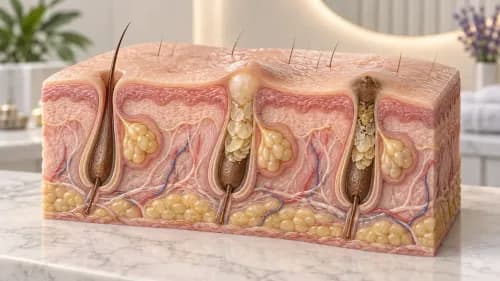
Fungal acne, technically called Malassezia folliculitis or Pityrosporum folliculitis, is a specific type of folliculitis caused by yeast overgrowth inside hair follicles, not by bacteria or clogged pores. Malassezia yeast naturally lives on everyone's skin as part of the microbiome. Under normal conditions it feeds on sebum without causing problems. When conditions shift in its favour, yeast populations explode inside follicles and trigger an inflammatory response. For further context, see fungal acne vs acne vulgaris.
The result is clusters of small, uniformly sized bumps that are intensely itchy. These bumps typically appear on the forehead, temples, chest, shoulders, and upper back, areas with higher oil production.
Key differences from bacterial acne:
- Fungal acne bumps are uniform in size; bacterial acne bumps vary
- Fungal acne is intensely itchy; bacterial acne is rarely itchy unless severely inflamed
- Fungal acne does not respond to benzoyl peroxide, salicylic acid, or antibiotics
- Fungal acne requires antifungal treatment; bacterial acne requires antibacterial or antibiotic treatment
According to The Clear Ritual's dermatology team, misidentifying fungal acne as bacterial acne, and treating it with more antibiotics, is one of the most common reasons people see no improvement, or a worsening, of their breakouts.
What Is Folliculitis, and Is Fungal Acne the Same Thing?
Fungal acne and folliculitis are not the same thing, but fungal acne is one type of folliculitis. Folliculitis is a broad term for inflammation of the hair follicles, the tiny pockets in skin where hair grows, caused by bacteria, fungi, or physical irritation. Fungal acne sits within that category as a specific subtype caused exclusively by Malassezia yeast overgrowth.
The main types of folliculitis:
- Bacterial folliculitis, most common type, usually caused by Staphylococcus aureus; bumps vary in size and may have pus-filled centres
- Fungal folliculitis (fungal acne), caused by Malassezia yeast; uniform, itchy, clustered bumps
- Mechanical folliculitis, caused by friction from clothing, helmets, or equipment; no microbial infection involved
- Eosinophilic folliculitis, rare, primarily affects people with compromised immune systems
The confusion between fungal acne and bacterial folliculitis is clinically significant. Treatments that work for bacterial folliculitis, including antibiotics, actively worsen fungal acne by eliminating the bacteria that would otherwise compete with yeast.
How Do Antibiotics Trigger Fungal Acne? The Microbiome Mechanism
Antibiotics trigger fungal acne by disrupting the competitive balance of the skin microbiome. Here is the mechanism in three steps: For further context, see Malassezia folliculitis.
Step 1, Antibiotics eliminate bacterial competitors
Broad-spectrum antibiotics, oral or topical, reduce the overall bacterial population on the skin, including the beneficial bacteria that naturally limit yeast growth. Because Malassezia yeast is a fungus, not a bacterium, it is completely unaffected by antibiotics. Bacterial competition disappears; yeast faces no constraint.
Step 2, Malassezia yeast overgrows inside hair follicles
Malassezia prefers the interior of hair follicles, where sebum is abundant. The yeast feeds on fatty acids in sebum, the more sebum available, the faster it multiplies. Without bacterial competition, yeast migrates deeper into follicles and begins expanding rapidly.
Step 3, The immune system responds with inflammation
As yeast populations inside follicles reach critical mass, the immune system launches an inflammatory response. This produces the clusters of small, uniformly sized, itchy papules that characterise Malassezia folliculitis. The inflammation is the body's attempt to contain the overgrowth, and it is that inflammation which creates the visible bumps.
How quickly does this happen?
Fungal acne from antibiotics typically appears within 1–4 weeks of starting a course. A 2019 review published in the Journal of the American Academy of Dermatology noted that Malassezia folliculitis is a recognised complication of prolonged antibiotic therapy, particularly with oral tetracyclines and macrolides. People taking long-term antibiotics for acne, courses of 3–6 months, face the highest risk because prolonged microbiome suppression gives yeast sustained freedom to expand.
The mechanism in one sentence: Antibiotics eliminate bacterial competitors on the skin, which allows Malassezia yeast to overgrow inside hair follicles, triggering the inflamed, itchy bumps of fungal acne.
Which Antibiotics Carry the Highest Risk of Causing Fungal Acne?
All broad-spectrum antibiotics can potentially trigger Malassezia folliculitis, but risk varies by drug type, course length, and route of administration. Oral antibiotics carry higher systemic risk than topical formulations because they disrupt the microbiome across the whole body, not just locally.
| Antibiotic | Common Use | Spectrum | Relative Fungal Acne Risk |
|---|---|---|---|
| Doxycycline | Bacterial acne, rosacea, infections | Broad-spectrum | High, long courses very common |
| Minocycline | Bacterial acne | Broad-spectrum | High, similar risk profile to doxycycline |
| Clindamycin (oral) | Serious skin infections | Broad-spectrum | Moderate to high |
| Clindamycin (topical) | Bacterial acne | Narrow, localised | Moderate, disruption limited to application area |
| Azithromycin | Acne, respiratory infections | Broad-spectrum | Moderate to high |
| Amoxicillin | Bacterial infections | Broad-spectrum | Moderate, courses typically shorter (7–14 days) |
Does doxycycline specifically cause fungal acne? Yes. Doxycycline is a broad-spectrum tetracycline antibiotic that disrupts the skin microbiome broadly. People on doxycycline for acne, particularly on courses of 3 months or more, report fungal acne as a recognised side effect. Importantly, doxycycline has no antifungal activity. Using it to treat what is actually fungal acne will not only fail, it will worsen yeast overgrowth by further suppressing bacterial competition.
Can topical clindamycin cause fungal acne? Yes, though the risk is more localised. Regular use over weeks or months can shift the bacterial balance on the face or chest, giving Malassezia a foothold in the treated area. The Clear Ritual's skin science team notes that new itchy, uniform bumps appearing in the same area as topical clindamycin application are a recognised pattern of localised microbiome disruption.
How to Tell Fungal Acne Apart From Bacterial Acne After Antibiotics
Many people finishing an antibiotic course notice their skin breaks out worse than before. Two separate mechanisms explain post-antibiotic breakouts, and distinguishing them matters because the treatments for each actively worsen the other. For further context, see benzoyl peroxide for acne.
Mechanism 1, Fungal acne rebound (Malassezia folliculitis)
If Malassezia yeast overgrew during the antibiotic course, stopping antibiotics does not reverse the imbalance. Bacterial populations take weeks to months to recover. During this window, yeast remains elevated and fungal acne persists or intensifies.
Mechanism 2, Bacterial acne rebound
Bacteria that survived the antibiotic course can develop partial resistance. Without continued antibiotic suppression, they re-colonise rapidly, producing the larger, more varied inflammatory papules and cysts associated with bacterial acne.
How to tell them apart:
| Feature | Fungal Acne Rebound | Bacterial Acne Rebound |
|---|---|---|
| Bump size | Uniform, small | Varied sizes, some deeper |
| Itch level | Intensely itchy | Mildly itchy or tender |
| Location | Forehead, chest, upper back | Jaw, cheeks, chin |
| Onset after stopping antibiotics | 1–4 weeks | 4–8 weeks |
| Response to antifungals | Improves within 2–4 weeks | No improvement |
Mixed rebound, both types occurring simultaneously, is more common than most people realise, particularly after long antibiotic courses. A dermatologist assessment is especially valuable when both patterns appear to be present.
Who Is Most at Risk of Antibiotic-Triggered Fungal Acne?
Antibiotic-triggered Malassezia folliculitis can affect anyone on a course of antibiotics, but certain factors increase the likelihood. For further context, see skin barrier.
Higher-risk profiles:
- People taking oral tetracyclines (doxycycline, minocycline) for 3 months or more for acne management
- People with naturally oily skin, excess sebum provides more food for Malassezia
- People in hot, humid climates, warmth and moisture are the environmental conditions yeast prefers
- People using heavy, oil-based skincare products that feed yeast while on antibiotics
- People with weakened immune function from chronic stress, sleep deprivation, or illness
- People who sweat heavily and do not shower promptly, creating a warm, moist environment on the skin surface
People with no prior acne history can develop fungal acne for the first time during or after an antibiotic course. The disruption of a previously balanced microbiome is sufficient to trigger Malassezia overgrowth even without a pre-existing skin condition.
How to Treat Fungal Acne Caused by Antibiotics: A Step-by-Step Guide
Treating Malassezia folliculitis triggered by antibiotics requires a targeted antifungal approach, not more antibiotics, and not standard acne treatments. The Clear Ritual recommends the following structured recovery process.
Confirm the diagnosis before treating. Uniform size, intense itch, and clustering on the chest, shoulders, or forehead strongly suggest fungal acne. Varied bump sizes, deeper cysts, and minimal itch suggest bacterial rebound. If unsure, or if both patterns are present, consult a dermatologist before self-treating.
Switch to an antifungal-targeted cleanser. Use a product containing ketoconazole 1–2% or zinc pyrithione on the affected area. Leave it on for 1–2 minutes before rinsing to allow sufficient contact time. Start once daily, increasing to twice daily if tolerated.
Remove products that feed yeast. Malassezia feeds on fatty acids (C11–C24 chain-length) found in many skincare oils. Remove coconut oil, olive oil, sunflower oil, and other plant oils from your routine. Replace them with Malassezia-safe alternatives, squalane, mineral oil, or glycerine do not feed the yeast.
Wear breathable fabrics and shower after sweating. Malassezia thrives in warm, humid conditions. Switch to cotton or moisture-wicking materials. Shower within 30 minutes of exercise, do not allow sweat to sit on the skin.
- Review your acne treatments with your prescriber. Standard acne treatments do not directly treat Malassezia yeast. Do not stop prescribed antibiotics or other medicines without medical advice.
Support microbiome recovery with gentle cleansing. Antifungals address the overgrowth, but restoring healthy bacterial populations prevents recurrence. Use a non-stripping, gentle cleanser. Avoid over-washing, which strips the lipid layer that beneficial bacteria depend on. The skin microbiome takes 3–6 months to fully restabilise after prolonged antibiotic use.
Track progress and set a reassessment point. Antifungal treatment for Malassezia folliculitis typically shows visible improvement within 2–4 weeks. Full clearance can take 6–8 weeks. If bumps have not improved after 4 weeks of consistent treatment, professional reassessment is needed, the diagnosis may need revisiting, or a secondary trigger (excess sebum, immune suppression) may be sustaining the overgrowth.
What to Expect: Fungal Acne Recovery Timeline
Recovery from antibiotic-triggered Malassezia folliculitis follows a predictable pattern when the correct antifungal treatment is applied consistently.
| Timeframe | What Typically Happens |
|---|---|
| Week 1–2 | Itch may reduce; new bump formation begins to slow |
| Week 2–4 | Visible reduction in existing bumps; redness fades |
| Week 4–6 | Most active bumps clear; post-inflammatory marks may remain |
| Week 6–8 | Full clearance in most cases with consistent treatment |
| Month 3–6 | Skin microbiome gradually restabilises; recurrence risk decreases |
These timelines apply to cases using appropriate antifungal treatment from the start. Delays caused by incorrect treatment (continuing antibiotics or standard acne products) extend recovery significantly.
When oral antifungals are considered: Most antibiotic-triggered fungal acne responds to topical ketoconazole 1–2% used as a wash or leave-on treatment. Oral antifungals, itraconazole or fluconazole, are reserved for cases that are extensive, deeply inflamed, or unresponsive to 6–8 weeks of topical therapy. Oral antifungals require a prescription and should only be taken under medical supervision.
How to Prevent Fungal Acne While Taking Antibiotics
Antibiotic use cannot always be avoided, but the risk of Malassezia folliculitis can be reduced with targeted preventive steps.
- Ask your prescribing clinician whether an antifungal wash is appropriate if you are at risk of Malassezia folliculitis; routine preventive treatment is not necessary for everyone.
- Remove heavy oil-based skincare products from your routine while taking antibiotics
- Shower promptly after exercise, within 30 minutes, to remove sweat from the skin surface
- Wear breathable, natural-fibre clothing that does not trap heat and moisture
- Avoid occlusive skincare ingredients (coconut oil, olive oil, heavy plant butters) that provide nutrients for Malassezia
These measures do not eliminate fungal acne risk entirely, but they reduce the environmental conditions that favour yeast overgrowth during a period when bacterial competition is suppressed.
Understand What Your Skin Needs
Take the Clear Ritual Skin Test to identify your skin type, concerns, and potential triggers before building your routine.
Take the Free Skin Test
Frequently Asked Questions About Antibiotics and Fungal Acne
Q. Can antibiotics cause breakouts even if you've never had acne before?
A. Yes. Antibiotics disrupt the skin microbiome regardless of prior acne history. If you had balanced bacterial populations keeping Malassezia in check, antibiotics reduce those bacteria, and yeast can overgrow in the absence of that competition. People with no prior acne history can develop Malassezia folliculitis for the first time during or after a course, typically presenting as uniform, itchy bumps on the chest, shoulders, or forehead.
Q. I finished my antibiotics two weeks ago. Why am I still breaking out?
A. Stopping antibiotics does not immediately restore the skin microbiome. Bacterial populations suppressed during the course take weeks to months to recover. During this window, Malassezia yeast remains elevated and fungal acne persists. If your breakout consists of small, itchy, uniform bumps, antifungal treatment, not waiting it out, is the appropriate next step. Bacterial acne rebound, characterised by larger and deeper bumps, is also possible and requires a different treatment path.
Q. Can amoxicillin cause fungal acne?
A. Yes, it can. Amoxicillin is a broad-spectrum penicillin antibiotic that disrupts skin and gut bacterial populations, creating conditions for Malassezia yeast overgrowth. However, amoxicillin courses are typically shorter (7–14 days) than acne-specific antibiotic courses, so the risk is lower than with prolonged doxycycline or minocycline use. Fungal acne from amoxicillin, if it occurs, typically appears within 1–3 weeks of starting the course.
Q. Can you have fungal acne and bacterial acne at the same time?
A. Yes, and this is more common than most people realise, particularly after prolonged antibiotic use.
Both conditions can occur together. Because they may require different treatments, a dermatologist can assess the pattern of bumps and recommend appropriate care. Do not stop prescribed antibiotics without speaking to your clinician.
Q. Should I stop antibiotics if I notice fungal acne?
A. Do not stop prescribed antibiotics on your own. Contact the prescribing clinician if new itchy bumps develop during treatment so the diagnosis and medication plan can be reviewed.
Conclusion
Antibiotic use can sometimes be associated with Malassezia folliculitis, particularly when itchy, similarly sized bumps appear during or after treatment. Not every breakout following antibiotics is fungal acne. An accurate diagnosis and a treatment plan guided by a clinician can help address the underlying cause without interrupting necessary medication.
Disclaimer: This article is for general educational purposes and is not a substitute for professional medical advice. Do not change or stop prescribed medication without consulting your healthcare professional.
Editorial Standards
Clear Ritual has Strict sourcing guidelines to ensure our content is accurate and current. We rely on peer-reviewed studies, academic research institutions, and medical associations. We strive to use primary sources and refrain from using tertiary references. See a mistake? Learn More about our Editorial Standards.
Related Articles
What Is Comedonal Acne? Causes, Types, and Treatment
Published 15 September 2026
Genetic Causes Behind Acne-Prone Skin And Treatment Options
Published 16 July 2026
Does Conditioner Cause Back Acne? Direct Answer + Fix
Published 8 October 2026
Does AC Cause Acne? How Air Conditioning Affects Your Skin
Published 8 October 2026