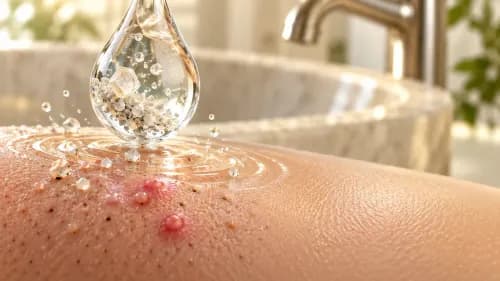
Does Conditioner Cause Back Acne? Direct Answer + Fix
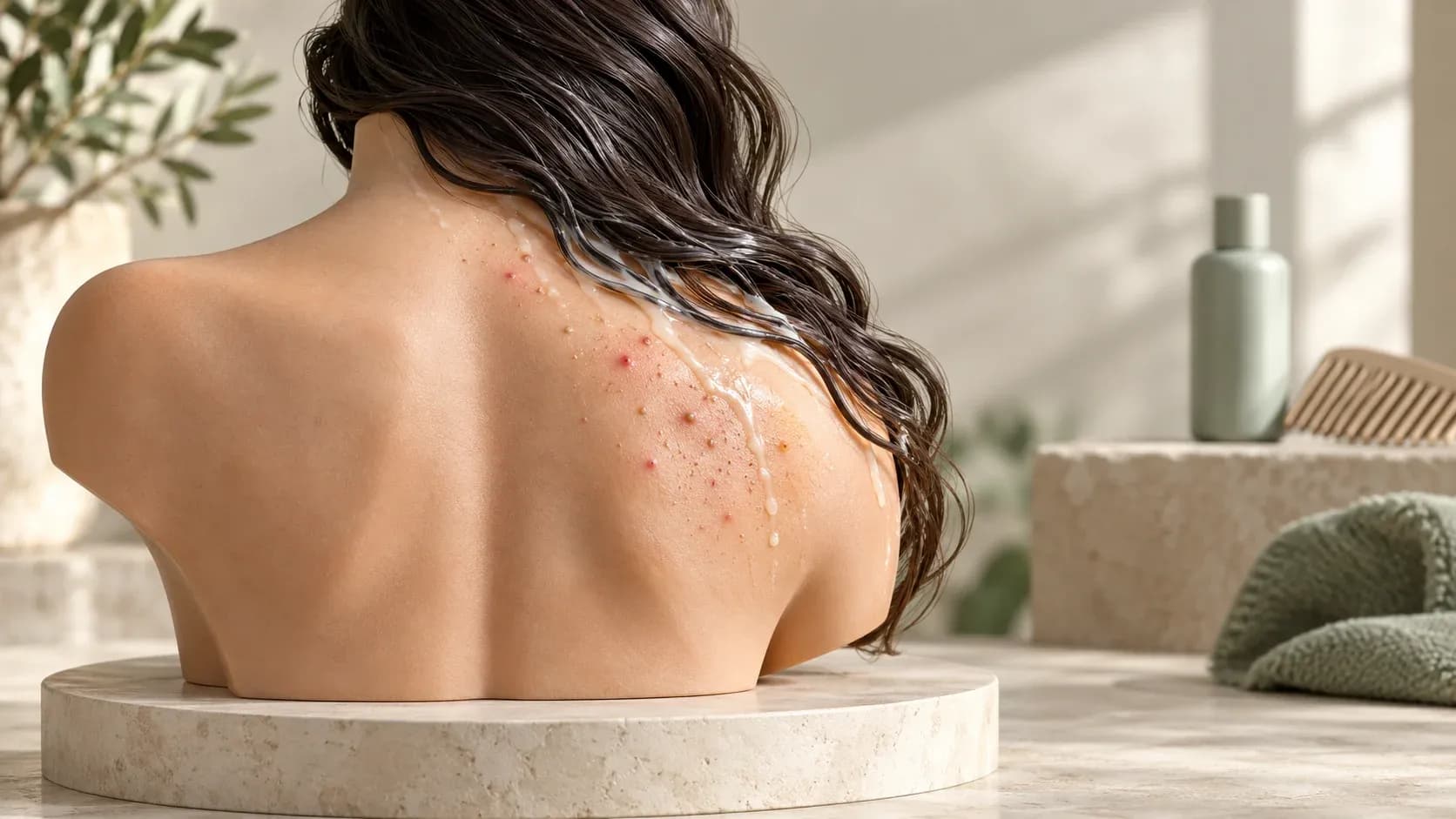
Quick Answer: Conditioner can cause back acne, and it happens more often than most people realise. The problem is not conditioner itself, it is what silicone- and oil-based residues do when they run down your back during rinsing and settle into pores that are already producing sebum.
This type of breakout has a clinical name: pomade acne, also called acne cosmetica. Ingredients like dimethicone, coconut oil, beeswax, and polyquaterniums coat the skin over your upper back and shoulders, blocking the natural exit route for oil and dead skin cells. The result is a predictable cluster of small, uniform bumps exactly where your hair falls.
What Is Pomade Acne? The Clinical Name for Hair-Product Breakouts
Pomade acne is a specific subtype of acne triggered by topical hair products, not by hormones, genetics, or diet alone. Dermatologists first described it in the 1970s among people who applied heavy pomades and greases to their hair, observing a consistent pattern of closed comedones along the forehead and hairline. Today, the same mechanism affects the back and shoulders, and the trigger products extend far beyond old-school pomades.
According to Clear Ritual's dermatology team, pomade acne is defined by three features:
- Location pattern, breakouts cluster in areas of direct product contact: upper back, shoulders, nape of the neck, and hairline
- Lesion type, predominantly small, flesh-coloured closed comedones with some inflamed papules; rarely large cysts
- Trigger relationship, breakouts correlate with hair wash days or product application days, and improve when products change
The mechanism is distinct from hormonal acne. Product ingredients physically obstruct pore openings from the outside, rather than increasing oil production from within. This is why pomade acne can appear even in people with otherwise non-acne-prone skin, and why it responds to product changes rather than requiring hormonal or antibiotic treatment.
Pomade acne typically resolves within two to four weeks of eliminating the causative product, compared to eight to twelve weeks for hormonal acne to respond to treatment.
How Hair Products Cause Back Acne: The Skin Mechanism
Hair products cause back acne by depositing occlusive ingredients onto back skin during rinsing, where those ingredients block pore openings and trap sebum beneath the skin surface.
The upper back and shoulders have a high density of sebaceous glands, producing sebum to protect and moisturise skin. When hair product ingredients coat this area, they form a film over pore openings. Your skin continues producing oil underneath this barrier, but the oil cannot reach the surface. Dead skin cells that should naturally shed away become sticky and clump together inside the follicle.
The trapped environment inside blocked pores allows Cutibacterium acnes bacteria to multiply rapidly. These bacteria feed on sebum and produce inflammatory byproducts that activate the immune system. White blood cells rush to the area, causing redness, swelling, and eventually pustule formation.
Clear Ritual's skin science team identifies three stages in this process:
- Stage 1: Occlusive product residue settles on back skin during rinsing
- Stage 2: Normal sebum flow and dead cell shedding become blocked
- Stage 3: Bacterial proliferation triggers visible inflammation within one to three days
Which Hair Product Ingredients Trigger Back Acne?
Specific ingredient categories cause back acne by creating occlusive barriers on skin. Understanding which ingredients cause problems helps identify triggers in current products.
| Ingredient Type | Examples | Why They Cause Acne |
|---|---|---|
| Silicones | Dimethicone, cyclopentasiloxane, cyclomethicone | Form occlusive film; do not dissolve in water |
| Heavy oils | Coconut oil, palm oil, cocoa butter | Mix with sebum and solidify inside pores |
| Waxes | Beeswax, carnauba wax, candelilla wax | Create thick barrier that traps dead cells |
| Polymers | Polyquaterniums, PVP, acrylates | Sticky residue binds to skin surface |
| Sulfates | Sodium lauryl sulfate, ammonium laureth sulfate | Irritate skin barrier, triggering reactive oil production |
Silicones deserve particular attention. Dimethicone and related silicones appear in most conditioning products. While effective at making hair smooth and shiny, dimethicone does not dissolve easily in water. When you rinse conditioner, silicone droplets settle on shoulder and back skin and accumulate over days and weeks.
Coconut oil has become popular in natural hair care, but its comedogenic properties make it problematic for acne-prone skin. The medium-chain fatty acids in coconut oil can penetrate pore linings and trigger inflammation even before complete pore blockage occurs.
Importantly, "natural" or "organic" labels do not indicate non-comedogenic status. Many natural oils, including shea butter and cocoa butter, are highly comedogenic despite being plant-derived.
Conditioner vs. Shampoo vs. Leave-In: Which Causes the Most Back Acne?
Not all hair products pose the same risk. The key variable is contact time on skin and ingredient occlusion level.
| Product Type | Contact Time on Skin | Main Acne-Causing Ingredients | Back Acne Risk | Who's Most Affected |
|---|---|---|---|---|
| Rinse-out conditioner | 2–5 min during rinse | Dimethicone, cetyl alcohol, coconut oil | High | All hair types; worst with long hair |
| Leave-in conditioner | All day / overnight | Polymers, silicones, lightweight oils | Very high | Curly hair routines; protective styling |
| Hair mask / deep conditioner | 5–30 min | Heavy waxes, shea butter, cocoa butter | High | Weekly treatment users |
| Styling cream / gel | All day | Acrylates, PVP, oils | Moderate–High | Product-heavy styling routines |
| Shampoo | Under 2 min rinse contact | SLS, conditioning agents | Low–Moderate | Sensitive or compromised skin barrier |
| Dry shampoo | All day on scalp | Starches, alcohols, polymers | Low (back) / High (hairline) | Daily dry-shampoo users |
| Hair oil (scalp applied) | Hours on scalp | Coconut oil, castor oil, argan oil | Moderate | Oil-drip transfer during sweating |
The clearest ranking:
- Leave-in conditioner causes the most back acne because it stays on hair, and therefore on back skin, for eight to sixteen hours, long enough for pore obstruction to begin within a single application cycle
- Rinse-out conditioner is the second biggest trigger because silicones do not fully clear during rinsing
- Shampoo rarely causes back acne on its own unless it contains heavy conditioning agents or the skin barrier is already compromised
If you are only going to change one product, start with your leave-in or rinse-out conditioner before adjusting your shampoo.
Does Long Hair Make Back Acne Worse?
Long hair does not directly cause back acne, but it dramatically increases how much product residue reaches back skin and how long it stays there.
During washing:
- Conditioner coats more surface area of long hair, meaning more product-laden water flows down the back during rinsing
- Long hair takes longer to rinse completely, extending the window of product-to-skin contact
After washing:
- Wet, product-coated strands drape across the upper back and shoulders during drying, a period of 20 to 60 minutes of direct skin contact
- Product continues transferring from damp hair to skin as you move, sleep, or exercise
Throughout the day:
- Long hair reaching the mid-back creates a continuous transfer surface against the skin
- In heat or humidity, sweat carries product residues from hair into open pores
Hair length beyond shoulder length can increase back skin product exposure time by an estimated factor of three to five compared to ear-length hair, based on surface area and draping contact patterns. People with short hair more commonly get product-related acne along the hairline and upper neck rather than the full upper back.
Practical steps for long hair:
- Rinse with hair flipped forward, directing water away from your back
- Apply leave-in products below the ear only, keeping scalp-adjacent sections product-free
- Tie hair up immediately after applying any styling product
- Use a lightweight, non-comedogenic leave-in rather than a cream-based formula
- Shower at night so hair dries fully before contact with bedding
Why Some People Break Out While Others Do Not
Skin barrier function and individual sebum composition determine who develops back acne from hair product exposure, not product contact alone.
Skin barrier integrity: A compromised skin barrier allows product ingredients to penetrate more deeply into follicles. Factors that weaken the barrier include hot water exposure during long showers, harsh body washes, over-exfoliation, and low environmental humidity. When the protective lipid layer between skin cells breaks down, even small amounts of comedogenic ingredients can trigger pore blockage.
Sebum composition: Some people produce sebum with higher concentrations of squalene and wax esters, which mix readily with silicones and oils from hair products. This combination creates a particularly thick substance inside pores that blocks openings more effectively than either component alone.
Sweating: During exercise or in hot weather, sweat mixes with product residue on the back and carries it deeper into open pores. Salt in sweat can also irritate follicle walls, increasing inflammation around existing blockages.
Hormonal fluctuations: During high-androgen phases, oil glands produce more sebum, filling pores faster when external blockages prevent normal drainage. This explains why some people develop back acne only at certain times of the month or during stress, when cortisol stimulates additional oil production.
Scalp health: Seborrheic dermatitis and scalp folliculitis can both transfer inflammatory compounds and bacterial strains onto back skin through product runoff. Product buildup on the scalp creates a reservoir that gradually releases into rinse water over multiple washes, so back acne may continue for several weeks after switching products until existing scalp buildup fully clears.
How to Stop Hair Products from Causing Back Acne: Step-by-Step Routine
Changing your shower routine is more effective than changing products alone. According to Clear Ritual's dermatology team, the wash-body-after-hair sequence is the single most recommended first intervention for product-induced back acne, it costs nothing and typically shows results within two to three weeks without any product change.
Back-acne-safe hair washing routine:
- Wet hair thoroughly before applying shampoo. Diluted product means less residue per rinse cycle.
- Apply conditioner from mid-shaft to ends only. Avoid applying to the scalp or top 5 cm of hair, this is where most transfer originates.
- Clip hair up while conditioner processes. This keeps product-coated strands off your back and shoulders during the wait time.
- Flip hair forward over the bath edge or toward the shower floor to rinse. This is the single most effective technique, gravity directs product-laden water toward the drain instead of down your back. Rinse for at least 60 seconds past the point where hair "feels done."
- Wash your body after rinsing hair, not before. This removes any conditioner residue that landed on your back. Use a mild salicylic acid or non-stripping cleanser on the upper back specifically.
- Finish with a cool-to-lukewarm body rinse. Hot water opens pores at exactly the moment product residue is present, switch to cooler water for the final 30-second rinse.
- Towel-dry hair and clip it up before dressing. Do not let damp, product-coated hair rest against your back or a fresh shirt.
Common mistakes to avoid:
- Leaving conditioner on for extra moisture and then rinsing quickly, silicones require thorough mechanical rinsing regardless of processing time
- Applying leave-in conditioner and immediately letting hair fall down your back to dry
- Using a heavy hair mask before exercise, sweat will drive product residues into open pores
- Washing hair last before exiting the shower, which reverses the body-after-hair sequence
What to look for in back-acne-safe hair products:
- Labelled non-comedogenic
- Silicone-free or using only water-soluble silicones (e.g. dimethicone copolyol rather than dimethicone)
- Free from coconut oil, palm oil, cocoa butter, and beeswax in the top five ingredients
- Lightweight, water-based styling formulas rather than cream- or oil-based
What to Expect: Timeline for Back Acne to Clear After Changing Hair Products
Most people want to know how long clearance takes. Here is a realistic, week-by-week picture based on what Clear Ritual's clinical team typically observes.
Week 1–2: Surface residue clears No new breakouts form from ongoing product transfer once rinse technique has changed or products have been switched. Existing closed comedones remain but stop expanding. Skin may feel slightly less congested.
Week 2–4: Visible improvement begins Small closed comedones start resolving as trapped sebum gradually works its way out. Inflammation around papules reduces noticeably. Most people see 30–50% improvement in this window.
Week 4–8: Deeper blockages resolve Deep-seated comedones that have been building for weeks or months take longer to surface and clear. Using a salicylic acid body wash two to three times weekly accelerates this process.
Week 8–12: Full clearance for most cases The majority of people with hair-product-induced back acne see near-complete clearance within three months of consistent product and routine changes. Post-inflammatory hyperpigmentation (dark marks) may remain for an additional four to eight weeks after active breakouts have resolved.
What slows clearance:
- Continuing to use leave-in products with heavy silicones or oils
- Not washing pillowcases at least twice weekly
- Exercising with product in hair and not cleansing immediately after
- Scalp conditions like seborrheic dermatitis releasing Malassezia-related inflammatory compounds into rinse water
When clearance stalls: If consistent changes have been maintained for 12 weeks and back acne persists, the remaining breakouts are unlikely to be product-related. Hormonal, fungal, or mechanical causes become more likely at this point, and a dermatologist consultation is the appropriate next step.
A 2018 review in the Journal of Clinical and Aesthetic Dermatology noted that acne cosmetica typically resolves within four to eight weeks of eliminating the causative agent, without the need for prescription treatment in most cases.
Fungal vs. Product-Induced Back Acne: How to Tell the Difference
Not all back breakouts that correlate with hair products are comedogenic acne. Some are pityrosporum folliculitis, a fungal infection of hair follicles caused by Malassezia yeast. The two conditions look similar but require different treatments.
Getting this distinction right matters because treating fungal folliculitis with standard acne products, salicylic acid, benzoyl peroxide, can prolong the problem rather than resolve it.
| Feature | Pomade Acne (Product-Induced) | Fungal Folliculitis (Pityrosporum) |
|---|---|---|
| Appearance | Mix of closed comedones and papules | Uniform, itchy red papules and pustules; rarely true comedones |
| Itch level | Low to none | Moderate to high, often the distinguishing symptom |
| Location | Upper back, shoulders, hairline | Upper back, chest, sometimes face, often more widespread |
| Trigger | Specific product application or wash days | Heat, sweating, antibiotics, humid environment |
| Response to salicylic acid | Gradual improvement over weeks | Little to no improvement |
| Response to antifungal treatment | Minimal effect | Clear improvement within 2–4 weeks |
| Correlation with hair products | Yes, worse after conditioning products | Sometimes, oily products can worsen Malassezia overgrowth |
How to self-test:
- If back bumps are intensely itchy, uniform in size, and do not form true blackheads or whiteheads, suspect fungal folliculitis
- If they are clustered in product-contact zones, correlate with wash days, and include a mix of closed comedones and inflamed papules, pomade acne is more likely
- If you have changed products and maintained a clean rinse routine for eight weeks with no improvement, a dermatologist should rule out fungal causes
The overlap: Some people have both conditions simultaneously. Hair product residues can feed Malassezia yeast, worsening fungal folliculitis in people already predisposed to it. Addressing both the comedogenic ingredients and the yeast overgrowth produces the fastest clearance in these cases.
Clear Ritual's Perspective on Hair-Product Back Acne
Back acne linked to conditioner or styling products is often manageable once the contact pattern is identified. Start by changing the order of your shower routine, rinsing hair away from the back, and removing residue from the skin after conditioning.
If breakouts remain itchy, painful, widespread, or unchanged after eight to twelve weeks, a dermatologist can determine whether another trigger or fungal folliculitis is involved.
Understand Your Back Acne Triggers
Take the free skin test to assess product exposure, oiliness, skin sensitivity, barrier concerns, and recurring breakouts, then build a routine suited to your skin.
Take the Free Skin Test
Frequently Asked Questions
Q: Can conditioner cause acne on the back?
A: Yes. Conditioner residue containing silicones, heavy oils, waxes, or polymers can settle on the upper back and shoulders, obstruct pores, and contribute to breakouts.
Q: How can I prevent conditioner from causing back acne?
A: Rinse your hair while it is flipped forward, keep conditioned hair off your back, wash your body after rinsing your hair, and choose lightweight products that do not leave heavy residue.
Q: How long does product-induced back acne take to clear?
A: Visible improvement may begin within two to four weeks. Deeper blockages can take eight to twelve weeks to resolve after the triggering product or contact pattern is removed.
Q: Which hair product ingredients may trigger back acne?
A: Potential triggers include heavy silicones, coconut oil, cocoa butter, beeswax, polyquaterniums, and other ingredients that leave an occlusive or sticky residue on the skin.
Q: How can I tell fungal folliculitis from product-induced back acne?
A: Fungal folliculitis commonly causes uniform, itchy bumps and rarely produces true comedones. Product-induced acne is more likely to contain closed comedones and appear in areas where hair products touch the skin.
Disclaimer: This article is for general educational purposes and is not a substitute for personalised medical advice. Consult a qualified dermatologist for persistent, painful, itchy, inflamed, or scarring breakouts.
Editorial Standards
Clear Ritual has Strict sourcing guidelines to ensure our content is accurate and current. We rely on peer-reviewed studies, academic research institutions, and medical associations. We strive to use primary sources and refrain from using tertiary references. See a mistake? Learn More about our Editorial Standards.