How to Reduce Pimple Redness Fast: Safe Ways to Calm Skin
Quick Answer:
A clean, cool compress can temporarily ease swelling and visible redness. Avoid squeezing or applying ice directly to skin. Gentle cleansing and a fragrance-free moisturiser can help prevent additional irritation. Deep, painful or persistent acne needs dermatology care; no topical treatment reliably clears a pimple in minutes.
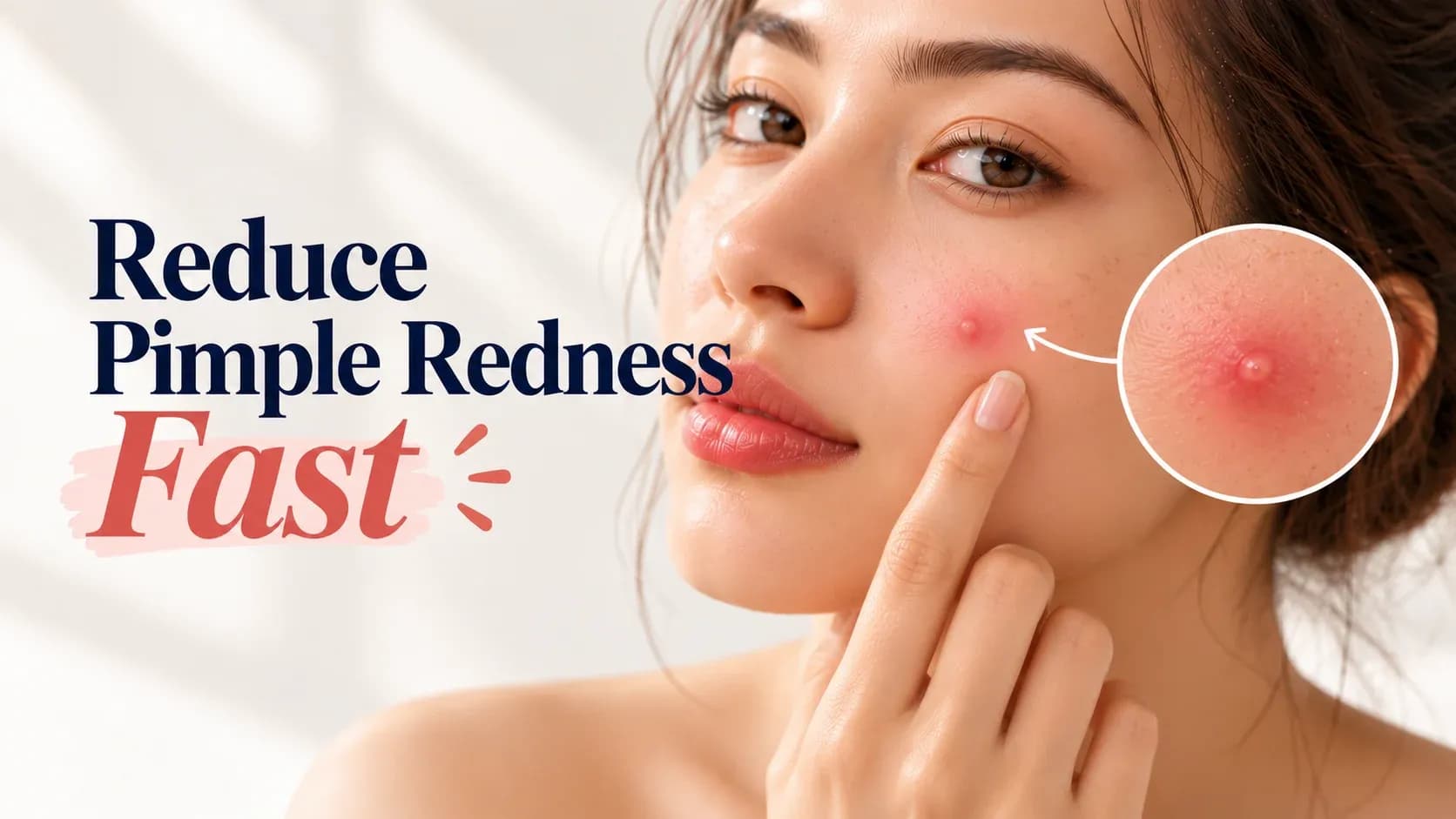
You cannot make a pimple vanish in minutes , but you can visibly reduce its redness in under ten. Pimple redness is an inflammatory response: dilated blood vessels rush immune cells to a clogged, bacteria-infected pore, creating the red halo around active breakouts. Cold compresses trigger vasoconstriction and cut visible redness within 5 to 10 minutes. Anti-inflammatory ingredients like niacinamide and azelaic acid calm the underlying inflammatory signalling within one to four hours. Picking, hot water, and strong acids do the opposite , they extend the inflammatory response by days.
What works:
- Cold compress or ice (wrapped in cloth): visible effect within 5–10 minutes via vasoconstriction
- Niacinamide 2–5%: may support the skin barrier with regular use; rapid results are not established
- Hydrocolloid patch: reduces morning redness by absorbing fluid overnight
- Azelaic acid 10%: can help inflammatory acne with regular use over weeks
What makes it worse:
- Squeezing or picking (extends inflammation by 3–5 days, risks dark marks)
- Hot water or steam (dilates blood vessels further)
- Strong acids or benzoyl peroxide above 2.5% on actively inflamed skin (barrier disruption adds reactive redness)
What Is Pimple Redness and Why Does It Happen?
Pimple redness is a visible inflammatory response caused by dilated blood vessels delivering immune cells to a clogged, bacteria-infected pore. It is not the pimple itself , it is your body's defence mechanism.
When a pore becomes clogged with dead skin cells, sebum, and bacteria (particularly Cutibacterium acnes), your immune system detects the threat and triggers an inflammatory cascade. White blood cells rush to the site, blood vessels dilate to deliver more nutrients and oxygen, and surrounding tissue swells. This creates the red halo visible around active breakouts.
The intensity of pimple redness depends on several factors:
- Pimple depth: Deeper cystic pimples trigger stronger immune responses than surface whiteheads
- Skin type: Fair or thin skin shows dilated blood vessels more visibly
- Inflammatory baseline: Chronic inflammation from repeated breakouts can leave skin in a semi-inflamed state, making new pimples appear redder faster
- Physical trauma: Touching, picking, or applying harsh treatments damages surrounding tissue, ruptures the follicle wall deeper into the dermis, and extends the inflammatory response
- Barrier disruption: Alcohol-based spot treatments or strong acids strip the protective lipid barrier, causing reactive inflammation that adds to the original redness
According to Clear Ritual's skin science team, the same visible redness can have different root causes , identifying the dominant driver determines which treatment approach is most effective.
Fastest Methods to Reduce Pimple Redness: Ranked by Speed
Every major redness-reduction approach differs in how quickly it produces a visible result. The table below ranks each method by timeframe, mechanism, and expected effect.
| Timeframe | Method | Mechanism |
|---|---|---|
| 0–10 minutes | Ice or cold compress | Vasoconstriction |
| 10–30 minutes | Chilled green tea compress | EGCG polyphenols + cooling |
| 1–4 hours | Niacinamide serum (2–5%) | Cytokine inhibition, barrier support |
| 6–12 hours | Hydrocolloid patch | Fluid absorption, barrier protection |
| 12–24 hours | Azelaic acid (10%) | Antimicrobial + anti-inflammatory |
| Overnight | Centella asiatica / colloidal oatmeal | Barrier repair, cytokine reduction |
According to Clear Ritual's skin science team, choosing the right method depends on your available timeframe , not all approaches are interchangeable.
How to Reduce Pimple Redness in 5 Minutes: Step-by-Step
The fastest way to reduce pimple redness in five minutes is cold therapy , specifically, controlled vasoconstriction using ice or a refrigerated compress. When blood vessels dilate, they bring more blood to the surface. Cooling the area causes temporary vasoconstriction, which visibly reduces redness within 5 to 10 minutes.
The 5-Minute Ice Protocol
- Wrap one ice cube in a clean, thin cloth. Never apply bare ice directly to skin , extreme cold can damage the skin barrier and cause rebound redness.
- Hold against the pimple for 30 seconds, then remove for 30 seconds. Repeat this on-off cycle three to four times.
- Pat the area dry gently with a clean tissue. Do not rub.
- Apply a thin layer of niacinamide serum immediately after. The constricted vessels and temporarily calmed surface make this the optimal window for anti-inflammatory ingredient absorption.
- Do not apply makeup or heat for at least 15 minutes. Heat re-dilates the vessels and undoes the vasoconstriction effect.
What to expect: Within 5 to 10 minutes, visible redness reduces noticeably. The effect lasts 30 to 90 minutes. For longer-lasting reduction, follow with an anti-inflammatory topical.
Clear Ritual skin tip: If you don't have ice, a metal spoon chilled in the refrigerator for 10 minutes works similarly. The key is the temperature drop , not the ice itself.
Common Mistakes That Extend Redness
- Applying ice directly to skin (causes barrier damage and rebound redness)
- Using hot or warm water before the compress (dilates vessels further)
- Picking or touching the pimple between steps (ruptures the follicle wall deeper into the dermis)
- Applying a strong spot treatment immediately after icing (the temporarily compromised barrier absorbs irritants faster, worsening inflammation)
How to Reduce Pimple Redness in 1 Hour: The Mid-Range Protocol
The 1-hour window sits between quick cold therapy and a full overnight recovery. It is enough time for anti-inflammatory ingredients to start working , but only if applied in the right sequence, with the area left alone afterwards.
The 1-Hour Redness Reduction Protocol
- Minutes 0–5: Cold compress. Wrap an ice cube or chilled spoon in a clean cloth. Hold against the pimple for 30 seconds on, 30 seconds off , three to four cycles. This provides immediate vasoconstriction, cutting visible redness fast.
- Minutes 5–10: Gentle cleanse. Use lukewarm water and a fragrance-free, sulfate-free cleanser. Pat dry , never rub. This removes surface irritants without stripping the barrier.
- Minutes 10–15: Niacinamide serum (2–5%). Apply a thin layer directly to the inflamed area and let it absorb fully. Niacinamide begins inhibiting the transfer of inflammatory signals between skin cells within minutes of application, with visible calming building over the next 45–60 minutes.
- Minutes 15–60: Leave it alone. Do not apply makeup, touch the area, or add additional actives. The biggest mistake in this window is layering products , each additional formula risks irritating a temporarily compromised barrier.
What to expect at 60 minutes: The red halo should appear noticeably smaller and less intense compared to baseline. A 2021 review in Dermatologic Therapy found that topical niacinamide at 4% reduced erythema scores significantly within a single application session.
Skin tip: If you have an event in exactly one hour, apply a chilled green tea bag compress for 10 minutes before the niacinamide. The dual action of EGCG and cooling gives the fastest visible result in that combined window.
How to Reduce Pimple Redness Overnight: What Actually Works
Overnight is your skin's best window for redness reduction. During sleep, cortisol drops, blood flow to the skin increases, and cellular repair accelerates , making the hours between 11 PM and 3 AM particularly effective for topical treatments.
The Overnight Protocol for Calming an Inflamed Pimple
- Cleanse with a gentle, sulfate-free cleanser using lukewarm water. Avoid anything foaming or acid-based on active pimples at this stage.
- Apply a niacinamide serum (2–5%) across the affected area and let it absorb for 2 minutes. A 2022 review in the Journal of Cosmetic Dermatology found that topical niacinamide significantly reduces inflammatory papule count and associated erythema within 4 weeks of consistent nightly use.
- Spot-apply azelaic acid (10%) directly on the pimple. Azelaic acid simultaneously reduces bacterial load, inhibits inflammatory cytokines, and targets the tyrosinase activity that leads to post-inflammatory dark marks.
- Apply a fragrance-free moisturiser with ceramides across the full face. An intact skin barrier reduces transepidermal water loss overnight, which directly shortens the inflammatory phase.
- Cover the pimple with a hydrocolloid patch if it has surfaced. The patch creates a sealed moist environment that absorbs pus, protects against unconscious touching during sleep, and reduces morning redness by up to 50% in a single night.
Clear Ritual skin tip: Do not layer retinol or strong exfoliating acids (AHA/BHA) directly on active, red pimples overnight. These increase cell turnover , helpful for prevention, but irritating on already-inflamed tissue.
What to expect by morning: A visible reduction in the red halo around the pimple. The bump may not be fully gone, but the inflammatory redness should be noticeably calmer. Two to three nights of this protocol typically bring the pimple to resolution without dark marks.
Types of Pimple Redness: Which Kind Do You Have?
Not all pimple redness is the same. Treating the wrong type with the wrong method can make things worse. Clear Ritual's dermatology team identifies five clinically distinct types of redness that are commonly confused.
| Type of Redness | What It Looks Like | Primary Cause | How Long It Lasts |
|---|---|---|---|
| Active pimple redness | Red halo around a visible whitehead, blackhead, or pustule | Dilated blood vessels from live inflammation | 2–5 days with appropriate care |
| Cystic / nodular redness | Deep red or purple discolouration, painful lump under skin | Inflammation deep in the dermis, no surface exit | 1–4 weeks; often needs professional treatment |
| Post-inflammatory erythema (PIE) | Flat pink or red mark where a pimple healed | Damaged capillaries that didn't fully constrict after inflammation | Weeks to months; fades with niacinamide and SPF |
| Rosacea flush | Widespread redness across cheeks and nose, often with burning | Chronic vascular dysfunction, not bacterial | Chronic; does not respond to acne treatments |
| Contact redness | Sudden redness after applying a product | Barrier disruption or allergic reaction | Hours; resolves once irritant is removed |
How to Tell the Difference
Active pimple redness has a visible centre , a whitehead, a dark pore, or a raised bump. Press gently: it blanches briefly (turns pale), then refills red.
Post-inflammatory erythema (PIE) is flat. The pimple is gone, but a pink or red mark remains. It does not blanch consistently on pressure and fades slowly over weeks to months.
Rosacea tends to cover larger areas symmetrically , both cheeks, the nose, the chin , and is often triggered by heat, alcohol, or spicy food rather than bacteria. A dermatologist can distinguish rosacea from acne with a clinical examination.
Cystic redness is deep, painful, and has no visible head. It does not respond to surface-level treatments and typically requires a dermatologist.
Topical Ingredients That Reduce Pimple Redness
Certain skincare actives work specifically on the inflammatory pathways that cause pimple redness. These do not eliminate pimples instantly, but they calm visible redness faster than traditional drying treatments.
Niacinamide
Niacinamide, a form of vitamin B3, is one of the most effective redness-reducing ingredients available over the counter. It inhibits the transfer of inflammatory signals between cells and strengthens the skin barrier, which reduces the reactive inflammation that makes redness linger.
Studies show that 2 to 5% niacinamide may help with redness during regular use when applied to inflamed lesions. It is gentle enough for sensitive skin and does not cause the peeling or irritation associated with stronger actives. Clear Ritual includes niacinamide as a core component in formulations designed for inflamed, breakout-prone skin.
- Concentration: 2–5% for over-the-counter use
- Timeframe: 1–4 hours per application; 4 weeks consistent use for sustained reduction
- Suitable for: All skin types, including sensitive
Azelaic Acid
Azelaic acid works through multiple mechanisms simultaneously:
- Reduces keratin production, which prevents further pore clogging
- Has antimicrobial effects against acne-causing bacteria
- Decreases the production of inflammatory cytokines
- Inhibits tyrosinase, which helps prevent post-inflammatory hyperpigmentation (the dark marks that often follow red pimples)
Azelaic acid at 10% can be applied directly to pimples without over-drying surrounding skin, making it suitable for daily use. A 2020 review in the International Journal of Dermatology confirmed that 15% azelaic acid reduced post-inflammatory erythema scores by 47% over 12 weeks.
Colloidal Oatmeal
Colloidal oatmeal contains avenanthramides , compounds that reduce the release of pro-inflammatory cytokines and histamine. Mixing finely ground oatmeal with water into a paste and applying it as a spot treatment calms irritation and reduces the burning sensation that often accompanies inflamed pimples. It is particularly useful for reactive or sensitive skin types.
Centella Asiatica
Centella asiatica (also called cica or gotu kola) promotes collagen synthesis, enhances skin barrier repair, and reduces inflammatory markers like interleukin-6. Creams or serums containing centella extract can be applied over pimples to support faster recovery and less prolonged redness.
Green Tea (EGCG)
Green tea contains epigallocatechin gallate (EGCG), a polyphenol with demonstrated anti-inflammatory properties. Steep two tea bags in hot water, let them cool in the refrigerator, then apply them to the affected area for five minutes. The cool temperature constricts vessels while EGCG calms inflammatory mediators , providing dual-action redness reduction within 10 to 30 minutes.
How to Reduce Pimple Swelling and Redness Together
Pimple swelling and redness are caused by the same mechanism but respond to slightly different interventions.
When bacteria trigger an immune response inside a follicle, your body sends white blood cells, fluid, and proteins to the site. This fluid build-up creates the raised bump. The blood vessel dilation that causes redness also contributes to fluid leakage into surrounding tissue , which is why swollen pimples are almost always red, but red pimples are not always swollen.
| Approach | Why It Reduces Swelling | Time to Effect |
|---|---|---|
| Cold compress (wrapped) | Vasoconstriction reduces fluid delivery to the site | 5–10 minutes |
| Hydrocolloid patch | Absorbs interstitial fluid from the pimple environment | 6–12 hours |
| Azelaic acid 10% | Reduces inflammatory cytokines that drive fluid accumulation | 12–24 hours |
| Elevation (sleeping with head raised) | Reduces overnight fluid pooling to the face | Overnight |
Deep, painful lumps may need a dermatologist’s assessment. A clinician may consider an intralesional corticosteroid injection for selected severe lesions; do not attempt injections or drainage at home.
When Should You See a Dermatologist for Pimple Redness?
How to Prevent Redness from Getting Worse
Frequently Asked Questions About Pimple Redness
Q. How can I reduce pimple redness quickly?
A. Hold a clean, cool compress against the area for a few minutes. This may temporarily reduce visible redness or discomfort, but it will not remove the pimple immediately.
Q. Can I put ice directly on a red pimple?
A. No. Direct ice contact can damage skin. Wrap a cold pack or ice in a soft, clean cloth and use it briefly.
Q. Does niacinamide reduce pimple redness overnight?
A. Niacinamide may support the skin barrier, but there is no reliable evidence that a single overnight application will visibly clear pimple redness.
Q. Should I pop a red and swollen pimple?
A. No. Picking or squeezing can worsen inflammation and increase the risk of infection, dark marks or scarring.
Q. Do hydrocolloid patches help red pimples?
A. Hydrocolloid patches can protect some superficial pimples from touching and absorb fluid from draining spots. They are less useful for deep nodules.
Q. When should I see a dermatologist for a red pimple?
A. Seek advice for deep, painful, recurring or scarring acne. Rapidly spreading redness, fever or swelling around an eye warrants prompt medical evaluation.
Understand What Your Skin Needs
Take the Clear Ritual Skin Test to identify your skin type, concerns, and potential triggers before building your routine.
Take the Free Skin Test
Disclaimer: This article is for general educational purposes and does not replace personalised medical advice. Seek professional care for severe, persistent, painful or worsening skin symptoms.
Editorial Standards
Clear Ritual has Strict sourcing guidelines to ensure our content is accurate and current. We rely on peer-reviewed studies, academic research institutions, and medical associations. We strive to use primary sources and refrain from using tertiary references. See a mistake? Learn More about our Editorial Standards.