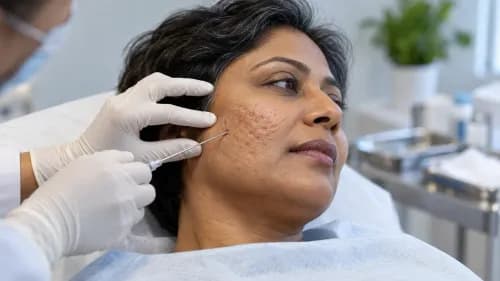
Laser Treatment for Acne Scars Explained
Laser treatment for acne scars works by creating controlled micro-injuries that stimulate organized collagen remodeling, gradually improving skin texture and reducing scar visibility over multiple sessions. Ablative, non-ablative, and fractional lasers each address different scar depths and skin tones, with results building over weeks to months. Not all scars respond equally, and most people see 50 to 70 percent improvement rather than complete removal.
- Different laser types suit different scar depths and skin tones
- Results develop gradually over several months as collagen remodels
- Multiple sessions are usually needed for visible improvement
- Deep ice pick scars respond less well than shallow rolling scars
What Happens When Acne Leaves Scars
When a breakout penetrates deep enough to damage the dermis, your skin attempts emergency repair. The body rushes collagen fibers to patch the wound, but this process often happens too quickly or too slowly. Too much collagen creates raised scars, while too little leaves depressions. The original skin architecture [its organized network of collagen and elastin] gets replaced with disorganized scar tissue that reflects light differently and feels textured.
The inflammatory cascade matters significantly. When a cystic breakout releases bacteria and sebum into surrounding tissue, immune cells flood the area. This prolonged inflammation damages oil glands, hair follicles, and structural proteins. The worse the inflammation, the more likely scarring becomes permanent. Picking or squeezing forces infected material deeper, expanding the zone of damage.
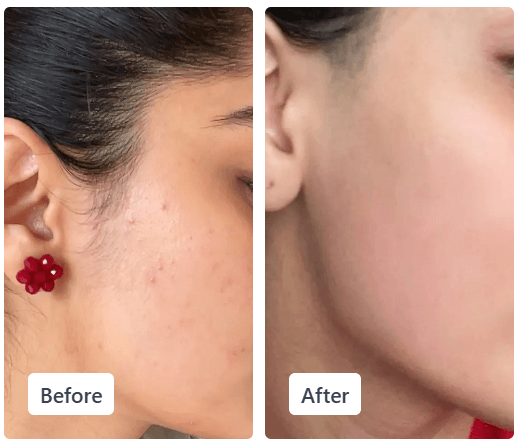
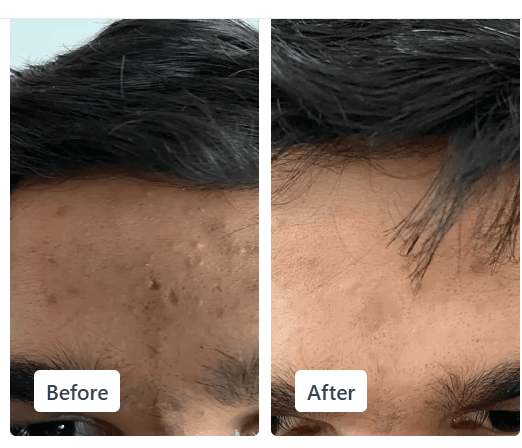
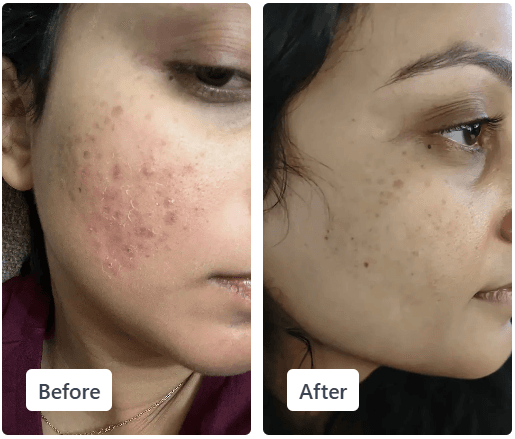
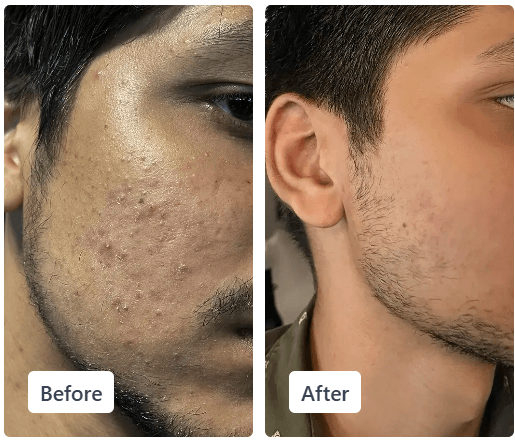
See real results, then start your own
Take the free Clear Ritual Skin Test and get a personalized routine built for your skin's unique patterns.
Understanding Different Scar Types
Atrophic scars appear as depressions because the skin lost tissue during healing. Ice pick scars are narrow and deep, resembling small puncture wounds. Boxcar scars have defined edges and flat bottoms, creating shadowed craters. Rolling scars form when fibrous bands tether the skin downward, creating wave-like undulations.
Hypertrophic and keloid scars rise above the skin surface from excessive collagen deposition. These tend to develop on the chest, shoulders, and jawline where skin experiences more tension. Dark marks called post-inflammatory hyperpigmentation technically are not scars but often accompany them, fading over months as melanin disperses.
Each scar type requires different treatment approaches because the underlying tissue damage varies. Shallow rolling scars may respond to gentler interventions, while deep ice pick scars need aggressive resurfacing or excision techniques.
How Laser Technology Addresses Scar Tissue
Lasers deliver concentrated light energy at specific wavelengths that target particular skin components. The energy converts to heat when absorbed by water, melanin, or hemoglobin in tissue. This controlled damage triggers the wound healing cascade, but under precise conditions that encourage organized collagen formation rather than chaotic scarring.
Ablative lasers vaporize thin layers of skin, removing damaged surface tissue entirely. This forces the skin to regenerate from deeper layers, producing smoother texture as new skin forms. The controlled injury depth matters, too shallow produces minimal change, too deep risks new scarring.
Non-ablative lasers penetrate without destroying the surface. They heat the dermis to stimulate collagen production while leaving the epidermis intact. Recovery is faster, but results develop more slowly since the remodeling happens entirely beneath the surface. Multiple sessions build cumulative improvement.
Fractional lasers create thousands of microscopic treatment zones surrounded by untreated skin. This pattern accelerates healing because healthy tissue rapidly migrates into treated areas. The surrounding undamaged skin acts as a reservoir of cells that rebuild the microscopic wounds quickly, reducing downtime while still triggering significant remodeling.
See real results, then start your own
Take the free Clear Ritual Skin Test and get a personalized routine built for your skin's unique patterns.
Common Laser Types and Their Applications
Carbon dioxide lasers deliver powerful ablation that removes substantial tissue depth. They work well for severe boxcar scars and deep texture irregularities but require significant recovery time. Skin remains red and raw for weeks while new tissue forms. The risk of complications increases with skin tone darkness because heat can trigger melanocyte activity, causing hyperpigmentation.
Erbium lasers ablate more precisely with less thermal damage to surrounding tissue. They remove thinner layers, making them suitable for moderate scarring with faster healing. The reduced heat penetration limits collagen stimulation compared to CO2 lasers but decreases the chance of pigmentation problems.
Pulsed dye lasers target blood vessels that contribute to red, raised scars. They work particularly well for hypertrophic scars still in active formation. The laser energy coagulates tiny blood vessels feeding the scar tissue, reducing inflammation and excess collagen deposition.
Nd:YAG lasers penetrate deeply without significant melanin absorption, making them safer for darker skin tones. They stimulate collagen in the deeper dermis while minimizing surface damage. This makes them effective for treating rolling scars and improving overall skin thickness.
Picosecond lasers deliver energy in ultra-short pulses that shatter pigment particles and stimulate remodeling with minimal heat. They address both textural scarring and associated hyperpigmentation simultaneously, though their effect on deep structural scars remains less dramatic than ablative options.
The Treatment Process and What to Expect
Initial consultation involves assessing scar type, depth, skin tone, and medical history. Certain conditions like active acne, recent isotretinoin use, or keloid tendency may delay or prevent laser treatment. Skin must be free of active breakouts because treating inflamed skin can worsen scarring.
Before treatment, skin gets thoroughly cleansed and numbing cream applied for 30 to 60 minutes. The procedure itself takes 20 minutes to over an hour depending on treatment area size. You will feel heat, stinging, or snapping sensations despite numbing. Protective eyewear shields against laser light.
Immediately after, skin appears red and swollen, similar to severe sunburn. Ablative treatments may ooze clear fluid and develop crusting within 24 hours. Gentle cleansing and prescribed ointments prevent infection while skin regenerates. Strict sun avoidance is critical because healing skin develops pigmentation irregularities extremely easily when exposed to UV radiation.
Non-ablative treatments cause less visible damage but still trigger inflammation. Redness fades within days rather than weeks. Makeup can usually be applied after 24 hours once any pinpoint bleeding stops.
Recovery Timeline and Collagen Remodeling
The visible recovery represents only the beginning of actual improvement. After ablative treatment, new skin forms within 7 to 14 days, but this fresh tissue remains pink and sensitive for months. The real remodeling happens beneath the surface as fibroblasts slowly reorganize collagen fibers over the next three to six months.
Non-ablative treatments show gradual improvement as new collagen deposits accumulate. Each session builds on previous treatments, with optimal results appearing several months after the final session. This delayed timeline frustrates many people who expect immediate transformation.
Multiple sessions spaced 4 to 12 weeks apart allow skin to heal between treatments while maintaining the remodeling stimulus. Ablative procedures typically require 1 to 3 sessions. Non-ablative approaches may need 3 to 6 sessions for comparable results. Combining different laser types in a staged approach sometimes produces better outcomes than any single modality.
Factors That Influence Treatment Success
Skin tone significantly impacts laser selection and outcomes. Melanin absorbs laser energy, so darker skin tones risk heat damage to pigment-producing cells, causing light or dark patches. Longer wavelengths with less melanin interaction work more safely, though they may limit treatment intensity.
Scar age matters because newer scars retain more active remodeling capacity. Treating scars within the first year or two of formation often produces better improvement than addressing decade-old scarring. However, even old scars can show meaningful enhancement as new collagen formation improves skin architecture.
Smoking severely impairs healing by reducing oxygen delivery to tissue. Nicotine constricts blood vessels needed to supply healing nutrients and remove waste products. Smokers experience more complications, slower recovery, and diminished collagen response.
Sun exposure before or after treatment undermines results. UV radiation triggers melanocytes to deposit uneven pigment in healing skin. It also generates free radicals that damage the fragile new collagen forming in treated areas. Rigorous sun protection with mineral sunscreens and physical barriers is non-negotiable.
Genetics determine baseline collagen production capacity and wound healing patterns. Some people naturally produce robust collagen responses to injury while others show minimal remodeling despite identical treatment. This variability explains why results differ dramatically between individuals receiving the same protocol.
Potential Risks and Complications
Infection can occur if healing skin is not kept clean or if bacteria colonize the open wounds created by ablative treatment. Signs include increasing pain, pus, spreading redness, and fever. Prophylactic antibiotics are sometimes prescribed for extensive ablative procedures.
Hyperpigmentation appears as dark patches where melanocytes overreact to inflammation. It occurs most commonly in darker skin tones or when sun exposure happens during healing. Treating with hydroquinone, vitamin C, or additional laser sessions can gradually fade the discoloration.
Hypopigmentation creates permanent light spots because melanocytes were destroyed by excessive heat. This complication is irreversible and particularly noticeable in darker skin. Conservative treatment settings reduce this risk but may require more sessions for results.
Prolonged redness lasting months beyond expected healing suggests persistent inflammation or damaged blood vessels. Pulsed dye laser treatments can sometimes reduce this, but patience is often the only solution as vessels gradually normalize.
New scar formation represents the worst outcome, treatment intended to improve scars instead creates new ones. This happens when settings are too aggressive, healing is compromised, or individual healing response is unpredictable. Starting conservatively and gradually increasing intensity minimizes this risk.
Complementary Approaches to Maximize Results
Microneedling creates controlled micro-injuries similar to fractional lasers but without heat. Combining it with laser treatments addresses different aspects of scar architecture. The needles break fibrous bands while lasers stimulate collagen production, producing synergistic improvement.
Chemical peels using trichloroacetic acid or phenol can improve superficial texture irregularities between laser sessions. They work through controlled chemical injury rather than heat, providing an alternative stimulus for remodeling.
Subcision involves inserting a needle beneath depressed scars to release tethering fibrous bands. This allows the skin to lift toward normal position, reducing depression depth. Combining subcision with laser resurfacing addresses both the tethering and surface texture.
Injectable fillers temporarily elevate depressed scars by adding volume beneath them. While not permanent, they provide immediate improvement and may stimulate some collagen formation around the filler material. Repeated injections maintain results.
Proper skincare supports healing and maximizes collagen quality. Gentle cleansers prevent barrier disruption while skin regenerates. Antioxidants like vitamin C protect new collagen from free radical damage. Retinoids enhance cell turnover and may improve collagen organization, though they must be stopped before laser treatment to prevent excessive sensitivity.
Realistic Expectations and Long-Term Outcomes
Complete scar elimination is rarely achievable. Most people experience 50 to 70 percent improvement in texture and visibility after a full treatment series. Deep ice pick scars show the least improvement with laser alone, often requiring excision or punch techniques. Shallow rolling scars typically respond best to non-ablative fractional treatments.
Results are permanent in that remodeled collagen remains, but natural aging continues. Over years, collagen degrades and skin loses volume, potentially making scars more noticeable again. Maintenance treatments every few years can sustain improvement.
Psychological impact of improvement often exceeds the measurable physical change. Even moderate texture enhancement can dramatically increase confidence and reduce the tendency to fixate on scars. This emotional benefit represents real value regardless of technical improvement percentage.
Cost considerations matter since insurance typically does not cover cosmetic procedures. Laser treatments range from several hundred to several thousand dollars per session depending on technology, treatment area, and provider expertise. The financial investment requires careful consideration against realistic outcome expectations.
When to Consult a Dermatologist
If scars cause significant distress or affect quality of life, professional evaluation is worthwhile. A dermatologist can assess whether you are a good candidate, recommend appropriate laser types, and manage expectations realistically based on your specific scar pattern and skin characteristics.
Active acne must be controlled before addressing scars. Ongoing breakouts will continue creating new damage while you attempt to repair old injuries. Dermatologists can prescribe treatments to stabilize acne first, then plan scar intervention.
Previous poor healing experiences, tendency toward keloid formation, or autoimmune conditions require careful evaluation. These factors increase complication risks and may make laser treatment inadvisable or require modified protocols.
Combining professional treatments with at-home care produces better outcomes than either approach alone. Dermatologists can guide appropriate skincare that supports healing without interfering with laser results.
How Clear Ritual Supports Personalized Skincare Decisions
Clear Ritual understands that acne scarring is more than a surface issue. It is shaped by genetics, skin renewal cycles, environmental factors, and the products you use.
Because acne scars form when breakouts result from complex interactions between hormones, sebum production, bacterial overgrowth, inflammation, stress responses, sleep quality, and dietary patterns, generic solutions rarely bring lasting improvement. Clear Ritual combines traditional wisdom and modern science to address the underlying causes of acne scarring.
The Clear Ritual Skin Test analyses your skin's unique patterns and daily influences to help identify the best routine for supporting healthy skin and reducing acne scar recurrence.
See real results, then start your own
Take the free Clear Ritual Skin Test and get a personalized routine built for your skin's unique patterns.
Conclusion
Laser treatments can meaningfully improve the appearance of acne scars by stimulating organized collagen remodeling, though the degree of improvement depends on scar type, skin tone, and individual healing response. Results develop gradually over weeks to months and typically require multiple sessions, with most people seeing 50 to 70 percent improvement rather than complete scar removal. Combining professional laser treatment with proper aftercare, sun protection, and complementary approaches like microneedling or subcision can help maximize outcomes. Addressing the underlying triggers of acne alongside scar treatment supports longer-lasting results.
Frequently Asked Questions
How long until I see results from laser scar treatment?
Initial healing takes one to three weeks, but visible improvement develops over three to six months as collagen remodels. Non-ablative treatments show gradual changes after multiple sessions, while ablative procedures may demonstrate noticeable texture improvement once initial redness fades, though continued enhancement occurs for months afterward.
Can laser treatment completely remove acne sca
Editorial Standards
Clear Ritual has Strict sourcing guidelines to ensure our content is accurate and current. We rely on peer-reviewed studies, academic research institutions, and medical associations. We strive to use primary sources and refrain from using tertiary references. See a mistake? Learn More about our Editorial Standards.