Butt Acne: Causes, Types, Treatment, and Prevention Tips
Quick Answer:
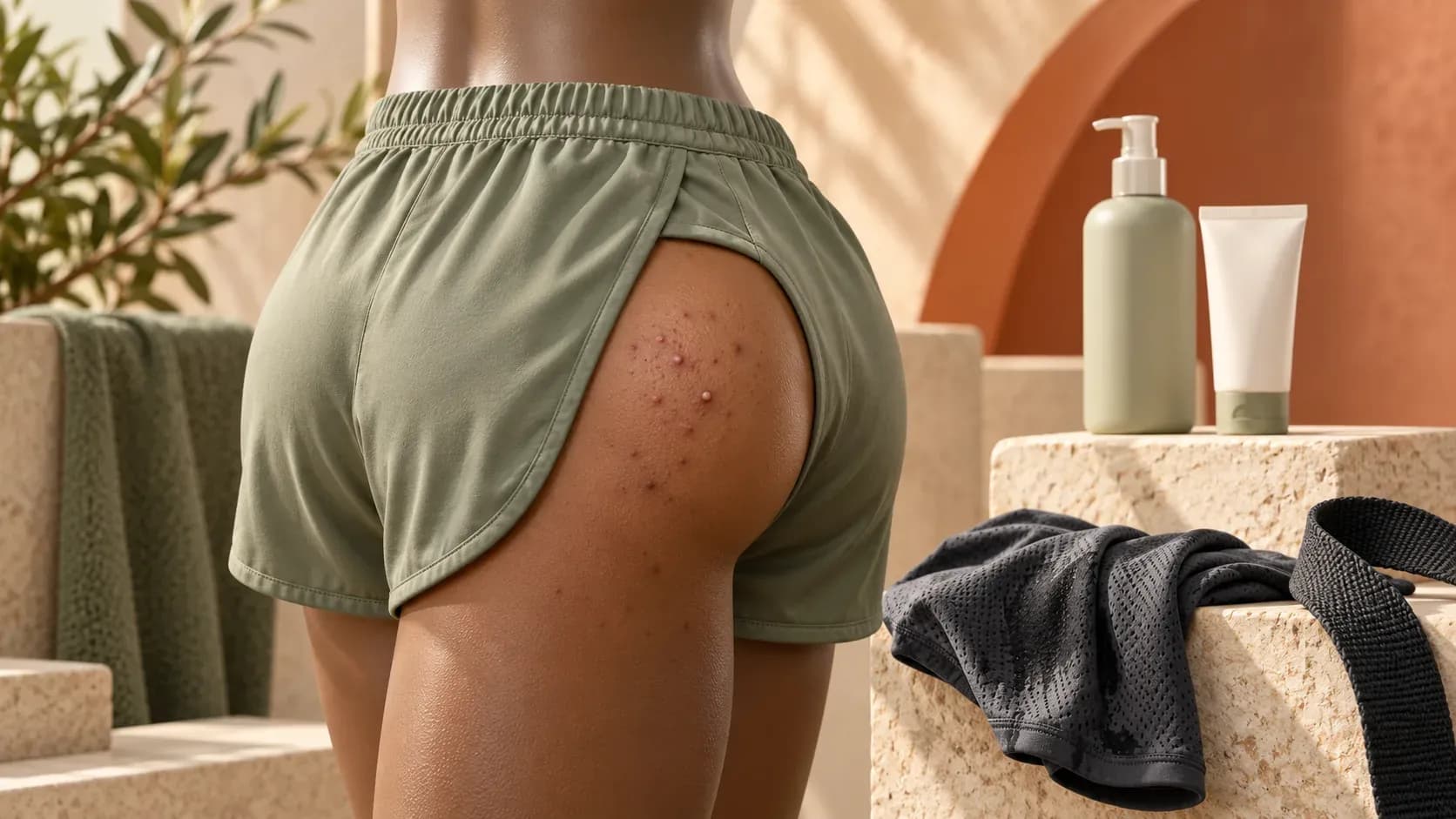
Butt acne is the everyday name for pimple-like bumps on your buttocks. Most of the time, the bumps are folliculitis rather than true acne. Folliculitis means your hair follicles (the tiny pockets your hairs grow from) have become irritated or infected.
Sweat, rubbing from tight clothes, and shaving or waxing are the usual triggers. They irritate the follicle, and the bacteria or yeast on your skin can then build up. It appears as bumps, mainly folliculitis, keratosis pilaris, boils (furuncles/ carbuncles), or contact dermatitis.
Small bumps, pimples, rough patches and other skin conditions on your buttocks can look similar. However, not every bump in this area is acne. The painful bumps that keep returning or leave scars might be severe acne, but they can also be boils or hidradenitis suppurativa, a long-term condition with deep lumps. Get those checked.
Start by finding out what is causing the bumps. Simple changes such as reducing friction, managing sweat, and avoiding scrubbing or harsh body washes may help, and a dermatologist can confirm.
What Is Butt Acne?
Butt acne is a common term for pimple-like bumps that appear on the buttocks. Acne can occur in this area, but most acne on the butt is actually related to inflamed hair follicles, particularly folliculitis.
Folliculitis develops when a hair follicle becomes inflamed or infected. It can look surprisingly similar to an acne breakout, with red, swollen, or infected pus-filled bumps appearing around the hairs.
According to the American Academy of Dermatology, rubbing, tight clothing, shaving, and keeping the skin hot and damp can damage the follicles and raise the risk of folliculitis.
Butt acne can look and feel like:
Small red or skin-coloured bumps
Pus-filled bumps around hair follicles
Itching or tenderness
Rough, uneven skin
Deeper, painful lumps in some cases
The appearance alone may not tell you exactly what is causing the bumps.
What Causes Butt Acne?
Butt acne can have several causes, and many factors may contribute at the same time. Your buttocks are often exposed to heat, sweat, friction, and prolonged sitting. If you also shave or wax the area, your hair follicles may become irritated more easily.
Some common reasons for butt acne or acne-like bumps include:
Sweat, heat, and friction from clothing or skin-to-skin contact
Tight or non-breathable clothing
Prolonged sitting
Shaving, waxing, or plucking
Irritating body-care products (Heavy creams, oils, or fragranced body washes)
Bacteria or yeast getting into irritated follicles
Oil and dead skin clogging your pores
Your skin naturally contains bacteria and yeast, and folliculitis can develop when hair follicles become irritated or damaged. Washing the area gently can help keep your skin clean, but repeatedly scrubbing or using harsh products can cause further irritation.
Shaving, waxing, and other forms of hair removal can irritate or damage hair follicles. This can lead to folliculitis or ingrown hairs (hairs that curl back into the skin) that may look like pimples.
These germs are usually harmless. They can infect a follicle once friction, shaving, or sweat has irritated it. Gentle washing helps, but scrubbing makes it worse.
What Can Look Like Butt Acne?
If you have butt acne, the bumps may not all look or feel the same. What looks like acne can sometimes be folliculitis, keratosis pilaris, an ingrown hair, or another skin condition. Here are the types of bumps you may mistake for butt acne:
| Types of bumps | What it may look like |
|---|---|
| Acne | Whiteheads, blackheads, red bumps, or pus-filled spots. |
| Folliculitis | Small red or pus-filled bumps around hair follicles. |
| Ingrown hairs | Raised, itchy, or painful bumps, sometimes with a trapped hair. |
| Keratosis pilaris | Tiny, rough, similar-sized bumps that feel like sandpaper. They are usually painless and often show up on the thighs or arms too. |
| Hidradenitis suppurativa | A long-term condition with deep, painful lumps that keep coming back, often in skin folds. They may leak pus or leave scars. |
If you are unsure, especially if the bumps are painful, recurrent, or leave marks or scars, a dermatologist can examine your skin and tell you whether it is acne, folliculitis, or something else.
Butt Acne in Men: What Causes It?
If you are a man dealing with bumps on your buttocks, the causes are mostly the same as in women. Bumps often show up after sweating, working out, or shaving. Some common triggers in men include:
Sweating: Exercise and hot weather can leave your skin damp for longer, particularly when you stay in sweaty clothes.
Friction: Tight trousers, underwear, or workout clothing can repeatedly rub against the skin and hair follicles.
Shaving or trimming: Hair removal can irritate follicles and may contribute to folliculitis or ingrown hairs.
Prolonged sitting: Sitting for hours traps heat and adds friction around the buttocks.
Body-care products: Heavy creams or fragranced body washes can make sore skin worse.
If you notice that the bumps tend to appear after a particular activity, deal with that trigger first, before you add more acne products. For example, changing out of sweaty clothes after a workout and choosing looser, breathable clothing may help cut down the rubbing.
Is Butt Acne More Common in Men?
No. Butt acne affects people of all genders, and there is no clear evidence that men get it more often.
For some men, the problem can be more noticeable because of a combination of factors, including sweating, friction, body hair, shaving, and exercise. Anyone who sweats a lot, works out, or shaves can get these bumps.
How to Treat Butt Acne?
If you have acne on your butt, do not assume that you need to treat it exactly like facial acne. The butt acne treatment depends on what is causing the bumps. Body skin is thicker, and friction and sweat play a bigger part.
You can start with these simple steps:
Cleanse gently: Wash the area once a day, particularly after sweating, using a mild cleanser. Avoid harsh scrubbing, as friction can further irritate the skin.
Change out of sweaty clothes: Shower and change into clean, dry clothing after exercise or prolonged sweating.
Reduce friction: Choose breathable underwear and looser clothing if tight fabrics repeatedly rub against the area.
Avoid picking or squeezing: Popping bumps can increase redness and swelling and may leave dark marks or scars.
Consider an acne ingredient: Depending on the type of acne, ingredients such as benzoyl peroxide or salicylic acid may help. Start with one active rather than layering several products at once. Both can dry out or sting at first. Benzoyl peroxide can bleach fabric, so use old towels and underwear.
Give treatment time: Acne treatments generally need consistent daily use for four to eight weeks before you can judge whether they are helping.
For mild acne on your buttocks, gentle cleansing, reducing friction, and using an appropriate acne treatment can help. However, bumps caused by folliculitis or ingrown hairs may need a different approach.
If your bumps are small, itchy, or centred around individual hairs, particularly after shaving, sweating, or friction, they may be folliculitis rather than acne. In that case, repeatedly using acne products may not address the underlying problem.
For ingrown hairs, stop shaving or waxing for a few weeks. For folliculitis, a warm compress and a benzoyl peroxide wash often help. Acne products may not be enough on their own, so also cut down on shaving and rubbing. See a doctor if there is no change in about two weeks.
When Do You Need Medical Treatment for Butt Acne?
See a doctor or dermatologist if:
Your bumps are painful, deep, or keep coming back, or they leave scars.
Your bumps are spreading or are not improving despite consistent treatment.
You have been using an appropriate butt acne treatment for several weeks.
You have large, painful, or deep acne that can sometimes require prescription treatment.
Your bumps keep coming back in the same spots, leak pus, or form deep lumps.
You are unsure whether you have acne, folliculitis, or something else.
Note: Get medical help the same day if a lump grows fast, hurts a lot, feels hot, has red streaks around it, or comes with a fever.
What Are the Best Butt Acne Home Remedies?
Butt acne home remedies are simple habits that reduce sweat, friction, and irritation while keeping your skin clean. Here are a few changes you can make:
| Home care | What to do |
|---|---|
| Warm compress | Hold a clean, warm (not hot) damp cloth on a tender bump
for about 10 minutes, a few times a day. |
| Gentle bathing | Use lukewarm water and your hands. Do not scrub. |
| Loose sleepwear | Give the area some breathing room at night by avoiding tight underwear or clothing. |
| Clean, dry towels | Pat dry with a clean towel, wash towels often, and do not share them. |
| Avoid touching the area. | Try not to repeatedly check, scratch, or squeeze the bumps while they heal. |
These steps can help if you have mild butt acne, but they will not fix every kind of bump. If your spots are mainly itchy, centred around individual hairs, or repeatedly appear after shaving, you may have folliculitis or ingrown hairs too. The same steps still help, but you may also need to pause shaving or waxing.
Which Butt Acne Home Remedies Should You Avoid?
If your bumps are deep, painful or keep returning, it is better to have the cause checked than to keep trying different remedies at home.
Skip harsh or irritating ingredients like lemon juice, toothpaste, undiluted essential oils, apple cider vinegar, baking soda, and physical scrubs.
If a home remedy causes burning, stinging, excessive dryness, or worsening redness, stop using it.
How Long Does Butt Acne Take to Improve?
Butt acne may take several weeks to improve, depending on what is causing the bumps and how consistently you follow your routine. Mild breakouts may settle sooner, while recurring or more persistent bumps can take longer.
Give your chosen treatment time to work rather than adding multiple products at once. If the bumps are not improving, keep returning, or become increasingly painful, consider seeing a dermatologist to confirm whether they are acne or another condition such as folliculitis or ingrown hairs.
How to Prevent Butt Acne?
You can’t always prevent butt acne, but a few changes can lower your risk. The aim is to avoid common triggers before they block or irritate your follicles:
Choose non-comedogenic body products: Pick body products labelled non-comedogenic, which means they are made not to clog pores.
Wash new clothes before wearing them: This can remove leftover dyes, finishes, and other residues that may irritate your skin.
Change your bedsheets once a week: Clean bedding can help limit the build-up of sweat, oil, and dead skin cells.
Avoid sitting in sweaty environments for long periods: Get up and move, particularly in hot conditions.
Be careful with hair removal: If shaving or waxing keeps setting off bumps, ask yourself if you need to remove the hair at all. If you do, use a clean, sharp razor, shave the way your hair grows, and do not share razors.
Check your workout gear: Choose fabrics and fits that are loose or sweat-wicking during exercise rather than trapping heat or rubbing against your skin.
Notice your personal triggers: If breakouts tend to follow a particular product, activity, or type of clothing, changing that habit may help prevent future flare-ups.
How to Get Rid of Butt Acne Scars and Dark Marks?
Flat brown or darker marks that stay after your butt acne clears are often post-inflammatory hyperpigmentation (PIH), which just means dark marks left after a pimple heals. They can fade over time, although this can take several months, and sometimes a year or more, especially on brown skin.
Sunken, raised, or uneven patches of skin are more likely to be true scars and may need treatment from a dermatologist. You can start fading dark marks while your breakouts calm down, as long as you avoid irritating the skin. You can support this process by:
Treat new breakouts: Controlling the acne helps prevent new marks from forming.
Do not pick the bumps: Picking increases inflammation and risk of both dark marks and scarring.
Avoid harsh scrubs: Irritating the skin can make dark marks more noticeable.
Consider azelaic acid: It can help treat acne while also fading post-acne dark spots. It can also help fade dark marks. It may sting or dry your skin at first, so patch-test it.
Be patient with dark marks: Flat marks fade slowly, so give them time.
Creams may not be enough for sunken, raised, or stubborn scars. A dermatologist can offer prescription creams or procedures such as peels or lasers.
Clear Ritual’s Perspective on Butt Acne Treatment
At Clear Ritual, we think treatment starts with finding out what is causing the bumps. Acne, folliculitis, ingrown hairs, and other conditions can look similar, so the right approach may not be the same for everyone.
Instead of repeatedly trying different products, focus on identifying your triggers, keeping your routine gentle and choosing treatment based on what your skin actually needs. If your bumps are persistent, painful, or keep coming back, a dermatologist can tell you what you are dealing with.
The Clear Ritual Skin Test can help you understand your skin better and identify possible acne triggers. We believe expert-guided insights and care personalised to your needs can help you find the right next step for your skin.
Frequently Asked Questions
1. What causes butt acne?
Sweat, friction, tight clothing, shaving, and clogged pores can all cause pimple-like bumps on your butt. Most of the time, the bumps are folliculitis, which means irritated or infected hair follicles.
2. How do you get rid of butt acne?
For mild bumps, use benzoyl peroxide or salicylic acid, wear looser clothes, and do not pick. If the bumps are painful or keep coming back, see a dermatologist.
3. Can butt acne leave scars?
Yes. Deep, swollen bumps can scar even if you leave them alone, and picking raises the risk. Dark marks are more common than scars, and they usually fade with time.
4. Is butt acne contagious?
No. Acne itself is not contagious. But if your bumps are bacterial or fungal folliculitis, the germs can spread through shared towels, razors, or hot tubs. Do not share them, and shower after you sweat a lot.
5. How long does butt acne take to go away?
It depends on the cause. Mild folliculitis often clears in one to two weeks. Acne treatments usually take four to eight weeks to work. Dark marks can take several months. See a dermatologist if bumps last longer or keep coming back.
6. Is butt acne hormonal?
Sometimes. Hormones can affect how much oil your skin makes, which can cause true acne anywhere, including your butt. But most butt bumps are folliculitis, and that is not hormonal.
References
- American Academy of Dermatology. (2026). Acne-like breakouts could be folliculitis. American Academy of Dermatology. Official source: aad.org
- NHS. (2026). Acne. NHS. Official source: https://www.nhs.uk/
- Del Rosso JQ, Kircik L. The cutaneous effects of androgens and androgen-mediated sebum production and their pathophysiologic and therapeutic importance in acne vulgaris. J Dermatolog Treat. 2024;35(1):2298878. doi:10.1080/09546634.2023.2298878
- Hu T, Wei Z, Ju Q, Chen W. Sex hormones and acne: State of the art. J Dtsch Dermatol Ges. 2021;19(4):509-515. doi:10.1111/ddg.14426
- Cong TX, Hao D, Wen X, Li XH, He G, Jiang X. From pathogenesis of acne vulgaris to anti-acne agents. Arch Dermatol Res. 2019;311(5):337-349. doi:10.1007/s00403-019-01908-x
- Makrantonaki E, Ganceviciene R, Zouboulis C. An update on the role of the sebaceous gland in the pathogenesis of acne. Dermatoendocrinol. 2011 Jan;3(1):41-9. doi: 10.4161/derm.3.1.13900. PMID: 21519409; PMCID: PMC3051853.
- NHS. Hidradenitis suppurativa. Official source: Hidradenitis suppurativa (HS) - NHS
Disclaimer
This article is intended for general informational purposes and is not a substitute for personalised medical advice, diagnosis or treatment. If the bumps are persistent, painful, recurrent or causing scars, consult a qualified dermatologist.
Editorial Standards
Clear Ritual has Strict sourcing guidelines to ensure our content is accurate and current. We rely on peer-reviewed studies, academic research institutions, and medical associations. We strive to use primary sources and refrain from using tertiary references. See a mistake? Learn More about our Editorial Standards.
Related Articles
Acne After Waxing: Why Skin Breaks Out After Hair Removal
Published 16 July 2026
Acne Around the Mouth: Causes, Triggers and Treatment Options
Published 16 July 2026
Acne Breakout: Why It Happens All at Once and How to Calm It
Published 8 August 2026
Acne and Diet: What’s the Real Link Between Food and Breakouts?
Published 21 July 2026