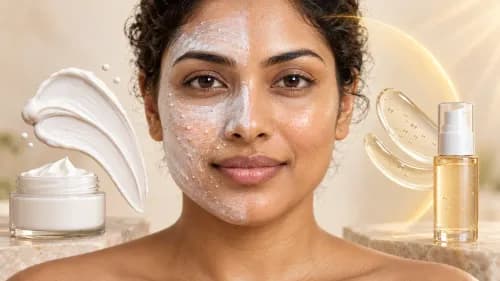
Stress and Whiteheads: The Hidden Skin–Mind Connection

Stress does not directly cause whiteheads, but it creates conditions that make pores clog more easily. Higher cortisol can increase oil production, slow skin repair, weaken the barrier, and increase subtle inflammation. Stress-related whiteheads often worsen during poor sleep or prolonged emotional pressure. Gentle skincare, adequate rest, and practical stress management can help the skin gradually normalise, often over 4-8 weeks.
How stress affects the skin
When the body is under stress, it activates the stress-response system.
This leads to the release of hormones-especially cortisol.
Cortisol affects the skin by:
- Increasing oil (sebum) production
- Slowing skin repair and healing
- Weakening the skin barrier
- Increasing subtle inflammation
Together, these changes make pores more likely to trap oil and dead skin cells.
Understand your skin patterns and receive a more personalised starting point.
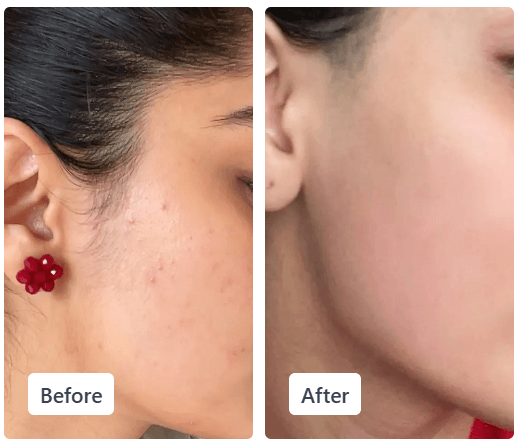
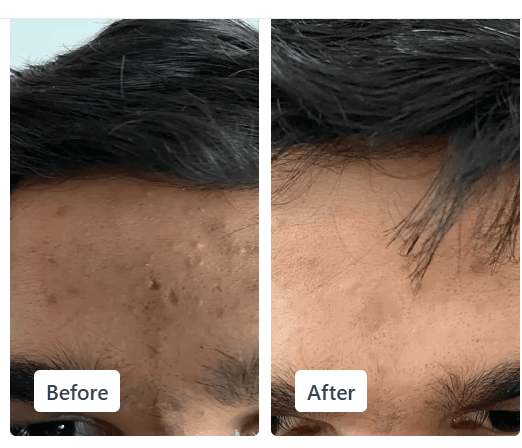
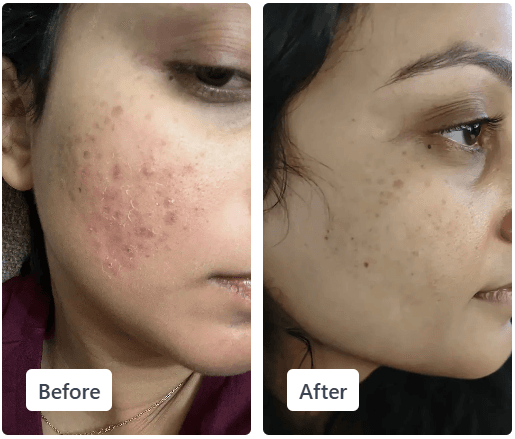
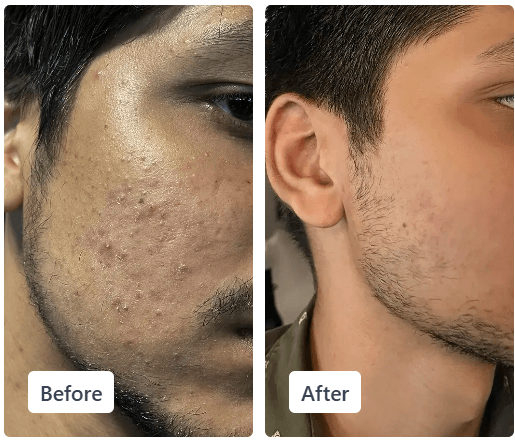
Why stress specifically triggers whiteheads
Whiteheads are closed comedones.
They form when oil and dead skin get trapped inside a pore that stays closed.
Stress increases the likelihood of this by:
- Making oil thicker and more abundant
- Disrupting even skin cell shedding
- Reducing the skin's ability to self-correct congestion
Unlike inflamed acne, stress-related whiteheads often appear quietly as texture changes
rather than red, painful breakouts.
Common stress-related whitehead patterns
Stress-triggered whiteheads often show up as:
- Small, skin-coloured bumps
- Clusters on the forehead, jawline, or cheeks
- Sudden texture changes without redness
- Whiteheads that don't respond to usual products
Many people mistake these for clogged pores from products,
when the real trigger is internal.
Understand your skin patterns and receive a more personalised starting point.
How chronic stress worsens whiteheads over time
Short-term stress can cause temporary flares.
But chronic stress has a compounding effect on the skin.
Over time, ongoing stress:
- Keeps cortisol levels elevated
- Maintains high oil production
- Slows normal pore-clearing cycles
- Weakens barrier resilience
This creates a cycle where whiteheads keep returning,
even with a careful skincare routine.
Why aggressive skincare makes stress-related whiteheads worse
When whiteheads persist, many people respond by:
- Over-cleansing
- Exfoliating too frequently
- Layering multiple active ingredients
On stressed skin, this often backfires.
Over-treatment:
- Further damages the skin barrier
- Triggers more oil rebound
- Increases sensitivity and congestion
The skin becomes stuck in a stress-irritation-whitehead loop.
What actually helps stress-related whiteheads
1. Simplifying skincare
Stressed skin responds best to fewer products,
gentle cleansing, and barrier-supportive moisturisation.
### 2. Prioritising sleep
Sleep is when the skin repairs itself.
Poor sleep increases cortisol and slows healing,
worsening whiteheads over time.
### 3. Managing daily stress
Stress management doesn't need to be extreme.
Even small habits help regulate cortisol levels.
- Regular movement
- Breathing exercises
- Consistent routines
Stress-related whiteheads don't clear overnight.
As internal stress reduces, the skin gradually normalises.
How long does it take to see improvement?
Once stress levels are better managed,
many people notice gradual improvement in 4-8 weeks,
especially when skincare remains gentle and consistent.
Improvement depends on reducing both internal and external stress on the skin.
When to seek professional support
Consider professional guidance if:
- Whiteheads persist despite simple care
- Stress feels unmanageable
- Skin becomes increasingly sensitive or reactive
Addressing both skin and stress holistically often leads to better outcomes.
How Clear Ritual Supports Personalized Skincare Decisions
Clear Ritual understands that stress-related whiteheads are more than a surface issue. The pattern can reflect cortisol activity, oil production, skin-barrier disruption, sleep quality, and the way the skin responds during prolonged emotional pressure.
Because whiteheads form when oil and dead skin become trapped inside closed pores, generic product changes may not bring lasting improvement when stress, poor sleep, and over-treatment continue to reinforce congestion.
The Clear Ritual Skin Test analyses your skin's unique patterns, routine, lifestyle influences, and possible internal triggers to create a more personalised starting point instead of relying on generic trial-and-error.
Understand your skin patterns and receive a more personalised starting point.
Conclusion
Stress does not directly cause whiteheads, but it creates conditions that make pores clog more easily. Higher cortisol can increase oil production, slow skin repair, weaken the barrier, and increase subtle inflammation. Reducing stress, protecting sleep, and keeping skincare gentle can help interrupt the oil-inflammation-breakout cycle.
Frequently Asked Questions
Can stress directly cause whiteheads?
Stress does not directly create whiteheads, but higher cortisol can increase oil production, weaken the skin barrier, slow repair, and make pores more likely to trap oil and dead skin.
Why do whiteheads appear during stressful periods?
Stress can increase sebum, disrupt even skin-cell shedding, worsen sleep, and reduce the skin's ability to correct congestion, so closed comedones may become more noticeable.
Can poor sleep worsen stress-related whiteheads?
Yes. Poor sleep can keep cortisol elevated and slow skin repair, which may worsen oil imbalance, sensitivity, and recurring congestion.
What helps stress-related whiteheads?
Simplifying skincare, cleansing gently, supporting the barrier, prioritising sleep, and using practical stress-management habits can help.
How long can improvement take?
Many people notice gradual improvement in 4-8 weeks once stress is better managed and skincare remains gentle and consistent.
Editorial Standards
Clear Ritual has Strict sourcing guidelines to ensure our content is accurate and current. We rely on peer-reviewed studies, academic research institutions, and medical associations. We strive to use primary sources and refrain from using tertiary references. See a mistake? Learn More about our Editorial Standards.
Related Articles
Sweat, Pollution & Whiteheads: Why Your Environment Matters
Published 22 July 2026

How Hormones Trigger Whiteheads (Puberty, PCOS, Stress & Periods)
Published 22 July 2026

Whiteheads in Women: Hormonal Triggers, PCOS & Pregnancy
Published 22 July 2026

Do Sunscreens Cause Whiteheads? How to Choose the Right SPF
Published 15 October 2026