AHA vs BHA: Which Exfoliating Acid Is Right for Your Skin?
Quick Answer:
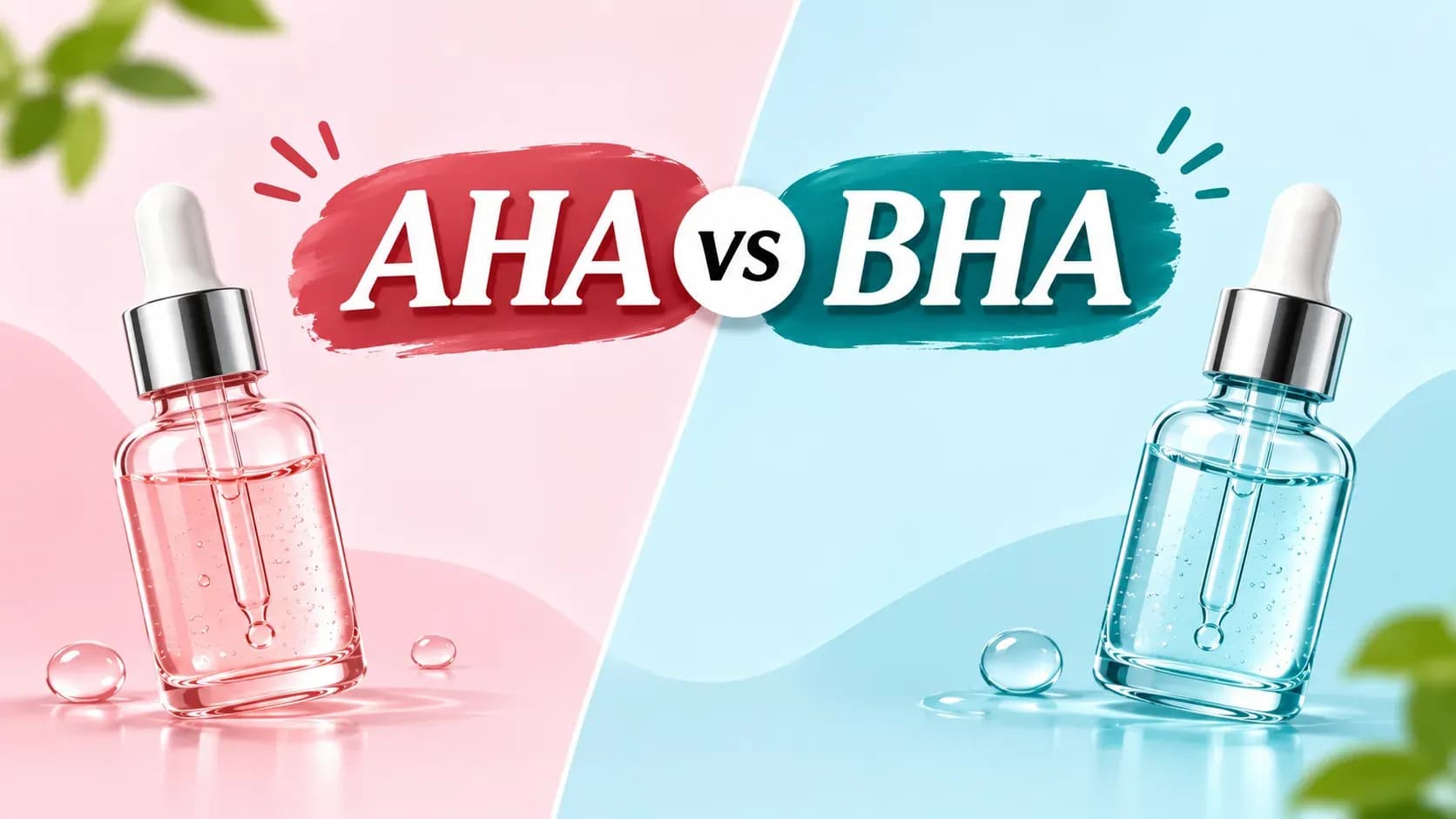
Choosing between AHA and BHA depends on what you want to improve in your skin. Both are chemical exfoliants, but they work differently. Alpha hydroxy acids (AHAs) mainly exfoliate the skin’s surface, while beta hydroxy acids (BHAs), particularly salicylic acid, can penetrate oil-filled pores.
If you’re dealing with uneven skin tone, rough texture, excess oil, or clogged pores, understanding the difference can help you choose an exfoliant that suits your skin without overloading your routine.
What Are AHA and BHA in Skincare?
Alpha hydroxy acids (AHAs) are water-soluble acids that help loosen the bonds between dead skin cells, supporting their removal from the skin’s surface. Common examples include glycolic acid, lactic acid, and mandelic acid.
AHAs can help improve rough texture, uneven skin tone, and the appearance of some post-acne marks. Lactic acid may suit dry skin because it also has humectant properties, while glycolic acid is well studied for its effects on skin texture and photoageing.
Beta hydroxy acid (BHA) in skincare usually refers to salicylic acid. Unlike AHAs, salicylic acid is oil-soluble, allowing it to work inside pores and help remove excess oil and accumulated dead skin cells.
If you experience blackheads, whiteheads, or oily, acne-prone skin, salicylic acid may be a useful option. However, its effectiveness depends on the formulation, concentration, and your skin’s tolerance.
AHA vs BHA: Which Is Better for Your Skin Type?
Neither acid is universally better. Your choice should depend on your primary skin concern.
| Skin concern | Acid to consider | Why it may help |
|---|---|---|
| Dry, rough skin | AHA, such as lactic acid | Exfoliates the surface and may support smoother-looking skin |
| Oily skin and clogged pores | BHA, such as salicylic acid | Helps clear pore buildup and reduce comedones |
| Acne-prone skin | BHA | Can help with blackheads and whiteheads |
| Uneven tone and acne marks | AHA | May improve surface texture and the appearance of discolouration |
AHA for Dry Skin
If your skin feels rough or looks dull, an AHA may help improve surface smoothness. Lactic acid is worth considering because it exfoliates while also attracting moisture. However, AHAs can still cause dryness or irritation, especially at higher concentrations.
BHA for Oily Skin
If you notice persistent blackheads, whiteheads, or congested pores, salicylic acid may be more suitable. Its oil-soluble nature helps it work within pores, making it a common ingredient in products for oily and acne-prone skin.
AHA vs BHA for Acne-Prone Skin
Your acne type matters. AHAs may help improve uneven texture and the appearance of post-acne marks, but they do not treat every type of acne. BHA is generally the more targeted choice for blackheads and whiteheads. Persistent, painful, or scarring acne may require medical treatment rather than exfoliation alone. Instead of self-diagnosis, consulting a dermatologist can help you choose a targeted approach that works for you.
AHA vs BHA vs PHA: What’s the Difference?
AHAs exfoliate the skin’s surface, while BHA (salicylic acid) can penetrate oil-filled pores. Polyhydroxy acids (PHAs), such as gluconolactone, have larger molecular structures than many AHAs and are often formulated for gentler surface exfoliation.
If your skin is sensitive, a PHA product may be worth considering, although it can still cause irritation. No exfoliating acid is automatically suitable for everyone. So, patch-testing before introducing new products helps avoid irritation.
How to Use AHA and BHA in Your Skincare Routine
To reduce the risk of irritation, introduce one exfoliating acid, either AHA or BHA, at a time.
- Start slowly: Use the product at the frequency recommended on its label or as advised by your dermatologist. If you’re a beginner, avoid daily use until you understand how your skin responds.
- Follow the instructions: Apply the product as directed, and follow with a moisturiser to support your skin barrier.
- Avoid over-exfoliation: Combining several exfoliating products or introducing strong actives together can increase irritation.
- Wear sunscreen: AHAs can increase your skin’s sensitivity to sunlight. Use broad-spectrum SPF 30 or higher and reapply as directed.
Note: Even if you apply AHA BHA serums at night, you still need to use sunscreen the next morning.
AHA vs BHA: Side Effects and Precautions
Both AHAs and BHAs can cause redness, stinging, dryness, peeling, or irritation if used incorrectly. Higher concentrations and frequent use may increase the risks of side effects.
Avoid applying exfoliating acids to broken or irritated skin, expecting faster healing. Doing so actually harms your skin and disrupts cellular repair. If you develop persistent burning, swelling, or significant irritation, stop using the product and seek professional advice. If you have sensitive skin, eczema, or ongoing acne, consult a dermatologist before starting a new exfoliant.
Clear Ritual’s Perspective on AHA vs BHA
Choose an AHA if your priority is surface texture and uneven tone, or consider BHA if clogged pores and excess oil are your main concerns. Your skincare routine should address your main concern without compromising your skin barrier.
Your skin needs may be different from the surface-level problems that you see, which can't be fixed with a trending OTC product. Your skin requires a holistic approach that focuses on internal repair, along with the right ingredients that are mild for your skin to achieve healthy skin.
At Clear Ritual, we believe you need to start with one product, introduce it gradually, and maintain consistent sun protection. The Clear Ritual Skin Test offers a customised skin kit that suits your skin type and concerns.
Understand What Your Skin Needs
Take the Clear Ritual Skin Test to identify your skin concerns and explore a plan for your routine.
Take the Free Skin Test
Frequently Asked Questions
Q. Which is better, AHA or BHA?
A. Neither is always better. AHAs are generally suited to surface texture and uneven tone, while BHA is often more useful for oily skin and clogged pores.
Q. Is AHA or BHA better for acne?
A. BHA is often a better fit for blackheads and whiteheads. The right treatment depends on your acne type and severity.
Q. Can you use AHA and BHA daily?
A. Daily use is not necessary for everyone and may cause irritation. Follow the product instructions and adjust frequency according to your skin’s tolerance.
Q. How often should you use AHA or BHA?
A. Start with a low frequency, such as once or twice weekly if the product instructions allow, and increase only if your skin tolerates it.
Q. Can you use AHA and BHA together?
A. Some formulations combine both acids, but layering separate products can increase irritation. If you’re new to exfoliation, start with one acid at a time and consult a dermatologist if you’re unsure.
References
- Edison BL, Green BA, Wildnauer RH, Sigler ML. A polyhydroxy acid skin care regimen provides antiaging effects comparable to an alpha-hydroxyacid regimen. Cutis. 2004 Feb;73(2 Suppl):14-7. PMID: 15002657.
- Tang SC, Yang JH. Dual Effects of Alpha-Hydroxy Acids on the Skin. Molecules. 2018 Apr 10;23(4):863. doi: 10.3390/molecules23040863. PMID: 29642579; PMCID: PMC6017965.
- Reynolds RV, Yeung H, Cheng CE, Cook-Bolden F, Desai SR, Druby KM, Freeman EE, Keri JE, Stein Gold LF, Tan JKL, Tollefson MM, Weiss JS, Wu PA, Zaenglein AL, Han JM, Barbieri JS. Guidelines of care for the management of acne vulgaris. J Am Acad Dermatol. 2024 May;90(5):1006.e1-1006.e30. doi: 10.1016/j.jaad.2023.12.017. Epub 2024 Jan 30. Erratum in: J Am Acad Dermatol. 2026 Jul;95(1):347. doi: 10.1016/j.jaad.2026.04.009. PMID: 38300170.
- Food and Drug Administration U.S. Alpha Hydroxy Acids | FDA Last Updated: 11/22/2022
Disclaimer: This article is for general information only and is not a substitute for diagnosis or treatment from a qualified dermatologist. Follow your product label and your clinician’s advice, especially during pregnancy, breastfeeding, or when treating a diagnosed skin condition.
Editorial Standards
Clear Ritual has Strict sourcing guidelines to ensure our content is accurate and current. We rely on peer-reviewed studies, academic research institutions, and medical associations. We strive to use primary sources and refrain from using tertiary references. See a mistake? Learn More about our Editorial Standards.