Pimple on Forehead: Why It Happens And How to Treat It
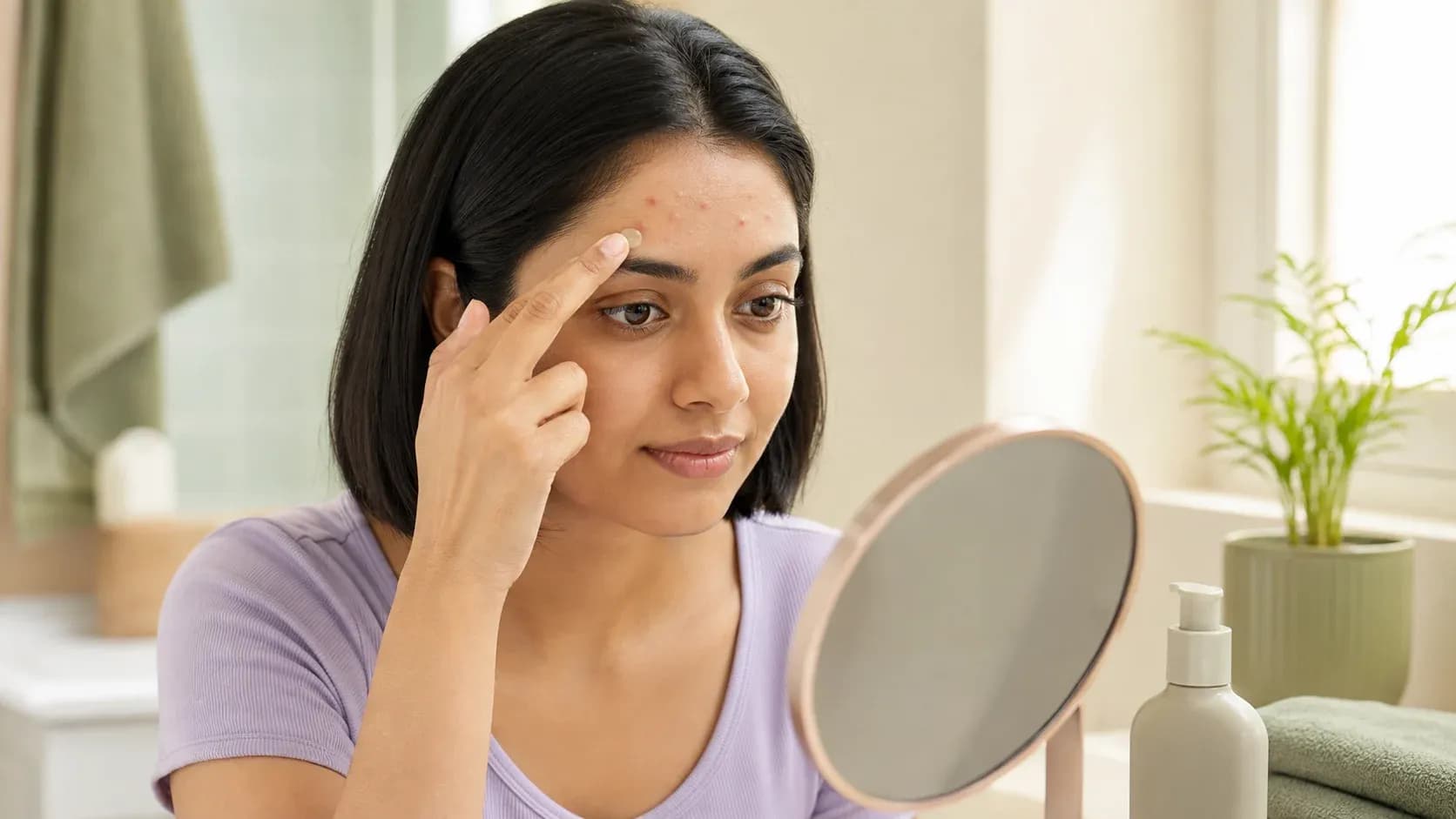
A pimple on forehead usually forms when excess oil and dead skin cells clog a hair follicle, triggering inflammation. Hair products, hormonal changes, sweat, and friction can increase the risk of forehead breakouts.
For mild pimples, evidence-based ingredients such as salicylic acid, benzoyl peroxide, adapalene, or azelaic acid can help, while deeper or persistent acne may need dermatological treatment.
What Does a Pimple on Your Forehead Mean?
A pimple on your forehead usually means a hair follicle has become clogged with excess oil and dead skin cells, triggering inflammation within the pore.
Acne can develop anywhere you have hair follicles, including your forehead, so a pimple on your forehead does not necessarily indicate a specific internal health problem.
The forehead can be especially prone to breakouts because of its oil-producing skin and its exposure to hair products, sweat, and other pore-clogging substances. Here is what happens inside the pore:
● Excess oil: Sebaceous glands produce sebum, which can build up inside the follicle.
● Dead skin cells: Oil and dead skin cells can accumulate and block the follicle opening, forming a whitehead or blackhead.
● Inflammation: Bacteria that normally live on your skin can multiply within the blocked follicle, triggering inflammation and forming a pimple.
So, a pimple on your forehead does not necessarily mean something is wrong internally. It usually reflects what is happening within the skin and follicles in that area.
Who Is More Likely to Get Pimples on the Forehead?
You may be more prone to forehead pimples if you have oily skin, are going through hormonal changes, or are in your teenage years. Stress and other factors that affect oil production can also contribute to breakouts.
If you are wondering about the pimple on forehead reason, these factors can make forehead breakouts more likely:
● Teenagers: If you are going through puberty, hormonal changes can increase oil production and raise your risk of forehead breakouts.
● Oily skin: If your skin naturally produces more sebum, you may be more prone to clogged pores and forehead pimples.
● Hormonal changes: If you experience menstruation, pregnancy, or conditions such as PCOS, hormonal shifts may worsen acne.
● Significant stress: If you are under ongoing stress, changes in hormonal and inflammatory pathways may contribute to worsening acne.
Why Do You Get Pimples on Your Forehead?
You can get pimples on your forehead when excess oil, dead skin cells, and other substances block your pores, leading to inflammation.
Hair products, hormonal changes, sweat, and friction can increase the likelihood of these blockages. If you are wondering why pimples occur on your forehead or the causes of pimples on your forehead, these are some common triggers:
● Hair products: Oils, waxes, and leave-in products can transfer to your forehead and clog pores.
● Hormonal changes: Puberty, menstrual changes, and stress can increase oil production and worsen acne.
● Sweat and friction: Hats, helmets, and headbands can trap sweat and irritate acne-prone skin.
● Unclean items: Pillowcases, hands, and other frequently touched surfaces can transfer oil and impurities to your skin.
Is Every Pimple on Your Forehead Actually Acne?
No, not every pimple or bump on your forehead is actually acne. Although acne is common, several other skin conditions can look similar, so the appearance, texture, and symptoms of the bumps matter.
If you are wondering what causes a pimple on your forehead, it is also important to consider whether the bump is actually acne before choosing a treatment. Some common acne look-alikes include:
● Malassezia folliculitis: Tiny, uniform, itchy bumps caused by yeast affecting the hair follicles rather than typical acne bacteria.
● Contact dermatitis: Small, red, itchy bumps that can develop after exposure to irritating or allergenic products, including hair products or headwear.
● Keratosis pilaris: Small, rough, flesh-coloured bumps caused by keratin building up around hair follicles.
● Milia: Small, firm, white cysts that form when keratin becomes trapped beneath the skin.
If your forehead bumps are unusually itchy, uniform, rough, or persistent, avoid assuming they are acne and consider a dermatologist’s assessment.
How Can You Treat a Pimple on Your Forehead?
Treatment depends on the type and severity of the pimple. For a mild breakout, gentle skin care and an appropriate OTC acne ingredient may help, while deep, painful, or persistent acne may need a dermatologist’s treatment.
What Home Remedies Can Help a Forehead Pimple?
Simple at-home care can help calm a pimple without irritating your skin further. Try these measures:
● Cleanse gently: Use a gentle, non-abrasive cleanser, especially after sweating.
● Use a warm compress: Apply a clean, warm washcloth to a deep, painful pimple.
● Avoid picking: Do not squeeze or pop the pimple, as this can worsen inflammation and scarring.
● Moisturise: Use a non-comedogenic moisturiser if your skin becomes dry or irritated.
Which OTC Ingredients Help Clear Forehead Pimples?
Several OTC ingredients have evidence for treating mild acne, but each works differently. Choose one appropriate active ingredient and use it consistently rather than layering several new products at once.
● Salicylic acid: Helps unclog pores and works particularly well for whiteheads and blackheads.
● Benzoyl peroxide: Reduces acne-causing bacteria and helps treat inflammatory pimples.
● Adapalene: A topical retinoid that helps unclog pores and reduce new breakouts.
● Azelaic acid: Helps unclog pores, reduce inflammation, and improve acne-related dark marks.
Note: If you are pregnant or trying to become pregnant, speak with a dermatologist before using acne treatments, particularly retinoids such as adapalene.
What Steps Can Help Prevent Pimples on Your Forehead?
You can reduce forehead breakouts by avoiding common triggers and following a gentle, consistent routine. If you are wondering why pimples occur on your forehead repeatedly, these simple steps can help reduce clogged pores and recurring breakouts.
Keep Hair And Hair Products Away From Your Forehead
Hair oils, waxes, and styling products can transfer onto your forehead and contribute to clogged pores. Keep your hair and hair products away from the skin where possible, especially if you are prone to forehead pimples.
Choose Non-Comedogenic Skincare And Makeup
Choose products labelled non-comedogenic or formulated for acne-prone skin. This can reduce the chance of products contributing to clogged pores and may support your pimple on forehead treatment routine.
Cleanse Gently After Sweating
Gently cleanse your forehead after heavy sweating to remove excess sweat and oil. Avoid harsh scrubbing, which can irritate your skin and make breakouts harder to manage.
Reduce Friction From Hats, Helmets And Headbands
Keep items that regularly touch your forehead clean and avoid wearing them too tightly. Repeated heat, pressure, and friction can contribute to acne mechanica.
Avoid Picking, Scrubbing And Over-Treating Your Skin
Resist squeezing pimples or repeatedly applying strong acne products. Picking can increase inflammation and scarring, while over-treating can irritate your skin and interfere with your pimple on forehead treatment.
How Long Does a Forehead Pimple Take to Clear?
Expert guidance from the American Academy of Dermatology recommends giving a new acne treatment around 6 to 8 weeks to assess its initial response, rather than changing products too frequently. This helps you avoid unnecessary irritation and gives the treatment enough time to work.
Your response can vary depending on the type of breakout and the treatment you use. A realistic treatment timeline looks like this:
| Timeframe | What You May Notice |
|---|---|
| First few days | A small pimple may begin to settle, while deeper or more inflamed pimples can take longer. |
| 4 to 8 weeks | You may begin to see fewer breakouts with consistent use of an appropriate acne treatment. |
| Around 12 to 16 weeks | More noticeable improvement may develop with an effective treatment plan, although results vary. |
| After 8 weeks without improvement | Consider seeing a dermatologist to reassess the diagnosis and treatment approach. |
Note: A small forehead pimple may settle within several days, but there is no fixed timeline for every breakout. Deeper or more inflamed pimples can take longer, while acne treatments generally need several weeks of consistent use before you can judge their response.
When Should You See a Dermatologist for a Forehead Pimple?
You should see a dermatologist if your forehead pimples are painful, persistent, worsening, or leaving scars. You should also seek advice if the bumps are very itchy, unusual, or do not improve with appropriate treatment.
If you are unsure why a pimple is occurring on your forehead or your breakouts keep returning despite appropriate care, consider getting your skin assessed for:
● Painful or deep pimples
● Persistent or worsening breakouts
● Scarring or lasting dark marks
● Very itchy or unusual bumps
● No improvement with treatment
Clear Ritual’s Perspective on Pimples on Forehead
Forehead pimples can have different triggers, so instead of adding more products, focus on what is contributing to your breakouts, whether that means managing hair-product exposure, sweat and friction, choosing suitable skincare, or using targeted acne ingredients.
At Clear Ritual, we believe understanding why your forehead is breaking out is the first step towards choosing the right skincare approach.
The Clear Ritual Skin Test can help you identify your skin type and concerns, making it easier to build a routine suited to your skin’s needs.
Clear Ritual Skin Test
Understand What Is Triggering Your Forehead Pimples
Take the free skin test to assess oiliness, acne patterns, sensitivity, and other concerns, then get a routine suited to your skin.
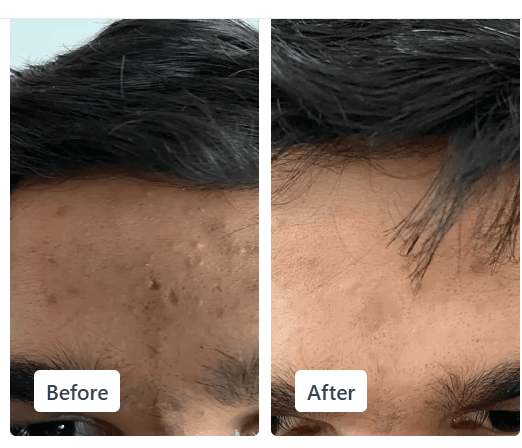
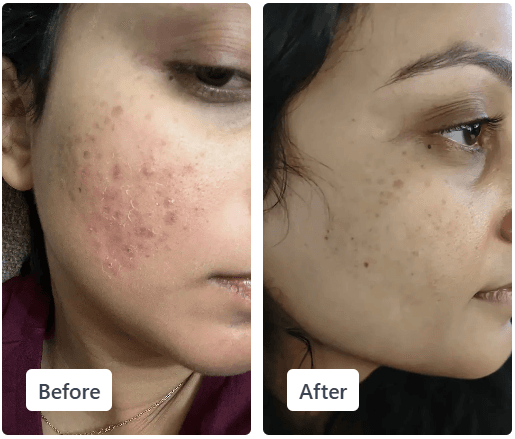
Take the Free Skin Test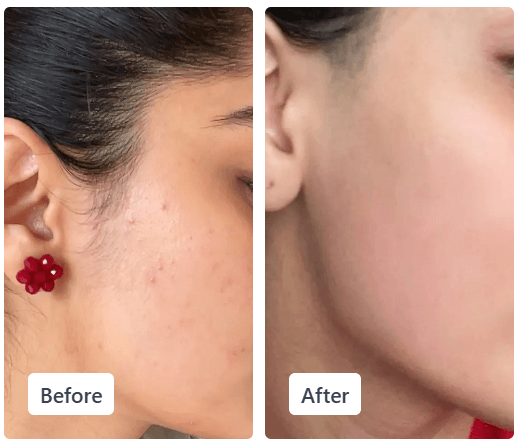
Frequently Asked Questions
1. What does a pimple on your forehead mean?
A pimple usually means a hair follicle has become clogged with oil and dead skin cells, leading to inflammation. Hair products, hormones, sweat, and friction can also contribute to forehead breakouts.
2. Why are you suddenly getting pimples on your forehead?
Sudden forehead breakouts can be linked to hormonal changes, new hair or skincare products, sweating, friction, or other acne triggers. If the breakout persists, a dermatologist can help identify the cause.
3. What is the main reason for pimples on the forehead?
The main cause is clogged hair follicles. Excess oil and dead skin cells can block the pore, while inflammation develops as bacteria multiply within the clogged follicle.
4. How can you remove a pimple on your forehead?
You can treat mild pimples with appropriate acne products and gentle skin care. Avoid squeezing or picking, as this can increase inflammation, dark marks and scarring.
5. Why do you keep getting pimples on your forehead?
Recurring forehead pimples may result from ongoing exposure to hair products, hormonal changes, sweat, friction or other acne triggers. Persistent breakouts may need a dermatologist’s assessment.
6. Should you pop a pimple on your forehead?
No, you should avoid popping it. Picking or squeezing can make acne take longer to clear and increase the risk of infection, dark marks and scarring.
References
American Academy of Dermatology - Acne: Diagnosis and Treatment
American Academy of Dermatology - Are Your Hair Care Products Causing Breakouts?
Editorial Standards
Clear Ritual has Strict sourcing guidelines to ensure our content is accurate and current. We rely on peer-reviewed studies, academic research institutions, and medical associations. We strive to use primary sources and refrain from using tertiary references. See a mistake? Learn More about our Editorial Standards.