Does Vitamin C Really Help Acne Scars? Here's the Honest Answer
Vitamin C does not erase acne scars , but it meaningfully fades the flat dark marks most people call scars. Those marks are usually post-inflammatory hyperpigmentation (PIH): excess melanin deposited when inflammation heals. Vitamin C interrupts melanin production at the enzyme level and supports collagen synthesis during healing. Most people see PIH lighten within 4 to 12 weeks of consistent daily use. Deep pitted or raised scars need clinical procedures, not a serum.
What Vitamin C Actually Does for Acne Scars
Vitamin C fades flat dark marks after acne by inhibiting melanin production and supporting collagen synthesis , but it does not erase deep pitted or raised scars.
Vitamin C works best on:
- Flat dark or red marks left after breakouts (post-inflammatory hyperpigmentation)
- Shallow textural irregularities with mild depth
- Skin that is actively healing and needs antioxidant support
Vitamin C has limited effect on:
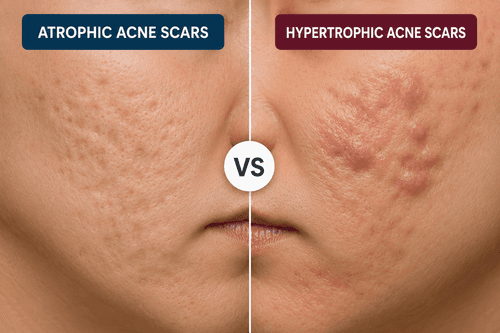
- Ice pick, boxcar, or rolling scars (atrophic scarring)
- Raised hypertrophic or keloid scars
- Structural scarring that has been present for years
If your marks are flat and darker than surrounding skin, vitamin C is a well-supported, evidence-backed choice. If they create shadows or indentations, topical products , including vitamin C , are a complement to professional treatment, not a replacement.
What Happens to Your Skin After Acne Heals
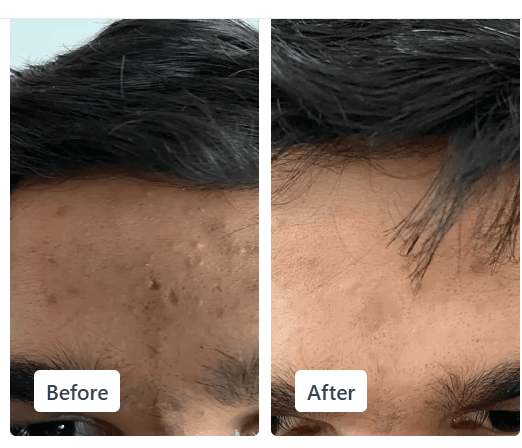
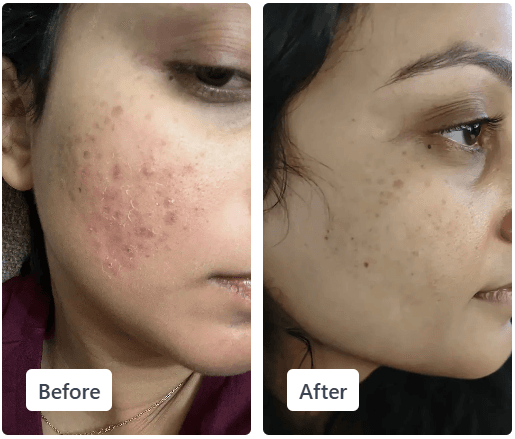
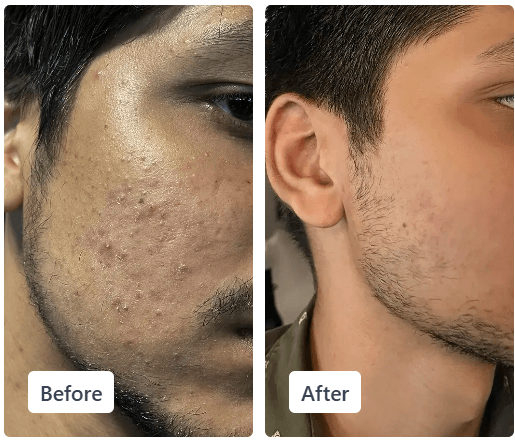
When a breakout heals, it often leaves behind marks that can linger for months. These are not always true scars in the medical sense. Most dark or red spots are post-inflammatory hyperpigmentation, which occurs when inflammation triggers excess melanin production in that area. Your skin remembers the injury and deposits extra pigment as part of its healing response.
True acne scars involve changes to the skin's structure:
- Ice pick scars create narrow, deep indentations
- Rolling scars form wave-like depressions across larger areas
- Boxcar scars leave angular edges with defined borders
- Hypertrophic scars form raised, firm tissue when the body overproduces collagen
These develop when inflammation destroys collagen during the healing process, or when the skin produces too much collagen, creating raised tissue. The distinction matters because different types of scarring respond differently to topical treatments. Vitamin C shows the most promise for pigmentation issues and may offer some benefits for shallow textural concerns, but deeper structural changes typically require professional intervention.
How Vitamin C Affects Skin Healing and Pigmentation
Vitamin C, or ascorbic acid, functions as a cofactor in collagen synthesis. Collagen fibers provide structural support to your skin. When adequate vitamin C is available, fibroblasts can produce collagen more efficiently during wound healing. This does not reverse established scars, but it may help prevent severe scarring if used during active breakouts and early healing phases.
For pigmentation, vitamin C interferes with tyrosinase , the enzyme responsible for melanin production. By reducing tyrosinase activity, vitamin C can slow the formation of new pigment and gradually lighten existing dark spots. This process takes time because your skin needs to naturally shed pigmented cells and replace them with new, less pigmented ones.
Vitamin C also functions as an antioxidant, neutralizing free radicals generated by UV exposure and inflammation. Since oxidative stress can worsen both scarring and pigmentation, this protective function supports overall skin recovery. When inflammation persists, it continues damaging surrounding tissue and prolonging discoloration.
According to Clear Ritual's skin science team, the antioxidant function of vitamin C is often underestimated , it reduces the oxidative load that extends the inflammatory phase, which in turn shortens the window during which new pigmentation can form.
Why Some Acne Scar Types Respond Better Than Others
Post-inflammatory hyperpigmentation responds most predictably to vitamin C because it addresses the underlying melanin deposits directly. If your marks are flat and simply darker than surrounding skin, vitamin C can make a noticeable difference over several weeks. Deeper skin tones may experience more pronounced hyperpigmentation because melanocytes are naturally more active, but vitamin C works across all skin types.
Shallow textural irregularities may see modest improvement as collagen support strengthens the surrounding skin matrix. The surface may appear smoother and more even, which can make shallow depressions less noticeable. However, this does not fill in deep scars or reverse significant structural damage.
Deep atrophic scars, where tissue volume has been lost, require interventions that physically rebuild the skin architecture. Procedures like microneedling, laser resurfacing, or subcision work at depths topical products cannot reach. Vitamin C can complement these treatments by supporting the healing process afterward, but it will not replace them.
Raised hypertrophic scars form when the body produces excess collagen during healing. Since vitamin C promotes collagen production, it is generally not the first choice for raised scarring. These respond better to treatments that reduce collagen formation or break down excess tissue.
Is Vitamin C Right for Your Scar Type? A Quick Assessment
Not all post-acne marks are the same, and vitamin C's effectiveness depends heavily on scar type. The table below helps identify which category your marks fall into before investing in a serum routine.
| Scar / Mark Type | What It Looks Like | Does Vitamin C Help? | Better Option If Not |
|---|---|---|---|
| Post-inflammatory hyperpigmentation (PIH) | Flat, dark brown or grey patches | ✅ Yes , directly targets melanin | Combine with niacinamide for faster results |
| Post-inflammatory erythema (PIE) | Flat, pink or red marks (more common in lighter skin tones) | ⚠️ Partial , antioxidant benefit only | Azelaic acid or niacinamide more targeted for PIE |
| Shallow atrophic scars | Mild depressions, slight texture change | ⚠️ Modest , collagen support may slightly improve surface | Add a retinoid; consider microneedling |
| Ice pick scars | Narrow, deep, pore-like holes | ❌ No meaningful effect | Punch excision or TCA cross (dermatologist procedure) |
| Boxcar scars | Wide, angular depressions with defined edges | ❌ Minimal to none | Laser resurfacing or subcision |
| Rolling scars | Wave-like uneven texture across larger area | ❌ Minimal to none | Subcision + filler; microneedling RF |
| Hypertrophic / keloid scars | Raised, firm tissue above skin surface | ❌ May worsen , vitamin C promotes collagen | Silicone gel, corticosteroid injection, or dermatologist referral |
One clinically important fact: topical vitamin C is effective for post-inflammatory hyperpigmentation because it directly inhibits tyrosinase , the enzyme melanocytes use to produce melanin. It cannot rebuild or remove tissue that has already been lost or overgrown. If your main concern is flat discoloration, vitamin C belongs in your morning routine. If you see shadows, indentations, or raised tissue, a dermatologist assessment should come first.
Which Vitamins Help Acne Scars Most? Vitamin C vs. the Full Picture
Vitamin C receives the most attention , but it is not the only vitamin that supports post-acne skin recovery. Understanding how each nutrient works helps in building a more effective routine.
| Vitamin / Nutrient | How It Helps Acne Scars | Best Form for Skin | Realistic Expectation |
|---|---|---|---|
| Vitamin C (Ascorbic acid) | Inhibits melanin production; supports collagen synthesis | L-ascorbic acid serum (10-20%) or stable derivatives | Fades PIH in 4-12 weeks of daily use |
| Vitamin E (Tocopherol) | Antioxidant; reduces lipid peroxidation during healing | Topical tocopherol acetate; best combined with vitamin C | Modest benefit on fresh scars; overapplication can clog pores |
| Niacinamide (Vitamin B3) | Reduces melanin transfer to skin surface; strengthens barrier | 4-10% topical serum | Visible PIH reduction in 4-8 weeks; well tolerated by most |
| Vitamin A (Retinoids) | Accelerates cell turnover; stimulates collagen; reduces PIH | Prescription tretinoin or OTC retinol | Broad post-acne improvement in 8-16 weeks; irritation risk |
| Zinc | Anti-inflammatory; regulates sebum; supports wound healing | Oral zinc gluconate or zinc picolinate (25-40 mg/day) | Mainly prevents new breakouts; modest effect on existing marks |
| Vitamin D | Modulates skin immune response; supports barrier function | Oral supplementation (1,000-2,000 IU/day if deficient) | Indirect benefit; most useful when deficiency is confirmed |
The most evidence-backed combination for PIH: Vitamin C (morning) + Niacinamide + Broad-spectrum SPF. This trio targets melanin through two separate pathways while protecting against UV-triggered repigmentation.
For overall scar recovery: adding a retinoid at night covers cell turnover and collagen support that vitamin C alone cannot deliver. Vitamin C is not the only answer , but for flat post-acne discoloration, it remains the most directly targeted topical option available without a prescription.
Understanding Vitamin C Forms and Stability
Not all vitamin C products deliver the same results. L-ascorbic acid is the most researched form and the only version your skin can use directly. However, it is notoriously unstable. Exposure to light, air, and water causes it to oxidize rapidly, turning the product yellow or brown and rendering it ineffective.
Formulation pH matters significantly. L-ascorbic acid needs a pH below 3.5 to penetrate the skin barrier effectively. This acidity can irritate sensitive skin, especially when combined with other active ingredients. If stinging or redness occurs, your skin may need time to adjust, or a gentler derivative may be more appropriate.
Vitamin C derivatives like magnesium ascorbyl phosphate, ascorbyl glucoside, and tetrahexyldecyl ascorbate offer more stability and less irritation. Your skin must convert these into active vitamin C, which may reduce potency but improves tolerability. For acne-prone skin that is already dealing with inflammation, a stable derivative may prevent additional irritation while still providing benefits.
Concentration matters, but more is not always better. Research suggests effectiveness peaks around 15 to 20 percent for L-ascorbic acid. Higher concentrations increase irritation risk without proportional benefits. Derivatives work at lower percentages, typically between 5 and 10 percent.
Vitamin C Forms Compared: Which One Actually Works for Acne Scars?
The form of vitamin C in a product determines how much active ingredient actually reaches your skin cells. The table below provides a practical comparison of the most common forms.
| Vitamin C Form | Stability | Effective Concentration | Irritation Level | Best For | Notes |
|---|---|---|---|---|---|
| L-ascorbic acid | Low (oxidises in light/air) | 10-20% | High at >15% | PIH, collagen support, brightening | Most research-backed; pH must be below 3.5 to penetrate; store in dark, cool place |
| Ascorbyl glucoside | High | 2-5% | Low | Sensitive, acne-prone skin | Converts to active vitamin C in skin; slower but gentler |
| Magnesium ascorbyl phosphate (MAP) | High | 5-10% | Low | Oily or reactive skin | Water-soluble; hydrating; good tolerance for inflamed skin |
| Tetrahexyldecyl ascorbate (THD) | Very high | 1-3% | Very low | Dry skin; those who have reacted to L-ascorbic acid | Oil-soluble; penetrates deeper layers; no low-pH requirement |
| Ascorbyl tetraisopalmitate | High | 2-5% | Very low | Combination skin | Lipophilic form; good layering compatibility |
What to look for on a label when buying:
- Active vitamin C form listed in the first five ingredients
- Concentration specified , not just "vitamin C enriched"
- Dark or opaque packaging , light degrades L-ascorbic acid quickly
- pH listed or described as "low pH" for L-ascorbic acid products
- No oxidation , a yellow-brown serum means it has already degraded
Price guidance: Effective vitamin C serums in India range from ₹400 to ₹2,500 depending on form, concentration, and brand. Derivatives like ascorbyl glucoside tend to be more affordable and more stable. Higher price does not always mean better results , concentration and packaging matter more.
For acne-prone skin dealing with active inflammation, a stable derivative such as ascorbyl glucoside or MAP at a moderate concentration is often better tolerated than high-percentage L-ascorbic acid.
How to Use Vitamin C for Acne Scarring
Consistency determines results more than any other factor. Your skin replaces itself approximately every 28 days, so continuous support throughout multiple skin cycles is needed to see pigmentation changes. Applying vitamin C daily, preferably in the morning, allows it to work synergistically with sunscreen.
Step-by-step morning application routine:
- Cleanse your face and pat dry
- Apply vitamin C serum to clean, dry skin before heavier products
- Wait approximately 60 seconds to allow proper penetration
- Apply moisturizer over the serum
- Apply broad-spectrum SPF 30 or higher as the final step
UV exposure worsens both pigmentation and collagen breakdown. Even when treating existing marks, sun damage creates new pigmentation and slows healing. Vitamin C provides antioxidant protection that enhances sunscreen effectiveness, but it does not replace broad-spectrum SPF.
Some sources claim vitamin C and niacinamide should not be mixed, but recent research disputes this outdated concern. Both ingredients support skin barrier function and address pigmentation through different mechanisms. They can work together effectively in modern, properly formulated products.
Retinoids and vitamin C together can irritate sensitive skin , not because they interact chemically, but because both are potent actives. If you use retinoids for acne treatment, consider applying vitamin C in the morning and retinoid at night to minimize irritation while maintaining both benefits.
What Results Can You Expect? A Month-by-Month Timeline
Most people expect results faster than vitamin C can deliver them , and stop too soon. The table below provides a realistic, evidence-informed breakdown of what typically happens at each stage of consistent daily use.
| Timeframe | What Typically Happens | What You Might See |
|---|---|---|
| Days 1-14 | Skin barrier adjusting; antioxidant protection building | Possible mild tingling (L-ascorbic acid); no visible pigmentation change yet |
| Weeks 2-4 | Tyrosinase inhibition starts reducing new melanin formation | Some early brightening; existing marks not yet fading |
| Month 2 (Weeks 5-8) | First skin renewal cycle completes; upper pigmented cells begin shedding | Lightest marks noticeably faded; moderate marks starting to shift |
| Month 3 (Weeks 9-12) | Second renewal cycle; deeper pigmented cells reach surface | Most PIH visibly lighter; before-and-after difference measurable |
| Months 4-6 | Continued collagen support; sustained depigmentation | Stubborn marks significantly faded; shallow textural marks may appear smoother |
| 6 months+ | Maintenance phase; preventing UV-triggered repigmentation | Consistent use preserves results; stopping allows pigment to return |
Key variable: skin renewal rate. Your skin replaces its surface cells approximately every 28 days. Vitamin C cannot work faster than this biological rate. Older skin or skin under chronic stress may cycle more slowly.
Factors that speed up results:
- Daily SPF 30+ , without it, UV repigments faster than vitamin C can clear
- Combined use with niacinamide, which targets melanin transfer through a different pathway
- Avoiding picking at healing breakouts , each pick resets the inflammation clock
- Stable product packaging , oxidised vitamin C has no tyrosinase-inhibiting activity
Factors that slow results:
- Ongoing active acne , new inflammation generates new PIH continuously
- Sun exposure without SPF
- Inconsistent application , skipping days resets the cumulative effect
- Using a degraded or under-concentrated product
If PIH has not visibly improved after 12 weeks of daily, consistent, properly formulated vitamin C with SPF, something else is likely interfering , either ongoing breakouts, sun exposure, or a product that has lost efficacy.
Lifestyle Factors That Influence Scar Healing
Your skin's ability to repair itself depends partly on internal resources. Chronic stress elevates cortisol, which slows wound healing and prolongs inflammation. When your body stays in a stress response, it prioritizes immediate survival over skin repair.
Sleep, nutrition, smoking, and repeated sun exposure can also influence how quickly marks settle. These factors do not replace topical care, but they can support or undermine the consistency of your results.
- Aim for regular sleep and manageable stress levels
- Eat a balanced diet with adequate protein, fruit, and vegetables
- Avoid smoking, which can impair circulation and collagen support
- Use sunscreen daily to limit UV-triggered pigmentation
- Avoid picking healing breakouts, as repeated injury may create new marks
If active breakouts continue while you are trying to fade old marks, addressing the underlying breakouts is essential. Otherwise, new pigmentation can appear faster than existing marks improve.
When Should You See a Dermatologist?
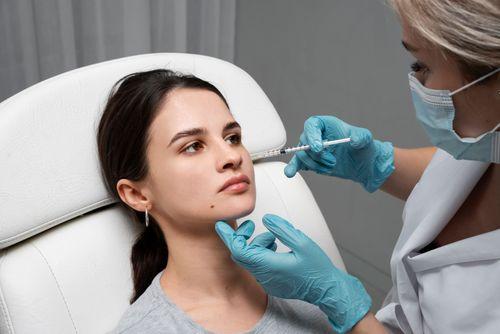
Consider a dermatologist assessment if your marks are indented, raised, painful, or unchanged after several months of consistent care. Professional guidance is also useful if vitamin C repeatedly causes irritation or if ongoing breakouts continue to leave new marks.
Procedures such as microneedling, subcision, chemical peels, or laser resurfacing may be considered for structural scars. The right option depends on scar type, skin tone, active inflammation, and your tendency to develop pigmentation.
Clear Ritual's Perspective on Vitamin C for Acne Scars
Vitamin C can be useful when the concern is flat post-breakout pigmentation, but it should not be presented as a complete solution for every scar type. Identifying whether you have a dark mark, an indentation, or raised tissue helps set realistic expectations.
At Clear Ritual, we believe a consistent routine should match your skin's current needs and tolerance. Introduce one active at a time, protect your skin from the sun, and seek expert guidance when scars involve changes in skin texture.
Build a routine for post-acne marks
Take the Clear Ritual Skin Test to better understand your breakout pattern, pigmentation concerns, and suitable next steps.
Take the Skin Test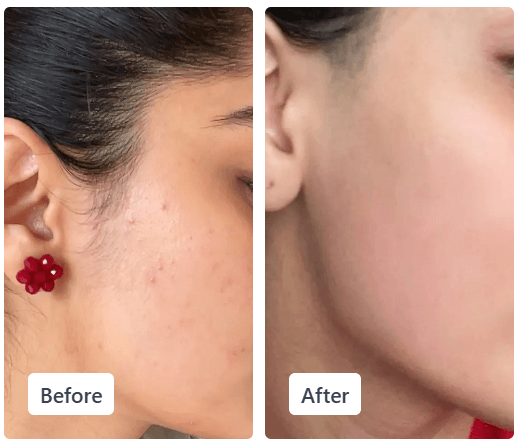
Frequently Asked Questions
1. Does vitamin C remove acne scars?
Vitamin C may fade flat post-acne pigmentation, but it cannot remove deep indented or raised scars. Structural scars usually require dermatologist-directed procedures.
2. How long does vitamin C take to fade acne marks?
Early brightening may appear within four weeks, while clearer improvement in pigmentation often takes eight to twelve weeks of consistent use with sunscreen.
3. What percentage of vitamin C is suitable for acne-prone skin?
L-ascorbic acid is commonly formulated at 10 to 20 percent, while gentler derivatives may work at lower concentrations. Start gradually and choose according to your skin's tolerance.
4. Can vitamin C help pitted acne scars?
Vitamin C may support collagen production, but a topical serum cannot rebuild the tissue loss that causes pitted scars. A dermatologist can recommend suitable procedural options.
5. Should vitamin C be used in the morning or at night?
Vitamin C can be used at either time, but morning use pairs well with sunscreen because of its antioxidant activity. Consistent application and good tolerance matter most.
References
- Vitamin C in Dermatology, Indian Dermatology Online Journal.
- Postinflammatory Hyperpigmentation: Epidemiology, Clinical Features, and Treatment Options, Journal of Clinical and Aesthetic Dermatology.
- Acne scars: Treatment, American Academy of Dermatology.
Disclaimer
This article is intended for general informational purposes and is not a substitute for personalised advice, diagnosis, or care. Consult a qualified dermatologist if you have persistent breakouts, significant scarring, or irritation from skincare products.
Editorial Standards
Clear Ritual has Strict sourcing guidelines to ensure our content is accurate and current. We rely on peer-reviewed studies, academic research institutions, and medical associations. We strive to use primary sources and refrain from using tertiary references. See a mistake? Learn More about our Editorial Standards.