Dermal Fillers for Acne Scars: Treatments and Results

Dermal fillers for acne scars are injectable treatments that add volume beneath indented, atrophic scars, such as rolling and boxcar scars, lifting them to the level of surrounding skin. Results appear almost immediately, unlike collagen-stimulating treatments such as microneedling or lasers. Hyaluronic acid fillers last 6 to 18 months, while PLLA, CaHA, and PMMA can last from about 1 to 5 years. Fillers are not suitable for ice pick or hypertrophic scars, and results are not permanent, so an experienced dermatologist is essential for safe, customised treatment.
- Best suited for rolling and boxcar scars
- Results appear almost immediately after injection
- Hyaluronic acid fillers typically last 6 to 18 months
If you are dealing with indented or pitted acne scars, dermal fillers for acne scars offer a fast, non-surgical way to visibly smooth out the skin's surface. Acne scars, especially the sunken, pitted kind, can linger long after your skin clears up; those depressions in your cheeks or temples can stick around for years.
Dermal fillers for acne scars are among the most immediate ways to address lost volume and visibly smooth your skin's surface. But fillers are not a permanent fix and are not the right choice for every type of scar. Because scar tissue requires precise mapping, working with an experienced dermatologist ensures you get a safe, customised approach.
What are Dermal Fillers For Acne Scars?
Dermal fillers are injectable substances that are placed beneath a depressed scar to physically lift it to the level of the surrounding skin. Unlike treatments such as microneedling or lasers that work by stimulating your skin's own collagen over time, fillers produce a visible improvement almost immediately by restoring volume where the skin has lost tissue.
They are primarily used for atrophic acne scars, the sunken, indented type caused by collagen loss during healing. Rolling scars have soft, sloping edges, which allow the filler to gently lift the shadow and blend seamlessly into the surrounding skin. Rolling scars and boxcar scars respond best, as they have broader bases that allow the filler to spread evenly and lift the depression effectively.
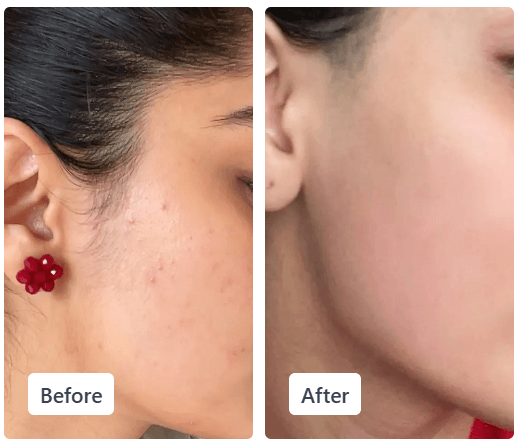
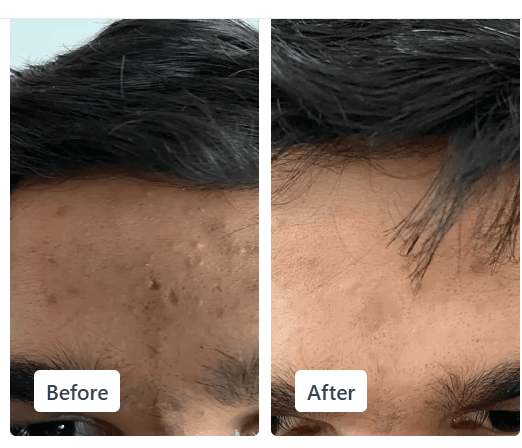
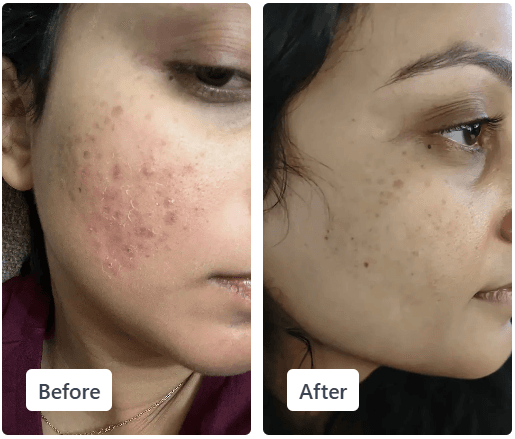
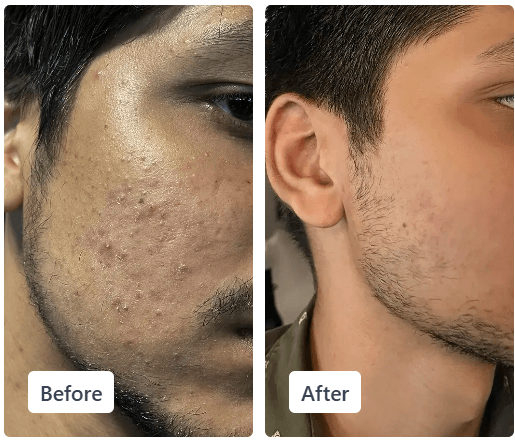
See real results, then start your own
Take the free Clear Ritual Skin Test and get a personalized routine built for your skin's unique patterns.
Which Types of Acne Scars Do Fillers Treat?
Not all acne scars need filler treatment. However, atrophic scars respond well to dermal fillers, as they add volume to the skin. Here is a quick breakdown to help you:
| Scar Type | Shape | Filler Suitable? |
|---|---|---|
| Rolling Scars | Broad, wave-like depressions | Yes, gives the best results |
| Boxcar Scars | Wide, defined edges | Yes, gives moderate results |
| Ice Pick Scars | Deep, narrow channels | No, they're too deep and narrow |
| Hypertrophic Scars | Raised, firm bumps | No, they need flattening treatments like steroid injections or vascular lasers |
Best Fillers for Acne Scars
The best fillers for acne scars depend on your scar depth, how long you want results to last, and what your dermatologist recommends after assessing your skin.
Hyaluronic Acid (HA) Fillers
The most commonly used option. HA is naturally found in your skin, so it is well-tolerated by most people.
Poly-L-Lactic Acid (PLLA)
While hyaluronic acid fillers act like an immediate cushion, PLLA functions like an internal scaffolding system that prompts your skin to rebuild itself naturally over time. It works more as a collagen stimulator than a volume replacer.
PLLA works gradually, triggering your skin to produce new collagen over several months. Results take longer to appear but tend to last longer.
Calcium Hydroxylapatite (CaHA)
A thicker filler that also stimulates collagen. Works well for deeper depressions that need more structural support beneath the skin.
PMMA (Polymethylmethacrylate)
A permanent option that lasts the longest, up to 5 years, but carries a higher risk profile. Less commonly recommended as a first-line treatment.
See real results, then start your own
Take the free Clear Ritual Skin Test and get a personalized routine built for your skin's unique patterns.
How Long Do Fillers for Acne Scars Last?
This is usually the first question people ask before booking a session, and rightfully so. Here is what to expect:
| Filler Type | How Long Does It Last |
|---|---|
| Hyaluronic Acid (HA) | 6 to 18 months |
| Poly-L-Lactic Acid (PLLA) | Up to 2 years |
| Calcium Hydroxylapatite (CaHA) | 12 to 18 months |
| PMMA | Up to 5 years |
One thing worth knowing: fillers used on acne scars tend to last longer than fillers used in high-movement areas like the lips. Because scar tissue moves less, there is less physical friction to trigger the body's natural enzymes that dissolve the filler.
Most patients need a follow-up session after the initial treatment. Combining fillers with microneedling or subcision can also extend and improve your overall results.
Are Dermal Fillers for Acne Scars Safe?
When done by a qualified dermatologist, yes. The most common side effects are minor, such as redness, swelling, bruising, and tenderness that settle within a few days.
Serious complications like vascular occlusion are rare, but possible. That is why your practitioner's experience genuinely matters here. Hyaluronic acid fillers carry an added safety net because they can be dissolved quickly if anything unexpected happens.
Fillers are generally not recommended if you have active acne breakouts in the treatment area or if you are pregnant.
How Do Fillers Compare to Other Acne Scar Treatments?
Dermal fillers are one option in a wider toolkit for atrophic acne scars. Here is how they compare:
| Treatment | How It Works | Best For |
|---|---|---|
| Dermal Fillers | Restores volume immediately | Rolling and boxcar scars |
| Microneedling | Stimulates collagen gradually | Mild to moderate atrophic scars |
| Subcision | Breaks fibrous bands pulling skin down | Tethered rolling scars |
| Fractional Laser | Resurfaces and rebuilds skin layers | Moderate to severe atrophic scars |
| TCA CROSS | Stimulates collagen inside narrow pits | Ice pick scars |
Dermal fillers and subcision are often combined when scars are both tethered beneath the skin and visibly depressed on the surface. Your dermatologist may recommend a combination approach depending on your scar pattern.
How Clear Ritual Supports Personalized Skincare Decisions
At Clear Ritual, we believe accurately identifying your scar type must come before any treatment decision. Acne scar fillers work beautifully on the right scars; otherwise, they won't do much. The ultimate goal is to stabilise the body's internal triggers, like hormones, gut health, and stress, so that active inflammation stops creating new scars in the first place.
The Clear Ritual Skin Test helps you understand exactly what type of scarring you are dealing with before committing to any procedure. Once you know your scar type, the treatment path becomes much clearer.
See real results, then start your own
Take the free Clear Ritual Skin Test and get a personalized routine built for your skin's unique patterns.
Conclusion
Dermal fillers offer a fast, non-surgical way to smooth atrophic acne scars, particularly rolling and boxcar types, by restoring lost volume beneath the skin's surface. Results are not permanent and vary by filler type, from around 6 to 18 months with hyaluronic acid to up to 5 years with PMMA, and can be extended by pairing fillers with treatments like microneedling or subcision. Since ice pick and hypertrophic scars respond poorly to fillers, correctly identifying your scar type with an experienced dermatologist is essential before committing to treatment.
References
https://cosmeticinjectables.com/blog/best-dermal-fillers-for-acne-scars/
Frequently Asked Questions
Do dermal fillers work for acne scars?
Dermal fillers are an effective and non-surgical treatment for indented (atrophic) acne scars. They work by adding volume underneath the depressed tissue, refining texture, and lifting the scars to the level of the surrounding skin for a smoother complexion.
How much does 2 ml of fillers cost?
In India, 2 ml of premium, FDA-approved dermal fillers generally costs between ₹40,000 and ₹90,000. The total price depends on the specific brand used, the treatment area (e.g., lips, cheeks, or temples), and the expertise of your dermatologist.
What do Koreans do for acne scars?
To treat acne scars, Koreans rely on a combination of medical aesthetic procedures (such as RF microneedling and subcision) and gentle, hydrating at-home K-beauty routines. The Korean beauty approach focuses on aggressively resurfacing pitted scars in the clinic while deeply nourishing and protecting the skin at home.
Why are people moving away from fillers?
Plain fillers only add volume beneath the skin; they cannot improve surface texture or radiance the way regular skincare does. However, because skincare alone cannot lift deep, pitted acne scars, many are shifting toward a hybrid approach using targeted topicals for a healthy glow alongside biostimulator fillers to rebuild skin structure.
How risky are dermal fillers?
Dermal fillers are generally safe when administered by qualified board-certified dermatologists or plastic surgeons using sterile, approved products. However, like any medical procedure, they carry risks, including infections, lumps, and rare but severe complications such as vascular occlusion, a situation where the filler accidentally blocks a blood vessel.
Editorial Standards
Clear Ritual has Strict sourcing guidelines to ensure our content is accurate and current. We rely on peer-reviewed studies, academic research institutions, and medical associations. We strive to use primary sources and refrain from using tertiary references. See a mistake? Learn More about our Editorial Standards.
Related Articles
What is Inflammatory Acne? Causes, Types, and Treatments
Published 10 August 2026

Bacterial Acne vs Fungal Acne: How Are They Different?
Published 17 July 2026

Nodular Acne: Causes, Treatments and What Works
Published 19 October 2026
Chest Acne: Causes, Treatment & Complete Skincare Guide
Published 17 July 2026