Bacterial Acne vs Fungal Acne: How Are They Different?
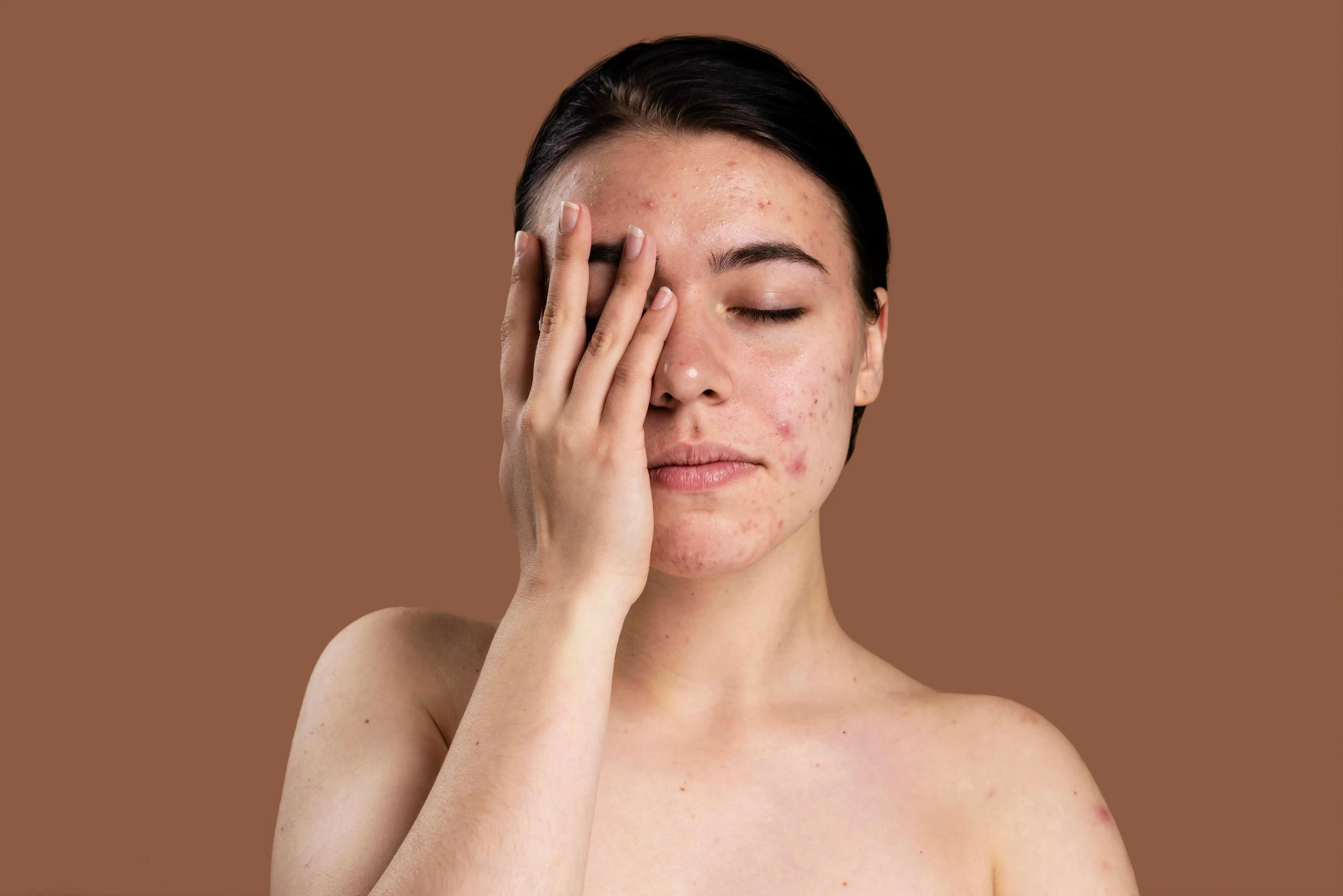
Bacterial and fungal acne are entirely different conditions. Fungal acne is an overgrowth of yeast in hair follicles, whereas bacterial acne is an inflammatory condition triggered by clogged pores and the proliferation of Cutibacterium acnes (formerly P. acnes).
While both cause breakouts, bacterial acne appears as varied, sometimes painful pimples or blackheads. Fungal acne is characterised by small, uniform, and very itchy bumps that typically cluster on the chest, back, and forehead.
What is Fungal Acne?
Fungal acne (Malassezia folliculitis) is not true acne but rather a yeast infection of the hair follicles. An overgrowth of Malassezia, a natural yeast on the skin, causes it.
It appears as intensely itchy red bumps, sometimes with small pus-filled heads (pustules), often accompanied by whiteheads.
Fungal acne commonly appears on areas where sweat and oil accumulate, including:
- Forehead
- Hairline
- Chest
- Upper back
- Shoulders
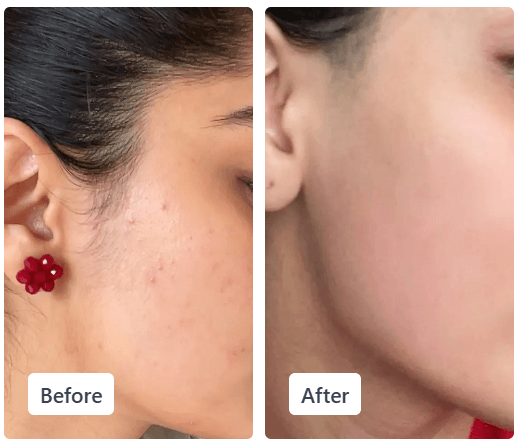
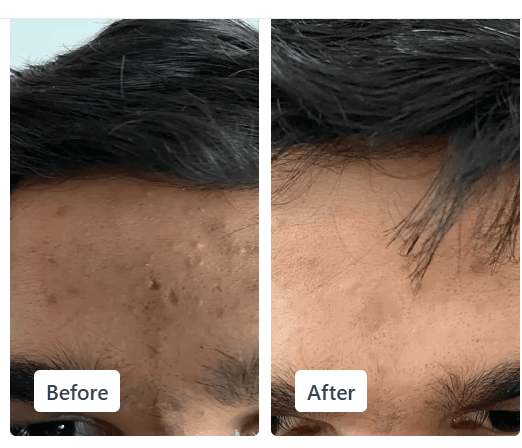
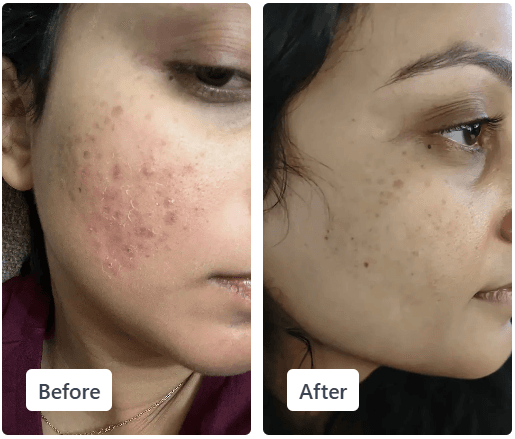
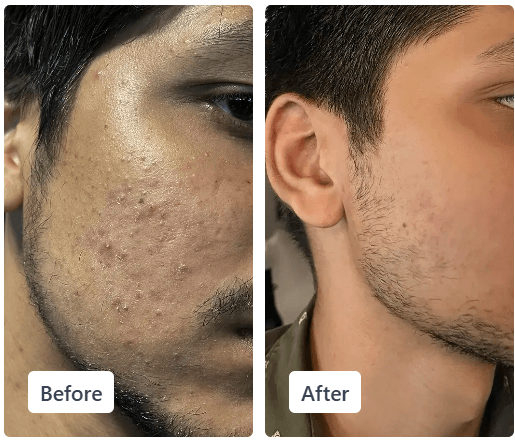
See real results, then start your own
Take the free Clear Ritual Skin Test and get a personalized routine built for your skin's unique patterns.
What are the Causes of Fungal Acne?
Unlike traditional acne, fungal acne is not caused by trapped debris or acne bacteria. Instead, it is a type of folliculitis caused by yeast overgrowth.
While yeast exists naturally on everyone's skin, it only becomes problematic under specific conditions.
Excessive Sweating
Warm and humid conditions can increase yeast growth. People who exercise frequently or live in hot climates may be more prone to fungal acne.
Tight or Non-Breathable Clothing
Sweat trapped against the skin creates a moist environment where yeast can thrive, particularly on the chest, shoulders, and back.
Prolonged Antibiotic Use
Antibiotics can disrupt the skin's natural microbial balance. When bacteria decrease, yeast may multiply more easily.
Oily Skin
Yeast feeds on skin oils, making individuals with naturally oily skin more susceptible to fungal acne.
Weakened Immune Function
Certain medical conditions or medications that affect the immune system may increase the risk of yeast overgrowth.
Heavy Skincare Products
Rich, occlusive products can trap sweat and oil, potentially contributing to fungal acne in susceptible individuals.
What is Bacterial Acne?
Bacterial acne, also known as acne vulgaris, is the type most people are familiar with. It develops from a combination of excess oil, clogged pores, and bacterial activity rather than bacteria alone.
Unlike fungal acne, bacterial acne often presents with multiple lesion types occurring simultaneously.
These include:
- Blackheads
- Whiteheads
- Papules
- Pustules
- Nodules
- Cysts
See real results, then start your own
Take the free Clear Ritual Skin Test and get a personalized routine built for your skin's unique patterns.
What are the Causes of Bacterial Acne?
Unlike fungal flares, which are often environmental, traditional breakouts are typically systemic.
Excess Oil Production
Overactive sebaceous glands produce excess sebum that can clog pores and contribute to acne formation.
Dead Skin Cell Build-Up (Retention Hyperkeratosis)
When dead skin cells do not shed properly, they can mix with oil and block hair follicles.
Bacterial Growth
The growth of C. acnes bacteria within clogged pores can trigger inflammation and worsen breakouts.
Hormonal Changes
Hormonal fluctuations during puberty, menstruation, pregnancy, or periods of stress can increase oil production and contribute to acne.
Genetics
A family history of acne can increase the likelihood of developing persistent or severe breakouts.
Certain Skincare Products
Comedogenic products may block pores and contribute to acne development in some individuals.
How to Identify Bacterial Acne vs Fungal Acne?
Mistreating yeast as bacteria can worsen your skin. Use this side-by-side comparison to identify your breakout type.
| Feature | Fungal Acne | Bacterial Acne |
|---|---|---|
| Cause | Overgrowth of yeast (Malassezia) within hair follicles. | Clogged pores combined with bacterial growth and inflammation. |
| Appearance | Small, uniform bumps that look similar in size. | Multiple lesion types including whiteheads, blackheads, papules, and pustules. |
| Itching | Common and often intensely itchy. | Usually minimal or absent. |
| Pain or Tenderness | Usually mild or absent. | Can be painful, tender, or inflamed. |
| Common Locations | Forehead, chest, back, shoulders, and upper arms. | Face, jawline, chest, back, and shoulders. |
| Response to Standard Acne Treatments | Often worsens with oral acne antibiotics. | Usually responds to conventional acne treatments. |
| Distribution Pattern | Often appears in clusters or crops. | Can be scattered or concentrated in acne-prone areas. |
| Main Trigger | Excess heat, sweat, humidity, and yeast overgrowth. | Excess oil production, clogged pores, hormones, and bacteria. |
A useful clue is the appearance of the bumps. Fungal acne tends to produce clusters of nearly identical bumps that appear suddenly and itch significantly. Bacterial acne usually consists of a mixture of blackheads, whiteheads, inflamed pimples, and sometimes deeper lesions.
How is Fungal and Bacterial Acne Diagnosed?
When evaluating fungal acne, a dermatologist usually identifies the condition through a skin examination and medical history.
Signs that suggest fungal acne include:
- Uniform bumps
- Intense itching
- Typical body distribution
- Lack of response to standard acne treatments
In some cases, skin scrapings or laboratory testing may be performed to confirm the diagnosis.
For bacterial acne, diagnosis is usually based on:
- Presence of blackheads and whiteheads
- Inflammatory lesions
- Distribution of breakouts
- Medical and hormonal history
Accurate diagnosis is important because treating fungal acne as bacterial acne may not provide meaningful improvement.
Treatment and Prevention Strategies for Bacterial and Fungal Acne
Although bacterial acne and fungal acne can look similar at first glance, they require very different treatment approaches.
Treating Fungal Acne
Because yeast belongs to an entirely different biological kingdom than bacteria, fungal acne treatment focuses on reducing yeast growth and controlling moisture.
Antifungal Cleansers
Products containing antifungal ingredients may help reduce yeast populations on the skin.
Prescription Antifungal Medications
Dermatologists may recommend topical or oral antifungal medications depending on severity.
Sweat Management
Showering after exercise and changing out of sweaty clothing promptly can help reduce recurrence.
Lightweight Skincare
Using non-occlusive products may help minimise conditions that encourage yeast growth.
Treating Bacterial Acne
Bacterial acne treatment focuses on unclogging pores, reducing bacteria, and improving skin cell turnover.
Salicylic Acid
Helps unclog pores and remove excess oil.
Benzoyl Peroxide
Reduces acne-causing bacteria and inflammation.
Retinoids
Promote cell turnover and help prevent clogged pores.
Prescription Medications
For moderate-to-severe acne, dermatologists may recommend:
- Prescription retinoids
- Antibiotics
- Hormonal therapies
- Isotretinoin
Prevention Tips for Both Conditions
Regardless of the type of breakout, certain habits can support healthier skin:
- Cleanse gently twice daily.
- Shower after sweating.
- Avoid picking at breakouts.
- Use non-comedogenic skincare products.
- Wash pillowcases regularly.
- Manage stress where possible.
- Seek professional advice for persistent breakouts.
How Clear Ritual Supports Personalized Skincare Decisions
If your breakouts consist of intensely itchy, uniform bumps that do not improve with conventional acne treatments, fungal acne may be a possibility.
On the other hand, if you experience blackheads, whiteheads, inflamed pimples, or deeper acne lesions, bacterial acne is more likely.
The Clear Ritual Skin Test helps you better understand your skin and suggests products tailored to your specific concerns and breakout patterns.
With the right diagnosis and treatment approach, both fungal and bacterial acne can be effectively managed.
See real results, then start your own
Take the free Clear Ritual Skin Test and get a personalized routine built for your skin's unique patterns.
Conclusion
Bacterial and fungal acne may look similar at first glance, but they stem from very different causes and require different treatment approaches. Fungal acne is driven by yeast overgrowth and tends to be itchy, uniform, and clustered in sweat prone areas, while bacterial acne involves clogged pores, excess oil, and bacterial activity, presenting as a mix of blackheads, whiteheads, and inflamed lesions. Identifying which type you are dealing with matters, since treating one as the other rarely brings meaningful improvement. With accurate diagnosis and the right routine, both conditions can be effectively managed.
References
- https://my.clevelandclinic.org/health/diseases/24341-fungal-acne
Frequently Asked Questions
1. How do you know if your acne is fungal?
Fungal acne is usually intensely itchy, appears as small uniform bumps, and clusters in sweat-prone areas such as the forehead, chest, and back.
2. How do you know if your acne is bacterial?
Bacterial acne presents as a mixture of blemishes including whiteheads, blackheads, papules, and inflamed pimples. It usually improves with traditional acne treatments.
3. Can fungal acne become bacterial acne?
No, fungal acne does not become bacterial acne. However, it is possible to have both conditions at the same time, known as mixed acne.
4. How to clear bacterial and fungal acne?
Fungal acne often responds to antifungal cleansers and medications, while bacterial acne responds better to ingredients such as salicylic acid, benzoyl peroxide, and retinoids.
5. What is worse, hormonal or bacterial acne?
Neither is inherently worse. Hormonal acne refers to the trigger, whereas bacterial acne refers to the acne process itself. The severity varies from person to person.
Editorial Standards
Clear Ritual has Strict sourcing guidelines to ensure our content is accurate and current. We rely on peer-reviewed studies, academic research institutions, and medical associations. We strive to use primary sources and refrain from using tertiary references. See a mistake? Learn More about our Editorial Standards.
Related Articles
Nodular Acne: Causes, Treatments and What Works
Published 19 October 2026
Chest Acne: Causes, Treatment & Complete Skincare Guide
Published 17 July 2026
Neonatal Acne: What New Parents Need to Know
Published 17 July 2026
Whiteheads vs Milia: How to Tell the Difference & Treat Them Correctly
Published 20 July 2026