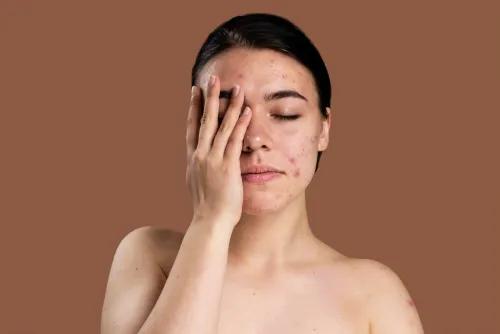
Multani Mitti for Acne: How It Works, Benefits & How to Use It
Quick Answer:
Multani mitti (Fuller's Earth clay) can help reduce acne by absorbing excess sebum, unclogging pores, and drawing out impurities from the skin. It is most effective for oily and acne-prone skin types. Used 1–2 times per week as a face pack, multani mitti for acne may visibly reduce breakouts within 3–4 weeks of consistent use.
What Is Multani Mitti for Acne?
Multani mitti is a naturally occurring clay mineral, also called Fuller's Earth, composed primarily of magnesium, silica, calcium, and aluminium silicates. For acne-prone skin, multani mitti works as an absorbent and mild exfoliant that targets the root causes of breakouts: excess oil and clogged pores.
Is multani mitti good for acne? Yes, in most cases. Its negatively charged clay particles bind to positively charged impurities, bacteria, and sebum, pulling them out of the pores when the mask is rinsed off. This makes multani mitti particularly suitable for oily, acne-prone skin that is prone to whiteheads, blackheads, and inflamed pimples.
According to Clear Ritual's skin health team, multani mitti for acne works best when used as part of a consistent skincare routine rather than as a one-time solution.
How Does Multani Mitti for Acne Work? The Core Mechanism
Multani mitti for acne works through three primary mechanisms:
- Sebum absorption: The clay's porous structure physically absorbs up to 4–5 times its weight in oil, reducing the excess sebum that feeds acne-causing bacteria (Cutibacterium acnes).
- Pore decongestion: As the clay dries on the skin, it contracts slightly and draws out dirt, dead skin cells, and debris lodged inside pores.
- Mild anti-inflammatory action: The mineral content in multani mitti, particularly magnesium, may calm mild skin inflammation, reducing redness around active pimples.
- Gentle exfoliation: When rinsed off, the clay particles provide mild mechanical exfoliation, helping clear the skin surface of dead cells that can block pores.
- pH balancing: Multani mitti has a slightly alkaline nature that may help neutralise the acidic environment that promotes bacterial growth.
Common misconception: Multani mitti does not kill acne bacteria directly. Its effectiveness comes from removing the conditions: excess oil, clogged pores: that allow bacteria to thrive.
Key Benefits of Multani Mitti for Acne: What You Actually Gain
Multani mitti for acne-prone skin offers the following clinically observed and user-reported benefits:
- Reduces excess oil production: Visibly mattifies the skin within 15–20 minutes of application; regular use may reduce oiliness over 4–6 weeks.
- Unclogs pores: Consistent use 2x per week can help reduce blackhead density in T-zone areas.
- Calms mild inflammation: May reduce redness around active pimples within 24–48 hours post-application.
- Fades post-acne marks: Multani mitti for acne scars and dark spots may show gradual lightening over 6–8 weeks when combined with brightening ingredients like lemon or turmeric.
- Improves skin texture: Gentle exfoliation over 3–4 weeks may result in smoother skin surface.
- Low-cost and accessible: A single application requires approximately 1–2 tablespoons of clay, making it one of the most cost-effective acne management options available.
- Suitable for combination skin: Multani mitti for oily, acne-prone skin is well-tolerated by most skin types, though caution is advised for dry or sensitive skin.
Short-term benefits (Week 1–2): Reduced surface oiliness, temporary pore tightening, mild reduction in redness.
Long-term benefits (Week 4–8): Fewer breakouts, lighter acne marks, improved skin clarity.
Types of Multani Mitti Face Packs for Acne: Which Is Right for You?
Different multani mitti face pack formulations suit different acne concerns. What to mix with multani mitti for acne depends on your skin type and specific concern.
| Pack Type | Key Additions | Best For | Expected Benefit |
|---|---|---|---|
| Plain multani mitti + rose water | Rose water | Oily, inflamed acne | Oil control, pore tightening |
| Multani mitti + neem powder | Neem powder | Bacterial acne, whiteheads | Antibacterial, anti-inflammatory |
| Multani mitti + turmeric + honey | Turmeric, raw honey | Acne + dark spots | Brightening, healing |
| Multani mitti + lemon juice | Fresh lemon juice | Acne scars, pigmentation | Mild exfoliation, lightening |
| Multani mitti + aloe vera gel | Aloe vera | Sensitive acne-prone skin | Soothing, hydrating |
| Multani mitti + sandalwood | Sandalwood powder | Acne + excess heat in skin | Cooling, anti-inflammatory |
Choose plain multani mitti + rose water if you are new to clay masks. Add neem or tea tree only if bacterial acne is a primary concern. Avoid lemon juice if your skin is sensitive or reactive.
Clear Ritual recommends starting with the simplest formulation and adding one ingredient at a time to identify what works for your skin.
How to Use Multani Mitti for Acne: Step-by-Step Guide
Follow these steps to apply a multani mitti pack for acne correctly:
- Cleanse your face: Wash with a gentle, sulphate-free cleanser to remove surface-level dirt and makeup. Pat dry. This allows the clay to contact the skin directly.
- Prepare the pack: Mix 1–2 tablespoons of multani mitti with enough rose water (or plain water) to form a smooth, lump-free paste. The consistency should be spreadable but not runny.
- Add your chosen ingredient: Based on your concern (see Types section above), add neem powder, turmeric, honey, or aloe vera at this stage.
- Apply evenly: Using clean fingertips or a mask brush, apply the multani mitti face pack for acne in a thin, even layer over your face. Avoid the eye area and lips.
- Leave on for 10–15 minutes: Do not leave the pack on until it is completely cracked and bone-dry. Remove when it is just set: this prevents excessive moisture loss from the skin.
- Rinse with lukewarm water: Use gentle circular motions while rinsing to maximise the mild exfoliating effect.
- Apply moisturiser immediately: Even oily skin needs hydration post-mask. Use a light, non-comedogenic moisturiser within 2 minutes of rinsing.
- Frequency: Use the multani mitti pack for acne 1–2 times per week. More frequent use may cause dryness and irritation.

Common mistakes to avoid:
- Leaving the mask on for more than 20 minutes
- Using cold water to rinse (causes capillary stress)
- Skipping moisturiser after the pack
- Using multani mitti daily on dry or combination-dry skin
- Applying over broken or actively oozing skin
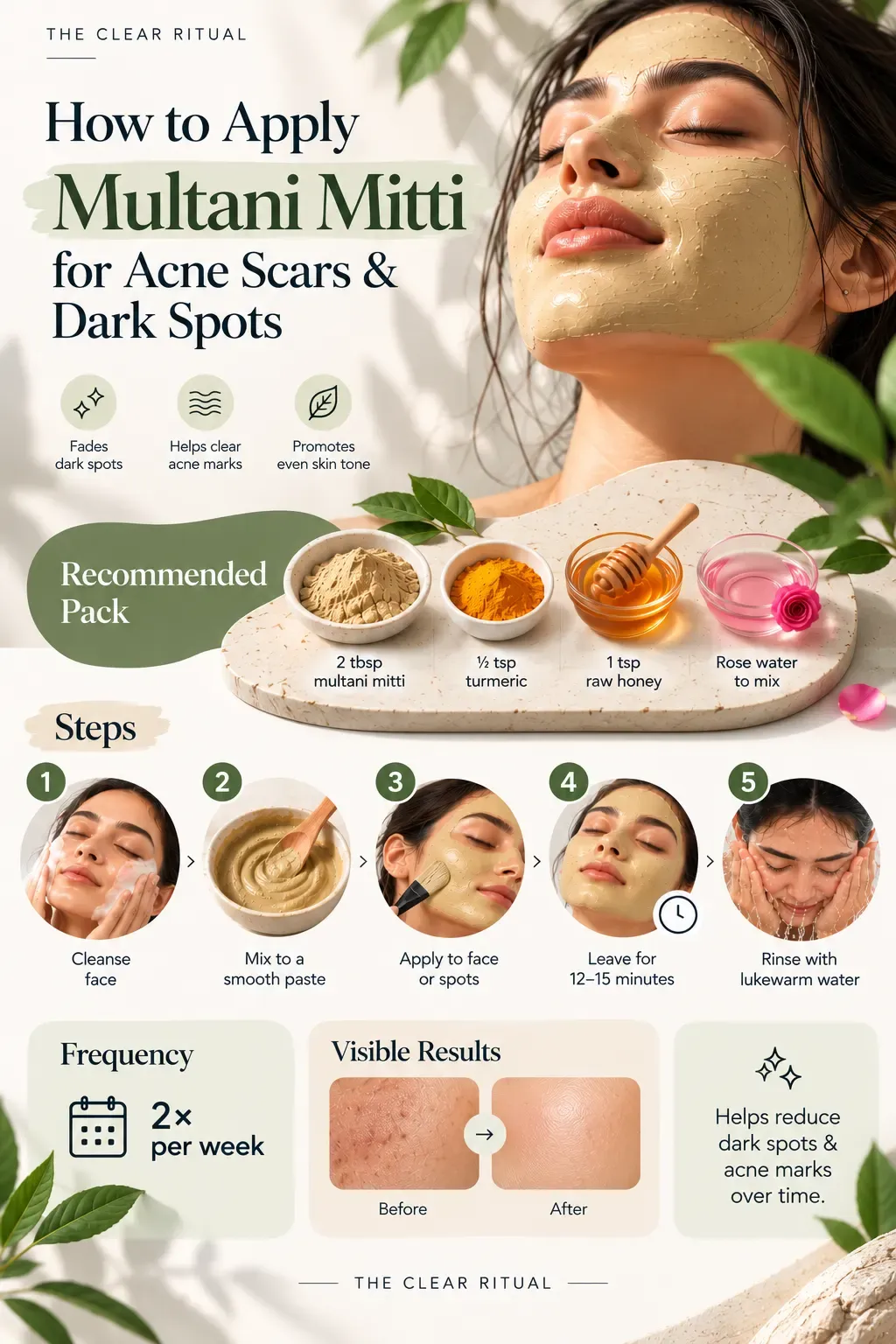
How to Apply Multani Mitti on Face for Acne Scars and Dark Spots
For multani mitti face pack for acne and dark spots, the approach requires a targeted formulation and longer consistency.
Recommended pack for acne scars:
- 2 tbsp multani mitti
- ½ tsp turmeric
- 1 tsp raw honey
- Rose water to mix
Apply to the full face or spot-apply to scarred areas. Leave for 12–15 minutes, then rinse. Use 2x per week for a minimum of 6 weeks to observe visible lightening.
Studies suggest that turmeric's curcumin content may inhibit melanin production, while honey's humectant properties support skin healing. Multani mitti for acne scars acts as the base delivery vehicle, ensuring the active ingredients sit in close contact with the skin surface.
Results from multani mitti for acne scars vary depending on scar depth, skin tone, and consistency of use. Superficial post-inflammatory hyperpigmentation (PIH) responds better than deep, pitted scars.
Multani Mitti vs. Alternatives: An Honest Comparison
| Ingredient | Mechanism | Best For | Skin Types | Frequency |
|---|---|---|---|---|
| Multani mitti | Oil absorption, pore cleansing | Oily acne, blackheads | Oily, combination | 1–2x per week |
| Kaolin clay | Gentler absorption | Mild acne, sensitive skin | Dry, sensitive | 2–3x per week |
| Bentonite clay | Deep pore detox | Cystic acne, congested skin | Very oily skin | 1x per week |
| Salicylic acid wash | Chemical exfoliation, BHA | Closed comedones, acne | All types (start slowly) | Daily (low %) |
| Neem face pack | Antibacterial | Bacterial acne | Oily, combination | 2–3x per week |
Recommendation: Multani mitti for oily, acne-prone skin is the most accessible and cost-effective option for managing mild to moderate acne. For deep cystic acne, bentonite clay or a dermatologist-prescribed treatment may be more appropriate.
What Results to Expect from Multani Mitti for Acne: A Realistic Timeline
Multani mitti for acne produces gradual, cumulative results rather than overnight changes. Results vary depending on acne severity, skin type, diet, and consistency of use.
| Timeframe | Expected Outcome |
|---|---|
| Week 1–2 | Reduced surface oiliness, mild tightening of pores, slight reduction in redness |
| Week 3–4 | Fewer new whiteheads and blackheads, skin appears less congested |
| Week 5–8 | Noticeable reduction in breakout frequency, early lightening of PIH marks |
| Week 8–12 | Improved skin clarity, lighter acne scars, more even skin tone |
Factors that affect results:
- Hormonal acne may respond more slowly than surface-level congestion
- Diet high in dairy or refined sugar can counteract topical benefits
- Incomplete rinsing leaves clay residue that can block pores
- Inconsistent use (less than 1x per week) significantly reduces effectiveness
Clear Ritual's experience-based guidance suggests that most users with mild to moderate oily acne notice a measurable reduction in breakouts by the end of Week 4 when using multani mitti consistently at least twice weekly.
Multani Mitti for Acne Best Practices: Expert Tips
Follow these best practices for maximum effectiveness:
- Use rose water, not tap water: Rose water has mild astringent properties that complement multani mitti's oil-control action.
- Always patch-test new additions: Test any new ingredient (lemon, turmeric, neem) on your inner wrist 24 hours before applying to your face.
- Remove at the right time: The pack should be firm but not fully cracked when removed. Fully dried clay strips the skin barrier.
- Hydrate from within: Drinking adequate water (8–10 glasses/day) supports skin's ability to regulate oil production.
- Combine with a consistent cleanser: Multani mitti works best as part of a routine, not as a standalone fix.
- Refrigerate unused paste: Prepared multani mitti paste stays fresh for up to 48 hours when refrigerated; do not reuse paste older than 2 days.
- Do not use on sunburned skin: Active sun damage makes skin too reactive for clay masks.
- Track your skin's response: Note changes weekly. If dryness or irritation appears, reduce frequency to once per week.
What Does the Evidence Say About Multani Mitti for Acne?
Current research supports the core mechanisms of Fuller's Earth clay for acne management:
- A study on clay minerals and skin health (Journal of Cosmetic Dermatology, 2012) found that clay minerals effectively reduce sebum on skin surfaces due to their high surface area and cation exchange capacity.
- Research on kaolin and Fuller's Earth clays indicates a strong capacity for oil absorption and mild anti-bacterial effect through physical removal of bacteria from the skin surface rather than direct killing.
- Turmeric (curcumin), commonly combined with multani mitti for acne scars, has been shown in multiple studies to inhibit C. acnes growth and reduce pro-inflammatory cytokines when applied topically.
- A 2019 review in the International Journal of Molecular Sciences confirmed that natural clay minerals may support wound healing and reduce skin inflammation in mild acne, though large-scale clinical trials are limited.
Limitations of current research: Most studies on multani mitti for acne specifically use small sample sizes or lab-based models. Large-scale human clinical trials are limited. The evidence supports its mechanisms but does not yet quantify precise clinical outcomes.
What Multani Mitti for Acne Cannot Do: Honest Limitations
Multani mitti for acne is effective for mild to moderate cases, but it has clear limitations:
- Cannot treat hormonal or cystic acne: Deep cystic lesions require medical treatment (retinoids, antibiotics, or hormonal therapy). Multani mitti does not penetrate deep enough to address these.
- Does not kill acne bacteria directly: It removes bacteria mechanically but does not have significant antimicrobial activity on its own.
- Not suitable for dry or very sensitive skin: Regular use on dry skin can compromise the skin barrier and worsen irritation.
- Cannot replace prescription treatments: Severe or persistent acne should be evaluated by a dermatologist. Multani mitti for acne is a supportive, not primary, treatment in such cases.
- Results are not permanent: Multani mitti manages acne conditions but does not change the underlying cause (sebaceous gland activity, hormonal factors).
| When to Use Multani Mitti | When to Seek an Alternative |
|---|---|
| Mild to moderate oily acne | Cystic, nodular, or severe acne |
| Surface-level blackheads | Acne with deep scarring (atrophic) |
| Oily, combination skin | Dry, sensitive, or rosacea-prone skin |
| As part of a skincare routine | As the only treatment for persistent acne |
Frequently Asked Questions About Multani Mitti for Acne
Q. Can multani mitti remove acne scars?
A. Multani mitti for acne scars can help fade superficial post-inflammatory hyperpigmentation (dark marks) with consistent use over 6–8 weeks. It works best when combined with brightening ingredients like turmeric or lemon. It cannot reverse deep, pitted, or atrophic scars, which require professional treatments such as micro-needling or chemical peels.
Q. Is multani mitti good for acne on oily skin?
A. Yes. Multani mitti for oily, acne-prone skin is one of its most well-suited applications. The clay absorbs excess sebum effectively, which is the primary trigger for breakouts in oily skin types. Most users with oily skin tolerate 2x weekly use without significant dryness.
Q. What should I mix with multani mitti for acne?
A. What to mix with multani mitti for acne depends on your concern. Rose water is the most universal base. Add neem powder for bacterial acne, turmeric and honey for acne scars and dark spots, or aloe vera gel for sensitive acne-prone skin. Avoid mixing multiple active ingredients at once.
Q. What are the side effects of multani mitti?
A. Multani mitti is generally well-tolerated, but overuse can cause skin dryness, tightness, and mild irritation, particularly in people with dry or sensitive skin. Leaving the mask on too long (more than 20 minutes) increases the risk of moisture loss. Patch-test before first use if you have reactive skin.
Q. Which face pack reduces pimples?
A. A multani mitti face pack for acne combining 2 tbsp clay, neem powder, and rose water is among the most commonly recommended natural options for reducing active pimples. Consistency (1–2x per week for 4+ weeks) is more important than the specific formulation.
Q. How often should you use multani mitti for acne?
A. Start with once a week and use it no more than twice weekly if your skin tolerates it. Rinse before the mask becomes completely dry and moisturise afterwards. Stop if irritation or tightness develops.
Understand What Your Skin Needs
Take the Clear Ritual Skin Test to identify your skin type, concerns, and potential triggers before building your routine.
Take the Free Skin Test
Editorial Standards
Clear Ritual has Strict sourcing guidelines to ensure our content is accurate and current. We rely on peer-reviewed studies, academic research institutions, and medical associations. We strive to use primary sources and refrain from using tertiary references. See a mistake? Learn More about our Editorial Standards.
Related Articles
Acne and Diet: What’s the Real Link Between Food and Breakouts?
Published 21 July 2026

Acne: Types, Causes, Treatments and Prevention
Published 16 July 2026
Acne Mechanica: How Friction from Helmets, Masks & Tight Clothing Causes Breakouts
Published 17 July 2026
Acne on Cheeks: Causes, Treatment & What Actually Works
Published 17 July 2026