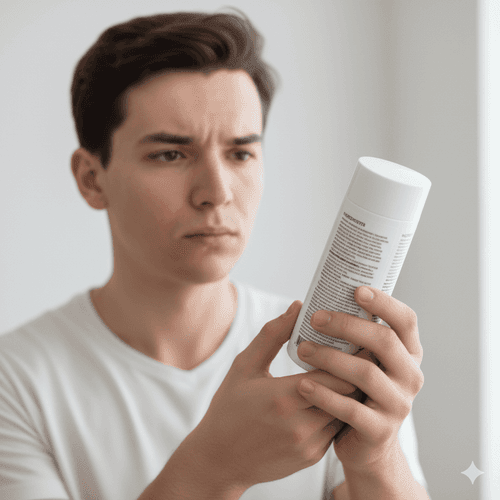
Can Dandruff Cause Forehead Acne? The Scalp–Skin Connection Explained
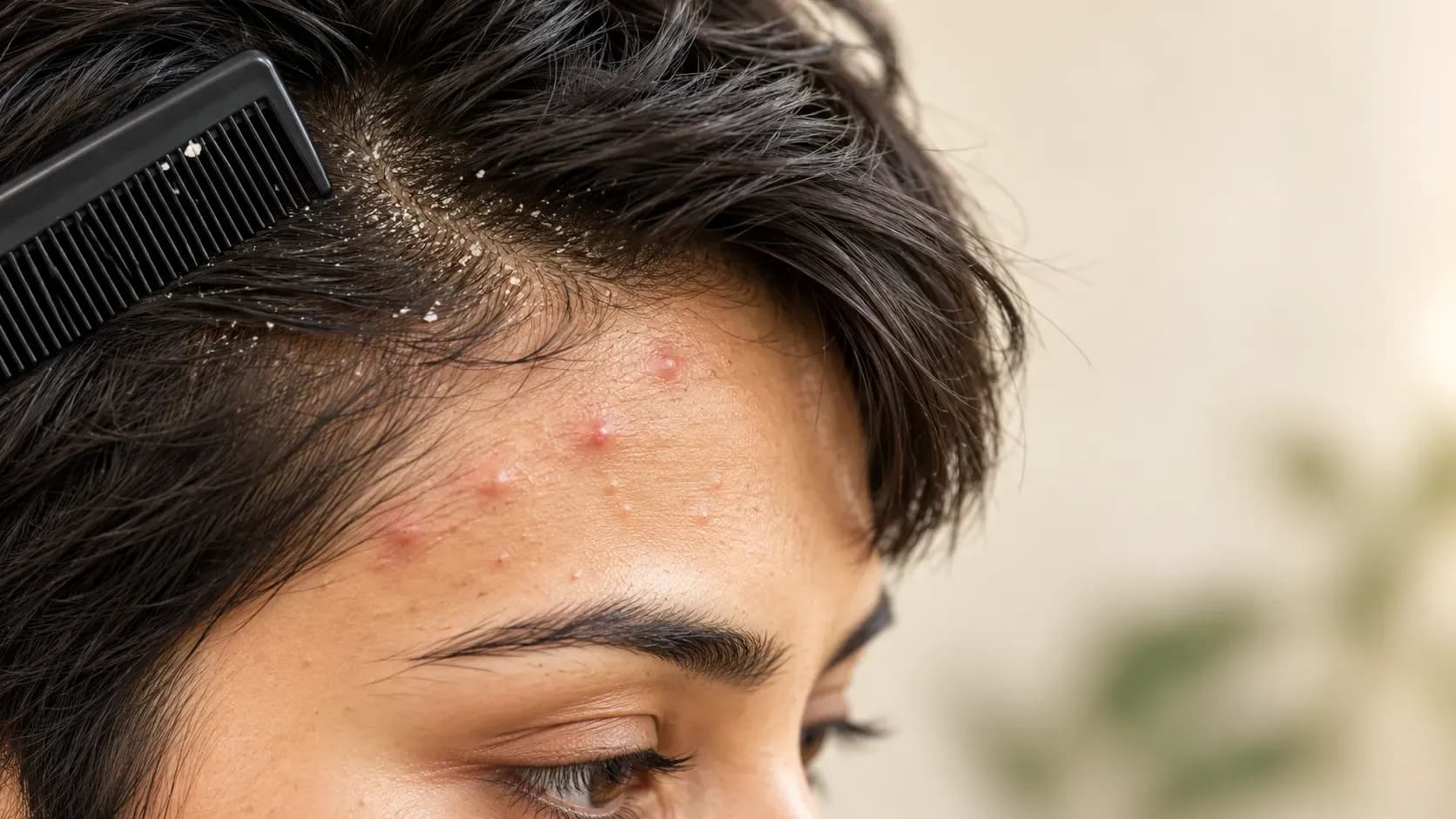
Quick Answer: Dandruff does not cause forehead acne the way bacteria do, but it creates the exact conditions that make forehead breakouts nearly inevitable for many people. The yeast behind scalp flaking, Malassezia, migrates onto forehead skin and clogs pores with oils, dead skin, and inflammatory compounds. For anyone already prone to breakouts, active dandruff can be the hidden trigger that makes everything worse.
What Is the Connection Between Dandruff and Forehead Acne?
Dandruff and forehead acne are linked through shared biology, physical proximity, and continuous transfer of scalp material onto facial skin. The scalp produces more sebum than almost any other body area, feeding Malassezia globosa and Malassezia restricta , the yeast species responsible for most dandruff cases. When these yeasts break down scalp oils, they produce oleic acid and other irritating byproducts that trigger inflammation, accelerated skin cell turnover, and visible flaking.
This process does not stop at the hairline. Flakes fall forward onto the forehead, carrying oils, yeast organisms, and inflammatory molecules with them. Forehead skin has smaller pores than the scalp but still produces significant sebum, especially across the T-zone. When dandruff debris settles into these pores, it mixes with facial oils and dead skin cells already present, creating a plug that blocks the follicle opening.
Key mechanisms linking dandruff to forehead acne:
- Malassezia yeast migrates from scalp to forehead skin and can trigger fungal acne directly
- Dandruff flakes carry sebum, yeast metabolites, and inflammatory molecules that plug facial pores
- Hair products used on a dandruff-affected scalp transfer comedogenic residue to forehead skin
- Barrier disruption from chronic scalp inflammation weakens forehead skin at the hairline
- Physical contact , touching hair, sleeping on pillowcases, wearing hats , continuously reintroduces scalp material to facial skin
According to Clear Ritual's dermatology team, treating dandruff consistently reduces forehead acne in most affected individuals, though it rarely eliminates breakouts entirely on its own.
What Is Malassezia Folliculitis and How Does It Differ from Bacterial Acne?
Malassezia folliculitis , commonly called fungal acne , is a specific breakout type caused by yeast overgrowth in hair follicles, and it is not the same as standard bacterial acne (acne vulgaris), even though both appear as red, raised bumps on the forehead.
The critical distinction is treatment response. Bacterial acne responds to antibiotics and benzoyl peroxide. Fungal acne does not , because antifungals, not antibacterials, are required to address Malassezia. A 2015 study published in the Journal of Clinical and Aesthetic Dermatology found that Malassezia folliculitis is frequently misdiagnosed as conventional acne, with patients who had failed multiple antibiotic courses showing complete or near-complete clearing when switched to antifungal therapy.
| Feature | Bacterial Acne (Acne Vulgaris) | Fungal Acne (Malassezia Folliculitis) | Dandruff-Related Forehead Bumps |
|---|---|---|---|
| Appearance | Mixed: blackheads, whiteheads, red papules, cysts | Uniform small red or flesh-toned bumps | Clusters along hairline, variable size |
| Itching | Rare | Common , a key diagnostic clue | Often present, especially near hairline |
| Location on forehead | Spread across forehead and chin | Upper forehead, temples, hairline | Concentrated at hairline, spreading inward |
| Responds to antibiotics? | Yes | No | Partially (bacterial component only) |
| Responds to antifungals? | No | Yes | Yes (for the Malassezia component) |
| Primary trigger | Cutibacterium acnes bacteria | Malassezia yeast overgrowth | Scalp flakes + product transfer + yeast |
| Worsens with dandruff? | Sometimes | Yes, directly | Yes, directly |
| Worsens with oily hair products? | Sometimes | Yes | Yes |
Malassezia is present on the skin of over 90% of healthy adults, but it only causes problems when scalp oil production, immune response, or barrier function tips the balance toward overgrowth. Many people with dandruff-related forehead acne experience both bacterial and fungal breakout types simultaneously, requiring different management approaches for each.
Why Does Dandruff Transfer from Scalp to Forehead?
Dandruff transfers from scalp to forehead through several physical mechanisms that operate throughout the day and night. Understanding these transfer routes is essential to interrupting the cycle.
Direct flaking: Dandruff flakes fall forward onto the forehead during normal movement, carrying oils, yeast organisms, and inflammatory molecules directly into facial pores.
Hair product residue: Heavy conditioning agents, silicones, and oils coat hair shafts and transfer to forehead skin during application, sleep, or sweating. These substances are comedogenic , they physically block pores and prevent normal sebum flow.
Sleep contact: Hair rests against the forehead for hours each night. Residual product from styling gels, leave-in conditioners, or dry shampoo gradually transfers to facial skin, particularly for those who sleep on their stomach or side. Pillowcases accumulate oils, dead skin cells, hair products, and yeast from the scalp night after night.
Sweat during exercise: Scalp sweat carries dissolved oils, salt, and yeast metabolites that run down onto the forehead. As this mixture evaporates, it leaves behind a concentrated residue that clogs pores. Athletic headbands and caps press this material deeper into follicles while creating friction that damages the skin barrier.
Physical touch: Touching hair and then the face transfers oils, flakes, and microorganisms. Brushing hair forward over the forehead dislodges loose dandruff flakes that settle into pores.
A 2017 study published in PLOS Pathogens used genomic sequencing to map Malassezia distribution across the human body and found it most concentrated on the scalp, face, and upper chest , precisely the areas most prone to dandruff-related skin problems. The forehead was among the highest-density sites on facial skin.
How Does Dandruff Damage the Skin Barrier on the Forehead?
Chronic dandruff disrupts the skin barrier along the hairline and forehead through the same inflammatory processes causing scalp flaking. Healthy skin maintains a protective barrier composed of lipids, proteins, and beneficial microorganisms that regulate what enters and exits tissue. When this system is compromised, the consequences compound quickly.
When the barrier weakens, transepidermal water loss increases, leaving skin dehydrated despite excess surface oil. This triggers compensatory sebum production, creating a paradox where oily, acne-prone skin also feels tight and flaky. A damaged barrier allows irritants, allergens, and microorganisms to penetrate more easily, amplifying the inflammatory responses that worsen acne.
The skin's acid mantle , the slightly acidic pH that keeps harmful bacteria and yeast in check , is particularly vulnerable. Most beneficial skin bacteria prefer slightly acidic environments, while many pathogens including Cutibacterium acnes and Malassezia thrive at neutral or alkaline pH. Alkaline soaps and aggressive cleansing shift this balance toward conditions that favour both acne bacteria and dandruff-causing yeast.
According to Clear Ritual's skin science team, aggressive cleansing aimed at removing excess oil strips away remaining barrier lipids, making the situation worse rather than better. Gentler approaches that support overall microbial diversity while controlling problematic overgrowth tend to produce better long-term outcomes.
What Role Do Hormones and Sebum Play in Both Dandruff and Forehead Acne?
Hormones directly regulate sebum production on both the scalp and forehead, making them a shared internal driver of both dandruff and acne. The forehead sits within the T-zone, where sebaceous gland density and activity peak.
Androgens like testosterone and DHT increase both the size of sebaceous glands and the amount of sebum they produce. This extra oil feeds Malassezia populations on both scalp and face, worsening dandruff while simultaneously providing more material to clog facial pores. A 2020 study in Experimental Dermatology confirmed that Malassezia growth rate correlates directly with sebum availability, explaining why the scalp and forehead , the two highest-sebum areas of the body , are disproportionately affected.
Hormonal fluctuations that commonly worsen both conditions include:
- Puberty , androgen surges dramatically increase sebum on scalp and face simultaneously
- Menstrual cycle fluctuations , sebum production often peaks in the week before menstruation
- Stress , cortisol elevation alters skin barrier function and amplifies immune responses
- Sleep deprivation , disrupts barrier repair and elevates stress hormones that worsen both conditions
The cycle reinforces itself: hormones increase oil production, oil feeds yeast growth, yeast causes inflammation and flaking, flakes transfer to forehead skin, clogged pores develop, and inflammation triggers more oil production as the barrier struggles to repair itself.
What Dietary and Lifestyle Factors Worsen Both Dandruff and Forehead Acne?
Several dietary and lifestyle factors worsen dandruff and forehead acne through the same biological pathway , elevated androgens and increased sebum production.
High glycaemic foods: Rapid blood sugar spikes trigger insulin release, which raises androgen levels and stimulates sebum synthesis. A 2012 meta-analysis in the Journal of the Academy of Nutrition and Dietetics confirmed that high-glycaemic diets increase androgen levels and sebum production, feeding both Malassezia overgrowth and bacterial acne simultaneously. Reducing refined carbohydrates and added sugars for four to six weeks alongside scalp treatment is worth trialling to assess individual response.
Dairy consumption: Some individuals notice that dairy intake correlates with increased breakouts, possibly due to hormones naturally present in milk or the way dairy proteins affect insulin-like growth factor pathways.
Dehydration: Concentrates sebum, making it thicker and more likely to form plugs within pores. It also impairs the skin's ability to shed dead cells normally, contributing to buildup that worsens both scalp flaking and facial congestion.
Poor sleep: During deep sleep, the body prioritises tissue repair and barrier restoration. Chronic sleep deprivation leaves skin more vulnerable to inflammation, less able to fight microbial overgrowth, and slower to heal existing breakouts.
Stress: Psychological stress affects skin through multiple pathways. Cortisol increases oil production, impairs barrier function, and alters immune responses. Stress also typically increases face-touching behaviour, transferring oils and microorganisms from hands and hair to facial skin more frequently.
How Can You Tell If Your Forehead Acne Is Dandruff-Related?
Several patterns reliably suggest that dandruff is contributing to forehead breakouts. Checking these against your own experience helps confirm whether the scalp–skin connection is active in your case.
Signs that dandruff is driving forehead acne:
- Breakouts concentrate along the hairline and upper forehead rather than spreading evenly across the full forehead area
- Acne worsens when dandruff is active and improves when scalp flaking is controlled
- New hair products correlate with forehead breakout timing
- Itching accompanies the bumps, especially near the hairline , a strong indicator of Malassezia involvement
- Covering the forehead with hair, hats, or headbands makes breakouts worse
- Breakouts worsen after sweating, wearing hats, or going several days without washing hair
The type of lesions provides additional clues. Small, uniform, itchy bumps suggest fungal involvement (Malassezia folliculitis). Larger, painful nodules indicate deeper bacterial infection. Many people with dandruff-related forehead acne experience both types simultaneously.
A practical test, as recommended by Clear Ritual: control dandruff consistently for eight weeks. If forehead breakouts reduce significantly, dandruff was a major driver. If the pattern does not shift, hormonal factors are likely dominant.
What About Dandruff and Flaking Along the Forehead Hairline Itself?
When Malassezia yeast migrates past the scalp edge onto the forehead skin itself, it can trigger seborrheic dermatitis , a condition related to but distinct from scalp dandruff. Seborrheic dermatitis on the forehead hairline appears as greasy, yellowish flakes adhering to slightly reddened skin, often with mild itching.
The forehead hairline is the highest-risk zone for dandruff-driven acne because it receives both scalp sebum overflow and direct Malassezia migration simultaneously.
Clinical distinctions worth knowing:
- Seborrheic dermatitis flakes , oily and yellowish, adhering to mildly reddened skin
- Dry skin flakes , dry and white, without significant redness
- Eczema scale , thicker, more adherent, with more intense redness and possible oozing
The hairline is a transition zone between scalp skin (dense in sebaceous glands, covered by hair , ideal for Malassezia) and forehead skin (fewer sebaceous glands but still receiving sebum spillover). Hats, headbands, and hair styling products concentrate this effect at the exact transition point, creating a narrow band of chronically irritated, Malassezia-exposed skin.
Managing hairline flaking requires extending antifungal shampoo treatment to the hairline during washing , not just the scalp , and allowing it to rest for two to three minutes before rinsing. Between washes, a zinc pyrithione-based leave-on lotion designed for seborrheic dermatitis can maintain the treatment effect without irritating facial skin.
How to Treat Forehead Acne Caused by Dandruff: Step-by-Step
Treating forehead acne caused by dandruff requires a two-track approach: control the scalp source and protect the facial skin that receives the fallout. Addressing only the face while ignoring the scalp is the most common reason this type of breakout keeps returning.
Step 1: Stabilise the scalp first (Weeks 1–4)
Start with a clinically active dandruff shampoo used two to three times per week. Ketoconazole 1–2% is the most evidence-backed option for Malassezia control. A 2019 review in Mycoses confirmed that ketoconazole shampoo reduces scalp Malassezia populations within two weeks of consistent use. Selenium sulfide 2.5% and zinc pyrithione are effective alternatives. Apply the shampoo to the scalp, leave it for three to five minutes, then rinse. Rinsing too quickly is the most common reason active dandruff shampoos underperform.
Step 2: Prevent transfer during and after washing (Every wash)
Tilt your head back when rinsing shampoo so the runoff goes down your neck rather than across your forehead. Immediately after rinsing hair, cleanse your forehead with a gentle, non-comedogenic face wash to remove any scalp oil or active ingredient that landed on facial skin before it settles into pores.
Step 3: Block the nightly transfer route (Week 1 onward)
Change your pillowcase every two days during the active treatment phase. Sleep with hair pulled back or secured away from your face. Remove any leave-in conditioner, styling gel, or dry shampoo before bed , these are the primary product-transfer culprits that accumulate on pillowcases and reintroduce Malassezia to forehead skin nightly.
Step 4: Address facial skin directly (Weeks 2–6)
Once the scalp source is partially controlled, introduce a gentle antifungal ingredient to the forehead. A diluted ketoconazole wash , the same shampoo used briefly as a face wash two to three times weekly , can address Malassezia folliculitis on the forehead. A 2016 study in the International Journal of Dermatology found that topical ketoconazole applied to facial Malassezia folliculitis cleared lesions in 63% of participants within four weeks.
For the bacterial acne component, a low-concentration salicylic acid (0.5–1%) face wash helps clear pore blockage without over-drying. Avoid high-percentage benzoyl peroxide on the forehead if fungal involvement is suspected , it can worsen Malassezia folliculitis in some people.
Step 5: Maintain and monitor (Month 2 onward)
Do not stop scalp treatment when the forehead clears. Malassezia overgrowth returns when maintenance stops, particularly in humid weather or during periods of increased oil production. Continue the dandruff shampoo once weekly after symptoms settle, keep hair products away from the forehead, and monitor whether itching or uniform bumps begin returning.
How Long Does Dandruff-Related Forehead Acne Take to Improve?
| Timeframe | What You May Notice |
|---|---|
| Weeks 1 to 2 | Scalp flaking and itching may begin to reduce with consistent dandruff care |
| Weeks 2 to 4 | Fewer new bumps may appear along the hairline as transfer from the scalp decreases |
| Weeks 4 to 8 | Existing forehead congestion and inflammation may gradually settle |
| After 8 weeks | Persistent or worsening breakouts need professional assessment to confirm whether bacterial acne, fungal folliculitis, or another condition is present |
When Should You See a Dermatologist?
Seek professional advice if forehead bumps are painful, spreading, leaving scars, or not improving after eight weeks of consistent scalp and facial care. Medical assessment is also important when the rash is intensely itchy, forms uniform clusters, or worsens after antibiotic acne treatment, as these patterns may suggest fungal folliculitis rather than bacterial acne.
Understand Your Forehead Breakouts
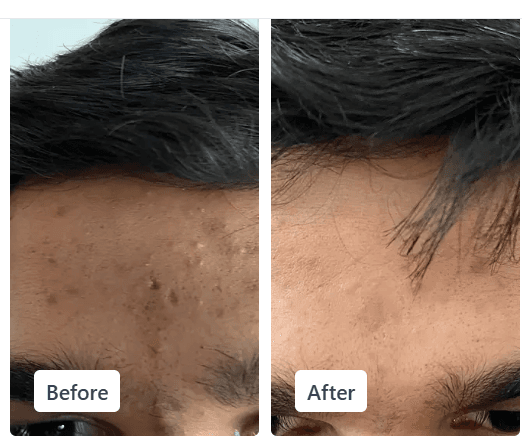
Take the free skin test to assess forehead bumps, oiliness, dandruff-related triggers, sensitivity, and other concerns, then get a routine suited to your skin.
Take the Free Skin Test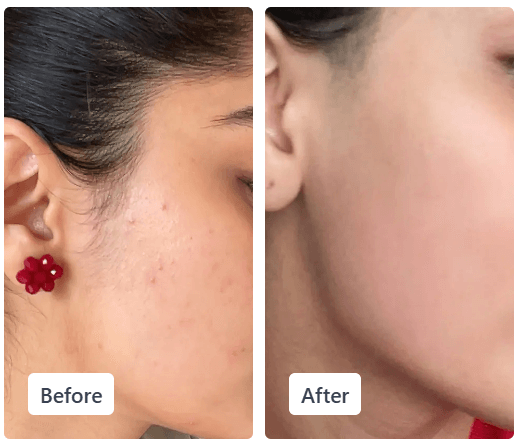
Frequently Asked Questions
Q: Can dandruff cause forehead acne?
A: Dandruff can contribute to forehead breakouts by transferring flakes, scalp oil, yeast, and hair product residue onto the forehead, where they may clog pores and increase inflammation.
Q: How can I tell if forehead acne is linked to dandruff?
A: The connection is more likely when bumps cluster near the hairline, itch, worsen during dandruff flares, or improve when scalp flaking is controlled.
Q: Is dandruff-related forehead acne fungal?
A: It can involve fungal folliculitis caused by Malassezia, bacterial acne, or both. Uniform itchy bumps are more suggestive of fungal involvement.
Q: How long does dandruff-related forehead acne take to improve?
A: Scalp symptoms may improve within two to four weeks, while forehead breakouts may need four to eight weeks of consistent scalp and facial care.
Q: Should dandruff treatment continue after forehead acne clears?
A: Yes. Maintenance dandruff care may help reduce recurrence because Malassezia overgrowth and scalp flaking can return after treatment stops.
Disclaimer: This article is for general educational purposes and is not a substitute for personalised medical advice. Consult a qualified dermatologist for persistent, painful, spreading, scarring, or intensely itchy breakouts.
Editorial Standards
Clear Ritual has Strict sourcing guidelines to ensure our content is accurate and current. We rely on peer-reviewed studies, academic research institutions, and medical associations. We strive to use primary sources and refrain from using tertiary references. See a mistake? Learn More about our Editorial Standards.