Benefits of Rice Water for Skin: Uses, Science & Expert Tips
Quick Answer:
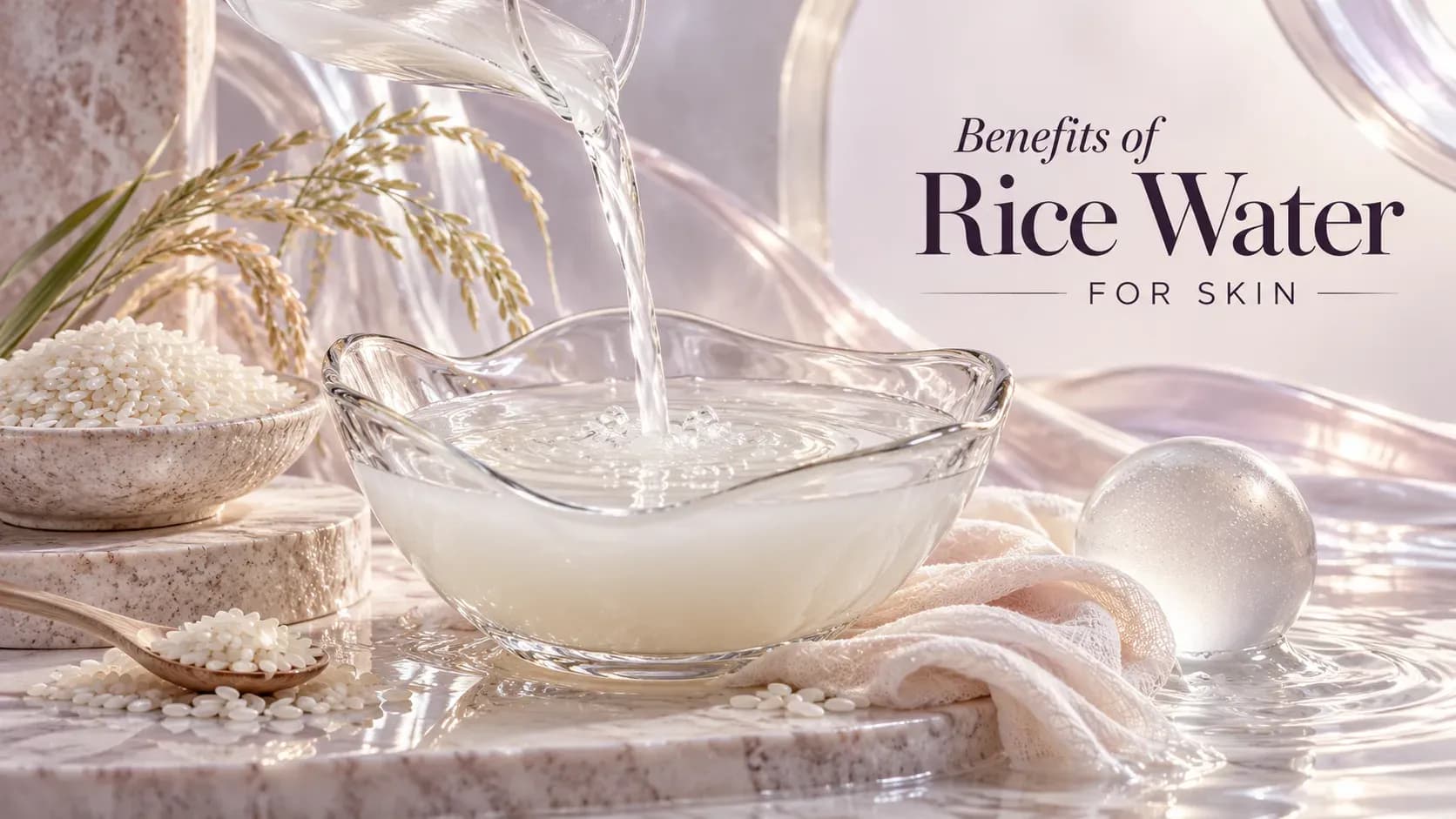
Rice water benefits the skin by delivering starch, vitamins B and E, and amino acids directly to the skin's surface: reducing inflammation, brightening uneven tone, and reinforcing the moisture barrier. It works for most skin types and can be used as a toner, mask, or overnight treatment. Clear Ritual's skincare experts recommend it as a low-cost, evidence-backed addition to any daily routine.
What Is Rice Water and What Does It Do for Skin?
Rice water is the starchy liquid left behind after washing or boiling rice. It contains inositol, ferulic acid, allantoin, vitamins B1 and E, and multiple amino acids: all of which have documented effects on skin health.
When applied topically, rice water:
- Reduces transepidermal water loss by reinforcing the lipid barrier
- Inhibits tyrosinase activity, an enzyme linked to excess melanin production
- Calms inflammation through its antioxidant content
- Supports cell turnover via inositol, a naturally occurring carbohydrate
According to Clear Ritual's formulation team, the combination of allantoin and inositol in rice water is what makes it particularly useful for both dry and sensitive skin: allantoin soothes irritation while inositol helps repair damaged skin cells from the inside out.
Key Benefits of Rice Water for Skin: What You Actually Gain
Rice water offers several measurable benefits for skin, most of which appear within 2–4 weeks of consistent use.
Core Benefits at a Glance
- Brightens skin tone: Ferulic acid and kojic acid derivatives in rice water inhibit melanin synthesis, which may reduce hyperpigmentation and uneven skin tone over 4–6 weeks of regular use.
- Improves hydration: The starch content in rice water forms a light film on the skin surface, reducing moisture loss: particularly useful for dry skin types.
- Reduces pore appearance: Rice starch water has an astringent-like effect that temporarily tightens skin, making pores appear smaller with consistent use.
- Soothes redness and irritation: Allantoin in rice water has anti-inflammatory properties supported by clinical dermatology literature.
- Improves skin texture: Inositol promotes cellular repair, which over time can improve roughness and fine lines.
- Controls excess sebum: For oily skin, rice water toner acts as a gentle astringent without stripping natural oils, helping to balance sebum production.
- Supports a healthy skin barrier: Amino acids in rice water reinforce the skin's natural moisture barrier, reducing sensitivity to environmental stressors.
Anti-Ageing Benefits of Rice Water for Skin
Rice water contains ferulic acid, which is a well-researched antioxidant shown to neutralise free radicals that break down collagen. Studies suggest ferulic acid enhances the stability of vitamins C and E when used in combination. Regular application of fermented rice water for skin may slow the visible signs of ageing by reducing oxidative stress at the cellular level.
Improves Skin Radiance
Clear Ritual's experts note that the benefits of rice water for skin whitening are linked to its mild exfoliating action and melanin-inhibiting compounds, not bleaching. It brightens by clearing dead cell build-up and reducing pigmentation at the source: a safer, gentler approach than chemical brighteners.
How Rice Water Works on Skin: The Science Behind It
Rice water works through four distinct biological mechanisms that act on different layers and functions of the skin.
Barrier reinforcement: Starch molecules in rice water coat the outer skin layer (stratum corneum), reducing water evaporation and protecting against external irritants. This is the primary reason the benefits of rice water for dry skin are so well-documented.
Antioxidant protection: Ferulic acid and vitamin E neutralise free radicals generated by UV exposure and pollution. Free radical damage degrades collagen and elastin, so their neutralisation slows visible ageing.
Melanin regulation: Fermented rice water contains GABA and organic acids that inhibit tyrosinase: the key enzyme in melanin production. Reduced tyrosinase activity leads to gradual lightening of dark spots over several weeks.
Cell repair stimulation: Inositol, which survives the fermentation process in higher concentrations, activates signalling pathways that accelerate cell turnover and repair damaged keratinocytes (skin surface cells).
The benefits of fermented rice water for skin are generally stronger than plain soaked or boiled rice water because fermentation increases the concentration of active compounds, lowers pH to a skin-compatible range (around 5.5), and produces beneficial organic acids.
Types of Rice Water for Skin: Which One Is Right for You?
| Type | Preparation | Active Compounds | Best For |
|---|---|---|---|
| Soaked rice water | Rice soaked in water for 30 min | Low starch, mild vitamins | Sensitive or beginners |
| Boiled rice water | Cooking water from rice | Higher starch concentration | Dry, dehydrated skin |
| Fermented rice water | Soaked for 24–48 hours at room temp | High inositol, organic acids, GABA | Brightening, oily, ageing skin |
| Rice water toner | Diluted soaked/fermented water | Moderate concentration | Daily use, all skin types |
Benefits of Boiled Rice Water for Skin
Boiled rice water has the highest starch content of all preparation methods. Clear Ritual recommends it specifically for very dry or eczema-prone skin, as the thick starch layer provides longer-lasting barrier protection compared to soaked varieties.
Benefits of Fermented Rice Water for Skin
Fermentation for 24–48 hours increases the concentration of inositol by a measurable degree and creates lactic acid, a natural AHA that gently exfoliates. This makes fermented rice water the preferred option for those targeting skin brightening, oily skin control, or fine lines.
Benefits of Rice Water Toner for Skin
A diluted rice water toner (1 part rice water to 2 parts plain water) is the most practical daily-use format. It delivers the benefits of rice starch water for skin without the tacky texture of undiluted boiled water and is suitable for use morning and evening.
How to Use Rice Water on Your Face: Step-by-Step Guide
Prerequisites
- Plain white rice (jasmine, basmati, or short-grain)
- Filtered or distilled water
- Clean glass jar or container
- Cotton pad or spray bottle
Step 1: Prepare the Rice Water
Rinse 2–3 tablespoons of uncooked rice with plain water to remove surface dust. Soak in 2 cups of water for 30 minutes (for plain rice water) or 24–48 hours at room temperature (for fermented rice water). Strain and store the liquid in a clean jar. Refrigerate and use within 5–7 days.
Why this matters: Fresh preparation preserves the vitamin and amino acid content. Older batches may grow bacteria that irritate skin.
Step 2: Cleanse Your Face First
Always apply rice water to a clean face. Residual sunscreen, makeup, or oil can block absorption.
Step 3: Apply with a Cotton Pad or as a Spray
Soak a cotton pad and press gently across the face and neck, or pour into a spray bottle and mist directly. Do not rub: pressing or patting preserves the skin's surface integrity.
Step 4: Leave On for 5–20 Minutes
For a basic toner application, leave for 5 minutes then follow with moisturiser. For a mask effect, leave for 15–20 minutes then rinse. For the benefits of rice water for skin overnight, apply a thin layer and leave without rinsing: best suited to fermented rice water diluted 50:50.
Step 5: Moisturise Immediately After
Seal in the nutrients with a lightweight moisturiser. The benefits of rice water for dry skin are maximised when a hydrating moisturiser is applied within 60 seconds of patting dry.
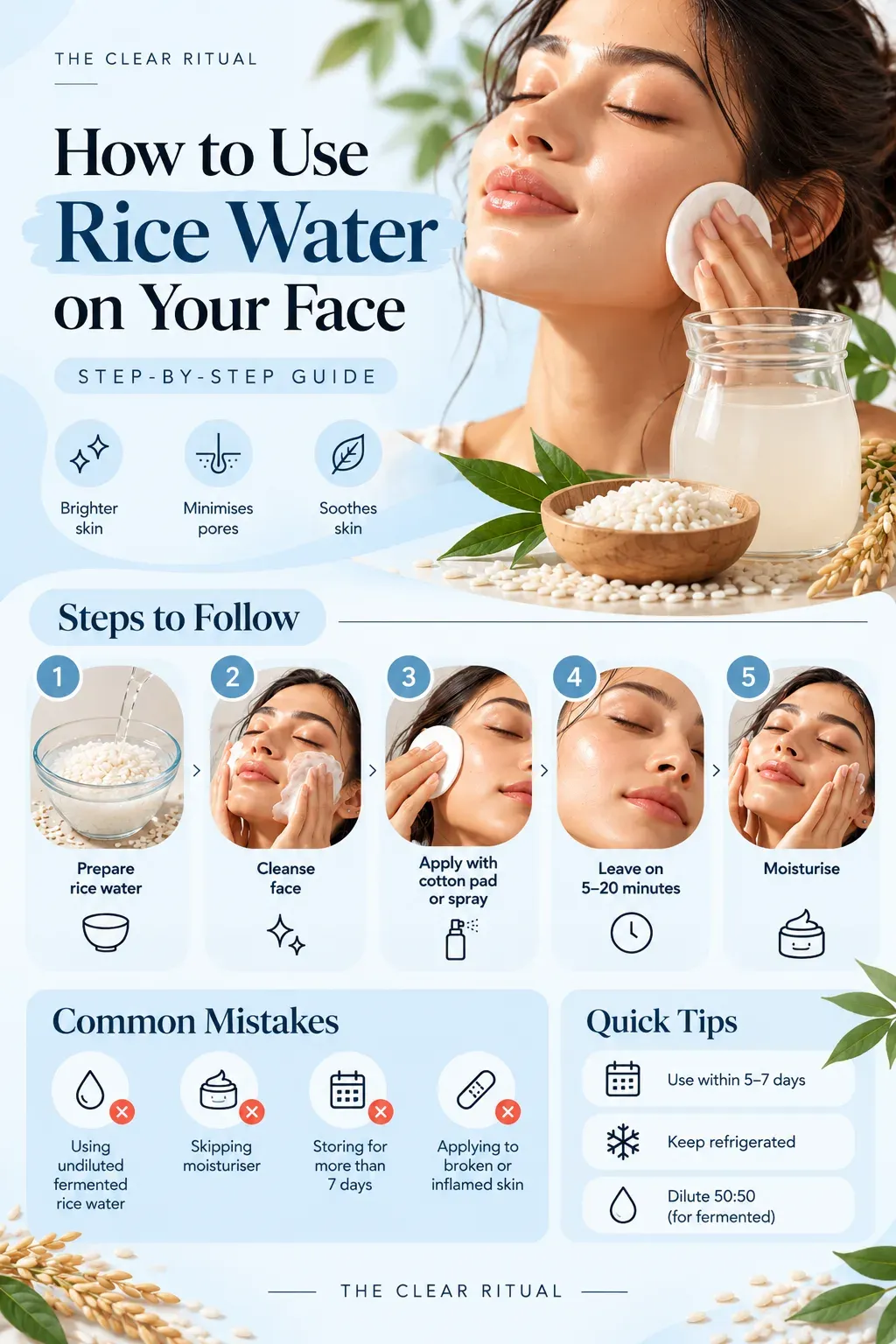
Common Mistakes to Avoid
- Using undiluted fermented rice water daily: The organic acids can over-exfoliate sensitive skin if used undiluted every day. Dilute to 50:50 for daily use.
- Skipping moisturiser after application: Without a follow-up moisturiser, water evaporates from the skin surface, potentially worsening dryness.
- Storing for more than 7 days: Rice water can grow harmful bacteria. Discard after one week and prepare a fresh batch.
- Applying to broken or actively inflamed skin: While rice water is anti-inflammatory, it should not be used on open wounds or active acne lesions.
Benefits of Rice Water for Skin Overnight: A Specific Use Case
Leaving rice water on skin overnight delivers continuous exposure to inositol and amino acids during the skin's natural overnight repair cycle.
To use rice water overnight safely:
- Use fermented rice water diluted 50:50 with plain water.
- Apply after cleansing and before any heavier oils or night creams.
- Allow to absorb for 2 minutes before layering other products.
- In the morning, rinse with cool water and moisturise as normal.
Clear Ritual advises starting with 2–3 nights per week before using nightly, especially for those with sensitive or reactive skin. Most users see a noticeable improvement in skin texture within 3–4 weeks of consistent overnight use.
Rice Water vs. Alternatives: An Honest Comparison
| Ingredient | Key Benefit | Best For | Cost | Limitation |
|---|---|---|---|---|
| Rice water | Brightening, barrier repair, soothing | All skin types, beginners | Very low | Slower results than active ingredients |
| Vitamin C serum | Melanin inhibition, collagen boost | Brightening, anti-ageing | Moderate–high | Can irritate sensitive skin |
| Niacinamide | Pore minimising, sebum control | Oily, acne-prone skin | Low–moderate | Minimal barrier benefit |
| Hyaluronic acid | Deep hydration | Dry, dehydrated skin | Moderate | No brightening effect |
Which Is Best for Your Use Case?
- For beginners or those with sensitive skin, rice water is the most accessible starting point.
- For active hyperpigmentation, vitamin C serum delivers faster results but is more likely to cause irritation.
- For oily skin management, rice water and niacinamide can be layered effectively: a strategy Clear Ritual's skin experts often recommend.
- For intense hydration alone, hyaluronic acid outperforms rice water.
Is Rice Water Right for Your Skin? Ideal and Non-Ideal Use Cases
| Rice Water Is Ideal For | Rice Water May Not Be Sufficient For |
|---|---|
| Sensitive or reactive skin | Severe cystic acne |
| Oily and combination skin | Deep wrinkles requiring retinoid-level intervention |
| Dry or dehydrated skin | Active eczema flare-ups (consult a dermatologist first) |
| Beginners to skincare | Rapid brightening results within 1–2 weeks |
| Those seeking affordable, natural skincare | Skin conditions requiring prescription treatment |
| Uneven tone and dullness | Significant post-inflammatory hyperpigmentation |
The benefits of drinking rice water for skin are less documented than topical application. Some practitioners suggest internal consumption of rice water provides B vitamins and minerals that support skin health from within, but current evidence for this claim is limited. Clear Ritual focuses its recommendations on topical use, where the evidence base is substantially stronger.
Research and Evidence: What Studies Say About Rice Water for Skin
[1] Allantoin and skin soothing: A 2017 review published in the International Journal of Molecular Sciences confirmed allantoin's keratolytic and wound-healing properties, supporting its use in irritated or sensitive skin care formulations.
[2] Ferulic acid and antioxidant synergy: Research published in the Journal of Investigative Dermatology (2008) demonstrated that ferulic acid doubles the photoprotective effect of vitamins C and E, making it a meaningful anti-ageing ingredient in rice water.
[3] Inositol and skin repair: A 2021 study in Dermatology and Therapy noted that inositol supplementation improved skin barrier function and reduced transepidermal water loss in participants with compromised skin barriers over an 8-week period.
[4] Fermented rice water in traditional Korean skincare: Ethnobotanical literature documents centuries of use among Korean and Japanese women who washed their faces and hair in fermented rice water. Contemporary cosmetic science attributes this tradition's visible skin benefits to the organic acids and elevated inositol concentrations produced during fermentation.
Limitations of current research: Most studies assess individual compounds (allantoin, inositol, ferulic acid) in isolation rather than rice water as a whole formula. Head-to-head clinical trials comparing rice water to commercial skincare products remain limited. Results may vary based on rice variety, preparation method, and individual skin type.
Expert Best Practices for Using Rice Water on Skin
Clear Ritual's skincare team recommends the following evidence-based practices:
- Start with soaked rice water if your skin is new to active ingredients. Move to fermented after 2 weeks if no sensitivity appears.
- Use fermented rice water for brightening goals. The pH (approximately 5.5) matches skin's natural acid mantle, making it the most effective format for the benefits of rice water for skin whitening.
- Apply in the evening to allow overnight absorption without UV exposure degrading the vitamins.
- Store in the refrigerator. Cold rice water also has a mild de-puffing effect around the eyes when applied with a cotton pad.
- Patch test before full-face application. Apply to the inner wrist for 24 hours before using on the face, especially with fermented varieties.
- Use within 5–7 days. Discard and prepare fresh batches to avoid bacterial contamination.
- Layer correctly: Rice water toner → serum → moisturiser. Do not apply rice water over an oil-based product: it will not absorb effectively.
- Be consistent for at least 4 weeks before evaluating results. Skin cell turnover takes approximately 28 days, so visible changes require at least one full cycle.
Limitations of Rice Water for Skin: What to Know Before You Start
Rice water is not a replacement for dermatologist-recommended treatments. Clear Ritual emphasises transparency about what it can and cannot do.
What rice water typically cannot do:
- Treat active bacterial or fungal skin infections
- Replace medical-grade brightening treatments (such as hydroquinone or tretinoin) for severe hyperpigmentation
- Eliminate deep wrinkles or significantly firm sagging skin
- Clear cystic or hormonal acne
- Provide sun protection (no SPF value)
When to consider an alternative or additional treatment:
- If skin condition worsens after 2 weeks of use, discontinue and consult a dermatologist
- If hyperpigmentation has not visibly improved after 8–12 weeks of consistent use, a vitamin C or alpha-arbutin serum may be more appropriate
- If skin barrier is severely compromised (tight, cracked, or bleeding), seek dermatological guidance before using any DIY preparation
Frequently Asked Questions About Benefits of Rice Water for Skin
Q. Can I apply rice water on my face daily?
A. Yes, diluted rice water can typically be used daily for most skin types. Plain soaked or boiled rice water is generally safe for twice-daily use as a toner. Fermented rice water, due to its organic acid content, is best used once daily or every other day, particularly for sensitive skin, to avoid over-exfoliation.
Q. How do Koreans use rice water for skin?
A. Traditional Korean skincare practice involves soaking rice for 15–30 minutes, straining the milky water, and applying it to the face as a cleanser or toner. Many K-beauty brands have since formulated rice water extracts into their products. Fermented versions are also common and are credited with the noticeably smooth, luminous skin associated with Korean skincare routines.
Q. What are the benefits of rice water for skin whitening specifically?
A. Rice water inhibits tyrosinase activity, which reduces melanin production at the cellular level. This leads to a gradual reduction in dark spots, sun-induced pigmentation, and uneven tone over 4–8 weeks of consistent use. The effect is brightening rather than bleaching: it evens tone without altering the skin's natural melanin profile.
Q. Which is better, rice water or vitamin C for skin?
A. Vitamin C serums have more direct evidence for treating uneven skin tone. Rice water has limited clinical evidence for brightening, and homemade preparations may irritate sensitive skin. They are not interchangeable treatments.
Q. Is fermented rice water safe to leave on your face overnight?
A. Homemade fermented rice water may contain unwanted microorganisms and can irritate skin. Avoid leaving it on overnight, especially if your skin is sensitive, broken or acne-prone.
Q. How long can homemade rice water be stored for skincare?
A. Homemade rice water is not preserved or sterile. Make small fresh batches, refrigerate promptly and discard if it changes smell or appearance. Do not assume that refrigeration makes fermented rice water safe for several days.
Understand What Your Skin Needs
Take the Clear Ritual Skin Test to identify your skin type, concerns, and potential triggers before building your routine.
Take the Free Skin Test
Editorial Standards
Clear Ritual has Strict sourcing guidelines to ensure our content is accurate and current. We rely on peer-reviewed studies, academic research institutions, and medical associations. We strive to use primary sources and refrain from using tertiary references. See a mistake? Learn More about our Editorial Standards.
Related Articles
Acne and Diet: What’s the Real Link Between Food and Breakouts?
Published 21 July 2026

Acne Caused by Makeup: Understanding Acne Cosmetica
Published 17 July 2026
Acne During Menopause: Why Breakouts Start Later in Life
Published 16 July 2026
Acne Breakout: Why It Happens All at Once and How to Calm It
Published 8 August 2026