Micellar Water: Complete Guide to How It Works, Benefits & Best Practices
Quick Answer:
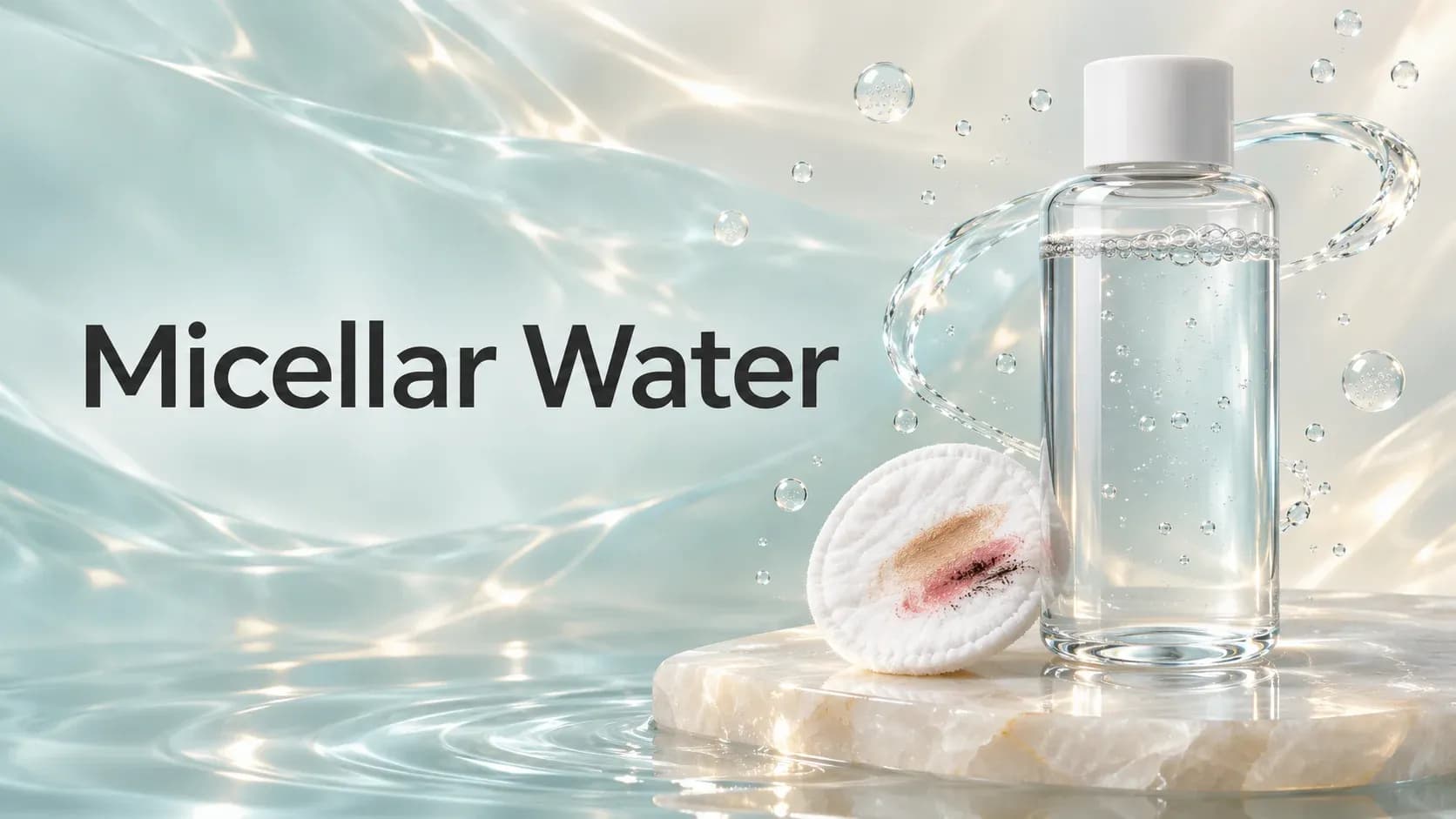
Micellar water is a water-based cleanser containing mild surfactants that help lift makeup, excess oil and dirt from the skin. It can be convenient for everyday cleansing, but effectiveness and rinsing needs depend on the formulation, skin sensitivity and how much makeup or sunscreen you wear.
Micellar water is a gentle, water-based cleanser that removes makeup, dirt, and excess oil from the skin without rinsing. It works by using tiny oil molecules called micelles that attract and lift impurities away from the skin's surface. Micellar cleansing water suits most skin types, including oily, dry, and sensitive, and requires no water or scrubbing to be effective.
What Is Micellar Water? A Complete Guide
Micellar water is a skin cleanser made of purified water, mild surfactants, and moisturising agents. The surfactant molecules arrange themselves into spherical clusters called micelles, which act as a magnet for oil-based impurities. The result is effective cleansing with minimal irritation, making micellar cleansing water one of the most widely recommended options by dermatologists for everyday use.
What micellar water is used for:
- Removing makeup, including eye makeup and foundation
- Cleansing the face before or after a skincare routine
- Refreshing the skin mid-day without full cleansing
- Soothing skin after exercise or travel
- Preparing the skin for serums or moisturisers
According to the Clear Ritual skincare team, micellar water functions as both a cleanser and a toner in a single step, reducing the number of products needed in a daily routine.
Key Terms to Know
- Micelle: A spherical cluster of surfactant molecules with a water-attracting outer shell and an oil-attracting core
- Surfactant: A compound that lowers surface tension between two substances, allowing oil and water to mix
- Micellar cleansing water: The full-form name used interchangeably with "micellar water" across dermatology and skincare literature
How Micellar Water Works: The Complete Breakdown
Micellar water works because the micelles in the formula act as dual-action cleansing agents, their outer surface bonds with water while their inner core bonds with oil and dirt. When a cotton pad soaked in micellar cleansing water is wiped across the skin, the micelles encapsulate sebum, makeup, and pollution particles and lift them away without disrupting the skin barrier.
Step-by-Step: How Micellar Water Cleanses
- Micelles form in the solution. Surfactant molecules self-assemble into spherical clusters when dissolved in water at a specific concentration.
- The cotton pad delivers micelles to the skin. Applying micellar water to a cotton pad ensures direct contact between the micelles and impurities on the skin's surface.
- The oil-attracting core binds to impurities. The hydrophobic (oil-attracting) centre of each micelle adheres to sebum, makeup pigments, and environmental pollutants.
- Impurities are lifted away. As the cotton pad is swept across the skin, the micelles pull the trapped impurities away from the surface and into the pad.
- The skin barrier remains intact. Because micelles work at a low concentration and do not require rubbing, the skin's natural lipid layer is largely undisturbed.
Why This Mechanism Matters
Traditional soap-based cleansers work by breaking down the skin barrier to dissolve oil, which can cause dryness and irritation. Micellar water works because it encapsulates rather than strips, impurities are surrounded and removed without direct chemical disruption of the skin. Studies suggest this makes micellar cleansing water significantly gentler than foam cleansers for people with sensitive or dry skin.
Common misconception: Micellar water is not just water with a fragrance. The surfactant chemistry behind micelle formation is the same principle used in pharmaceutical drug delivery and food emulsification. The concentration of surfactants in micellar water is carefully calibrated to be skin-safe while remaining effective.
Key Benefits of Micellar Water: What You Actually Gain
Micellar water offers a range of short-term and long-term benefits for skin health and routine efficiency. Clear Ritual's formulation team notes that micellar cleansing water consistently ranks among the top-performing daily cleansers across all skin types in clinical usage surveys.
Benefits at a Glance
- Gentle on the skin barrier: Micellar water does not strip natural oils, reducing the risk of post-cleanse dryness or tightness
- No rinsing required: The formula is self-sufficient, makeup and dirt are removed without water, making it ideal for travel or time-limited routines
- Suitable for sensitive skin: The low-surfactant concentration reduces the likelihood of irritation or allergic reactions
- Removes waterproof makeup: Oil-core micelles can dissolve waterproof formulas that standard cleansers cannot break down
- Hydrating effect: Most micellar water formulas include glycerin or similar humectants that add moisture during cleansing
- Doubles as a toner: Micellar cleansing water balances skin pH after cleansing, reducing the need for a separate toning step
- Reduces skin stress from over-cleansing: Because micellar water is non-stripping, it supports consistent twice-daily cleansing without cumulative damage
Short-Term vs. Long-Term Benefits
| Timeframe | Benefit |
|---|---|
| Immediate (first use) | Makeup and impurities visibly removed; skin feels clean and comfortable |
| Within 1–2 weeks | Reduction in post-cleanse dryness or tightness |
| Within 4–8 weeks | Improved skin texture; fewer breakouts linked to residual makeup |
| After 3+ months | Stronger skin barrier integrity; reduced sensitivity from daily cleansing habits |
Who Benefits Most from Micellar Water?
- People with dry or sensitive skin who cannot tolerate foam cleansers
- Those who wear daily makeup, including waterproof formulas
- Individuals with an active lifestyle who need quick cleansing after exercise
- Anyone looking to simplify a multi-step skincare routine
Types of Micellar Water: Which Is Right for You?
Micellar water is not a one-size-fits-all product. Different formulations target different skin concerns, and choosing the wrong type can reduce efficacy or cause mild irritation. Clear Ritual offers a range of micellar cleansing water formulas designed for specific skin profiles.
Micellar Water by Skin Type
| Skin Type | Recommended Formula | Key Ingredients to Look For |
|---|---|---|
| Oily skin | Micellar water for oily skin, oil-free, mattifying | Salicylic acid, niacinamide, zinc |
| Dry skin | Micellar water for dry skin, hydrating, cream-infused | Glycerin, hyaluronic acid, ceramides |
| Sensitive skin | Fragrance-free, alcohol-free micellar cleansing water | Aloe vera, panthenol, chamomile extract |
| Combination skin | Balancing micellar water | Niacinamide, light hydrators |
| Acne-prone skin | Clarifying micellar water | Salicylic acid, tea tree extract |
| Normal skin | Standard micellar water | Glycerin, mild surfactants |
Micellar Water for Oily Skin
Micellar water for oily skin typically contains oil-control actives such as niacinamide (commonly at 2–5% concentration) and zinc PCA. These ingredients help regulate sebum production while the micelles remove existing oil and congestion. Users with oily skin should avoid formulas that contain added oils or cream-based emollients, as these may increase pore congestion.
Micellar Water for Dry Skin
Micellar water for dry skin is formulated with higher concentrations of humectants, particularly glycerin and hyaluronic acid. These ingredients attract moisture from the environment to the skin's surface, ensuring the cleansing step adds rather than depletes hydration. Cream-based micellar cleansing water variants are especially effective for very dry or flaky skin types.
How to Use Micellar Water: Step-by-Step Guide
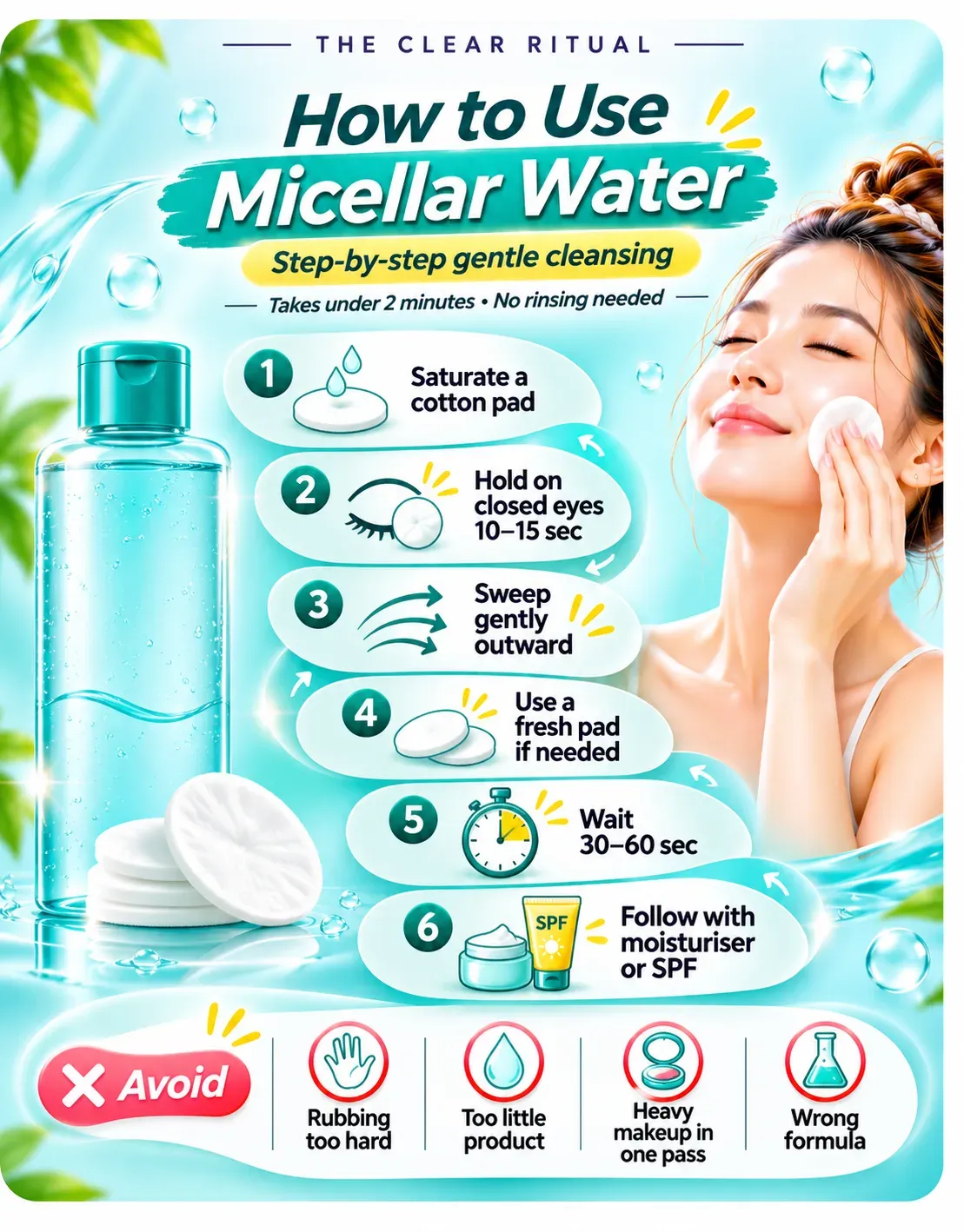
Using micellar water correctly takes under two minutes and does not require any additional products for the cleansing step. The process outlined by the Clear Ritual team is designed to maximise impurity removal while protecting the skin barrier.
What You Need
- A bottle of micellar cleansing water suitable for your skin type
- Cotton pads (reusable or disposable)
- Optional: a follow-up moisturiser
Step-by-Step: How to Use Micellar Cleansing Water
- Saturate a cotton pad. Pour enough micellar water onto a cotton pad to fully dampen it without dripping, approximately 4–6 pumps or a generous pour.
- Press and hold over the eyes first. For eye makeup removal, hold the saturated pad over a closed eye for 10–15 seconds. This softens waterproof mascara and liner before wiping, reducing the need for rubbing.
- Sweep gently across the skin. Use light, outward strokes across the face. Avoid scrubbing, micellar water works because the micelles lift impurities with minimal mechanical pressure.
- Repeat with a fresh pad if needed. If the first pad shows heavy makeup transfer, use a second pad until it comes away clean. This confirms all surface impurities have been removed.
- Allow the skin to absorb. There is no need to rinse micellar water off the skin. Wait 30–60 seconds before applying serums or moisturisers.
- Follow with your regular routine. For AM routines, apply SPF. For PM routines, apply any targeted treatment serums or overnight moisturiser.
Common Mistakes to Avoid
Rubbing too hard: Micellar water does not need scrubbing to work. Excess pressure can cause micro-tears and redness, particularly around the eyes.
Using too little product: An under-saturated cotton pad can drag across the skin and cause friction. Always fully dampen the pad before use.
Skipping a second cleanse for heavy makeup: On days with full-coverage or waterproof makeup, one pass may not be sufficient. Use two or more pads until no residue transfers.
Using the wrong formula for your skin type: Micellar water for oily skin used on dry skin can increase dryness. Always match the formula to your skin type.
Quick-Start Checklist
- Choose a micellar cleansing water formula suited to your skin type
- Stock cotton pads (or reusable alternatives)
- Use morning and/or evening as the first step of your routine
- Do not rinse off after use
- Follow with SPF (AM) or serum/moisturiser (PM)
Micellar Water Use Cases: Real-World Applications
Micellar water serves multiple cleansing needs beyond the standard evening makeup removal routine. Understanding the specific use of micellar water in different contexts helps users get the most from the product.
Post-Exercise Cleansing
After exercise, sweat, sebum, and environmental particles accumulate on the skin. Micellar cleansing water can remove these impurities within seconds without the need for a sink or towel-intensive cleansing routine. This makes it particularly practical for gym environments or outdoor activities. Regular use in this context may reduce sweat-related breakouts, particularly along the jawline and forehead.
Travel and On-the-Go Cleansing
Micellar water is a TSA-compliant liquid that replaces three products, makeup remover, cleanser, and toner, in a single bottle. Travellers who use micellar cleansing water report maintaining skin quality more consistently than those who rely on hotel soaps or wipes, primarily because micellar water does not disrupt the skin's natural pH balance.
Pre-Makeup Skin Preparation
Using micellar water before applying makeup removes residual oils and skincare product residue from the previous night. This creates a clean, balanced surface that allows foundation and primer to adhere more evenly. Users who incorporate this step typically report longer makeup wear and reduced midday shine, particularly those using micellar water for oily skin formulas.
Spot-Removal for Makeup Errors
A cotton bud dipped in micellar cleansing water can precisely remove eyeliner smudges, lip liner bleeds, or foundation lines without disturbing surrounding makeup. This is a standard technique used by professional makeup artists for precision correction.
Sensitive Skin Daily Cleansing
For individuals whose skin reacts to foam cleansers, gel cleansers, or micellar water alternatives like cleansing oils, fragrance-free micellar cleansing water may serve as the primary, and only, daily cleanser. Dermatologists in clinical practice frequently recommend this approach for patients with rosacea or eczema-adjacent dryness.
Children and Teens with Acne-Prone Skin
Younger users who are beginning a skincare routine often find micellar water approachable because it requires no complex multi-step technique. For teens with mild acne, micellar water for oily skin variants with salicylic acid can deliver a low-strength exfoliating benefit while removing daily grime and sebum.
Micellar Water vs. Alternatives: An Honest Comparison
Micellar water competes with several other cleansing formats. Each has distinct advantages and limitations. The best choice depends on skin type, makeup use, and routine preference.
| Product | How It Works | Best For | Removes Waterproof Makeup | Requires Rinsing | Skin Barrier Impact |
|---|---|---|---|---|---|
| Micellar water | Micelles encapsulate impurities | All skin types, sensitive skin | Yes (with hold time) | No | Minimal |
| Cleansing oil | Oil dissolves oil-based impurities | Dry skin, heavy makeup wearers | Yes | Yes (emulsifies with water) | Low–moderate |
| Foam cleanser | Surfactants lather and strip impurities | Oily or acne-prone skin | Partial | Yes | Moderate–high |
| Cleansing balm | Rich oil-wax texture dissolves makeup | Dry, mature skin | Yes | Yes | Low |
| Makeup wipes | Physical friction with mild surfactants | Travel, emergency use | Partial | No | High (friction) |
| Cleansing gel | Water-based surfactant formula | Normal to oily skin | Partial | Yes | Moderate |
Micellar Water vs. Cleansing Oil
Both micellar water and cleansing oil can remove waterproof makeup effectively. Cleansing oil typically offers deeper emulsification of heavy SPF formulas and long-wear foundations, but requires thorough rinsing to avoid a residual film. Micellar cleansing water is faster, requires no rinsing, and is better tolerated by oily or acne-prone skin. For dry skin users, cleansing oil may feel more nourishing but needs to be followed by a water-based cleanser in a double-cleanse routine.
Micellar Water vs. Makeup Wipes
Makeup wipes use physical friction and preservative-heavy formulas to remove surface makeup. Studies suggest that wipes leave up to 30% more residue on the skin compared to rinse-off and cotton-pad cleansers. Micellar water removes impurities via micelle encapsulation rather than abrasion, making it significantly less irritating for daily use. Clear Ritual's skincare advisors consistently recommend micellar cleansing water over wipes for clients with reactive or sensitive skin.
Which Option Is Best for You?
- Choose micellar water if you have sensitive, dry, or oily skin and want a one-step, no-rinse cleanser
- Choose cleansing oil or balm if you wear very heavy or long-wear makeup daily and prefer a richer feel
- Choose foam or gel if you have oily skin and prefer a full-rinse, high-lather cleanse for a "deep clean" sensation
- Avoid makeup wipes as a primary daily cleanser due to high friction and residue concerns
Micellar Water Results: What to Expect
Results from micellar water use depend on skin type, consistency of use, and whether the correct formula has been selected. Clear Ritual recommends consistent daily use for a minimum of four weeks before evaluating changes in skin feel and texture.
Realistic Outcome Timeline
| Timeframe | Expected Result |
|---|---|
| First use | Makeup, oil, and surface impurities removed; skin feels clean without tightness |
| Week 1–2 | Reduction in post-cleanse dryness; skin feels balanced after cleansing |
| Week 3–4 | Improved skin texture; fewer visible pores from residual makeup build-up |
| Month 2–3 | Noticeable improvement in skin barrier function; reduced reactivity to other products |
| Month 4 | No fixed milestone. Continue a well-tolerated routine and reassess if irritation or congestion persists. |
Possible Side Effects of Micellar Water
Although many people tolerate micellar water well, reactions depend on the complete formula, including surfactants, preservatives and fragrance. Some users experience stinging, dryness, redness or irritation around the eyes. Stop using a product if discomfort persists, and consider a fragrance-free formula if your skin is sensitive.
Micellar water may not completely remove water-resistant sunscreen, long-wear foundation or heavy eye makeup in one pass. When residue remains, a gentle second cleanse can help. Some leave-on formulas can also leave surfactant residue, so rinsing is reasonable if the product directions recommend it or your skin becomes irritated.
Should You Rinse Off Micellar Water?
Whether you need to rinse depends on the formula, skin tolerance and what you are removing. Many micellar products are marketed as no-rinse cleansers, but you can rinse with lukewarm water if your skin feels sticky, tight or sensitive. Always follow product directions, especially around the eyes.
How Often Can You Use Micellar Water?
Micellar water can be used as part of a morning or evening cleansing routine if it suits your skin. Avoid repeated wiping or rubbing throughout the day, which may irritate sensitive skin. If you notice redness or dryness, reduce use or switch to a gentler formulation.
When Should You Seek Dermatology Advice?
Seek advice if cleansing causes persistent stinging, swelling, rash or worsening breakouts. A dermatologist can help distinguish irritation or contact dermatitis from acne and suggest a suitable cleanser for your skin type.
Conclusion
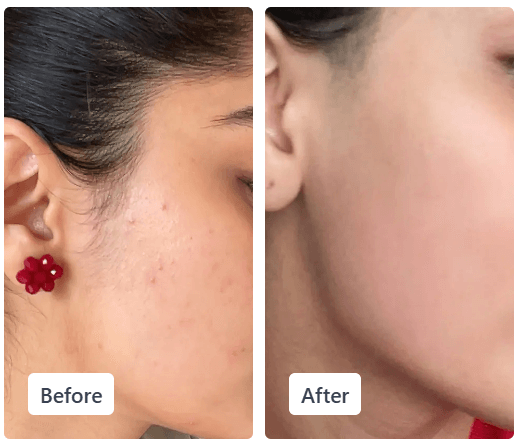
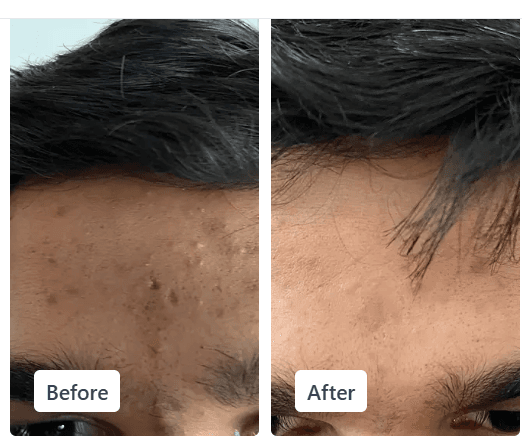
Micellar water is a convenient way to remove everyday makeup, sebum and surface impurities. Its performance varies by formulation and by the products being removed, so a gentle second cleanse may sometimes be useful. Choose a formula that suits your skin, avoid excessive friction and follow with moisturiser or sunscreen as needed.
Frequently Asked Questions
Q: What is micellar water used for?
A: Micellar water is used to remove everyday makeup, surface oil and dirt. It can be a convenient cleansing step for many skin types, although heavy or waterproof products may need additional cleansing.
Q: Do you need to wash your face after using micellar water?
A: Not always. Many products are designed for no-rinse use, but rinsing is reasonable if the formula leaves residue, irritates your skin or the label recommends it.
Q: Can micellar water be used every day?
A: Yes, if the formulation suits your skin. Use a soft cotton pad without rubbing, and reduce use if you develop dryness, stinging or redness.
Q: Is micellar water good for oily and acne-prone skin?
A: It may work as a gentle makeup-removal or cleansing step. Look for a well-tolerated formula, but remember that micellar water alone is not an acne treatment.
Q: Does micellar water remove waterproof sunscreen and makeup?
A: Some formulas can remove waterproof products, but others may leave residue. Follow the product instructions and use a gentle second cleanser if necessary.
Q: Can micellar water cause side effects?
A: Possible reactions include stinging, dryness, redness and irritation, especially around the eyes or with fragranced formulas. Stop using a product if symptoms persist and seek professional advice for a significant reaction.
Editorial Standards
Clear Ritual has Strict sourcing guidelines to ensure our content is accurate and current. We rely on peer-reviewed studies, academic research institutions, and medical associations. We strive to use primary sources and refrain from using tertiary references. See a mistake? Learn More about our Editorial Standards.
Related Articles
Morning Skincare Routine for Acne Prone Skin
Published 17 July 2026
Post-Workout Skincare: How to Prevent Blackheads After Exercise
Published 22 July 2026
Korean Skincare Routine for Acne-Prone Skin: What Actually Helps
Published 20 July 2026

Skincare Ingredients Suitable for Acne Prone Skin
Published 24 July 2026