Perioral Dermatitis: Causes, Symptoms, Treatment, and Home Care
Quick Answer:
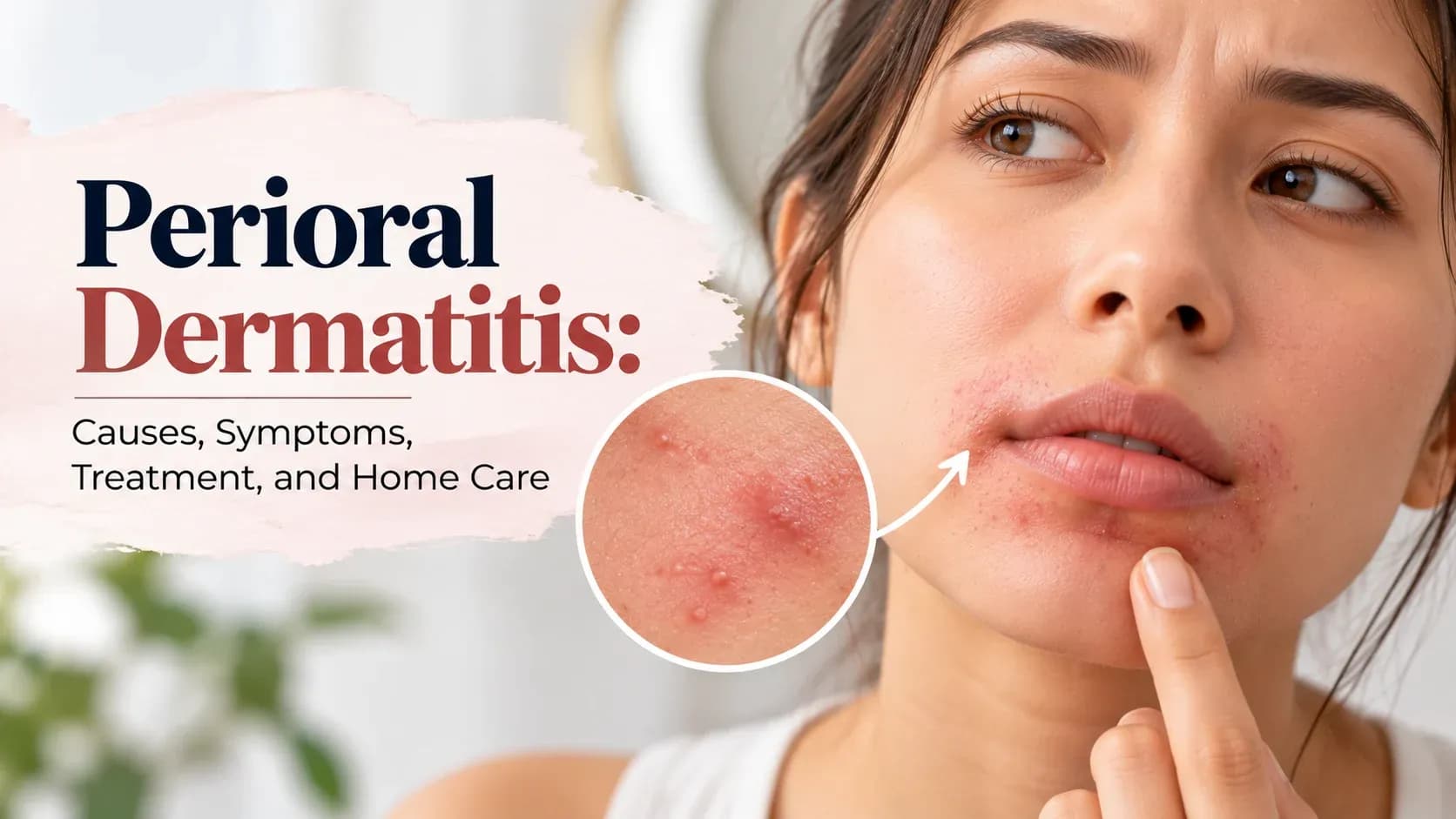
Perioral dermatitis is a non-contagious inflammatory skin condition that causes clusters of small, acne-like bumps with dry, red, and irritated skin. While it primarily develops around the mouth, this rash can also appear around the nose and eyes and typically causes a distinct burning or stinging sensation. Some people may also experience mild itching.
What Is Perioral Dermatitis?
Perioral dermatitis is not contagious, and it is a different condition from acne. While its exact cause remains unknown, the skin is highly sensitive. Topical steroid use is strongly linked to flare-ups, while certain heavy skincare products and environmental irritants are also associated with the rash, though the evidence is more limited.
Although the rash typically occurs around the mouth, it can also appear around the nose and eyes. When multiple facial areas are involved, dermatologists call it periorificial dermatitis.
What Are the Symptoms of Perioral Dermatitis?
Perioral dermatitis symptoms can develop gradually and may persist or return if the underlying triggers remain. Recognising the pattern can help you seek the right treatment.
Common Signs of Perioral Dermatitis
You may notice:
- Small bumps: Clusters of red or skin-coloured bumps, which are sometimes fluid-filled or contain tiny amounts of pus.
- Dryness and flaking: The affected skin may appear rough, scaly, or flaky.
- Burning or itching: Your skin may burn, sting, or feel unusually tight, irritated, and sensitive.
- Redness or discolouration: Patches may look pink, red, purple, or darker than your surrounding skin.
- A rash around the mouth: The bumps often appear around the mouth, sometimes leaving a narrow strip of skin next to the lips unaffected.
Not everyone experiences all these symptoms. The rash may also look different depending on your skin tone, so redness alone is not a reliable way to identify the condition.
Perioral Dermatitis Around the Nose
Perioral dermatitis can appear around your nostrils and in the creases between your nose and cheeks. You may notice small bumps, dry patches, or irritation in these areas, sometimes along with a rash around your mouth.
A rash around the nose does not automatically mean you have perioral dermatitis. Rosacea, seborrheic dermatitis and contact dermatitis can cause similar changes. If the rash persists or spreads towards your eyes, consult a dermatologist for an accurate diagnosis and prompt treatment.
What Causes Perioral Dermatitis?
Researchers have not fully identified the exact cause of perioral dermatitis, though several exposures and skincare habits are associated with it. Identifying potential triggers can help you and your dermatologist decide what to change.
Topical Steroid Use
Corticosteroid creams (medicated topical treatment applied to the skin to reduce redness, itching, and swelling), including hydrocortisone, are among the best-recognised triggers of perioral dermatitis. Although these medicines may temporarily reduce redness, repeated use on your face can aggravate the condition.
Using nasal sprays and inhalers containing corticosteroids may also contribute through exposure around the mouth and nose.
If you use a prescribed steroid, speak to your doctor before changing or stopping it. Withdrawal, particularly after prolonged use of a potent facial steroid, can cause a temporary flare-up.
Skincare Products and Cosmetic Irritants
Some skincare products, like heavy, occlusive creams, cosmetics and products that do not suit your skin, can irritate sensitive skin or aggravate an existing rash.
Excessive cleansing, frequent exfoliation, and layering multiple active ingredients may also worsen irritation.
If you suspect any product is contributing to your symptoms, simplify your routine and discuss suitable alternatives with a dermatologist instead of repeatedly switching products.
Toothpaste and Other Possible Triggers
Toothpaste ingredients, especially fluoride, SLS, and strong mint flavourings, frequently irritate the skin around your mouth. Hormonal shifts, extreme heat, wind, and sun exposure can also spark flare-ups. However, these triggers do not affect everyone and may not be the cause of your rash.
Perioral Dermatitis vs Acne
Perioral dermatitis and acne can both cause small facial bumps, but they often differ in appearance and distribution. The table below helps you understand the difference between them:
| Feature | Perioral dermatitis | Acne |
|---|---|---|
| Appearance | Clusters of similar-looking bumps | Blackheads, whiteheads and inflamed spots |
| Common locations | Around the mouth, nose and sometimes eyes | Face, chest, back and shoulders |
| Skin sensations | Burning, dryness or tightness may occur | Inflamed spots may feel tender |
| Blackheads and whiteheads | Usually absent | Commonly present |
| Treatment | Trigger management and condition-specific treatment | Acne treatments selected according to severity |
The absence of blackheads and whiteheads, together with a rash concentrated around your mouth, may suggest perioral dermatitis rather than acne. However, these conditions can sometimes look alike, and you should not rely on appearance alone to diagnose the rash.
How Is Perioral Dermatitis Diagnosed?
A dermatologist diagnoses perioral dermatitis by examining your skin and may ask about your symptoms, skincare routine, and medication use.
They may check whether the rash affects your mouth, nose, or eyes and whether you have used topical steroids or recently introduced new products.
Additional tests, such as skin swabs, allergy patch testing, or a biopsy, may be considered if the diagnosis is uncertain or they suspect another condition. These tests are not routinely necessary for every case.
Perioral Dermatitis Treatment
Perioral dermatitis treatment depends on the severity of your symptoms, possible triggers, and how your skin responds to initial care. The treatment starts with your dermatologist reviewing potential irritants or any steroid use and may also prescribe medication to reduce inflammation and help the rash settle.
Prescription Treatments for Perioral Dermatitis
Depending on your condition, your dermatologist may recommend:
| Prescription treatment | How it may help |
|---|---|
| Topical medication such as 0.75 - 1% metronidazole or 2% erythromycin gel or cream. | It may help manage inflammation and the associated rash. |
| Oral antibiotics such as doxycycline. | Their anti-inflammatory effects can be useful for more persistent or extensive cases |
| Alternative prescription treatments | If standard options are unsuitable or ineffective, these are considered. |
The right medicine depends on your age, medical history, pregnancy status (where relevant), and symptom severity. Do not use leftover antibiotics or prescription creams without medical advice. If you use a prescribed facial steroid, ask your dermatologist how to manage it safely instead of stopping it abruptly on your own.
How Long Does Perioral Dermatitis Take to Clear?
Perioral dermatitis takes three to six months to heal and doesn't usually improve overnight. While many clear up after a few weeks of treatment, stubborn cases can linger for months. Your exact timeline depends on how severe the rash is, what triggered it, and how your skin responds.
Perioral Dermatitis Treatment at Home
Perioral dermatitis treatment at home focuses on reducing irritation and supporting your skin while the condition settles. Home care may be an additional option for some mild cases, but it does not replace medical treatment when you need it.
Here are some practical steps to consider:
| At-home Step | How to Do It |
|---|---|
| Simplify your skincare routine | Pause all scrubs, exfoliants, and extra products that sting or burn. |
| Cleanse gently | Wash with lukewarm water or a minimal, soap-free cleanser. |
| Keep hands off | Do not pick or squeeze the bumps, as this worsens inflammation. |
| Lighten your products | Swap heavy moisturisers and thick sunscreens for lightweight, fluid formulas. |
| Watch contact zones | Check if toothpaste residue or makeup sparks a flare, and ask a doctor for alternatives. |
Are There Home Remedies for Perioral Dermatitis?
There is limited reliable evidence that home remedies such as apple cider vinegar, essential oils, herbal applications, or DIY treatments can treat this condition. Sticking to gentle skincare is better than relying on these substances, which may irritate already sensitive skin and worsen the rash.
Avoid applying undiluted essential oils, acidic ingredients, or abrasive scrubs to the affected area. Natural ingredients are not automatically gentle or suitable for inflamed skin.
What Should You Do About Mild Perioral Dermatitis?
For mild perioral dermatitis, removing potential triggers and simplifying your skincare routine may help you see improvement. If the rash is limited to a small area and causes little discomfort, your dermatologist may initially recommend conservative skincare.
A mild facial rash can easily be mistaken for acne or contact dermatitis. Avoid self-diagnosing perioral dermatitis, as using the wrong treatments or heavy skincare products can severely worsen the inflammation. Seek professional medical advice if your bumps persist, spread, return, or cause increasing discomfort.
When Should You See a Dermatologist for Perioral Dermatitis
Schedule a dermatology appointment if your facial rash:
- Persists after you switch to a simplified, gentle skincare routine.
- Spreads around your nose or eyes.
- Flares up repeatedly after using topical steroid creams.
- Becomes increasingly irritated, or the diagnosis remains uncertain.
- Substantially impacts your physical comfort or personal confidence.
Seek urgent medical care if a rash near your eyes is accompanied by eye pain, light sensitivity, or vision changes.
Clear Ritual’s Perspective on Perioral Dermatitis
Get a diagnosis and treatment from a dermatologist if you suspect perioral dermatitis. Wait before introducing active ingredients or making significant changes to your routine.
At Clear Ritual, we believe that when your skin feels irritated, adding more products may not work. A gentle, personalised routine can help you avoid unnecessary irritation while you follow your dermatologist’s advice.
We focus on understanding your individual skincare needs through the Clear Ritual Skin Test to address your skin concerns and help you achieve healthier skin.
Understand What Your Skin Needs
Take the Clear Ritual Skin Test to identify your skin concerns and explore a plan for your routine.
Take the Free Skin Test
Frequently Asked Questions
Q. What is the fastest way to get rid of perioral dermatitis?
A. You need to identify and manage triggers, simplify your skincare routine and follow your dermatologist’s treatment plan, which may include prescription medicines.
Q. Can perioral dermatitis go away on its own?
A. Yes, some mild cases may settle when triggering products are removed. However, the rash can persist or return, and some people need prescription treatment.
Q. Does perioral dermatitis spread through contact?
A. No. Perioral dermatitis is an inflammatory skin condition, not a contagious infection. You cannot catch it through touching or sharing everyday items with someone who has it.
Q. Can perioral dermatitis spread to the nose or eyes?
A. Yes. Although it usually appears around the mouth, perioral dermatitis can also affect the nostrils and the skin around the eyes. A rash in these areas may have other causes, so a dermatologist can help confirm the diagnosis.
Q. Can you wear makeup if you have perioral dermatitis?
A. Makeup may aggravate some cases, particularly if the products irritate your skin or are difficult to remove. Consider pausing non-essential cosmetics during a flare and ask your dermatologist which products are appropriate for your skin.
Q. Can toothpaste cause perioral dermatitis?
A. Not necessarily; toothpaste and ingredients that contact the skin around your mouth may act as irritants or potential triggers in some people. However, toothpaste is not the cause in every case.
Q. Does perioral dermatitis leave scars?
A. Perioral dermatitis usually resolves without scarring if you avoid picking the bumps. However, severe or unusual forms may cause scarring, and persistent inflammation can sometimes leave temporary changes in skin colour.
References
- Tolaymat L, Syed HA, Hall MR. Perioral Dermatitis. [Updated 2025 Jul 6]. In: StatPearls [Internet]. Treasure Island (FL): StatPearls Publishing; 2025 Jan-. Available from: Perioral Dermatitis - StatPearls - NCBI Bookshelf
- Guarda D, Marquez P, Bascuñan G, Montane C. Recalcitrant Perioral Dermatitis Successfully Controlled With Low-Dose Isotretinoin: A Case Report. Cureus. 2026 Mar 26;18(3):e105896. doi: 10.7759/cureus.105896. PMID: 42037824; PMCID: PMC13110097.
- American Academy of Dermatology. Red rash around your mouth could be perioral dermatitis.
- DermNet New Zealand. Periorificial dermatitis. Last Updated: July 2022
- British Association of Dermatologists. Peri-oral dermatitis: Patient information leaflet. Last Updated: Feb 2023
- Merck Manual Professional Edition. Perioral Dermatitis. Last Updated: Sept 2026
- Mid-Atlantic Permanente Medical Group 10 Things to Know About Perioral Dermatitis Skin Rash. Last Updated: June 2023
- The Primary Care Dermatology Society Patient Information Leaflet: Perioral dermatitis. Last Updated: 31 January 2025
Disclaimer: This article is for general information only and is not a substitute for diagnosis or treatment from a qualified dermatologist. Follow your product label and your clinician’s advice, especially during pregnancy, breastfeeding, or when treating a diagnosed skin condition.
Editorial Standards
Clear Ritual has Strict sourcing guidelines to ensure our content is accurate and current. We rely on peer-reviewed studies, academic research institutions, and medical associations. We strive to use primary sources and refrain from using tertiary references. See a mistake? Learn More about our Editorial Standards.
Related Articles
Acne Breakout: Why It Happens All at Once and How to Calm It
Published 8 August 2026
Acne Diet Chart: Simple Food Plan for Clear Skin
Published 22 July 2026
Acne on Cheeks: Causes, Treatment & What Actually Works
Published 17 July 2026
Acne on Neck: Why It Appears and How to Treat It by Cause
Published 10 August 2026