Small Itchy Bumps on Back of Hands: Causes, Types & Treatment
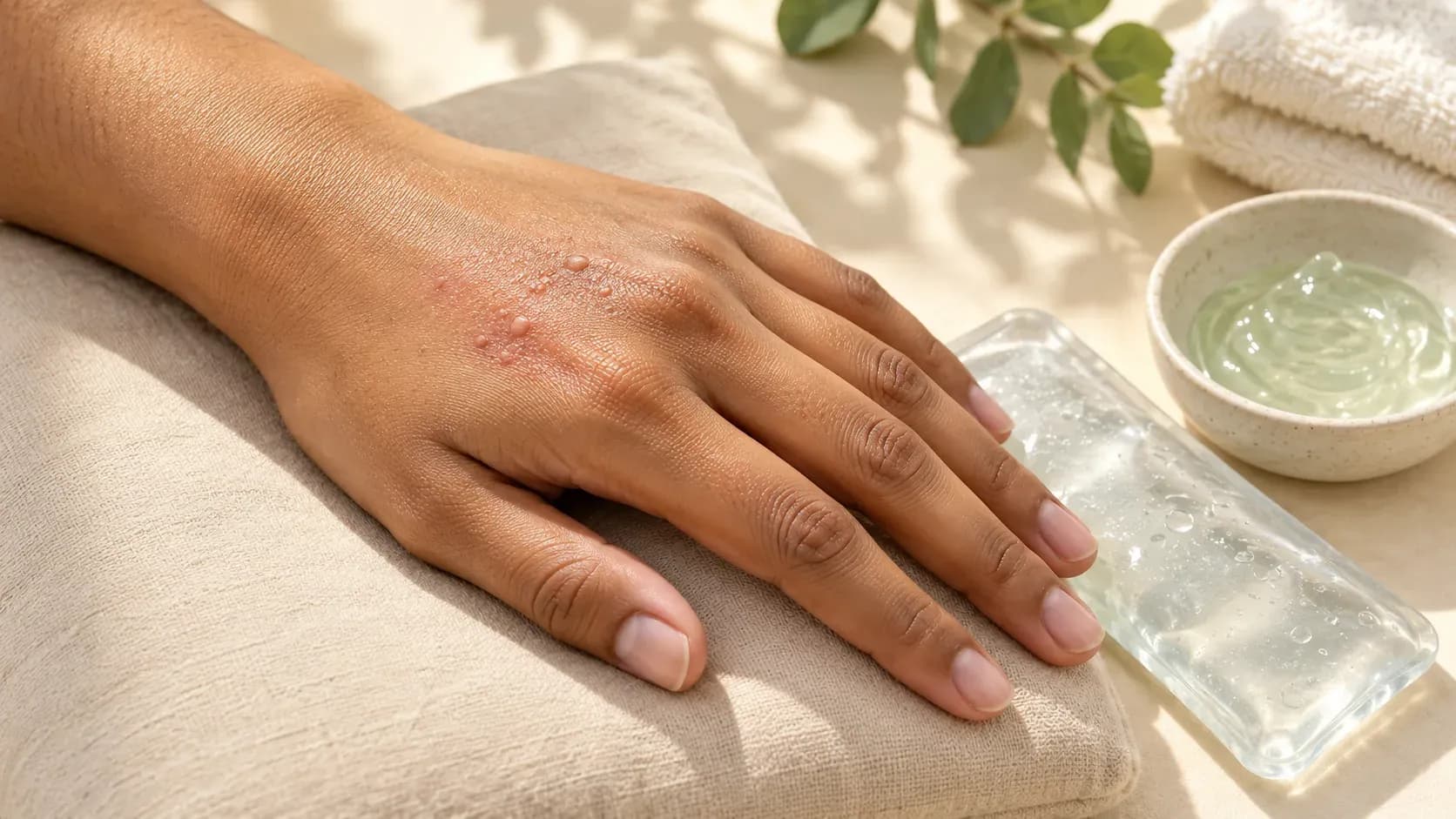
Quick Answer: Small itchy bumps on the back of hands are raised skin lesions on the dorsal surface of one or both hands, caused by at least eight distinct conditions ranging from allergic reactions to parasitic infestations. Most cases are caused by dyshidrotic eczema, contact dermatitis, or insect bites, all manageable at home with the right steps. Treatment depends entirely on which condition is present.
Before reading further:
- See a doctor the same day if bumps are oozing pus, spreading rapidly, or accompanied by fever
- Scabies, severe eczema, and suspected fungal infections require prescription treatment
- Most other causes resolve within 1 to 4 weeks with correct home management
What Are Small Itchy Bumps on the Back of Hands?
Small itchy bumps on the back of hands are raised skin lesions accompanied by itching, appearing on the dorsal (top) surface of one or both hands. They may be fluid-filled (vesicles), solid (papules), or inflamed (pustules), depending on the underlying cause.
These bumps range in size from 1 mm to several centimetres and may appear in clusters or spread across the hand. According to Clear Ritual's dermatology advisory team, the back of the hand is particularly vulnerable to environmental triggers because the skin there is thinner and more exposed than on the palm.
Key characteristics:
- Location: Dorsal surface of the hand, knuckles, or between fingers
- Texture: Fluid-filled, raised, flat, or crusted
- Duration: Days to weeks, depending on cause
- Associated symptoms: Redness, swelling, peeling, or burning sensation
What Are the Main Types of Small Itchy Bumps on the Back of Hands?
The type of bump determines the correct treatment. Clear Ritual's skin health team identifies five primary categories based on clinical presentation.
Dyshidrotic Eczema (Pompholyx) Dyshidrotic eczema produces small, deep-seated fluid-filled blisters on the back of hands and fingers. These blisters cause intense itching and typically resolve within 2 to 4 weeks, but recur in up to 50% of patients. Triggers include stress, moisture, and nickel exposure.
Contact Dermatitis Contact dermatitis appears as red, itchy bumps or blisters caused by direct skin contact with an irritant or allergen. Common triggers include latex gloves, cleaning products, and metal jewellery. Symptoms typically appear within 12 to 72 hours of exposure.
Scabies Scabies mites burrow into the skin and produce small, intensely itchy papules, often appearing in the webbing between fingers and the back of the hand. Scabies is contagious and requires prescription treatment. The itch characteristically worsens at night.
Insect Bites or Stings Insect bites produce localised raised welts or papules with a central puncture point. They typically resolve within 2 to 7 days without treatment. Multiple clustered bites appearing overnight may suggest bed bugs or mites.
Granuloma Annulare Granuloma annulare presents as firm, ring-shaped bumps on the back of the hand, typically without significant itch. It is a benign inflammatory skin condition. Lesions may persist for months to years but often resolve without treatment.
| Condition | Bump Type | Itch Level | Typical Duration |
|---|---|---|---|
| Dyshidrotic Eczema | Fluid-filled vesicles | Severe | 2 to 4 weeks |
| Contact Dermatitis | Red papules / blisters | Moderate to Severe | Days to weeks |
| Scabies | Small papules, burrow marks | Severe (worsens at night) | Weeks if untreated |
| Insect Bites | Raised welts | Mild to Moderate | 2 to 7 days |
| Granuloma Annulare | Firm ring-shaped bumps | Mild or none | Months to years |
Why Do Small Itchy Bumps Appear on the Back of Hands?
Small itchy bumps on the back of hands develop when the skin's immune or barrier response is triggered by internal or external factors. The back of the hand is one of the most exposed areas of the body, making it susceptible to multiple triggers simultaneously.
Common causes include:
- Allergic reactions: The immune system releases histamine in response to allergens like nickel, fragrances, or latex, causing localised bumps and itching
- Skin barrier dysfunction: Conditions like eczema involve a weakened skin barrier, allowing irritants to penetrate and trigger inflammation
- Parasitic infestation: Scabies mites burrow into skin layers, causing an immune reaction that produces bumps
- Stress: Psychological stress is a documented trigger for dyshidrotic eczema, possibly through sweat gland activation
- Nutritional deficiencies: Zinc deficiency is associated with dermatitis-like symptoms in a subset of patients; low vitamin B12 and vitamin D may also increase skin sensitivity
- Infections: Fungal or viral infections , such as hand, foot, and mouth disease , can produce vesicular bumps on the dorsal hand
- Sun exposure: Solar urticaria or polymorphic light eruption can cause itchy bumps on sun-exposed areas including the back of the hand
How Do Small Itchy Bumps on the Back of Hands Develop?
Small itchy bumps on the back of hands develop through a three-stage inflammatory process, regardless of the underlying trigger.
- Trigger exposure: The skin contacts an allergen, irritant, pathogen, or internal stressor such as elevated cortisol during stress
- Immune activation: Immune cells in the skin , primarily mast cells and T-lymphocytes , detect the trigger and release inflammatory mediators including histamine and cytokines
- Visible skin response: Increased blood flow, fluid accumulation, and cellular migration into the skin layer produce the visible bump, redness, and itching sensation
In dyshidrotic eczema specifically, this process occurs in the eccrine sweat gland ducts, which is why blisters are deep-seated and concentrated in areas with high sweat gland density. In contact dermatitis, the inflammatory cascade is triggered at the point of allergen contact, which is why the rash closely maps the exposure area.
Itching occurs because histamine and other mediators directly stimulate sensory nerve fibres in the skin. Scratching temporarily relieves itch by overriding the nerve signal but worsens inflammation and increases infection risk.
Who Is Likely to Get Small Itchy Bumps on the Back of Hands?
Small itchy bumps on the back of hands can affect any person, but certain groups face higher risk.
- People with a history of atopic dermatitis or asthma: Up to 10% of adults with atopic eczema develop dyshidrotic eczema on the hands
- Healthcare workers and cleaners: Frequent hand washing and glove use increase risk of irritant and allergic contact dermatitis
- People with metal allergies: Nickel allergy, present in approximately 8 to 15% of the population, is a leading trigger for hand eczema
- Individuals under chronic stress: Stress-related flares of dyshidrotic eczema are clinically well-documented
- Outdoor workers or gardeners: Regular exposure to plants, soil, insects, and sunlight increases trigger exposure
- Children under 5: Hand, foot, and mouth disease , a viral cause of vesicular hand bumps , primarily affects this age group
What Are the Eight Most Common Causes of Itchy Bumps on the Back of Hands?
Clear Ritual's skin health team identifies eight causes that account for the vast majority of cases of small itchy bumps on the back of hands.
1. Dyshidrotic Eczema (Pompholyx) Dyshidrotic eczema is the most common cause of fluid-filled itchy bumps on the back of hands in adults. Stress, sweat, and metal exposure trigger the eccrine sweat gland ducts to become inflamed, producing deep-seated blisters that itch intensely. Flares typically last 2 to 4 weeks and recur in up to 50% of patients.
2. Irritant Contact Dermatitis Repeated exposure to soap, detergent, or cleaning chemicals strips the skin's protective lipid barrier. Once the barrier is broken, even mild irritants penetrate and trigger localised redness and papules. This is the leading cause of hand bumps in healthcare workers and domestic cleaners.
3. Allergic Contact Dermatitis Nickel allergy affects 8 to 15% of the general population and is a primary driver of bumps appearing where jewellery or metal surfaces contact the back of the hand. The immune system releases histamine within 12 to 72 hours of allergen contact, producing red papules and blisters at the exact point of exposure.
4. Scabies The mite Sarcoptes scabiei burrows into the skin's upper layers and lays eggs, triggering an immune response that produces intensely itchy papules. The itch worsens at night because mites are more active in warmth. Scabies is highly contagious and spreads through prolonged skin-to-skin contact.
5. Insect Bites or Stings A single bite from a mosquito, mite, or flea results in localised histamine release at the puncture site, producing a raised welt within minutes. Multiple clustered bites appearing overnight suggest bed bugs or bird mites.
6. Granuloma Annulare Granuloma annulare is a benign inflammatory condition where immune cells cluster in the dermis, forming firm ring-shaped bumps on the back of the hand. Associations with diabetes and thyroid disease have been documented. Lesions are usually not itchy and may persist for months to years.
7. Fungal Infection (Tinea Manuum) Dermatophyte fungi cause scaling, redness, and small vesicular bumps on the dorsal hand, often starting on one hand only. Because the presentation overlaps with eczema, tinea manuum is frequently misdiagnosed. Antifungal treatment , not steroids , is required.
8. Nutritional Deficiency Zinc deficiency impairs keratinocyte function and increases pro-inflammatory cytokine activity, producing clinical findings consistent with dermatitis. Low vitamin B12 and vitamin D are also linked to increased skin sensitivity and barrier dysfunction. These causes are less common but important to consider when bumps persist despite standard treatment.
How to Tell Which Type of Bump You Have
Use these three questions to narrow down the likely cause of small itchy bumps on the back of hands before starting treatment.
Question 1: Are the bumps fluid-filled or solid?
- Fluid-filled blisters you can see through: likely dyshidrotic eczema or viral infection
- Solid, raised papules: likely contact dermatitis, scabies, or insect bites
- Firm, ring-shaped, skin-coloured bumps: likely granuloma annulare
Question 2: Where exactly on the hand do they appear?
- Between fingers and wrist: strong indicator of scabies
- Directly over a ring or watch strap: contact dermatitis from metal (nickel allergy)
- Across knuckles and back of hand in clusters: dyshidrotic eczema or contact dermatitis
- Random single bumps with a central dot: insect bites
Question 3: Does the itch follow a pattern?
- Worse at night, with other household members also itching: scabies , seek medical evaluation promptly
- Triggered after using a specific product or wearing gloves: contact dermatitis
- Comes and goes with stress or sweaty weather: dyshidrotic eczema
- No itch or very mild itch: granuloma annulare
Important: Self-identification guides provide direction, not diagnosis. If you are unsure after working through these questions, a dermatologist can confirm the cause with a patch test or skin scraping , typically within one appointment.
How to Treat Small Itchy Bumps on the Back of Hands: Step-by-Step Guide
Treatment for small itchy bumps on the back of hands depends on the diagnosed cause. The following steps apply to most common cases and are aligned with standard dermatological guidance.
Identify and remove the trigger. Stop using any new skin products, jewellery, or cleaning agents introduced before the bumps appeared. This step alone resolves contact dermatitis in many cases within 1 to 2 weeks.
Apply a topical corticosteroid. Mild-to-moderate cases of eczema and contact dermatitis typically respond to over-the-counter hydrocortisone 1% applied twice daily. For more severe cases, a doctor may prescribe a stronger corticosteroid cream.
Use a barrier repair moisturiser. Apply a fragrance-free, ceramide-based moisturiser at least twice daily to support skin barrier function. According to Clear Ritual's skin health advisory, consistent moisturising is one of the most evidence-supported steps in managing hand eczema , a 2022 randomised controlled trial found it reduced hand eczema severity scores by 42% over 12 weeks.
Take an oral antihistamine if needed. For significant itch, a non-sedating antihistamine such as cetirizine or loratadine can reduce histamine-driven symptoms. These are available over the counter.
Avoid scratching and protect the skin. Wear cotton gloves when sleeping to prevent overnight scratching. Use waterproof gloves for wet work , washing dishes, cleaning , to prevent further irritant exposure.
Seek medical evaluation if bumps persist beyond 2 weeks. If bumps do not improve, spread, become infected (yellow discharge, increasing warmth, pain), or recur frequently, consult a dermatologist. Scabies requires prescription permethrin cream; granuloma annulare may need steroid injections.
Common mistakes to avoid:
- Using heavily fragranced hand creams, which can worsen allergic reactions
- Applying topical steroids for more than 7 to 14 days without medical supervision
- Assuming all hand bumps are eczema , scabies requires a completely different treatment
- Ignoring systemic symptoms such as fever or a rapidly spreading rash
OTC vs. Prescription Treatment: What Works and What to Buy
Treatment for small itchy bumps on the back of hands falls into three tiers. Knowing which tier fits your situation saves time and money.
| Treatment Option | What It Treats | Available Without Prescription? |
|---|---|---|
| Fragrance-free ceramide moisturiser | All types , barrier repair | Yes |
| Hydrocortisone 1% cream | Mild eczema, contact dermatitis | Yes (pharmacist) |
| Non-sedating antihistamine (cetirizine / loratadine) | Itch relief for all types | Yes |
| Ketoconazole antifungal cream | Tinea manuum (fungal infection) | Yes (some markets) |
| Prescription corticosteroid (betamethasone) | Moderate-to-severe eczema | No , dermatologist required |
| Permethrin 5% cream | Scabies | No , prescription only |
| Patch testing | Identifying allergen in contact dermatitis | No , dermatologist clinic |
| Steroid injection (triamcinolone) | Granuloma annulare, severe eczema | No , dermatologist required |
When OTC treatment is enough: If bumps appeared after a clear trigger , a new product, jewellery contact, or insect bite , removing the trigger and using a ceramide moisturiser plus hydrocortisone 1% twice daily is usually sufficient. Most mild cases resolve within 1 to 2 weeks.
When to invest in a dermatologist: If bumps recur more than three times a year, if you cannot identify the trigger, or if OTC treatment provides no improvement after two weeks, a dermatologist visit is cost-effective in the long run. Patch testing identifies the specific allergen and can eliminate months of unnecessary product switching.
What not to buy: Heavily fragranced hand creams marketed as "soothing" or "healing" often contain allergens that worsen contact dermatitis. Any moisturiser should be labelled fragrance-free and hypoallergenic.
What to Expect: Treatment Timeline for Small Itchy Bumps on the Back of Hands
Recovery time for small itchy bumps on the back of hands varies by cause and treatment adherence.
| Timeframe | What Typically Happens |
|---|---|
| Days 1 to 3 | Itch may reduce with antihistamines; avoid further trigger exposure |
| Week 1 | Redness begins to fade with consistent topical treatment and moisturising |
| Week 2 | Mild eczema, contact dermatitis, and insect bites should show clear improvement; seek medical evaluation if symptoms remain unchanged |
| Weeks 3 to 4 | Dyshidrotic eczema blisters may dry, peel, and resolve when the trigger is controlled |
| Beyond 4 weeks | Persistent or recurring bumps require professional assessment to confirm the diagnosis and rule out infection |
Understand Your Skin Concerns
Take the free skin test to assess sensitivity, dryness, irritation, breakouts, and other concerns, then get a routine suited to your skin.
Take the Free Skin Test
Frequently Asked Questions
Q: What causes small itchy bumps on the back of hands?
A: Common causes include dyshidrotic eczema, contact dermatitis, scabies, insect bites, fungal infection, granuloma annulare, and certain nutritional deficiencies.
Q: Why do itchy hand bumps get worse at night?
A: Intense itching that worsens at night can occur with scabies. Seek medical evaluation, especially if other household members are also itching.
Q: Can contact dermatitis cause bumps on the hands?
A: Yes. Irritants or allergens such as soaps, cleaning products, latex, fragrances, or nickel can cause red, itchy bumps or blisters after exposure.
Q: How long do small itchy bumps on hands last?
A: Insect bites may resolve within days, while eczema or contact dermatitis may take one to four weeks. Persistent or recurring bumps need professional assessment.
Q: When should I see a dermatologist?
A: Seek medical care if bumps spread rapidly, ooze pus, occur with fever, persist beyond two weeks, repeatedly return, or cause severe night-time itching.
Disclaimer: This article is for general educational purposes and is not a substitute for personalised medical advice. Consult a qualified dermatologist for persistent, spreading, painful, infected, or recurring skin symptoms.
Editorial Standards
Clear Ritual has Strict sourcing guidelines to ensure our content is accurate and current. We rely on peer-reviewed studies, academic research institutions, and medical associations. We strive to use primary sources and refrain from using tertiary references. See a mistake? Learn More about our Editorial Standards.