Pimple on Forehead: Causes, Types, and How to Clear It

Forehead pimples form when excess oil, dead skin cells, and bacteria block follicles in the oil-rich T-zone. Hair products, sweat, friction, hormonal changes, stress, and over-washing are common triggers. Surface pimples may clear within 3 to 7 days, while deeper nodules can take 3 to 6 weeks and may require professional care.
A pimple on your forehead forms when a hair follicle in your skin's oiliest zone becomes blocked with excess sebum, dead skin cells, and bacteria, and your immune system responds with inflammation. That is the complete biological explanation. It is local, not systemic.
The forehead breaks out more than your cheeks or temples because it sits in the T-zone, where sebaceous gland density is among the highest on the face, and where hair products, sweat, hats, and forehead-touching make constant contact. Most surface-level forehead pimples clear in 3–7 days with the right routine. Deeper nodules can take 3–6 weeks and may need professional care.
What a Pimple on Your Forehead Actually Means
A pimple on your forehead means a hair follicle has become blocked with excess sebum, dead skin cells, and Cutibacterium acnes bacteria, and your immune system has responded with localised inflammation. That inflammation is the redness, swelling, and sometimes pain you see and feel.
The biological meaning is local, not systemic. Your forehead is not sending a signal about your liver, gut, or stress levels in any organ-specific sense. It is indicating that a pore in one of your face's oiliest zones got clogged.
One exception worth knowing: if forehead pimples are persistent, cyclical, or suddenly worsening in adulthood, they can be an indirect signal of a systemic issue, most commonly a hormonal shift (elevated androgens or cortisol) or a nutritional deficiency. But these are downstream effects on sebum production, not organ-specific signalling.
Key facts upfront:
- A forehead pimple = a clogged, inflamed follicle in a high-sebum zone, not an organ signal
- The most controllable triggers are hair products, sweat, and over-washing
- Surface whiteheads and blackheads typically clear in 3–7 days with a consistent routine
- Deeper nodules can take 3–6 weeks and may require professional care
- If breakouts are cyclical or sudden in adulthood, a hormonal trigger is likely
Does the Location of a Forehead Pimple Mean Anything?
The location of a forehead pimple can indicate its most likely trigger, which helps you identify what to change first.
Face mapping, the traditional idea from Chinese medicine and Ayurveda that forehead breakouts signal digestive or bladder dysfunction, is not supported by clinical dermatology research. A 2020 review in the Journal of the American Academy of Dermatology found no reproducible anatomical connection between acne zone patterns and specific internal organ dysfunction. The forehead breaks out more because of sebaceous gland density and environmental contact, not organ correspondence.
That said, where on the forehead your pimples cluster does carry useful information:
| Where on the Forehead | Most Likely Driver | Most Common In |
|---|---|---|
| Along the hairline | Hair products (pomade acne) | Anyone using styling products |
| Across the full forehead | Excess sebum and sweat | Teens, high-stress adults, humid climates |
| Between the eyebrows | Friction from glasses or touching | Eyeglass wearers, frequent face-touchers |
| Temples | Sweat and hat friction | Athletes, outdoor workers |
| Cyclical (appears monthly) | Hormonal androgens | Women in the week before menstruation |
If breakouts are concentrated exclusively at your hairline, hair product ingredients are the most likely explanation. If pimples appear on your chin and jawline simultaneously with your forehead, hormonal acne is more likely driving both zones and a dermatologist evaluation is worth prioritising.
What Happens Beneath the Skin When a Forehead Pimple Forms
A forehead pimple begins with overproduction of sebum inside a hair follicle, followed by bacterial colonisation and immune response, a three-stage process that takes days to weeks before becoming visible.
Stage 1, Follicle blockage: The forehead sits in the T-zone, where sebaceous glands are densely concentrated. When these glands overproduce oil in response to hormonal signals, stress, or external triggers, excess sebum mixes with dead skin cells that have not shed properly. This combination forms a plug inside the hair follicle.
Stage 2, Bacterial colonisation: Once the follicle is blocked, the airless environment becomes ideal for Cutibacterium acnes bacteria to multiply. These bacteria feed on sebum and release inflammatory substances that alert the immune system.
Stage 3, Inflammation: White blood cells rush to the site, causing redness, swelling, and sometimes pus formation. What began as a microscopic blockage becomes a visible, often painful pimple.
The forehead compounds this process because hair touching the area transfers styling products, scalp oils, and environmental pollutants directly onto skin. Sweat during physical activity increases moisture and warmth inside follicles, pushing bacteria deeper into partially blocked pores. Pressing your forehead against a pillowcase accumulates oils, bacteria, and product residue night after night, even a clean pillowcase begins collecting skin cells and sebum within days.
What Causes Pimples on Your Forehead?
Forehead pimples have one underlying mechanism, a blocked, inflamed follicle, but several distinct triggers that determine why your follicles are getting blocked in the first place. Identifying your trigger category is the difference between managing breakouts indefinitely and stopping them.
The six most common causes, ranked by frequency:
Hair products (pomade acne), Conditioners, leave-in treatments, dry shampoos, and hair oils contain ingredients that become comedogenic when they migrate from your scalp to your forehead via sweat or contact. This is the most underdiagnosed cause of persistent forehead breakouts along the hairline.
Excess sebum driven by hormones, Androgens (testosterone and its derivatives, including DHT) signal sebaceous glands to produce more oil. Forehead acne peaks during puberty, in the week before menstruation, and during high-stress periods when cortisol elevates androgen activity.
Sweat and friction (acne mechanica), Physical activity increases sweating, creating moisture and warmth inside follicles. Hats, helmets, and headbands add pressure that pushes bacteria deeper into partially blocked pores.
Dead skin cell build-up, Skin cells shed continuously. When shedding is uneven, common in dry weather or with dehydrated skin, cells accumulate inside follicles faster than they can exit. High-glycemic foods accelerate this by increasing androgen activity and altering skin cell turnover.
Skin barrier disruption, Washing more than twice daily or using harsh, high-pH cleansers strips the lipid barrier. Your skin responds by producing more sebum to compensate, worsening the oiliness and creating a rebound loop.
Sleep deprivation and acne, Poor sleep and stress elevate cortisol, which stimulates sebaceous gland activity and weakens the skin barrier. A 2017 study in Clinical, Cosmetic and Investigational Dermatology confirmed that acne severity scores correlated significantly with self-reported stress levels, independent of hormonal fluctuations from the menstrual cycle.
Find your most likely trigger by pattern:
| Your Pattern | Most Likely Cause | First Change to Make |
|---|---|---|
| Breakouts clustered at hairline | Hair products (pomade acne) | Audit ingredient list of all hair products |
| Appears the week before your period | Hormonal androgens | Track cycle; discuss with dermatologist |
| Worsens after workouts | Sweat and friction (acne mechanica) | Wash face within 30 minutes of exercise |
| Flares during exams or deadlines | Cortisol and stress | Stress management and sleep hygiene |
| Better when eating clean, worse with takeaway | Dietary glycemic load | Reduce high-GI foods for 4 weeks and track |
| Unchanged despite skincare improvements | Pillowcase or touching habit | Change pillowcase every 2–3 days; hands off forehead |
How Is the Forehead Different from Other Breakout Zones?
The forehead behaves differently from the cheeks, chin, and jawline, and those differences affect how you should treat it.
The forehead combines very high sebaceous gland density (similar to the nose) with very high environmental contact (unlike the nose). This means forehead acne often responds faster to external trigger management, reducing hair product migration, changing pillowcases, keeping hands away, than chin or jaw acne, which is more deeply hormonal.
| Zone | Primary Driver | Oil Gland Density | Most Common Trigger | Best First Response |
|---|---|---|---|---|
| Forehead | Excess sebum and external contact | Very high (T-zone) | Hair products, sweat, hats | BHA (salicylic acid), gentle cleansing |
| Nose | Sebum and enlarged pores | Highest on face | Blackheads, sun damage | BHA, pore-minimising retinoids |
| Chin and jaw | Hormonal androgens | Moderate | Hormonal cycles, stress | Hormonal evaluation, topical retinoids |
| Cheeks | Environmental and dietary | Lower | Pollution, dairy, phone contact | Antioxidants, dietary changes |
| Back and shoulders | Sweat and friction | High (body) | Workout gear, heat | Salicylic acid body wash, breathable fabrics |
According to Clear Ritual's skincare team, treating forehead acne with the same approach used for chin or jaw acne is one of the most common reasons routines fail to produce results, each zone requires a trigger-specific first response.
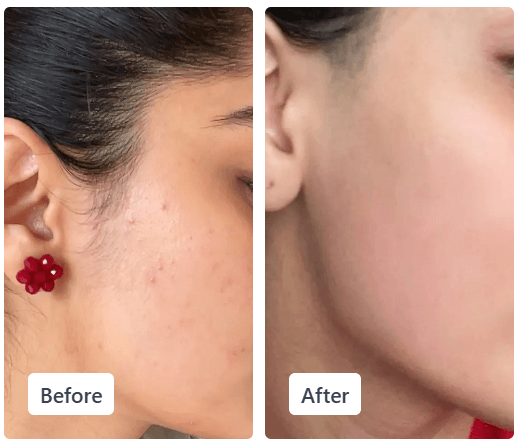
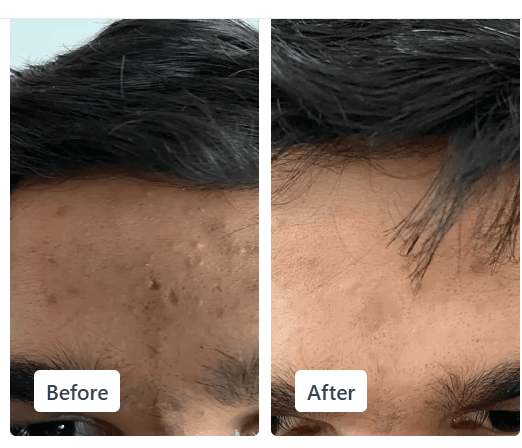
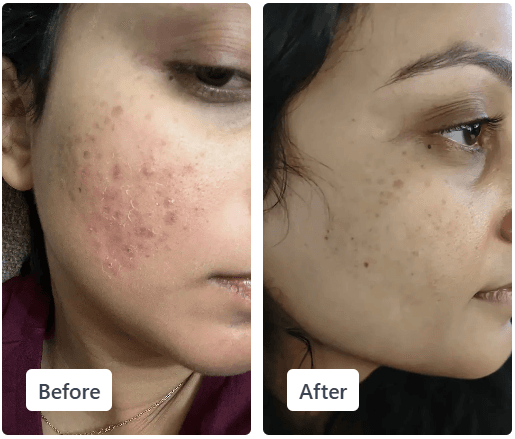
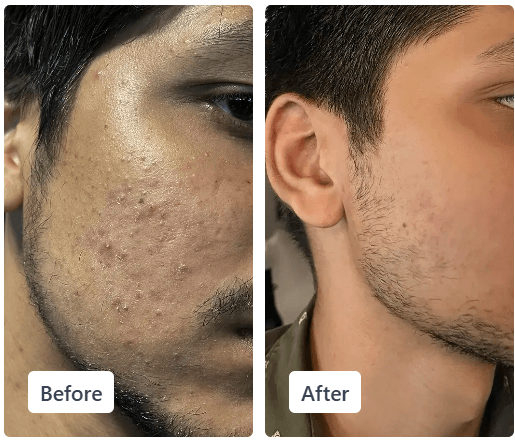
Find what is triggering your forehead pimples
Take the free Clear Ritual Skin Test to understand your breakout pattern, identify likely triggers, and receive a personalised skincare routine.
What Are the Different Types of Forehead Pimples?
Different types of pimples on the forehead form through different mechanisms, which means they require different treatment approaches.
| Pimple Type | Appearance | What Is Happening | Pain Level |
|---|---|---|---|
| Whitehead | Small white or flesh-coloured bump | Closed comedone with trapped sebum and cells | Minimal |
| Blackhead | Dark spot at pore opening | Open comedone where trapped material oxidises | None |
| Papule | Red, raised bump without white centre | Inflammation without pus formation | Moderate |
| Pustule | Red bump with white or yellow centre | Pus-filled lesion with active infection | Moderate to high |
| Nodule | Large, hard bump deep under skin | Severe inflammation in deeper skin layers | Severe |
| Cyst | Large, soft, pus-filled lump | Deep infection with significant tissue damage | Severe |
Surface-level whiteheads and blackheads often respond to consistent gentle care and topical salicylic acid. Deeper nodules and cysts involve inflammation beyond the reach of surface treatments and typically require professional intervention to prevent scarring. Clear Ritual's skin assessment framework specifically distinguishes between comedonal and inflammatory forehead acne, because the treatment path differs significantly.

How to Get Rid of Forehead Pimples: A Step-by-Step Routine
Most forehead acne clears with a consistent 4-step routine applied for at least 6–8 weeks. Skin cells turn over roughly every 28 days, which means results take time, but the steps are straightforward.
Step 1: Cleanse twice daily with a pH-balanced, non-stripping formula (morning and night)
Use lukewarm water, not hot. Hot water disrupts the lipid barrier, causing the skin to overproduce oil as compensation. Look for a cleanser with a pH between 4.5 and 5.5, which matches your skin's natural acidity. Pat dry, never rub. Over-washing is one of the most common triggers of rebound oiliness on the forehead.
Step 2: Apply a salicylic acid toner or serum to the forehead (evenings, 3–4 times per week to start)
Salicylic acid (BHA, beta-hydroxy acid) is oil-soluble, meaning it penetrates inside the follicle rather than working only on the surface. Concentrations of 0.5–2% are effective for forehead acne. A 2013 study in the Journal of Clinical and Aesthetic Dermatology found that 2% salicylic acid reduced comedone count by approximately 25% over 4 weeks. Start 3 nights a week and increase only if your skin tolerates it without dryness.
Step 3: Spot-treat active pimples with 2.5% benzoyl peroxide (targeted use only)
Benzoyl peroxide kills Cutibacterium acnes by releasing oxygen into the follicle, an environment the bacteria cannot survive in. Studies consistently show 2.5% performs as well as 5% or 10% with significantly less irritation. Apply only to visible spots, not the entire forehead, to avoid unnecessary barrier disruption.
Step 4: Moisturise every morning, even if your skin feels oily
This is the step most people skip, and skipping it is counterproductive. Oily forehead skin is often dehydrated beneath the surface, meaning the skin overproduces oil to compensate for moisture loss. A lightweight, non-comedogenic moisturiser with ceramides and niacinamide supports barrier repair without clogging pores.
Supplementary habit changes with high impact:
- Keep hair away from your forehead, especially during sleep and exercise
- Change pillowcases every 2–3 days
- Never pick or squeeze forehead pimples, this forces infected material deeper and significantly increases scarring risk
- Wash your face within 30 minutes of finishing exercise
Which Ingredients Actually Work for Forehead Acne?
The three most evidence-backed actives for forehead acne work through different mechanisms. Understanding salicylic acid vs. benzoyl peroxide can help you select the right option for your pimple type and routine.
| Salicylic Acid (BHA) | Benzoyl Peroxide | Retinoids | |
|---|---|---|---|
| How it works | Oil-soluble; dissolves the plug inside the follicle | Kills C. acnes bacteria by releasing oxygen | Speeds cell turnover; prevents pores from blocking |
| Best for | Blackheads, whiteheads, oily foreheads | Red papules, pustules with active infection | Persistent or recurring acne (long-term prevention) |
| Start with | 1–2% serum, every other night | 2.5% spot treatment only | Prescription strength, start very low |
| Timeline | Visible results in 3–4 weeks | Bacterial reduction within 48–72 hours | 8–12 weeks for meaningful improvement |
| Key risk | Dryness if overused | Bleaches fabric; can over-dry | Initial purging; sun sensitivity |
| Available OTC? | Yes | Yes | No (prescription in most countries) |
Additional ingredients that support forehead acne management:
- Niacinamide (5–10%), Reduces sebum production, calms redness, suitable for all forehead acne types
- Azelaic acid (10–15%), Anti-inflammatory, reduces post-acne hyperpigmentation, gentle enough for sensitive skin
What not to mix on the same night: Using salicylic acid, benzoyl peroxide, and a retinoid together is the fastest route to a damaged, irritated barrier. The sequence that works:
- Morning: Gentle cleanser → niacinamide moisturiser → SPF 30+
- Mon/Wed/Fri evening: Gentle cleanser → salicylic acid → moisturiser
- Tue/Thu/Sat evening: Gentle cleanser → benzoyl peroxide (spots only) → moisturiser
- Sun evening (if using retinoid): Gentle cleanser → retinoid (prescription) → moisturiser
What Ingredients Should You Look For, and Avoid, in Hair Products?
Hair products are the most underdiagnosed cause of persistent forehead acne, particularly along the hairline. The mechanism, called pomade acne, was first described clinically in 1970 and has been replicated in subsequent studies.
Comedogenic ingredients in hair products migrate from your scalp to your forehead through sweat or direct contact, coating pores and trapping debris inside. The fix is auditing your product ingredient lists, not eliminating hair products entirely.
| Avoid (High Comedogenicity) | Generally Safe |
|---|---|
| Coconut oil | Argan oil |
| Isopropyl myristate | Jojoba oil |
| Heavy petrolatum | Water-based gels |
| Lanolin | Silicone-free formulas |
| Sodium lauryl sulphate (SLS) | Dimethicone (low comedogenicity) |
According to Clear Ritual's formulation guidance, swapping to non-comedogenic styling products often produces a noticeable reduction in hairline breakouts within 4–6 weeks, making it one of the highest-impact, lowest-effort changes for forehead-specific acne.
Frequently Asked Questions
Why am I getting pimples on my forehead?
Forehead pimples commonly develop because of excess sebum, blocked follicles, hair products, sweat, friction, hormonal changes, stress, or an irritated skin barrier.
How long does a forehead pimple take to heal?
Surface whiteheads, blackheads, papules, and pustules may improve within 3 to 7 days. Deep nodules and cysts can take 3 to 6 weeks and may need professional care.
Can hair products cause forehead pimples?
Yes. Oils, conditioners, styling products, and dry shampoos can migrate onto the forehead and block pores, particularly along the hairline.
Which ingredient is best for forehead pimples?
Salicylic acid can help clear blackheads and whiteheads, while benzoyl peroxide is more suitable for inflamed pimples. Persistent acne may require a dermatologist-recommended retinoid.
When should I consult a dermatologist?
Consult a dermatologist when forehead acne is painful, deep, recurring, leaving scars, or not improving after 6 to 8 weeks of consistent skincare.
Editorial Standards
Clear Ritual has Strict sourcing guidelines to ensure our content is accurate and current. We rely on peer-reviewed studies, academic research institutions, and medical associations. We strive to use primary sources and refrain from using tertiary references. See a mistake? Learn More about our Editorial Standards.
Related Articles
Milia: Causes, Symptoms, and Treatments
Published 20 July 2026
Dry skin acne: why dehydration can still cause breakouts
Published 20 July 2026
Skin Barrier Damage and Acne: Causes, Signs, and How to Repair It
Published 12 October 2026
Small Bumps on Your Face That Are Not Acne: Causes, Types & Treatments
Published 12 October 2026