Understanding Male Acne: Causes, Triggers, and Treatment Options

Quick Answer: Male acne is mainly caused by high levels of androgen hormones, such as testosterone, which increase skin oil (sebum) production; along with dead skin cells and bacteria, this can clog pores. Factors such as genetics, facial hair, sweating, aggressive shaving, medications, and skincare products can also trigger or worsen acne in males. Depending on the type and severity of acne, the treatment options available for male acne include over-the-counter products for mild acne, prescription medicines, and clinical treatments.
What Is Male Acne?
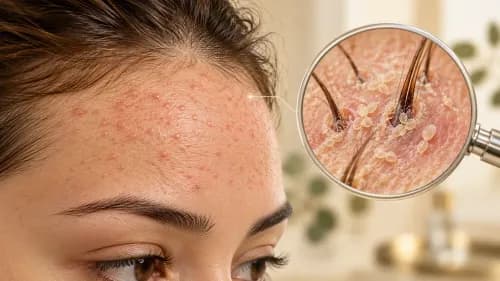
Male acne refers to acne that develops in men, often on areas such as the face, jawline, chest, back, and shoulders. While the basic acne process is similar in everyone, androgen activity in men can make their skin produce more sebum (oil), which may increase the likelihood of clogged pores and inflammation.
However, this doesn’t mean that testosterone is the cause of every acne breakout in males. Acne usually develops through a combination of factors. The reasons for which your skin keeps breaking out may not be the same as someone else’s.
What Causes Male Acne?
Male acne can develop when excess sebum, dead skin cells, and other debris build up inside hair follicles, creating conditions that can lead to inflammation and breakouts.
Several factors can contribute to sebum production, pore blockage, and the skin’s inflammatory response in men, such as:
- Hormones
Androgens, including testosterone, can stimulate the sebaceous glands and increase sebum production. When there is more oil on the skin, it can combine with dead skin cells and lead to blocked follicles and acne.
Since androgens are naturally high in men, the increased sebum production can make them prone to acne.
- Genetics
If acne runs in your family, chances are that you may be prone to it, too. Your genes can influence factors such as sebum production, how your skin responds to hormones, and how strongly it reacts to inflammation.
- Facial hair
Your beard itself does not cause acne, but facial hair can make it easier for oil, sweat, dead skin cells, and product residue to remain close to the skin. This can contribute to clogged follicles, making facial hair a possible contributing factor to male acne.
What Are the Triggers That Cause or Worsen Acne in Men?
Shaving, pollution, certain medicines, pore-blocking (comedogenic) products, friction, inadequate skin care, and dietary patterns can all trigger acne in males.
Paying attention to what happens before a flare-up can help you identify which of the following factors may be affecting your skin:
- Rough shaving techniques
Shaving can irritate the skin, especially when the technique is aggressive or the razor is blunt. Running the blade over the same area repeatedly can also cause irritation.
This irritation can aggravate the already inflamed skin and may also contribute to ingrown hairs and acne.
Rushing through a shave can also contribute to breakouts, since it pushes dead skin cells, excess oil, and bacteria into freshly shaved skin, making it easier for follicles to become clogged and breakouts to appear.
The products used before and after shaving matter too. Harsh cleansers or alcohol-heavy aftershaves can leave the skin dry, which triggers more sebum production, which can then lead to more acne.
However, not every shaving-related bump is acne. Repeated shaving, particularly close shaving, can cause pseudofolliculitis barbae, a condition in which shaved hairs grow back into the skin and cause small, inflamed bumps that can look similar to acne.
Bacterial folliculitis can also cause acne-like bumps. These conditions may need different management from acne, so identifying the cause matters before using acne treatments.
- Trapped sweat
Sweat can become a problem when it stays trapped against your skin, particularly on the chest, back, and shoulders. This usually happens after exercise or when you wear tight or non-breathable clothing for long periods.
- Environmental irritants
Your surroundings can affect your skin too. Research suggests that exposure to air pollutants may contribute to oxidative stress and inflammation in the skin, which can aggravate acne in susceptible individuals.
- Medications
Certain medications can trigger or worsen acne, including corticosteroids, lithium citrate, and lithium carbonate.
Research has also found that men taking lithium medications may be more susceptible to developing drug-induced acne.
As per medical experts, anabolic steroids, which are sometimes used to increase muscle mass and performance, can also cause acne to flare or become more persistent.
However, if you notice new or worsening acne after starting a medicine, do not stop taking it on your own. Speak with your doctor to determine whether the medication could be contributing to the changes in your skin.
- Oily or pore-blocking skincare products
The products you use on your hair, beard, and skin can sometimes end up contributing to breakouts. Heavy oils, waxes, and other occlusive ingredients may block hair follicles, particularly when they regularly come into contact with acne-prone skin.
This type of product-related acne is often referred to as acne cosmetica.
- Friction
Repeated rubbing or pressure can also irritate acne-prone skin and contribute to breakouts. Helmet straps, phone screens, backpacks, and tight clothing can create this kind of friction that can trigger male acne.
Even aggressively wiping your face with a towel or handkerchief can act as an acne trigger.
This form of acne, which breaks out because of friction, is known as acne mechanica
- Inadequate skin care
When sweat, oil, product residue, and dead skin cells remain on the skin, they can contribute to clogged follicles. But that doesn’t mean your skin needs aggressive scrubbing or frequent washing.
A simple routine with a gentle cleanser, appropriate acne treatment, moisturiser, and sunscreen can help support your skin without adding unnecessary irritation.
- Diet
Diet may also play a role in acne for some people. Research has found an association between high-glycemic diets and acne, possibly because foods that cause rapid increases in blood sugar can trigger inflammation.
This does not mean that one particular food is responsible for your breakouts. Your overall dietary pattern matters more than blaming a single ingredient.
Where Does Male Acne Commonly Appear?
Male acne can affect several areas of the body, and the triggers may differ depending on where the breakouts appear. Your face and jawline may be more affected by sebum, hormones, and grooming habits, while sweat and friction can be particularly relevant to body acne.
Here’s a breakdown of some of the most common areas of male acne and their underlying causes and contributing factors:
| Acne-Prone Area in Males | Common Acne Triggers/Causes |
|---|---|
| Nose and forehead | High sebum production, hormones |
| Cheeks | Oily or comedogenic skincare products, friction |
| Jawline | Hormonal activity, rough shaving, friction |
| Chest, back, and shoulders | Trapped sweat, friction |
Not every bump on the chest, back, or shoulders is necessarily acne. Fungal acne, also called Malassezia folliculitis, can look similar and is common in areas where sweat tends to collect.
If your breakouts don’t improve with your usual acne routine, a dermatologist can help determine whether folliculitis may be the cause.
How Does Male Acne Differ From Female Acne?
The underlying acne process is similar in men and women, but the hormonal factors that contribute to breakouts can differ. Men may experience acne linked to androgen activity, while hormonal fluctuations and conditions such as PCOS can contribute to acne in women.
That said, these are not hard-and-fast categories. Acne is individual, and several factors can overlap:
| Type of Acne | Common Hormonal Contributors |
|---|---|
| Male Acne | Androgen activity, including testosterone |
| Female Acne | Hormonal fluctuations, including those associated with the menstrual cycle and PCOS |
How Can You Treat Male Acne?
Treating male acne starts with identifying what type of acne you have, where it appears, how severe it is, and what may be contributing to it. Mild breakouts may respond to over-the-counter ingredients, while persistent, painful, or severe acne may need prescription treatment.
Your treatment may also need to change over time as your skin and acne change.
Over-the-Counter Products
Over-the-counter products, including cleansers, face wash, and creams, can be useful for mild male acne, particularly when you choose ingredients that target clogged pores, excess oil, inflammation, or acne-causing bacteria.
The key is knowing which ingredients to look for on the label. To address mild male acne, you can consider skincare products with the following ingredients:
- Salicylic acid: Helps exfoliate inside the pores and remove excess oil and dead skin cells.
- Benzoyl peroxide: Helps reduce acne-causing bacteria and inflammation.
- Adapalene: A topical retinoid that helps prevent clogged pores and can reduce new breakouts.
- Azelaic acid: Can help with acne and post-inflammatory discoloration.
- Glycolic acid and lactic acid: Alpha hydroxy acids (AHAs) that exfoliate the skin and can improve texture.
Start with one or two appropriate ingredients rather than introducing several strong products at once, and patch test each new product on a small area of skin first. If your skin becomes very dry, irritated, or painful, reduce use and speak with a dermatologist.
Prescription Treatments
Prescription treatment may be needed for male acne that is moderate to severe, persistent, painful, or not responding to over-the-counter products.
Your dermatologist may prescribe the following treatments or a combination of them, depending on the type and severity of your acne:
- Topical retinoids: Prescription retinoids such as tretinoin and tazarotene to prevent clogged pores.
- Oral retinoids: Isotretinoin may be prescribed for severe acne or acne that has not responded adequately to other treatments.
- Azelaic acid and salicylic acid: Prescription-strength formulations may be used in selected cases.
- Topical antibiotics: Medicines such as clindamycin may be prescribed, often alongside benzoyl peroxide to help reduce the risk of antibiotic resistance.
- Oral antibiotics: For moderate to severe inflammatory acne, a dermatologist may prescribe antibiotics such as tetracyclines.
- Topical anti-androgens: These medications can help in controlling the activity of androgens and may be suggested as a treatment for hormonal acne in men.
Research suggests that clascoterone, a topical androgen receptor inhibitor, can be a safe and effective treatment option for acne in males and females, with limited systemic hormonal effects.
Do not start or stop prescription acne medicines on your own. Consult your dermatologist regarding any prescription treatments and their dosage. Seek prompt medical attention if any treatment shows side effects.
Clinical Treatment for Male Acne
Some clinical procedures may help when topical or oral medicines alone do not provide adequate results.
Depending on the severity of acne, a dermatologist may recommend one of the following clinical procedures:
- Light therapy: Specific wavelengths of light are directed at the skin to target acne-related processes.
- Chemical peels: Superficial chemical peels using ingredients such as salicylic or glycolic acid are used to treat mild acne.
- Steroid injections: A dermatologist may inject a corticosteroid directly into a large, painful acne nodule or cyst to reduce inflammation and pain more quickly.
These treatments are selected according to the type of acne and should be performed under appropriate medical guidance.
Understand Your Male Acne Triggers
Assess oiliness, shaving habits, body breakouts, sensitivity, and lifestyle factors to find a routine suited to your skin.
Take the Free Skin Test
How Can You Prevent Male Acne?
You cannot always prevent acne, particularly when genetics and hormones play a role. However, a few everyday habits can reduce common triggers and help prevent breakouts from becoming more frequent or severe.
The following measures help you focus on reducing buildup, friction, irritation, and exposure to products that may clog your pores:
- Keep skin clean
Use a gentle cleanser and, if appropriate for your skin, a chemical exfoliant such as salicylic acid. Start with a lower concentration and avoid excessive exfoliation, which can irritate your skin.
- Shower after workouts
Removing sweat and changing out of damp clothes soon after exercising can reduce prolonged moisture and friction against your skin.
- Use non-comedogenic products
Look for skincare, sunscreen, beard products, and hair products labelled non-comedogenic, since they won’t clog your pores.
- Wash gym clothes, towels, and bedding regularly
Fabrics can collect sweat, oil, and product residue, so regular washing can help keep them from repeatedly coming into contact with your skin.
- Avoid picking or squeezing the breakouts
It may be tempting to get rid of a pimple quickly, but squeezing can increase inflammation and raise the risk of marks and scarring.
- Practice safe shaving techniques
Do not rush the shaving process. Use clean shaving tools and avoid repeatedly passing the razor over the same area. Choose a gentle shaving or aftershave product suited to your skin, particularly if it is sensitive or acne-prone.
- Avoid wiping your face aggressively
After cleansing, gently pat your skin dry with a clean towel rather than rubbing it. This helps minimise unnecessary friction and irritation.
- Wear sunscreen
Choose a lightweight, non-comedogenic sunscreen to protect your skin without adding another potential source of clogged pores.
When Should You See a Dermatologist?
Consult a dermatologist if your acne is deep, painful, keeps returning, leaves scars or dark marks, or does not improve with appropriate over-the-counter treatment.
You should also seek medical advice if severe acne appears suddenly in adulthood, seems linked to a medication, or is affecting your confidence or daily life.
A dermatologist can assess the type and severity of your acne and help identify factors that may be keeping your breakouts going.
Clear Ritual’s Perspective on Male Acne
Male acne is often associated with hormonal activity and oily skin alone. However, those are not the only factors that trigger it. Genetics, grooming habits, friction, products, sweat, and other factors can all be contributing factors to it.
Sometimes, it is a combination of multiple factors, and this combination of triggers can differ for each individual. That is why an acne routine that works well for someone else may not necessarily work for you.
At Clear Ritual, we believe that to address a skin concern, such as acne in males, it is vital to understand the skin type and root cause that may be triggering it.
Learning exactly what your skin needs is the first step in finding a more personalised approach to managing acne, or any skin concern, for that matter.
Take the Clear Ritual Skin Test to better understand your skin and identify the factors that may be contributing to your acne.
Frequently Asked Questions
What causes acne on the face and jawline in males?
Male acne on the face and jawline can be caused by hormonal activity (androgens), excess sebum, clogged pores, genetics, grooming habits, friction, and oily or comedogenic products. Aggressive shaving can also irritate the skin and contribute to breakouts.
What causes body acne in men?
Sweating, friction, excess sebum, clogged follicles, and occlusive clothing or products are among the main causes of male acne on the back, chest, and shoulders. Hormonal activity and genetics may also make some people more prone to body acne.
How can you get rid of chest acne in males?
To manage chest acne, shower after working out, change out of damp or tight clothing, use non-comedogenic body products, and consider an acne treatment containing ingredients such as benzoyl peroxide or salicylic acid. Persistent, painful, or scarring chest acne may need treatment from a dermatologist.
What foods help reduce acne?
There is no single food that can clear acne. However, research suggests that a diet centred on lower-glycemic foods may help some people manage acne by reducing rapid blood sugar and insulin fluctuations. A balanced diet that includes vegetables, whole grains, protein, and minimally processed foods can support overall health as well.
Why do some people never get acne?
People can have different genetic and biological factors that affect sebum production, hormonal sensitivity, inflammation, and how easily their pores become clogged. This means some people are naturally less prone to acne, while others may develop breakouts even with careful skin care.
References
Allied Academies. (2023). Cutaneous Drug Reactions: Types, Symptoms and Treatment. Allied Academies.
Krutmann, J., Moyal, D., Liu, W., Kandahari, S., Lee, G.-S., Nopadon, N., Xiang, L. F., & Seité, S. (2017). Pollution and acne: Is there a link? Clinical, Cosmetic and Investigational Dermatology, 10, 199–204. DOI: 10.2147/CCID.S131323.
https://pmc.ncbi.nlm.nih.gov/articles/PMC5446966/
Baldwin, H., Tan, J., & colleagues. (2022). Diet and acne: A systematic review. Nutrients.
https://pmc.ncbi.nlm.nih.gov/articles/PMC8971946/
Smith, C. A., Gosnell, E., Karatas, T. B., Deitelzweig, C., Collins, E. M. B., & Yeung, H. (2025). Hormonal Therapies for Acne: A Comprehensive Update for Dermatologists. Dermatology and Therapy, 15(1), 45–59. DOI: 10.1007/s13555-024-01324-8.
https://pmc.ncbi.nlm.nih.gov/articles/PMC11785877/
Mayo Clinic Staff. (2024). Acne: Diagnosis and treatment. Mayo Clinic.
https://www.mayoclinic.org/diseases-conditions/acne/in-depth/acne-treatments/art-20045814
Mayo Clinic Staff. (2024). Acne: Diagnosis and treatment. Mayo Clinic.
https://www.mayoclinic.org/diseases-conditions/acne/diagnosis-treatment/drc-20368048
Dréno, B., Pécastaings, S., Corvec, S., Veraldi, S., Khammari, A., & Roques, C. (2018). Cutibacterium acnes (Propionibacterium acnes) and acne vulgaris: A brief look at the latest updates. Journal of the European Academy of Dermatology and Venereology. DOI: 10.1111/jdv.15081.
https://www.sciencedirect.com/science/article/abs/pii/S0738081X16302681
Cleveland Clinic. (2024). When Should Men See a Dermatologist for Adult Acne? Cleveland Clinic.
https://health.clevelandclinic.org/when-should-men-see-a-dermatologist-for-adult-acne
Disclaimer
This article is intended for general informational purposes and is not a substitute for personalised medical advice, diagnosis, or treatment. Consult a qualified dermatologist if your acne is persistent, painful, severe, or leaving scars.
Editorial Standards
Clear Ritual has Strict sourcing guidelines to ensure our content is accurate and current. We rely on peer-reviewed studies, academic research institutions, and medical associations. We strive to use primary sources and refrain from using tertiary references. See a mistake? Learn More about our Editorial Standards.
Related Articles
Does Stress Really Cause Acne? Science-Backed Insights
Published 16 July 2026

The Acne-Diet Connection: What Science Really Says
Published 16 July 2026

Fungal Acne on Forehead: Why It Appears and How to Treat It
Published 7 October 2026
Acne Prone Skin: Meaning, Symptoms, Causes & What to Do
Published 8 October 2026