Comedogenic Ingredients That Trigger Whiteheads (And What to Avoid)

Whiteheads often form when comedogenic ingredients quietly clog pores over time. Heavy plant butters, certain oils, fatty alcohols and waxes, silicones in layered routines, and isopropyl-based ingredients are common triggers on whitehead-prone skin. Avoiding rich, occlusive formulas on the face and choosing lightweight textures instead can help. Since "non-comedogenic" is not a regulated label, patch testing and watching how your own skin responds matters more than trusting a label alone.
- Comedogenic ingredients build congestion gradually, not through instant breakouts
- Heavy butters, certain oils, fatty alcohols, silicones, and isopropyl derivatives are frequent triggers
- Lightweight, gel or lotion-based formulas are generally better tolerated on whitehead-prone skin
What does "comedogenic" actually mean?
"Comedogenic" refers to ingredients that have the potential to clog pores and contribute to comedones (whiteheads and blackheads).
This doesn't mean an ingredient is "bad" for everyone. It means that on whitehead-prone or congested skin, these ingredients may increase the risk of pore blockage, especially with regular use.
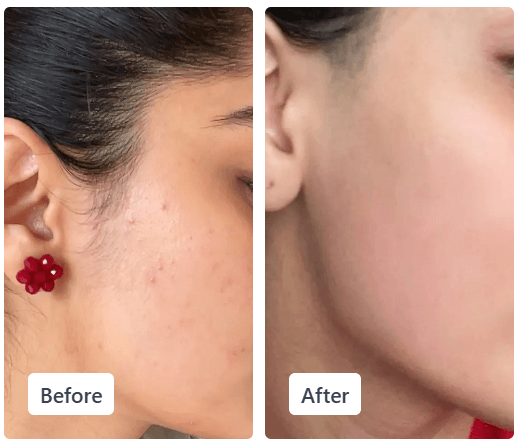
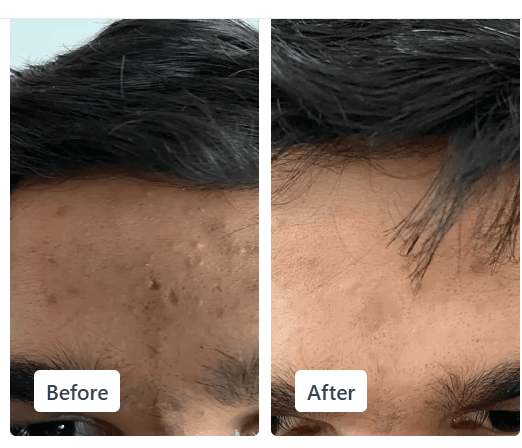
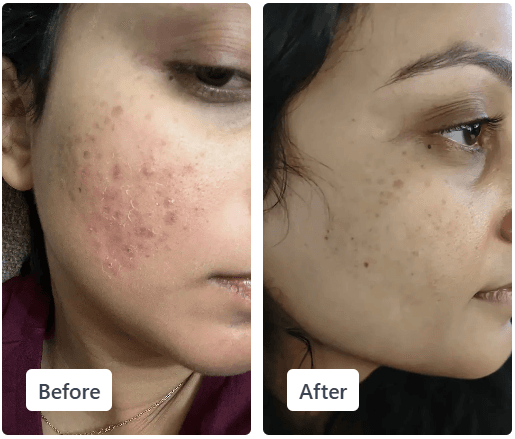
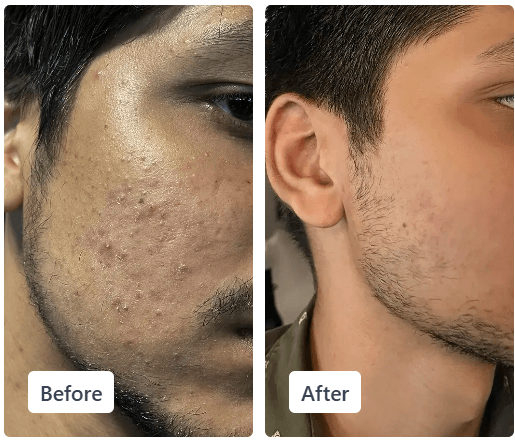
See real results, then start your own
Take the free Clear Ritual Skin Test and get a personalized routine built for your skin's unique patterns.
Why comedogenic ingredients matter for whiteheads
Whiteheads are closed comedones. When a pore is sealed, anything that is heavy, occlusive, or slow to absorb can trap oil and dead skin inside.
Over time, this creates the perfect environment for whiteheads to form, even if the product feels nourishing.
Common comedogenic ingredients that can trigger whiteheads
1. Heavy plant butters
Plant butters are often marketed as "natural" and nourishing, but some can be too occlusive for whitehead-prone facial skin.
- Shea butter (especially in high concentrations)
- Cocoa butter
- Mango butter
These are more suitable for dry body skin than congested facial areas.
2. Certain oils that sit heavily on the skin
Oils vary widely in how they behave on the skin. Some oils are more likely to clog pores when used regularly on the face.
- Coconut oil
- Wheat germ oil
- Lanolin (derived from wool wax)
These oils can trap oil and dead skin when pores are already prone to congestion.
3. Fatty alcohols and waxes (in heavy formulas)
Not all alcohols are drying. Some are used to thicken creams, but in rich formulations, they can worsen whiteheads.
- Cetearyl alcohol
- Cetyl alcohol
- Beeswax
In lightweight formulations, these may be fine. In thick creams, they often feel occlusive on whitehead-prone skin.
4. Silicones in heavy, layered routines
Silicones themselves don't always clog pores, but in heavy routines they can create a sealing effect.
- Dimethicone (high in ingredient lists)
- Cyclopentasiloxane (in multiple layered products)
This sealing can trap oil and debris underneath, especially if cleansing is inadequate.
5. Isopropyl-based ingredients
Some isopropyl derivatives are known to be more comedogenic.
- Isopropyl myristate
- Isopropyl palmitate
These are often used to improve texture but are frequent triggers for whiteheads.
See real results, then start your own
Take the free Clear Ritual Skin Test and get a personalized routine built for your skin's unique patterns.
Ingredients that are often safer for whitehead-prone skin
While no ingredient is universal, whitehead-prone skin often tolerates:
- Light humectants like glycerin
- Barrier-supporting ingredients like ceramide complex
- Gel or lotion-based moisturising systems
- Non-greasy emollients used in low concentrations
Texture and formulation matter as much as the ingredient itself.
Why "non-comedogenic" labels aren't always enough
"Non-comedogenic" is not a regulated term. A product can carry this label and still cause congestion for some people.
This is because:
- Testing varies between brands
- Formulations interact differently with individual skin
- Climate, sweat, and routine layering change how products behave
Listening to your skin is more reliable than relying on labels alone.
How to reduce whiteheads caused by comedogenic ingredients
- Simplify routines, fewer layers reduce trapping
- Choose lightweight textures like a lightweight sunscreen for the face
- Avoid rich creams on the nose, forehead, and chin
- Patch test new products for at least 1-2 weeks
How Clear Ritual Supports Personalized Skincare Decisions
Clear Ritual understands that whiteheads triggered by comedogenic ingredients are more than a surface issue. It is shaped by genetics, skin renewal cycles, environmental factors, and the products you use.
Because whiteheads triggered by comedogenic ingredients form when heavy, occlusive, or slow-absorbing ingredients trap oil and dead skin inside a sealed pore, generic solutions rarely bring lasting improvement. Clear Ritual combines traditional wisdom and modern science to address the underlying causes of whiteheads triggered by comedogenic ingredients.
The Clear Ritual Skin Test analyses your skin's unique patterns and daily influences to help identify the best routine for supporting healthy skin and reducing whiteheads triggered by comedogenic ingredients recurrence.
See real results, then start your own
Take the free Clear Ritual Skin Test and get a personalized routine built for your skin's unique patterns.
Conclusion
Comedogenic ingredients do not cause instant breakouts, but heavy plant butters, certain oils, fatty alcohols, silicones, and isopropyl derivatives can quietly build congestion over time on whitehead-prone skin. Since "non-comedogenic" labels are not regulated, choosing lightweight, non-occlusive formulations and patch testing new products matters more than relying on labels alone. Simplifying routines and avoiding rich creams on congestion-prone areas like the nose, forehead, and chin can make a meaningful difference in supporting clearer pores.
Frequently Asked Questions
1. Can hydrating ingredients still cause whiteheads?
Yes. Even hydrating ingredients can trigger congestion if the formulation is too heavy for your skin type. Ingredients like glycerin, panthenol, or squalane are generally considered skin-friendly, but layering multiple rich products may contribute to clogged pores in acne-prone skin.
2. Are soothing ingredients better for whitehead-prone skin?
Soothing ingredients such as allantoin, centella-asiatica-extract, and Aloe-Barbadensis-Leaf-Extract may help calm irritation associated with breakouts. However, the overall formulation matters more than a single ingredient alone.
3. Can sunscreen ingredients contribute to whiteheads?
Certain sunscreen formulations may feel occlusive on oily skin, especially in hot and humid weather. Mineral filters like zinc-oxide and titanium-dioxide are often preferred by acne-prone individuals because they are generally less irritating.
4. Which exfoliating ingredients may help reduce whiteheads?
Ingredients like salicylic-acid and niacinamide are commonly used in skincare routines targeting clogged pores and uneven texture. They may help manage excess oil and support clearer-looking skin over time.
5. Why does my skin feel greasy even after cleansing?
Over-cleansing or using harsh surfactants can sometimes disrupt the skin barrier, causing the skin to produce more oil. Gentle cleansers containing ingredients like sodium-cocoyl-isethionate or cocamidopropyl-betaine may feel less stripping for some skin types.
Editorial Standards
Clear Ritual has Strict sourcing guidelines to ensure our content is accurate and current. We rely on peer-reviewed studies, academic research institutions, and medical associations. We strive to use primary sources and refrain from using tertiary references. See a mistake? Learn More about our Editorial Standards.
Related Articles
Best Ingredients for Blackheads: Dermatologist-Approved Guide
Published 7 October 2026

Best Ingredients to Treat Whiteheads (Dermatologist-Approved)
Published 21 July 2026
Best Ingredients to Treat Pimples (Salicylic Acid, Benzoyl Peroxide, etc.)
Published 21 July 2026
Ajwain’s Role in Digestive Detox: A Skincare Super Ingredient?
Published 21 July 2026