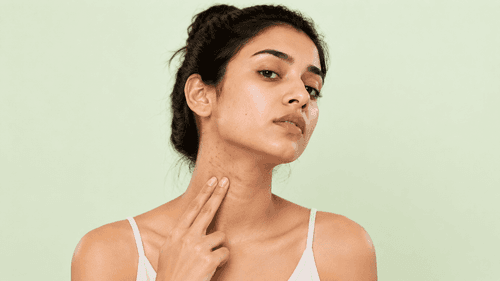
Neem Leaves for Pimples and Dark Spots: How to Use

Quick Answer:
Neem leaf paste may be used cautiously as a short-contact traditional skincare preparation, but it is not a proven treatment for acne or post-acne dark spots. Avoid irritated or broken skin, stop if a reaction occurs, and use daily sunscreen for pigmentation.
Neem leaves are traditionally used on acne-prone skin, but clinical evidence that homemade neem preparations clear pimples or fade dark spots is limited. Some neem compounds show antibacterial and anti-inflammatory activity in laboratory studies. Patch-test before applying neem to your face, and use established acne treatments for persistent breakouts.
What Are Neem Leaves and Why Are They Used for Pimples?
Neem (Azadirachta indica) is a medicinal plant widely used in Ayurveda. Its leaves contain bioactive compounds, primarily nimbidin, azadirachtin, quercetin, and catechin, that work through three mechanisms relevant to acne and post-acne dark spots:
- Antibacterial action: Nimbidin inhibits Cutibacterium acnes (C. acnes), the bacteria that triggers inflammatory acne lesions. A 2022 review in Phytotherapy Research found neem extracts disrupted bacterial cell membranes, reducing colonisation on acne-prone skin.
- Anti-inflammatory action: Quercetin and catechin reduce pro-inflammatory cytokines, calming visible redness and swelling around active pimples.
- Antioxidant and pigmentation support: Neem's antioxidants may slow excess melanin production in affected areas, gradually fading post-inflammatory hyperpigmentation (PIH), the dark marks left after a pimple heals.
According to Clear Ritual's skincare team, neem is one of the few home remedies with genuine scientific backing for mild acne, but it works best as part of a consistent routine, not as a one-off treatment.
What Can Neem Leaves Actually Do for Pimples and Dark Spots?
Neem leaves may support acne-prone skin through several evidence-informed mechanisms. Potential benefits include:
- Reducing C. acnes bacteria on the skin surface
- Controlling excess sebum to help minimise clogged pores
- Calming redness and inflammation around active pimples
- Supporting the gradual fading of post-inflammatory hyperpigmentation (PIH)
- Promoting a clearer, more even-looking complexion over time
Clear Ritual notes that neem works at the surface level, it does not address internal acne triggers such as hormonal imbalance, gut health, diet, or stress.
What Neem Leaves Cannot Do
Understanding the limits of neem is as important as knowing the benefits.
Neem leaves cannot:
- Remove deep-rooted cysts or nodular acne
- Replace prescribed treatments for moderate-to-severe acne
- Permanently remove dark spots, it can only gradually fade post-acne PIH
- Address internal causes of acne such as hormonal imbalance, gut health, or chronic stress
- Bleach skin or lighten natural skin tone
For faster or more significant PIH reduction, dermatologist-prescribed actives such as niacinamide, kojic acid, or azelaic acid are more clinically supported than neem alone.
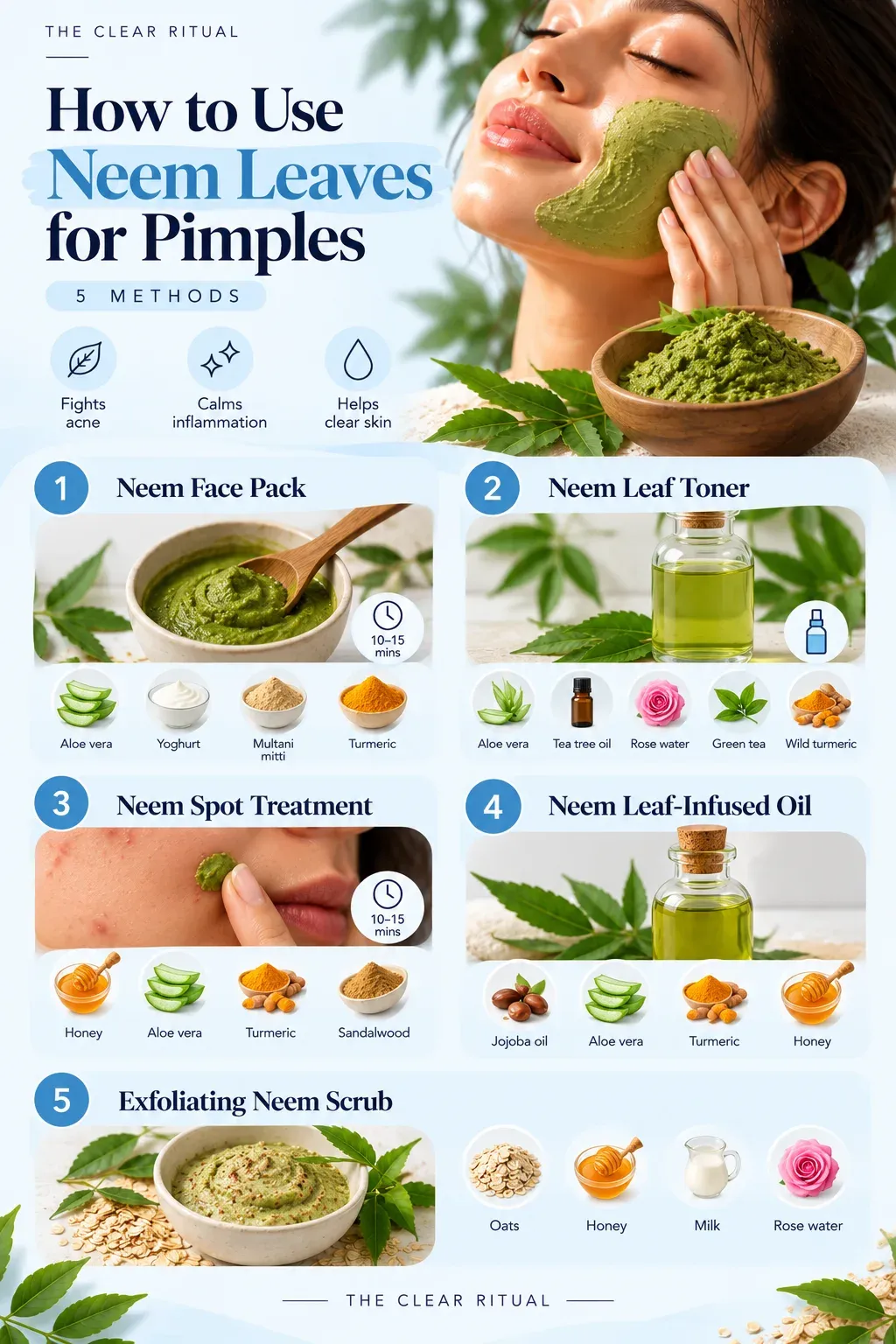
How to Use Neem Leaves for Pimples: 5 Methods
Neem leaves can be prepared and applied in five main ways. Choose the method based on your skin type and primary concern.
1. Neem Face Pack
Blend fresh neem leaves with water to form a paste. Apply to clean skin and leave on for 10–15 minutes, then rinse with lukewarm water. Use 2–3 times a week, not daily.
Customise based on your concern:
- Neem paste + aloe vera: Calms inflammation and supports skin healing
- Neem paste + yoghurt: Lactic acid gently exfoliates and supports PIH fading
- Neem powder + multani mitti: Absorbs excess sebum and unclogs pores
- Neem paste + turmeric: Reduces redness and supports acne-prone skin
2. Neem Leaf Toner
- Wash a handful of fresh neem leaves.
- Boil the leaves in 2 cups of water until the water turns pale green.
- Allow the mixture to cool completely.
- Strain the liquid into a clean, airtight container.
- Store in the refrigerator and use within 3–5 days.
Customise neem water based on your concern:
- + Aloe vera gel: Soothes and hydrates
- + 2–3 drops tea tree oil (diluted in carrier first): Adds antibacterial action, never apply undiluted tea tree oil to skin
- + Rose water: Refreshes and maintains hydration
- + Green tea: Adds antioxidants to calm redness
- + Wild turmeric (kasturi manjal): May support PIH fading
3. Neem Spot Treatment
Apply a small amount of neem paste directly to individual pimples or dark spots. Leave on for 10–15 minutes, then rinse. Use up to once daily on isolated spots.
Combination options:
- Neem powder + honey: Soothes inflamed pimples and maintains hydration
- Neem powder + aloe vera gel: Calms redness and supports healing
- Neem paste + turmeric: Reduces inflammation and improves PIH appearance
- Neem powder + sandalwood powder: Traditional Ayurvedic option for soothing skin and improving post-acne pigmentation
Perform a 24-hour patch test before first use.
4. Neem Leaf-Infused Oil
Steep crushed neem leaves in a carrier oil such as jojoba or olive oil to create a gentler neem preparation. This is distinct from pure neem seed oil, which is more concentrated and must always be diluted.
Combination options:
- Neem oil + jojoba oil: Dilute 1–2 drops of neem oil in 1 teaspoon of jojoba oil for active pimples
- Neem oil + aloe vera gel: Apply diluted oil first, then layer aloe vera to soothe and hydrate
- Neem oil + turmeric: A small pinch of turmeric may help improve post-acne dark spots
- Neem oil + honey: Use as a wash-off mask to soothe and maintain hydration
5. Exfoliating Neem Scrub
Avoid using any scrub on active or inflamed acne, scrubbing can worsen irritation. Use this only on calm skin, once a week at most.
Mix together:
- 2 tablespoons of crushed neem leaves or neem paste
- 1 tablespoon of ground oats or rice flour
- 1 teaspoon of raw honey
- 1 tablespoon of milk or rose water
Massage gently in circular motions for 30–60 seconds, then rinse with lukewarm water. Perform a 24-hour patch test before first use.
Which Neem Form Is Right for You? Leaves vs Oil vs Powder
Neem comes in three common forms for skin use. Each has different concentration levels, application methods, and suitability for different skin types.
| Neem Leaves / Paste | Neem Powder | Neem Seed Oil | |
|---|---|---|---|
| Concentration | Mild | Mild–Moderate | High (most potent) |
| Best for | Oily, acne-prone skin; beginners | Travel-friendly; combination skin | Spot treatment; dry skin |
| How to use | Blend fresh leaves + water into paste | Mix with rose water, aloe vera, or yoghurt | Always dilute: 1–2 drops in 1 tsp carrier oil |
| Ideal application | Face pack, toner, scrub | Face pack, spot treatment | Spot treatment, overnight diluted serum |
| Smell | Mild, herbal | Mild, herbal | Very strong, may cause irritation |
| Shelf life (homemade) | 3–5 days (refrigerated) | 6–12 months (sealed, cool, dry) | 1–2 years (sealed) |
| Patch test required? | Yes | Yes | Yes, especially pure seed oil |
| Who should avoid? | Sensitive skin: dilute with aloe | Sensitive skin: add honey or yoghurt | Sensitive, rosacea-prone skin: use sparingly |
Which form works best for specific concerns:
- Active pimples: Neem paste or neem powder with aloe vera, gentler and less likely to cause irritation
- Post-acne dark spots (PIH): Neem paste with wild turmeric or neem powder with rose water, used 3–4 times a week consistently
- Excess oil / large pores: Neem powder with multani mitti absorbs sebum without over-drying
- Dry or sensitive skin: Neem leaf-infused oil (not pure neem seed oil) diluted in jojoba oil
Note: Pure neem seed oil is the most potent and most likely to cause irritation. Always dilute it, at least 1 part neem oil to 9 parts carrier oil, before applying to the face.
What Results Can You Expect? A Realistic Timeline for Neem Use
Neem works gradually. Clear Ritual recommends setting realistic expectations to stay consistent long enough to see results.
| Timeframe | What You May Notice |
|---|---|
| Days 1–3 | No visible change. Minor temporary dryness or mild tingling is normal on first use. |
| Week 1–2 | Reduction in excess oiliness and surface shine. Some people notice fewer new small pimples forming. |
| Week 3–6 | Active pimples may reduce in size and redness more quickly. Blackheads may appear less pronounced. |
| Week 8–12 | Post-acne dark spots (PIH) begin to visibly fade with consistent use 3–4 times a week. Results vary based on skin tone and depth of pigmentation. |
| Week 12+ | Maintenance phase, continue 1–2 times a week to sustain clearer skin. |
Factors that affect how quickly neem works:
- Skin tone: Deeper skin tones often have more pronounced PIH, which typically takes longer to fade
- Acne severity: Neem is most effective for mild-to-moderate acne; severe or cystic acne requires dermatologist-prescribed treatment
- Consistency: Two to three sessions a week for 8–12 weeks outperforms intensive short-term use
- Sun exposure: UV light worsens PIH, SPF 30+ sunscreen every morning is essential alongside any dark spot treatment
- Root causes: If acne is triggered by hormonal imbalance, high stress, or gut health issues, topical neem provides limited benefit without addressing those underlying factors
How to Use Neem Leaves for Different Skin Types
Not every neem preparation works for every skin type. Using the wrong formulation can cause dryness, irritation, or worsened breakouts.
Oily and Acne-Prone Skin Neem's antibacterial and sebum-controlling properties directly address the main drivers of acne on oily skin.
- Best options: Neem powder + multani mitti face pack (twice weekly), neem water toner (daily), neem paste spot treatment
- Avoid: Neem seed oil applied across the full face, it can feel heavy and may clog pores
Combination Skin Focus neem applications on the oily T-zone (forehead, nose, chin). Avoid applying to dry cheek areas more than once a week.
- Best options: Neem water toner across the face, neem paste spot treatment on the T-zone only
Dry or Sensitive Skin Use neem in its most diluted, gentlest forms. Neem paste or powder can cause additional dryness on already dry skin.
- Best options: Neem leaf-infused oil diluted in jojoba, neem paste with honey or yoghurt, neem water toner with added rose water or aloe vera
- Avoid: Undiluted neem oil, neem + turmeric combinations, neem scrubs more than once every two weeks
Sensitive or Rosacea-Prone Skin A patch test is non-negotiable. Start with neem water toner on a small area for one week before expanding use.
- Best options: Diluted neem water toner (50% neem water, 50% rose water), neem leaf-infused oil in jojoba
- Avoid: Pure neem seed oil, neem scrubs, neem + turmeric combinations
Dos and Don'ts When Using Neem for Pimples and Dark Spots
| Do | Don't |
|---|---|
| Mix neem leaf paste with aloe vera, honey, or yoghurt | Use neem face packs or scrubs every day |
| Dilute neem oil with a non-comedogenic carrier oil such as jojoba or grapeseed oil | Apply undiluted neem oil to the skin |
| Perform a 24-hour patch test before first use | Apply neem to broken skin or freshly popped pimples |
| Rinse after 10–15 minutes and apply a non-comedogenic moisturiser | Leave neem masks on for more than 15 minutes |
| Wear SPF 30+ sunscreen when treating dark spots | Use neem during pregnancy, while breastfeeding, or while trying to conceive without consulting a healthcare provider |
Frequently Asked Questions About Neem Leaves for Pimples and Dark Spots
Q. Can you use neem leaves on your face daily?
A. Daily use of homemade neem preparations is not recommended. Neem can cause dryness or irritation, and there is no established evidence-based frequency. Patch-test first and stop if redness, burning or itching develops.
Q. Will neem leaves reduce pimples and acne marks?
A. Neem extracts have shown laboratory activity, but there is limited clinical evidence that applying neem leaves clears pimples or fades post-acne marks. Established acne treatments and daily sunscreen are more reliable options.
Q. Is neem good for hormonal acne?
A. Neem does not treat the hormonal causes of acne. If breakouts are persistent, painful or concentrated around the jawline, consult a dermatologist about appropriate treatment.
Q. Can I leave neem paste on my face overnight?
A. No. Leaving homemade neem paste on overnight may increase the chance of irritation. If you choose to try it, use a short-contact application and rinse off if discomfort occurs.
Q. How do I use neem powder if I do not have fresh leaves?
A. Mix a small amount of cosmetic-grade neem powder with water to form a paste, patch-test first and avoid broken or inflamed skin. Do not assume homemade mixtures are sterile or proven acne treatments.
Q. Does eating neem leaves help with acne?
A. There is insufficient clinical evidence that eating neem leaves treats acne. Neem taken orally can cause adverse effects, and neem supplements should not be used as an acne remedy without medical advice.
Q. Can I use neem on my face if I have very sensitive skin or rosacea?
A. Neem may irritate reactive skin. People with rosacea or very sensitive skin should generally avoid homemade neem preparations unless advised otherwise by a dermatologist.
Understand What Your Skin Needs
Take the Clear Ritual Skin Test to identify your skin type, concerns, and potential triggers before building your routine.
Take the Free Skin Test
Disclaimer: This article is for general educational purposes and is not a substitute for professional medical advice. Homemade neem preparations may cause irritation or allergic reactions. Consult a qualified dermatologist for persistent acne, dark spots, sensitive skin or worsening symptoms.
Editorial Standards
Clear Ritual has Strict sourcing guidelines to ensure our content is accurate and current. We rely on peer-reviewed studies, academic research institutions, and medical associations. We strive to use primary sources and refrain from using tertiary references. See a mistake? Learn More about our Editorial Standards.
Related Articles
Acne Mechanica: How Friction from Helmets, Masks & Tight Clothing Causes Breakouts
Published 17 July 2026
Acne and Diet: What’s the Real Link Between Food and Breakouts?
Published 21 July 2026

Acne on Cheeks: Causes, Treatment & What Actually Works
Published 17 July 2026
Acne on Neck: Why It Appears and How to Treat It by Cause
Published 10 August 2026