Acne Scar Removal: Creams, Home Remedies, & Clinical Treatments

Quick Answer:
Acne scar removal treatments include topical creams, home remedies, and professional medical procedures. The specific treatment that may be effective for you depends on the type of scar you have and the severity of it.
Topical creams and home remedies are commonly used for surface-level scars. For removing deep textural acne scars, clinical procedures may be required.
Before you opt for a treatment, it is essential to know about the different types of acne scars, as that can help you understand your skin concerns better.
What Are the Types of Acne Scars?
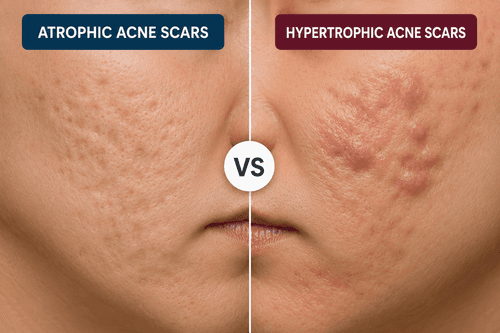
There are mainly two types of acne scars: atrophic scars and hypertrophic (or keloid) scars. Atrophic scars are further divided into 3 subtypes, called ice pick scars, rolling scars, and boxcar scars.
Different types of acne scars respond differently to acne scar removal, which makes it essential for you to identify what you’re dealing with.
Atrophic Scars
Atrophic scars are indentations that form when the skin loses collagen during the healing process. They appear as depressions beneath the surrounding skin and are often associated with severe cystic acne, although other forms of acne can also leave these scars.
The shape and depth of these scars can vary from person to person. Based on their appearance, atrophic acne scars are generally classified into three types:
| Type of Atrophic Scars | How They Look |
|---|---|
| Icepick scars | Deep, narrow indentations on the skin |
| Boxcar scars | Circular depressions on the skin |
| Rolling scars | Wavy depressions on the skin |
Hypertrophic (or Keloid) Scars
Hypertrophic and keloid scars are raised areas of skin that develop when the body produces excess collagen while healing an acne lesion. They are more commonly seen with acne on areas such as the chest and back, where these raised scars can extend above the surrounding skin.
Sometimes acne marks, which are called post-inflammatory hyperpigmentation, are mistaken for acne scars. However, these are discoloured patches on the skin that appear after acne has healed, and usually fade away on their own.
What Are Your Options for Acne Scar Removal?
The commonly used acne scar removal methods include topical creams, home remedies, or clinical procedures. While creams and certain home remedies may help improve the appearance of mild marks, deeper or more noticeable scars may require professional treatment for more significant improvement.
Acne Scar Removal With Creams
For mild acne scarring, topical creams can be a convenient solution. Depending on their active ingredients, they may help improve the appearance of pigmentation, uneven texture, and other visible signs of scarring.
The way an acne scar removal cream works depends on the active ingredients in its formulation. Different ingredients target different aspects of scarring. Some work on pigmentation, while others target inflammation, uneven texture, or the overall appearance of the skin.
Each ingredient brings something different to the table, depending on your skin’s specific needs.
| Key Ingredient in the Cream | What it Does |
|---|---|
| Retinol | Smoothens the skin, evens out colouring |
| Vitamin C | Brightens dark spots, evens out the skin tone |
| Niacinamide | Reduces inflammation, strengthens the skin barrier |
| Hyaluronic acid | Keeps skin hydrated so scars seem less noticeable |
You also need to consider your skin type before choosing ingredients. For instance, an acne scar removal cream with niacinamide may be suitable for someone with oily skin. If you have sensitive skin, you may benefit from a cream containing azelaic acid.
Before you purchase an acne scar removal cream, however, make sure to introduce active ingredients gradually. If you’ve never tried a particular ingredient or product before, conduct a patch test to determine if it is safe for you.
Home Remedies for Acne Scar Removal
Home remedies are often considered a simple way to care for acne scars using ingredients that may already be available at home. However, their effectiveness can vary, and there is limited evidence for many of these approaches.
Some commonly used home remedies include:
- Applying aloe vera gel
Aloe vera may support skin healing and has soothing properties that could help improve the appearance of acne scars.
To try, you can follow these steps:
- Apply fresh aloe vera gel to the affected area
- Leave it on for about 25 minutes
- Rinse it off.
- Applying raw honey
Raw honey may help support skin healing and has properties that may be useful for acne-prone skin.
Dab a small amount of raw honey onto the affected areas using clean cotton. Leave it on for around 15 minutes, then rinse thoroughly.
- Applying lemon juice
Lemon juice is often used for acne scars because it contains vitamin C. As per research, vitamin C can effectively lighten acne scars.
If trying this approach:
- Take a teaspoon of lemon juice and dip a cotton swab into it
- Dab the cotton onto the affected area
- Leave the juice on for around 10 minutes
- Rinse it off.
While these remedies are popular, they are not necessarily effective or suitable for everyone. Some ingredients can also irritate the skin or cause sensitivity, so it is best to patch-test first and stop using them if irritation occurs.
Lemon juice, for instance, may not suit everyone and can cause irritation when applied directly to the skin.
Clinical Treatments for Acne Scar Removal
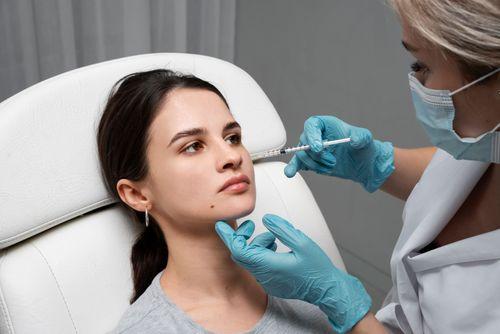
When topical skincare is not enough, clinical procedures can offer a more targeted approach to acne scar removal.
Many of these treatments work by removing or resurfacing damaged layers of skin, allowing the skin to heal and form a newer, smoother surface. Other procedures work deeper within the skin to stimulate collagen production, which can help improve the appearance of scars over time.
The treatment recommended to you by the dermatologist will depend on the type, depth, and severity of the scars.
- Chemical peels
Chemical peels use specially formulated acids to exfoliate and remove damaged outer layers of the skin.
- Dermabrasion
Dermabrasion uses a specialised device to gently create friction on the skin and remove its outer layers.
- Laser resurfacing
Laser resurfacing uses controlled laser energy to heat the collagen beneath scarred skin.
- Skin needling
Skin needling involves moving a device with tiny needles across the skin to create controlled micro-injuries. This stimulates collagen production in the deeper layers and can help improve uneven texture.
How Much Do Acne Scar Treatments Cost in India?
The cost of acne scar treatment in India can vary considerably depending on the procedure, the extent of scarring, and the number of sessions required. The clinic, dermatologist, and location can also influence the overall cost.
Here is a general comparison of the costs associated with some commonly used acne scar treatments:
| Acne Scar Removal Procedure | Cost in India (Approximate Range in ₹) |
|---|---|
| Laser acne scar removal | 5,000 - 20,000 |
| Chemical peel for acne scars | 4,000 - 6,000 |
| Dermabrasion for acne scars | 4,000 - 6,000 |
| Microneedling for acne scars | 5,000 - 20,000 |
Clear Ritual’s Perspective on Acne Scar Removal
The treatments for acne scar removal, be it creams, home remedies, or clinical procedures, can help improve the appearance of the skin. However, these approaches do not address the root cause of the scars.
At Clear Ritual, we believe that for a skin treatment to work, and for the skin to retain its healthy texture, it is vital to find out what is causing the issues in the first place. That makes it easier for you to choose a treatment that addresses your underlying concern, instead of simply treating the appearance of the scar.
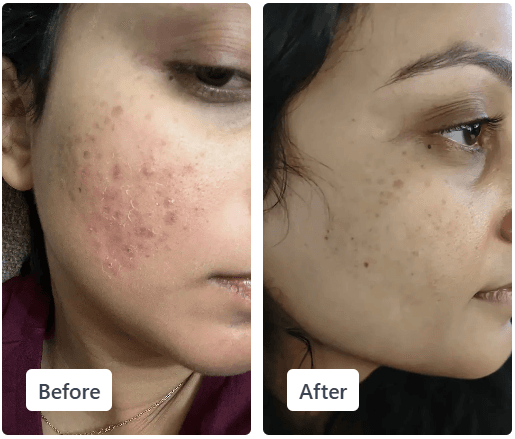
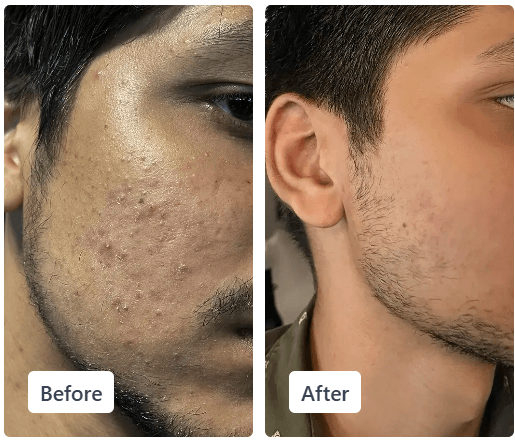
Take the Clear Ritual Skin Test to better understand your acne scars and find the right treatment for them.
Understand Your Acne Scars
Assess your scar pattern, active breakouts, sensitivity, barrier health, and other skin concerns.
Take the Clear Ritual Skin Test
Frequently Asked Questions
Can vitamin C help with acne scars?
Yes. Vitamin C can help brighten the skin and reduce the appearance of pigmentation left behind after acne. It is more useful for discolouration than for deep, indented scars.
Do acne scars fully fade?
Acne scars may not fade away completely on their own. But with consistent skincare, they can become less visible and gradually reduce. Deeper or structural scars often require professional treatment for complete removal.
Can coconut oil remove acne scars?
Coconut oil can kill the bacteria that causes acne, and it can moisturize the skin, but there is not enough evidence to recommend it as a treatment for removing acne scars. It also poses the risk of clogging the pores further, which raises the risk of acne. If you’re trying to fade acne scarring, products with targeted active ingredients are a more appropriate option.
Can you prevent acne scars?
Yes, you can prevent acne scars by treating acne early and reducing severe inflammation, which can lower the risk of scarring.
Can toothpaste remove acne scars?
No. Toothpaste is not an effective acne scar treatment and can irritate the skin, causing redness, dryness, or even further irritation that may make marks more noticeable.
References
Sauer, N., Oślizło, M., Brzostek, M., Wolska, J., Lubaszka, K., & Karłowicz-Bodalska, K. (2024). The multiple uses of azelaic acid in dermatology: mechanism of action, preparations, and potential therapeutic applications. Advances in Dermatology and Allergology, 40(6), 716–724. DOI: 10.5114/ada.2023.133955.https://pmc.ncbi.nlm.nih.gov/articles/PMC10809820/
Abdalla, S., Aroua, M. K., & Gew, L. T. (2024). A Comprehensive Review of Plant-Based Cosmetic Oils (Virgin Coconut Oil, Olive Oil, Argan Oil, and Jojoba Oil): Chemical and Biological Properties and Their Cosmeceutical Applications. ACS Omega, 9(44), 44019–44032. DOI: 10.1021/acsomega.4c04277.https://pmc.ncbi.nlm.nih.gov/articles/PMC11541506/
Samir, M. A., Amer, A., Sharobime, A., Mohamed, A., & Ehab, R. (2026). Platelet-Rich Plasma Versus Hyaluronic Acid and Vitamin C With Microneedling in the Treatment of Atrophic Acne Scars: A Comparative Study. Journal of Cosmetic Dermatology, 25(7), e71050. DOI: 10.1111/jocd.71050.https://pmc.ncbi.nlm.nih.gov/articles/PMC13366436/
Mayo Clinic Staff. (2024). Acne scars: What’s the best treatment? Mayo Clinic.https://www.mayoclinic.org/diseases-conditions/acne/expert-answers/acne-scars/faq-20058101
Yang, D., Pornpattananangkul, D., Nakatsuji, T., Chan, M., Carson, D., Huang, C.-M., & Zhang, L. (2009). The antimicrobial activity of liposomal lauric acids against Propionibacterium acnes. Biomaterials, 30(30), 6035–6040. DOI: 10.1016/j.biomaterials.2009.07.033.https://pubmed.ncbi.nlm.nih.gov/19665786/
Disclaimer
This article is intended for general informational purposes and is not a substitute for personalised medical advice, diagnosis, or treatment. If you have persistent, severe, or distressing acne scars, consult a qualified dermatologist for personalised guidance.
Editorial Standards
Clear Ritual has Strict sourcing guidelines to ensure our content is accurate and current. We rely on peer-reviewed studies, academic research institutions, and medical associations. We strive to use primary sources and refrain from using tertiary references. See a mistake? Learn More about our Editorial Standards.