Keratosis Pilaris: Causes, Symptoms, Treatment, and Home Care
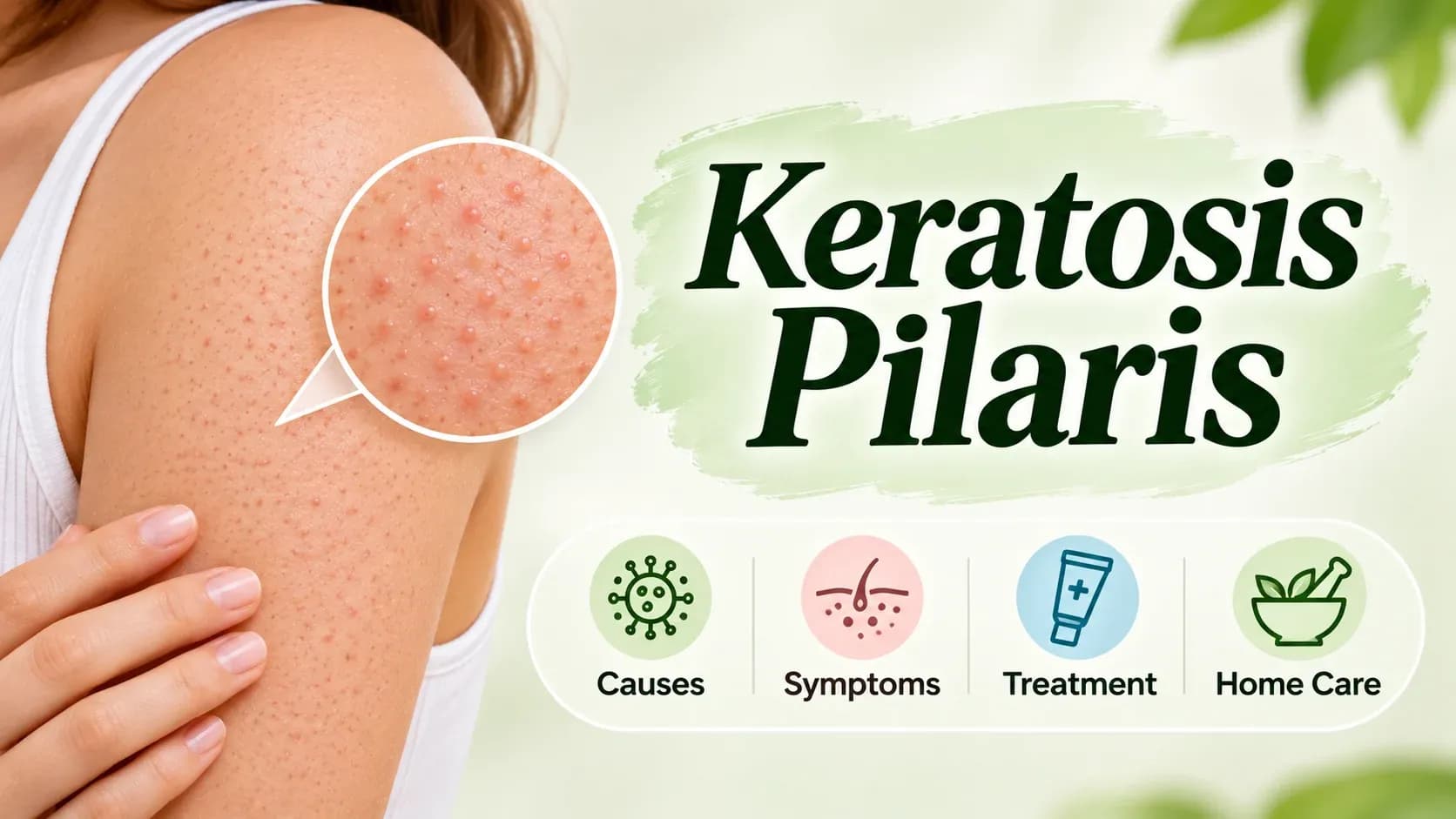
Keratosis pilaris, which is commonly called “chicken skin,” is a harmless skin condition that causes small, rough, painless bumps. It develops when keratin, a protein naturally found in your skin, builds up and blocks the openings of hair follicles. While its exact cause is unknown, genetics and dry skin may play a role. Although there is no permanent cure, regular moisturising and gentle exfoliation can help smooth the skin and make the bumps less noticeable.
What Is Keratosis Pilaris?
Keratosis pilaris is a common skin condition that affects the hair follicles. When these follicles get blocked by keratin, the protein found in your skin, hair, and nails, they end up forming small bumps that are rough to the touch.
KP is not an infection, and it cannot spread from one person to another. It is also not harmful to your overall health. However, the bumps may affect how you feel about your skin, particularly when they appear on visible areas such as your arms or face.
What Causes Keratosis Pilaris?
Keratosis pilaris develops when keratin builds up around the openings of hair follicles instead of shedding normally. The exact reason this happens is not fully known.
However, there are a few factors that make keratosis pilaris more likely to develop. These include the following:
- Genetics
KP is thought to have a genetic factor associated with it. This means that if your parents have keratosis pilaris, you may be more likely to develop it.
- Eczema
Keratosis pilaris is more common in people with eczema (atopic dermatitis), a condition that causes dry, itchy, and inflamed skin.
- Dry Skin
If you have generally dry skin, you may be more likely to develop keratosis pilaris.
KP may also become more noticeable when the environment around you causes your skin to dry out. For instance, during cold weather, when the air has less moisture and your skin becomes drier, the bumps may feel more prominent.
What Are the Symptoms of Keratosis Pilaris?
The most noticeable sign of keratosis pilaris is the appearance of small bumps around hair follicles. Their colour and texture can vary depending on your natural skin tone and how dry or irritated the affected area is.
Here are the symptoms that you may notice in case of KP:
- Tiny, painless bumps on the skin
- The skin around the affected area feels rough and dry
- Itching (rare), especially when the surrounding skin becomes dry
KP bumps are generally painless. If the affected area becomes painful, develops pus, or shows significant swelling, consult a dermatologist to check whether another skin condition is present.
What Areas Does Keratosis Pilaris Affect?
KP generally affects the following areas on the body:
- Upper Arms
This is one of the most frequently affected areas. You may notice clusters of small bumps along the outer part of your upper arms.
- Thighs
KP can cause rough patches on the front or outer sides of your thighs.
- Buttocks
Small bumps may appear across the buttocks, making the skin feel uneven.
- Cheeks
Some people develop KP on their cheeks, where it may appear as tiny bumps with mild redness.
- Lower Legs and Forearms
The bumps can also develop on these areas, although they are less commonly affected.
How Can You Tell If It Is Keratosis Pilaris or Another Skin Condition?
Keratosis pilaris can look similar to other skin conditions that cause small bumps, redness, or rough patches. However, differences in their appearance, texture, and symptoms can help distinguish them.
| Skin conditions that can resemble KP | How they differ from KP |
|---|---|
| Folliculitis | Bumps it causes are red, tender, or pus-filled |
| Acne | Leads to pimples, blackheads, whiteheads, or inflamed bumps |
| Eczema | Bumps it causes are dry, inflamed, in patches, and extremely itchy. |
If you are unsure what is causing the bumps, consult a dermatologist. They can examine your skin and recommend the right treatment.
What Are the Treatment Options for Keratosis Pilaris?
Keratosis pilaris does not always need treatment. In most cases, it becomes less noticeable with time. However, if the bumps affect your comfort or make you feel self-conscious, simple measures such as regular moisturising and gentle exfoliation may help.
Home Remedies for Keratosis Pilaris
A few simple lifestyle changes and home remedies, such as the following, may help improve your skin’s texture and settle KP bumps:
- Swap hot showers for lukewarm showers. Hot showers can strip away natural oils and make dry skin worse. Take short, lukewarm showers instead.
- Avoid picking or squeezing the bumps. Trying to remove individual bumps can damage the skin and may lead to irritation or scarring.
- Use a humidifier. If the air indoors is particularly dry, a humidifier may help maintain moisture in your surroundings and reduce skin dryness.
- Try coconut oil application. Coconut oil is popularly used as a natural moisturiser, and it may help soften dry skin. To try it, you can apply a small amount to your skin after bathing. However, it may clog pores or cause acne breakouts in some people.
Over-the-Counter Products for Keratosis Pilaris
Certain ingredients in non-prescription skincare products can help soften rough patches and reduce the buildup of dead skin cells and keratin around hair follicles.
The following table covers some ingredients commonly used in products for KP.
| Ingredient | Product category to look for | How it helps |
|---|---|---|
| Urea | Moisturisers and body lotions | Softens dry, rough skin and helps it retain moisture. |
| Lactic acid | Exfoliating lotions and moisturisers | Loosens dead skin cells and smooths rough patches. |
| Salicylic acid | Body washes, cleansers, and lotions | Helps clear the buildup of dead skin cells around hair follicles. |
| Glycolic acid | Body lotions | Exfoliates the skin’s surface and improves uneven texture. |
| Ammonium lactate | Moisturising lotions | Helps soften rough skin while adding moisture. |
Cautionary Note: If you are using an active ingredient for the first time, conduct a patch test to check if it suits your skin. It is also better to start with one product rather than combining several exfoliating ingredients at once. Disclaimer: Exfoliating ingredients can cause dryness or irritation, particularly if your skin is sensitive. Follow the product instructions and use a moisturiser afterwards. If your skin becomes irritated, reduce use or stop applying the product.
Medical Treatments for Keratosis Pilaris
If home care and over-the-counter products do not improve your skin, a dermatologist may recommend prescription treatments, such as the following:
- Prescription topical retinoids: These can help increase skin cell turnover and reduce the buildup of keratin around hair follicles. They may cause dryness, peeling, or irritation, so they should only be used as directed by a dermatologist.
- Prescription moisturising creams: Stronger formulations containing ingredients such as urea or lactic acid may help manage stubborn rough patches.
- Topical corticosteroids: A dermatologist may prescribe these for a short period if the affected skin is particularly itchy or inflamed.
- Laser and light treatments: Certain laser procedures may help reduce redness or changes in skin colour associated with KP. The results vary, and more than one session may be needed.
When Should You Consult a Dermatologist?
KP is generally harmless, so most people do not need medical treatment. However, consult a dermatologist if you notice the following symptoms:
- The bumps become increasingly red, itchy, or irritated.
- Your skin develops pain, swelling, or pus.
- The affected areas do not improve despite regular home care.
- The bumps spread to areas where they were not previously present.
It is also recommended to consult a dermatologist if you are unsure whether the bumps are caused by KP or another skin condition.
Clear Ritual’s Perspective on Keratosis Pilaris
While keratosis pilaris is harmless, the rough texture and visible bumps can affect how comfortable you feel in your skin. Regular moisturising and gentle exfoliation can help, but avoid choosing harsh exfoliants or scrubs, since they can irritate the skin.
At Clear Ritual, we believe that the right skincare routine and products that you choose for your skin should depend on your skin type and its individual needs.
You can take the Clear Ritual Skin Test to learn more about your skin and its concerns, so you can choose products that suit you instead of following a one-size-fits-all approach.
Understand What Your Skin Needs
Take the Clear Ritual Skin Test to identify your skin concerns and explore a plan for your routine.
Take the Free Skin Test
Frequently Asked Questions
Q. Can coconut oil help keratosis pilaris?
A. Coconut oil may soften dry skin and temporarily improve its texture, but it does not directly address the keratin buildup responsible for keratosis pilaris. It may also clog pores or cause breakouts in some people. If you want to use it, try a small amount on a limited area first and stop if you notice irritation or new bumps.
Q. Can turmeric cure keratosis pilaris?
A. No, turmeric cannot cure keratosis pilaris. It contains compounds with anti-inflammatory properties, which may help soothe some skin redness. However, there is not enough clinical evidence to show that applying turmeric removes the keratin buildup that causes KP. Turmeric preparations may also irritate sensitive skin, so they should not replace dermatologist-recommended treatments.
Q. Is keratosis pilaris permanent?
A. Keratosis pilaris is a long-term skin condition, which may become less noticeable with age. Although there is no permanent cure for it, regular moisturising and gentle exfoliation can help manage the bumps and rough texture. The condition may also improve on its own, particularly in adulthood.
Q. Should you scrub keratosis pilaris?
A. Avoid harsh physical scrubs, loofahs, and vigorous rubbing, as they can irritate your skin and make redness worse. Chemical exfoliants, such as lactic acid, salicylic acid, and glycolic acid, are generally a better option when used correctly. Start with a low-strength product and follow it with a moisturiser to prevent dryness.
Q. How can you remove keratosis pilaris plugs?
A. Keratosis pilaris plugs form when keratin (a protein found in the skin) builds up around hair follicles. You should not squeeze, pick, or try to pull them out, as this can irritate the skin and cause scarring. Instead, use skincare products containing ingredients such as urea, lactic acid, or salicylic acid. These help soften the plugs and gradually remove the buildup.
References:
Cleveland Clinic. (2022). Keratosis Pilaris: What It Is, Causes, Symptoms & Treatment. Cleveland Clinic.
Mayo Clinic. (n.d.). Keratosis Pilaris: Symptoms and Causes. Mayo Clinic.
Fisher, J. (2024). Keratosis Pilaris: Treatment and Self-Care for This Common Skin Condition. Harvard Health Publishing.
NHS. (n.d.). Keratosis Pilaris. NHS.
Medscape. (n.d.). Keratosis Pilaris: Treatment and Management. Medscape.
Franciscan Health. (2026). Caring for Strawberry Skin (Keratosis Pilaris). Franciscan Health.
Oakley, A. (n.d.). Keratosis Pilaris: Symptoms, Causes, and Treatment. DermNet.
Primary Care Dermatology Society. (n.d.). Keratosis Pilaris. PCDS.
Kaur, K., Kaur, A., Kalsi, V., & Kasav, S. (2025). Keratosis Pilaris Unveiled: Insights into Its Origin, Management Strategies and Research Frontiers. Indian Journal of Dermatology, 70(5), 267–274. DOI: 10.4103/ijd.ijd_51_25.
Disclaimer: This article is for general information only and is not a substitute for diagnosis or treatment from a qualified dermatologist. Follow your product label and your clinician’s advice, especially during pregnancy, breastfeeding, or when treating a diagnosed skin condition.
Editorial Standards
Clear Ritual has Strict sourcing guidelines to ensure our content is accurate and current. We rely on peer-reviewed studies, academic research institutions, and medical associations. We strive to use primary sources and refrain from using tertiary references. See a mistake? Learn More about our Editorial Standards.
Related Articles
Acne in Perimenopause: Hormonal Changes Behind Adult Breakouts
Published 16 July 2026
Acne on Cheeks: Causes, Treatment & What Actually Works
Published 17 July 2026
Acne Diet Chart: Simple Food Plan for Clear Skin
Published 22 July 2026
Acne on Neck: Why It Appears and How to Treat It by Cause
Published 10 August 2026