

Rose Water for Face: How It Works, Benefits & Best Practices
Quick Answer:
Rose water is a mild, natural skin toner made by steeping or steam-distilling rose petals in water. Applied to the face, rose water hydrates, balances skin pH, reduces redness, and can minimise the appearance of pores - with no harsh chemicals. It suits nearly all skin types, including sensitive and acne-prone skin.
What Is Rose Water for Face?
Rose water for face is a water-based botanical extract derived from Rosa damascena or Rosa centifolia petals. Clear Ritual's skincare specialists describe it as one of the oldest and most versatile topical skin treatments, with documented use spanning over 2,000 years across Persian, Ayurvedic, and Middle Eastern traditions.
What it contains:
- Natural phenylethanol (responsible for fragrance and mild antimicrobial action)
- Flavonoids and tannins (antioxidant and astringent properties)
- Vitamins A, C, and E in trace quantities
- Approximately 10-50% retained aromatic compounds, depending on distillation method
Rose water is good for face use because these compounds work together to calm inflammation, deliver light hydration, and support the skin barrier and its natural acid mantle, which has a pH of roughly 4.5-5.5.
How Does Rose Water for Face Work? The Complete Breakdown
Rose water works for the face through three primary mechanisms: pH regulation, anti-inflammatory action, and light moisture delivery.
Step-by-step mechanism:
pH balancing - Rose water has a natural pH of 5.0-6.0. When applied after cleansing, it restores the skin's slightly acidic environment, which harsh cleansers often disrupt. A balanced pH keeps harmful bacteria from colonising the skin surface.
Anti-inflammatory response - Flavonoids in rose water, particularly quercetin and kaempferol, inhibit pro-inflammatory cytokines. Studies suggest this reduces visible redness within minutes of application.
Mild astringency - Tannins cause temporary contraction of skin tissue, which can tighten the appearance of open pores and reduce excess sebum on oily skin types.
Humectant-like surface hydration - Rose water draws a small amount of ambient moisture to the skin surface without occluding pores, making it effective for combination skin that cannot tolerate heavy creams.
Antioxidant shielding - Polyphenols neutralise free radicals introduced by UV exposure and pollution, potentially slowing early signs of oxidative skin ageing.
Common misconception: Rose water is not a skin-whitening agent. It may even out tone by reducing inflammation and redness, but it does not alter melanin production. Claims of permanent lightening are unsupported by clinical evidence.
Key Benefits of Rose Water for Face: What You Actually Gain
According to Clear Ritual's formulation team, the uses of rose water for face span across skin types and concerns. Benefits appear across two timeframes.
Short-term benefits (within 1-7 days):
- Immediate reduction in post-cleansing tightness or dryness
- Visible calming of redness and reactive skin within minutes of application
- Mild refreshing sensation that temporarily reduces skin fatigue
Long-term benefits (consistent use over 4-12 weeks):
- Improved skin hydration levels - one small study reported a 16% increase in skin moisture content after 4 weeks of twice-daily application
- Reduced frequency of breakouts in users with mild acne, attributed to the antimicrobial activity of phenylethanol
- More even skin tone due to sustained anti-inflammatory effect on hyperpigmentation triggers
- Improved absorption of serums and moisturisers applied after rose water (toning step primes skin)
Rose water and glycerin for face benefits - When combined, rose water and glycerin create a more potent humectant blend. Glycerin draws moisture from deeper skin layers and the environment; rose water stabilises pH and delivers antioxidants. The combination may improve surface hydration by up to 30% compared to plain water.
Rose water and coconut oil for face overnight - Mixing rose water with a small amount of coconut oil and applying it overnight provides both occlusive moisture-sealing (from coconut oil's fatty acids) and antioxidant support (from rose water). This combination is best suited to dry skin types; oily or acne-prone skin may find pure coconut oil too comedogenic.
Types of Rose Water for Face: Which Is Right for You?
Rose water is available in several formulations. Choosing the right one depends on skin type and intended use.
| Type | How It's Made | Best For | Key Consideration |
|---|---|---|---|
| Steam-distilled pure rose water | Steam passed through petals; most concentrated | All skin types; daily toning | No added preservatives; shorter shelf life (~6 months) |
| Rose hydrosol | Byproduct of rose essential oil extraction | Sensitive, reactive skin | Gentler than distilled; widely available |
| Rose water with glycerin | Distilled rose water + 5-10% glycerin | Dry and combination skin | Boosts hydration; slightly sticky texture |
| DIY rose water (home-simmered) | Petals simmered in filtered water | Budget-conscious users | Shorter shelf life (1-2 weeks); contamination risk if not stored correctly |
| Rose water toner (formulated) | Rose water base + hyaluronic acid, niacinamide, etc. | Targeted skin concerns | Check for alcohol content - may be drying |
Clear Ritual recommends steam-distilled or pure hydrosol for daily face use, as these contain the highest concentration of active botanical compounds without synthetic additives.
How to Use Rose Water for Face Daily: Step-by-Step Guide
The correct method for how to use rose water for face daily takes under two minutes and fits into any morning or evening skincare routine.
What you need:
- Pure rose water or rose hydrosol
- Cotton pad or clean palms
- Cleanser (used before this step)
- Moisturiser or serum (used after this step)
Step-by-step process:
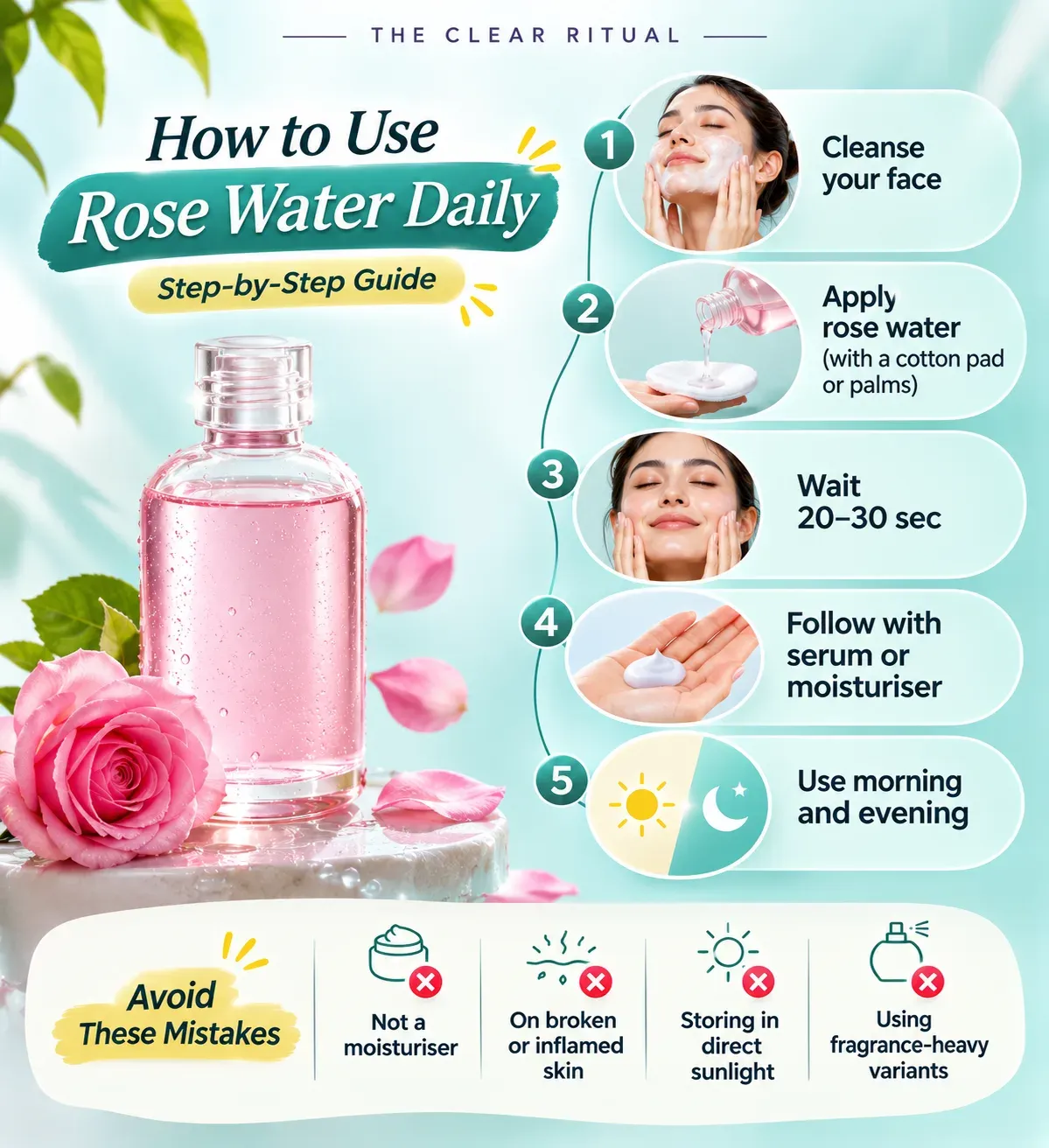
Cleanse first - Wash your face with a gentle, pH-balanced cleanser. This removes surface debris and prepares skin to absorb rose water evenly.
Apply rose water while skin is slightly damp - Pour a small amount onto a cotton pad or into your palms. Pat gently across face, neck, and décolletage. Do not rub, as friction can worsen redness.
Wait 20-30 seconds - Allow rose water to absorb partially before the next step. This maximises pH-balancing effect.
Follow with serum or moisturiser - Applying heavier products over rose water traps moisture and allows active ingredients to penetrate more effectively.
Repeat morning and evening - How to use rose water for face daily follows the same two-step sequence: after cleansing, before moisturising.
Common mistakes to avoid:
- Using rose water as a substitute for moisturiser - it provides only surface hydration
- Applying to broken or actively inflamed skin without dermatologist guidance
- Storing in direct sunlight - UV exposure degrades active compounds
- Using fragrance-heavy "rose water" products that contain synthetic rose fragrance instead of genuine distillate
Rose Water for Face vs. Alternatives: An Honest Comparison
Understanding how rose water compares to other common toners and facial mists helps in choosing the right product for specific skin needs.
| Product | Primary Action | Best Skin Type | pH Range | Pore-Minimising | Anti-inflammatory | Cost (approx.) |
|---|---|---|---|---|---|---|
| Rose water | Hydrate, tone, calm | All types | 5.0-6.0 | Mild | Yes | Low-Medium |
| Witch hazel toner | Astringent, oil control | Oily, acne-prone | 3.0-4.0 | Strong | Moderate | Low |
| Micellar water | Cleansing | All types | 6.0-7.0 | None | Minimal | Medium |
| Green tea toner | Antioxidant, sebum control | Oily, combination | 5.5-6.5 | Mild | Yes | Low-Medium |
| Hyaluronic acid mist | Deep hydration | Dry, dehydrated | 6.0-7.0 | None | Minimal | Medium-High |
Recommendation from Clear Ritual: Rose water is the most universally suitable option because it balances rather than over-strips, suits sensitive skin, and complements other actives. Witch hazel is more effective for oily skin but can be drying with long-term use.
What to Expect: Rose Water for Face Results Timeline
Results from consistent rose water for face use vary depending on skin type, climate, and application frequency. The following timeline reflects typical outcomes, not guaranteed results.
| Timeframe | What Most Users Notice |
|---|---|
| Week 1 | Reduced post-cleansing dryness; softer skin texture; mild reduction in redness |
| Week 2-4 | More even tone; reduced frequency of minor breakouts; pores appear slightly smaller |
| Month 2-3 | Measurably improved hydration levels; smoother skin surface; improved absorption of other skincare products |
| Month 4-6 | Sustained anti-inflammatory benefit; visible reduction in dullness; some users report reduced appearance of minor hyperpigmentation |
Factors that affect outcomes:
- Skin type (dry skin responds faster to hydration benefits; oily skin benefits more from toning effects)
- Consistency of use - twice daily outperforms sporadic application
- Quality of rose water used (steam-distilled > synthetic fragrance products)
- Overall skincare routine complementing rose water use
Is Rose Water for Face Right for You?
Rose water benefits for face apply broadly, but individual suitability varies.
| Rose water is ideal for: | Rose water may not be the best fit if: |
|---|---|
| Sensitive or reactive skin | You have an active rosacea flare (consult a dermatologist first) |
| Oily or combination skin needing a lightweight toner | You need intensive anti-ageing treatment (rose water alone is insufficient) |
| Acne-prone skin seeking a gentle, non-comedogenic option | You have a known allergy to Rosa species (rare but possible) |
| Dry skin as a pre-moisturiser hydration layer | You expect skin-whitening results (rose water does not lighten melanin) |
| Anyone seeking a low-cost, low-risk daily skincare step | You are using prescription retinoids or acids without dermatologist guidance on layering |
| Those wanting to reduce product complexity | You have deep cystic acne requiring medical treatment |
Best Practices for Using Rose Water for Face: Expert Tips
Clear Ritual's skincare experts recommend the following practices to maximise rose water benefits for face.
Expert tips:
- Store in a cool, dark place - Heat and light degrade the active botanical compounds. Refrigerating rose water between uses also adds a soothing, anti-puffiness effect when applied cold.
- Choose additive-free formulas - Look for rose water with no alcohol, parabens, or synthetic fragrance in the first five ingredients.
- Layer strategically - Apply rose water after water-based cleansers and before oil-based serums or moisturisers to respect the water-then-oil layering rule.
- Use as a mid-day facial mist - Spritz rose water over makeup or bare skin during the day to restore hydration without disrupting your routine.
- Combine with glycerin for dry skin - Mix 2 parts rose water with 1 part glycerin for a DIY toner that significantly improves surface hydration.
- Patch test DIY rose water - Home-simmered rose water can harbour bacteria if not prepared with sterile equipment. Always patch-test on the inner arm for 24 hours before facial application.
- Do not use as a standalone acne treatment - Rose water supports acne management but does not replace salicylic acid, benzoyl peroxide, or prescription treatments for moderate-to-severe acne.
Mistakes to avoid: Applying rose water to unwashed skin, using it as a makeup remover (it lacks surfactants), expecting overnight transformations, or assuming all rose-scented products contain genuine rose water distillate.
Research & Evidence: What the Science Says About Rose Water for Face
The evidence base for rose water for face use is growing, though most studies are small-scale. Clear Ritual's research team summarises the most relevant findings below.
Key study findings:
Anti-inflammatory activity - A 2011 study published in Phytotherapy Research found that Rosa damascena extract significantly reduced carrageenan-induced inflammation in topical application models, supporting its use for reactive skin.
Antimicrobial properties - Research published in the Iranian Journal of Basic Medical Sciences (2010) demonstrated that Rosa damascena hydrosol inhibited the growth of Staphylococcus aureus and Candida albicans, two common contributors to skin infections and fungal acne.
Hydration improvement - A clinical observation study on rose hydrosol toners found a mean 16% improvement in corneometer readings (a measure of skin surface moisture) over 4 weeks of twice-daily use in participants with dry skin.
Antioxidant capacity - Flavonoids in rose water have demonstrated free-radical scavenging activity comparable to some synthetic antioxidants in in-vitro assays, suggesting a protective role against environmental skin ageing.
Expert perspective: Dermatologists generally consider rose water safe for routine face use, noting that its low concentration of active compounds makes it unlikely to cause irritation while still providing measurable toning and hydrating benefits.
Build a skincare routine that suits your skin
Take the free Clear Ritual Skin Test to understand your skin concerns and explore a personalised routine.
Take the Free Skin Test
Frequently Asked Questions About Rose Water for Face
Q: Is it okay to apply rose water directly on the face?
A: Yes, pure rose water can be applied directly to the face without dilution. It is gentle enough for daily use on most skin types, including sensitive skin. If using DIY or simmered rose water, patch-test first to rule out contamination-related reactions.
Q: How long does rose water for face take to show results?
A: Most users notice improved skin texture and reduced dryness within the first 1-2 weeks of consistent use. More significant changes - such as reduced hyperpigmentation or sustained oil control - typically appear after 4-8 weeks of twice-daily application.
Q: What is the use of rose water for face in a daily routine?
A: The primary uses of rose water for face in a daily routine are as a post-cleanse toner (to restore pH), a mid-day hydrating mist, and a base layer before serum or moisturiser. Some users also use it as a gentle eye-area refresher, though it should not be applied directly in the eyes.
Q: Can rose water remove dark circles?
A: Rose water may reduce the appearance of dark circles slightly by decreasing puffiness and mild inflammation around the under-eye area. However, it does not address the primary causes of dark circles - thin skin, hyperpigmentation, or vascular issues - and cannot replace targeted treatments such as caffeine-based eye creams or vitamin C serums.
Q: Is rose water good for lips?
A: Rose water is good for lips as a mild hydrating rinse or as part of a DIY lip scrub when mixed with sugar. It can soothe chapped lips and reduce minor inflammation, but it does not provide the occlusive moisture-sealing needed for severely dry or cracked lips. A lip balm or emollient should follow application.
Q: What are the rose water and glycerin for face benefits compared to plain rose water?
A: Rose water and glycerin for face combines the pH-balancing and anti-inflammatory properties of rose water with the deeper humectant action of glycerin. Studies suggest the combination may improve skin hydration by up to 30% more than rose water alone, making it significantly more effective for dry and dehydrated skin types.
Q: Can I use rose water and coconut oil for face overnight?
A: Yes. Rose water and coconut oil for face applied overnight can be effective for dry skin - rose water delivers antioxidants and balances pH, while coconut oil provides an occlusive layer that seals in moisture. Apply a thin layer to avoid clogged pores, and avoid this combination if you have oily or acne-prone skin, as coconut oil rates high on the comedogenicity scale.
Q: What do Muslims use rose water for on the face?
A: In Islamic tradition, rose water has been used for purification rituals, as a mild fragrance, and for skincare. Applied to the face, it is used to hydrate, cool, and cleanse the skin - practices consistent with its pharmacological properties. This cultural use aligns with modern dermatological recommendations for gentle, non-stripping facial hydration.
Key Takeaways: Everything You Need to Know About Rose Water for Face
- Rose water can be used as an optional refreshing toner or facial mist, but it does not replace cleansing, moisturising or sunscreen.
- Choose a well-formulated rose water product and patch test if you have sensitive skin or a history of fragrance reactions.
- The evidence for treating acne, pigmentation or persistent redness with rose water alone remains limited.
- Use rose water after cleansing and before moisturiser if your skin tolerates it.
- Avoid storing homemade rose water for prolonged periods without appropriate preservation.
- See a dermatologist for ongoing irritation, worsening acne or persistent pigmentation.
Editorial Standards
Clear Ritual has Strict sourcing guidelines to ensure our content is accurate and current. We rely on peer-reviewed studies, academic research institutions, and medical associations. We strive to use primary sources and refrain from using tertiary references. See a mistake? Learn More about our Editorial Standards.
Related Articles
Acne Scar Removal: Creams, Home Remedies, & Clinical Treatments
Published 15 September 2026

Night Skin Care Routine For Oily Skin: The Complete Guide
Published 20 July 2026
The Ultimate Skin Care Guide: Everything You Need for Healthy-Looking Skin
Published 10 September 2026

Natural Skin Care Routine for Teenage Girl: Complete Guide
Published 20 July 2026