Fungal Acne vs Closed Comedones: The One Sign That Tells Them Apart
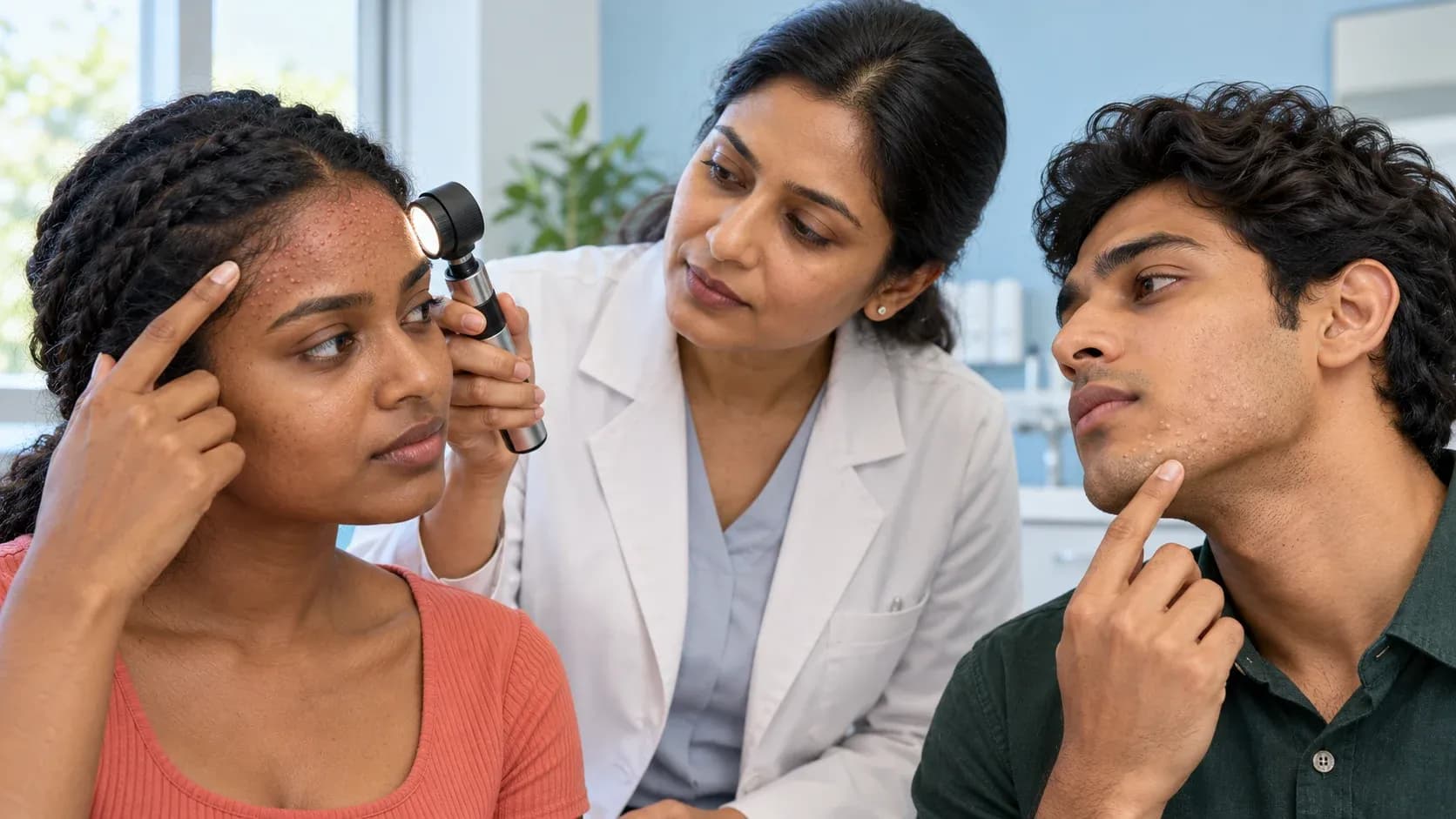
Fungal acne and closed comedones can both look like small, flesh-coloured bumps, but itching is the clearest clue. Fungal acne commonly itches and forms uniform clusters, while closed comedones usually do not itch and vary in size.
Use the wrong treatment and the condition gets worse, not better. Treat fungal acne with a salicylic acid toner and the yeast proliferates. Treat closed comedones with an antifungal shampoo and the clogged pores remain untouched.
What Are Fungal Acne and Closed Comedones?
Fungal acne and closed comedones are two distinct skin conditions that are frequently confused because they look nearly identical - small, flesh-coloured bumps sitting just under the skin surface.
Fungal acne (formally called Malassezia folliculitis or Pityrosporum folliculitis) is an infection of the hair follicles caused by an overgrowth of Malassezia yeast. This yeast is naturally present on most people's skin. When it multiplies rapidly - typically in warm, oily, or humid conditions - it triggers follicular inflammation. Fungal acne is not caused by bacteria and does not respond to standard antibacterial acne treatments.
Closed comedones are a type of non-inflammatory acne lesion. They form when a hair follicle becomes blocked by excess sebum and dead skin cells. Unlike open comedones (blackheads), the pore opening remains sealed, giving the bump a flesh-coloured or slightly white appearance. Closed comedones are considered the early-stage precursor to most inflammatory acne breakouts.
According to The Clear Ritual's skin care team, both conditions can coexist on the same face simultaneously - which is precisely why correct identification before starting any treatment is essential.
How Do Fungal Acne and Closed Comedones Develop?
Understanding how each condition develops explains why they require completely different treatment approaches.
How fungal acne develops:
- Malassezia yeast begins to overgrow in warm, humid, or oily skin environments - most commonly the chest, back, and forehead.
- The yeast enters hair follicles, which are rich in fatty acids from sebum - its primary food source.
- The immune system responds to yeast inside the follicle, producing small, itchy, uniform papules or pustules, typically 1-2 mm in diameter.
- Breakouts cluster in groups of identically sized bumps rather than isolated pimples of varying sizes.
Common fungal acne triggers include oral antibiotics (which eliminate competing bacteria and allow yeast to thrive), heavy occlusive skincare products, excessive sweating, and humid climates.
How closed comedones develop:
- Sebaceous glands overproduce oil, driven by hormonal changes, genetics, or comedogenic products.
- Dead skin cells accumulate inside the follicle, mixing with excess sebum.
- A thin layer of skin seals over the follicle opening, trapping the sebum-cell mixture inside.
- The blocked follicle remains non-inflammatory unless Cutibacterium acnes bacteria colonise it - at that point, it can progress to a papule, pustule, or cyst.
Closed comedones are the precursor lesion to almost every type of inflammatory acne.
Fungal Acne vs Closed Comedones: Side-by-Side Comparison
| Feature | Fungal Acne | Closed Comedones |
|---|---|---|
| Cause | Malassezia yeast overgrowth | Clogged pores from excess sebum and dead skin cells |
| Appearance | Uniform 1-2 mm itchy papules or pustules | Flesh-coloured, slightly raised bumps of varying size |
| Itchiness | Common - often the distinguishing sign | Rare |
| Location | Forehead, chest, back, shoulders | T-zone, chin, cheeks, forehead |
| Distribution | Clustered, uniform groups | Scattered, mixed sizes |
| Responds to antibiotics? | No - may worsen | Sometimes, if bacteria are involved |
| Responds to antifungals? | Yes | No |
| Responds to retinoids? | Partially, by reducing oil | Yes - first-line treatment |
| Responds to salicylic acid? | Partially | Yes |
| Contagious? | Not typically | No |
Fungal Acne vs Closed Comedones vs Milia: Three-Way Comparison
Milia are a third category of small white bumps frequently confused with both fungal acne and closed comedones. All three conditions produce bumps of similar size and colour, but their causes and treatments are entirely different.
| Feature | Fungal Acne | Closed Comedones | Milia |
|---|---|---|---|
| Cause | Yeast infection of follicle | Clogged pore from sebum | Trapped keratin under skin |
| Location | Forehead, chest, back | T-zone, cheeks | Under-eye area, cheeks |
| Size | 1-2 mm | 1-3 mm | 1-2 mm |
| Itchy? | Yes | No | No |
| Treatment | Antifungal | Retinoids, exfoliation | Extraction, retinoids |
Milia cannot be cleared by exfoliation or retinoids alone. Existing milia typically require manual extraction by a trained professional. Retinoids can help prevent new milia from forming by improving skin cell turnover.
What Are the Key Visual Differences Between Fungal Acne and Closed Comedones?
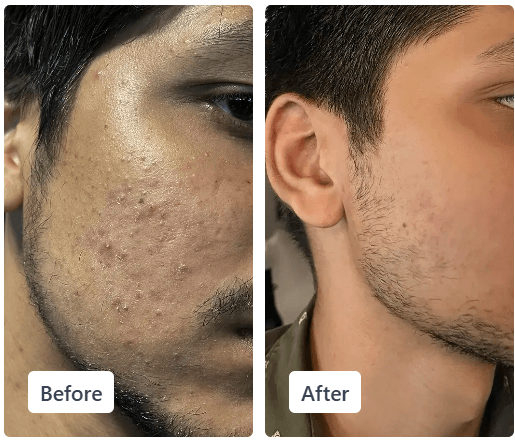
The clearest visual difference between fungal acne and closed comedones is uniformity. Fungal acne produces clusters of identically sized bumps - typically 1-2 mm - that appear almost identical to one another. Closed comedones vary more in size and distribution across the face.
Signs that point to fungal acne:
- Bumps are all the same size and shape
- Itching is present - a hallmark sign, especially after sweating
- Breakouts appeared or worsened after a course of oral antibiotics
- Bumps appear on the chest, back, or upper arms, not just the face
- Standard acne treatments produced no improvement or made the condition worse
Signs that point to closed comedones:
- Bump sizes vary across the affected area
- No itching is present
- Bumps are located primarily in the T-zone or along the jawline
- Breakouts correlate with hormonal cycles or a change in skincare products
- Some bumps develop into whiteheads or red papules over time
The Clear Ritual's skin assessment framework uses these exact visual and contextual cues to help identify which condition - or combination of conditions - is present before recommending a treatment routine.
Understand What Your Skin Needs
Take the Clear Ritual Skin Test to identify your skin type, concerns, and potential triggers before building your routine.
Take the Free Skin Test
What Causes Closed Comedones? The Six Root Triggers
Closed comedones form when two things happen simultaneously inside a single hair follicle: too much sebum is produced, and the skin's natural shedding process falls behind.
The six main causes:
- Hormonal changes - Androgens signal sebaceous glands to overproduce oil. This is why closed comedones are common during puberty, the luteal phase of the menstrual cycle, and perimenopause.
- Comedogenic skincare or makeup - Products containing certain silicones, heavy mineral oils, or pore-blocking ingredients physically seal follicles.
- Inadequate exfoliation - Without regular chemical or gentle physical exfoliation, dead skin cells accumulate faster than the follicle can clear them.
- Diet - High-glycaemic diets and dairy consumption have been associated with increased sebum production and comedone formation in multiple studies, though the relationship varies by individual.
- Genetics - Pore size and sebum output are partly hereditary. If a parent had comedonal acne, a higher likelihood of developing it exists.
- Occlusion from face masks, helmets, or tight clothing - Sustained pressure and trapped heat force skin cells and oil back into follicles rather than out.
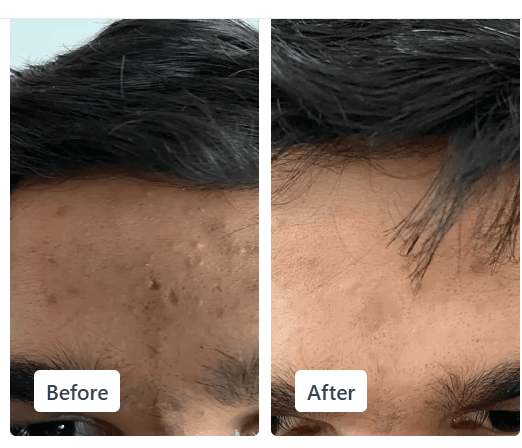
On the forehead specifically, closed comedones are often triggered by hairline products such as pomades, dry shampoos, and hair oils that migrate onto the skin - a pattern sometimes called pomade acne or acne cosmetica.
What Causes Fungal Acne? Understanding Malassezia Overgrowth
Fungal acne is caused by an overgrowth of Malassezia yeast, which naturally lives on all skin surfaces. Several conditions allow it to proliferate rapidly and trigger follicular infection.
Primary triggers for fungal acne:
- Antibiotic use - Oral antibiotics eliminate competing bacteria that normally suppress Malassezia, allowing unchecked yeast proliferation. A 2021 review in Clinical, Cosmetic and Investigational Dermatology found prior antibiotic use was reported as a triggering factor in 38% of Malassezia folliculitis cases.
- Fatty acid-rich skincare ingredients - Oils including squalane, coconut oil, argan oil, and olive oil directly feed Malassezia yeast.
- Sweating and humidity - Warm, moist environments accelerate yeast multiplication on the skin surface.
- Hair products - Dry shampoo and hair sprays deposit fatty-acid-rich residues on the forehead, directly feeding Malassezia in susceptible individuals.
- Occlusive clothing - Tight, non-breathable fabrics on the chest and back create the humid microenvironment Malassezia thrives in.
A practical skin-feel test: if breakouts feel itchy after applying a new oil-based moisturiser, that is a reliable signal a fungal component may be present.
Fungal Acne vs Closed Comedones on the Forehead: How to Tell Them Apart
The forehead is the location where both conditions appear most frequently - and where they are most commonly confused. The diagnostic clues are in the details.
Fungal acne on the forehead typically looks like this:
- Uniform rows or clusters of tiny, itchy papules along the hairline or across the entire forehead
- Bumps are all approximately the same size - roughly 1-2 mm
- Itch often intensifies after sweating or a hot shower
- Breakout appeared or worsened after antibiotics, heavy hair products, or intense sweating
- Standard acne products such as benzoyl peroxide or salicylic acid produced no improvement or worsened the condition
Closed comedones on the forehead typically look like this:
- Bumps vary in size and may be mixed with a few whiteheads or red papules
- No itching, even after exercise
- Breakout correlates with a new hair or face product, a hormonal shift, or inconsistent exfoliation
- The nose and chin also have some bumps - fungal acne rarely clusters in those areas
- BHA exfoliants or retinoids show gradual improvement over weeks
The hairline test: Run a clean fingertip along the hairline. Fungal acne tends to cluster densest at the hairline and spread inward in uniform rows. Closed comedones tend to scatter more randomly and mix with other lesion types.
| Sign | Points to Fungal Acne | Points to Closed Comedones |
|---|---|---|
| Bumps all the same size | ✓ Strongly | - |
| Bumps vary in size | - | ✓ Strongly |
| Itch present | ✓ Strongly | - |
| Hairline-dominant | ✓ Yes | Sometimes |
| Also on chest or back | ✓ Common | Uncommon |
| Hair product trigger | ✓ Fatty products | ✓ Comedogenic products |
| Worse after antibiotics | ✓ Yes | - |
Are Closed Comedones Itchy? Understanding the Itch Signal
Closed comedones are not itchy. That is one of the clearest ways to distinguish them from fungal acne, which almost always produces some degree of itch.
Closed comedones are non-inflammatory lesions. The follicle is blocked by sebum and dead skin cells, but the immune system is not actively responding to an infection. Without an inflammatory response, there is no histamine release - and histamine is what causes itching in most skin conditions.
If bumps itch - especially after exercise, hot showers, or sweating - that is a strong signal the cause is Malassezia yeast, not a clogged pore.
When can closed comedones feel itchy? Closed comedones may produce a very mild itch in two specific circumstances:
- When a closed comedone is becoming inflamed and transitioning into a papule or pustule - at that point, it is no longer purely a comedone, as bacteria have colonised the blocked follicle.
- When a topical product such as a retinoid or strong BHA is causing general skin irritation that makes the entire surface feel sensitised. In this case, the product is causing the itch, not the comedone itself.
The itch test - a practical starting point:
- Stop all new products for 48 hours.
- Go for a 20-minute walk or light exercise session.
- Check immediately afterward: do the bumps itch more intensely after sweating?
- If yes - fungal acne is the more likely cause.
- If no change - closed comedones or another non-fungal condition is more probable.
This test is a practical starting point, not a diagnosis. The Clear Ritual recommends confirming with a dermatologist via a KOH skin scraping test if any doubt remains.
Fungal Acne vs Comedonal Acne: Is There a Difference?
Comedonal acne is not the same as fungal acne - and understanding the distinction matters before treating either one.
Comedonal acne is the clinical term for acne consisting almost entirely of comedones: closed comedones and open comedones (blackheads). It sits at the mild end of the acne severity scale. It does not involve bacteria in the early stage, which is why it does not produce redness or pus on its own. Left untreated, closed comedones can progress to inflammatory acne when bacteria colonise the blocked follicle - but that is a secondary development, not the original cause.
Fungal acne (Malassezia folliculitis) is not acne in the dermatological sense at all. It is a yeast infection of the hair follicle that mimics comedonal acne visually but is biologically a completely different condition.
| Feature | Comedonal Acne | Fungal Acne |
|---|---|---|
| Cause | Excess sebum and dead skin cells blocking follicle | Malassezia yeast overgrowth in follicle |
| Lesion type | Closed and open comedones (non-inflammatory) | Papules and pustules (inflammatory) |
| Itch | No | Yes - a key distinguishing sign |
| Bacteria involved? | Sometimes, as a secondary factor | No - yeast, not bacteria |
| Responds to retinoids? | Yes - first-line treatment | Partially (reduces oil but does not kill yeast) |
| Responds to antifungals? | No | Yes - required for resolution |
| Progression risk | Can progress to inflammatory acne | Does not progress to cysts or nodules |
The distinguishing question to ask first is always: does it itch?
If bumps were previously diagnosed as comedonal acne but did not respond to retinoids or salicylic acid after 8-12 weeks, a dermatologist assessment for Malassezia folliculitis is worth requesting.
Can You Have Fungal Acne and Closed Comedones at the Same Time?
Yes - and it is more common than most people realise.
Both conditions share the same root environment: an oily, hair-follicle-rich skin surface. Someone whose skin overproduces sebum creates ideal conditions for both clogged pores and Malassezia yeast to thrive simultaneously. The most common mixed-presentation pattern is closed comedones on the nose, chin, and cheeks alongside fungal acne on the forehead, temples, chest, or back.
This mixed picture explains why treating everything with salicylic acid or retinoids alone often produces only partial results - only half the problem is being addressed.
How to manage both conditions at the same time:
- Treat the fungal component first. Start with an antifungal treatment - ketoconazole shampoo used as a face wash, or a topical antifungal under dermatologist guidance - for 4-6 weeks. Confirm the itchy, uniform bumps are responding before moving to the next step.
- Introduce comedolytic treatment next. Once the fungal component is controlled, add a low-strength BHA (salicylic acid 0.5-2%) or a gentle retinoid to address clogged pores.
- Remove occlusive products throughout. Heavy creams, oily hair products, and non-breathable fabrics can maintain the warm, oil-rich environment that supports both congestion and yeast overgrowth.
- Protect the skin barrier. Use a gentle cleanser and lightweight moisturiser. Over-cleansing or combining several strong actives can increase irritation without treating either condition correctly.
When both conditions are suspected, introduce one treatment at a time. This makes it easier to identify which bumps are responding and which ones need a different approach.
How Is Fungal Acne Treated?
Fungal acne treatment targets Malassezia yeast and the warm, oily environment that allows it to multiply. A dermatologist may recommend a topical antifungal such as ketoconazole or another antifungal medicine depending on the diagnosis, location, and severity.
- Shower and change out of sweaty clothing soon after exercise.
- Choose breathable clothing for the chest, shoulders, and back.
- Avoid heavy oils and review ingredients that worsen fungal acne.
- Do not continue antibiotics solely for bumps that have not been correctly diagnosed.
- Use antifungal medicines only as directed and complete the recommended course.
Visible improvement may begin within 2 to 4 weeks, but recurrent cases need an assessment of sweating, medication use, product ingredients, and underlying health factors.
How Are Closed Comedones Treated?
Closed comedone treatment focuses on normalising skin cell turnover and clearing the mixture of sebum and dead cells inside the pore.
- Salicylic acid: Penetrates oil-filled pores and helps loosen accumulated cells.
- Topical retinoids: Help prevent new comedones by regulating cell turnover.
- Non-comedogenic moisturiser: Supports the barrier without adding heavy occlusion.
- Professional extraction: May be appropriate for persistent lesions when performed by a trained professional.
A guide to the best ingredients for blackheads can also help explain which pore-clearing actives are used for comedonal congestion. Start slowly because excessive exfoliation can damage the skin barrier and make irritation more visible.
Common Treatment Mistakes to Avoid
- Treating every small bump as fungal acne: Uniform appearance alone is not enough for diagnosis.
- Using antifungal shampoo indefinitely: Long-term or unnecessary use may irritate the skin and does not treat closed comedones.
- Applying several exfoliating acids together: This increases dryness and barrier irritation without speeding up results.
- Squeezing closed comedones: Picking can push inflammation deeper and increase the risk of marks.
- Ignoring product triggers: Heavy oils, pomades, makeup, and occlusive creams can maintain the conditions that caused the bumps.
Use an evidence-based acne treatment guide for clogged pores, but remember that confirmed Malassezia folliculitis requires antifungal management rather than standard acne treatment alone.
When Should You See a Dermatologist?
See a dermatologist when the diagnosis remains unclear, itching is severe, bumps spread to the chest or back, or there is no improvement after 4 to 6 weeks of appropriate care.
A clinician may examine the distribution of lesions and perform a KOH preparation or microscopic examination to look for yeast. This is particularly useful when standard acne treatment has failed or antibiotics made the bumps worse.
Understanding the symptoms of acne-prone skin can provide context, but appearance alone cannot always distinguish acne from folliculitis, milia, dermatitis, or another skin condition.
Clear Ritual's Perspective on Fungal Acne vs Closed Comedones
Similar-looking bumps do not always have the same cause. The Clear Ritual recommends identifying itch, uniformity, location, triggers, and treatment response before adding more products.
A simple routine and one targeted treatment are easier to assess than several antifungal and acne products introduced at the same time. Persistent or uncertain cases should be diagnosed by a dermatologist.
Frequently Asked Questions
Q. What is the main difference between fungal acne and closed comedones?
A. Fungal acne is caused by Malassezia yeast and commonly itches, while closed comedones are clogged pores that usually do not itch.
Q. Can fungal acne look like closed comedones?
A. Yes. Both can appear as small flesh-coloured bumps, especially on the forehead, but fungal acne tends to form uniform itchy clusters.
Q. Does salicylic acid treat fungal acne?
A. Salicylic acid may reduce oil and surface congestion, but it does not kill Malassezia yeast and is not a substitute for antifungal treatment.
Q. Are closed comedones itchy?
A. Closed comedones usually do not itch. Itching may indicate fungal folliculitis, irritation from a product, or another skin condition.
Q. Can fungal acne and closed comedones occur together?
A. Yes. Oily skin can support both clogged pores and Malassezia overgrowth, so different areas may require different treatments.
Q. How can a dermatologist confirm fungal acne?
A. A dermatologist may assess the lesion pattern and use a KOH preparation or microscopic examination to identify yeast.
References
- DermNet. Malassezia Folliculitis.
- American Academy of Dermatology. Acne: Signs and Symptoms.
- Cleveland Clinic. Fungal Acne.
- National Institute of Arthritis and Musculoskeletal and Skin Diseases. Acne.
Editorial Standards
Clear Ritual has Strict sourcing guidelines to ensure our content is accurate and current. We rely on peer-reviewed studies, academic research institutions, and medical associations. We strive to use primary sources and refrain from using tertiary references. See a mistake? Learn More about our Editorial Standards.
Related Articles
Whiteheads: Causes, Symptoms, Treatment & Prevention Guide
Published 17 July 2026
Blackheads: What Causes Them and When to See a Dermatologist
Published 17 July 2026
Comedonal Acne: Causes, Types, Treatments & Prevention
Published 17 July 2026
Blackheads in Men: Why They’re More Common and How to Treat Them
Published 23 September 2026