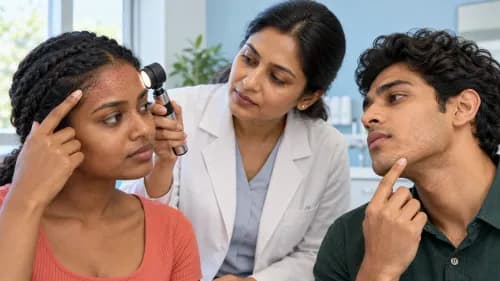
Pimple on Lip: Causes, Types & How to Get Rid of It
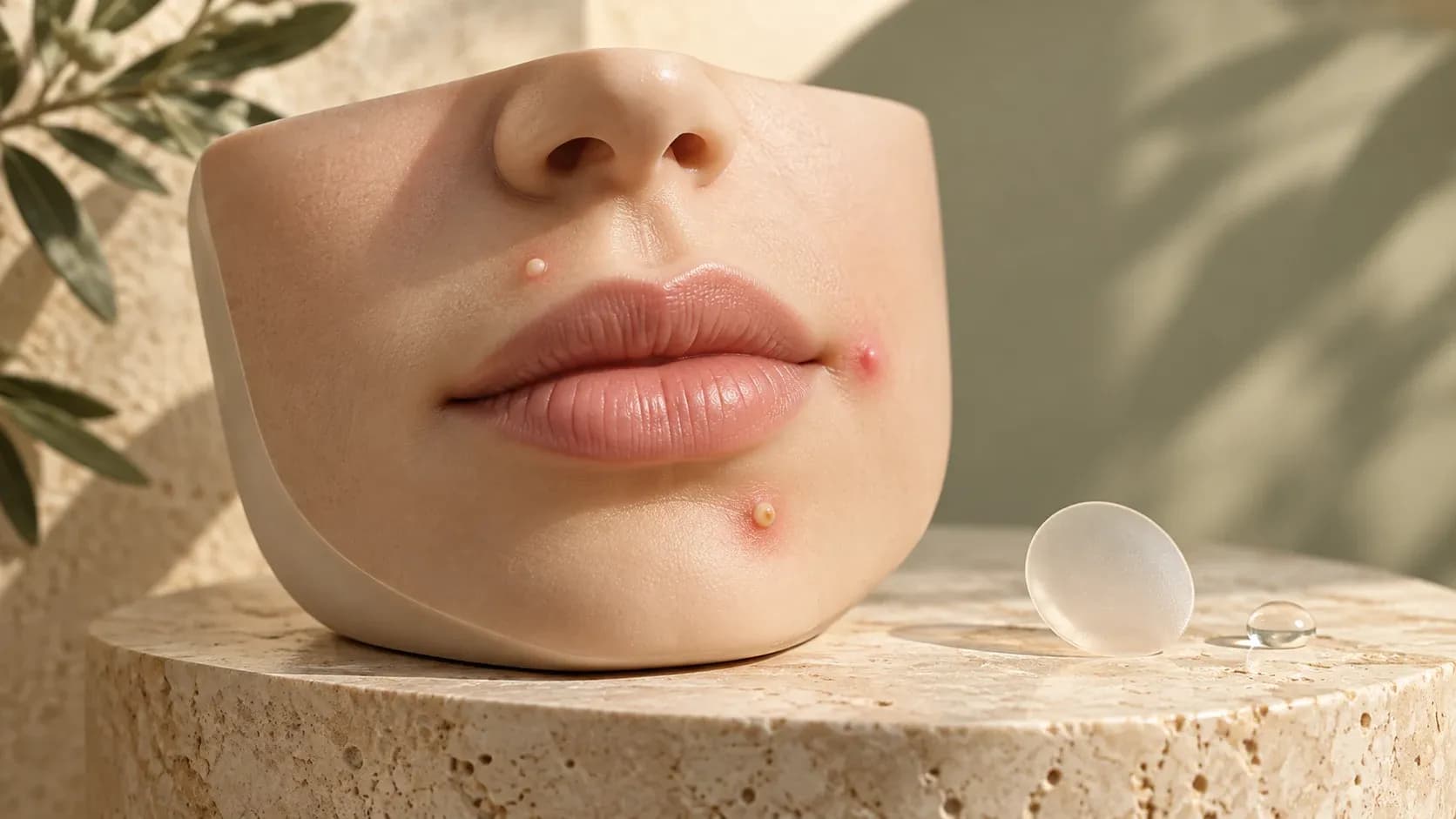
Quick Answer:
A bump on your lip is not automatically a cold sore. Most of the time, it is a straightforward pimple caused by a clogged pore, and it responds to the same acne treatments used anywhere on the face.
A pimple on the lip forms when sebum, dead skin cells, or bacteria block a follicle along the lip border or surrounding skin. The result is a red, sometimes painful bump that may develop a white or yellow head. It is not contagious, it is not herpes, and in most cases it clears within one to two weeks with consistent, gentle treatment.
This guide covers every type of lip pimple, what causes them, how to treat them by location, and when the bump you are looking at is actually something else.
What Are Pimples on Lips?
Pimples on lips are inflamed skin lesions that develop on the lip border (vermillion border), the skin directly above or below the lips, or at the corners of the mouth. They are not the same as cold sores or canker sores, although these conditions are frequently confused with each other.
A true lip pimple forms when a hair follicle or pore becomes blocked with sebum, dead skin cells, or bacteria: the same mechanism behind facial acne anywhere on the face. The result is a red, tender bump that may develop a white or yellow head.
Key facts about pimples on lips:
- Lip pimples most commonly appear on the upper lip, lower lip border, or corner of the mouth
- They affect people of all ages but are most frequent between ages 12–35
- Approximately 85% of people experience some form of acne during their lifetime, and the lip area is among the commonly affected zones
- A lip pimple is not contagious; a cold sore is
- According to Clear Ritual's dermatology advisory team, the most common reason patients confuse lip pimples with cold sores is their similar appearance in early stages: but the underlying cause and treatment are entirely different
What Causes Pimples on Lips?
Pimples on lips form when pores or follicles near the lip become clogged or infected. Several specific triggers can cause or worsen this process.
Primary causes include:
- Excess sebum production: Overactive sebaceous glands near the lip produce more oil than the pore can clear, leading to blockages
- Dead skin cell buildup: Skin cells that are not shed properly accumulate in pores and create a plug
- Bacterial activity: Cutibacterium acnes colonises blocked pores and triggers inflammation
- Hormonal fluctuations: Androgens such as testosterone and DHEA spike during puberty, menstruation, or periods of stress, increasing sebum output by up to 60% in some individuals
- Lip products: Heavy or comedogenic lipsticks, balms, and glosses can block follicles along the lip border
- Touching or picking the lips: Transfers bacteria from the hands to the lip area
- Diet: High-glycaemic foods and dairy products may increase androgen activity and sebum production in susceptible individuals
- Stress: Cortisol elevation during stress stimulates sebaceous glands and can trigger breakouts near the lip within 24–72 hours
Less common triggers:
- Fluoride toothpaste or sodium lauryl sulphate (SLS), which can cause perioral dermatitis in sensitive individuals
- Spicy or acidic foods causing perioral inflammation
- Waxing or threading of the upper lip area
Clear Ritual's clinical approach identifies hormonal fluctuations and comedogenic lip products as the two most overlooked triggers in patients presenting with recurring lip-area pimples.
How Do Pimples on Lips Form? The Mechanism Explained
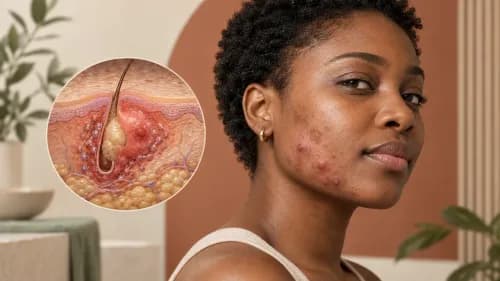
Pimples on lips form through the same four-stage biological process as standard acne, applied specifically to the follicles around the lip border.
Stage 1: Excess sebum: Sebaceous glands near the lip produce excess oil, often driven by androgen hormones. This oil is intended to lubricate the skin but accumulates when production outpaces clearance.
Stage 2: Pore blockage: Dead skin cells mix with excess sebum and form a plug inside the follicle. This creates either an open comedo (blackhead) or a closed comedo (whitehead) at the lip border.
Stage 3: Bacterial colonisation: Cutibacterium acnes, which lives on the skin naturally, multiplies rapidly inside the oxygen-deprived blocked pore. The bacteria release enzymes that break down the follicle wall.
Stage 4: Inflammation: The immune system responds to bacterial activity by sending white blood cells to the site. This produces the characteristic redness, swelling, and tenderness of a lip pimple. If the follicle wall ruptures beneath the skin, a deeper cyst or nodule may form.
This four-stage process explains why squeezing a lip pimple worsens inflammation: it ruptures the follicle wall prematurely and drives bacteria deeper into surrounding tissue.
What Are the Different Types of Pimples on Lips?
Not all bumps around the lips are the same type of lesion. Correctly identifying the type helps determine the right treatment approach.
| Type | Appearance | Location | Contagious? | Typical Duration |
|---|---|---|---|---|
| Whitehead (closed comedo) | Small white bump, no redness | Lip border or surrounding skin | No | 3–7 days |
| Papule | Red, raised, no head | Lip border or chin area | No | 5–10 days |
| Pustule | Red base with white or yellow pus head | Anywhere around the lip | No | 5–7 days |
| Cystic pimple | Deep, painful, no visible head | Under the lip line or chin | No | 2–4 weeks |
| Cold sore (herpes simplex) | Cluster of fluid-filled blisters | On or inside the lip border | Yes | 7–14 days |
| Canker sore | White ulcer with red halo | Inside the mouth only | No | 7–14 days |
| Fordyce spots | Painless, small white or yellow dots | Lip border | No | Permanent unless treated |
How to tell a lip pimple from a cold sore:
- A cold sore tingles or burns before it becomes visible; a pimple does not
- Cold sores appear as a cluster of small blisters; pimples are single raised bumps
- Cold sores are caused by herpes simplex virus (HSV-1) and require antiviral treatment
- A pimple responds to acne treatments; a cold sore does not
Pimple on Lip vs Cold Sore vs Canker Sore: How to Tell the Difference
The most important question about a lip bump is not what type of pimple it is: it is whether it is a pimple at all. Getting this wrong leads to the wrong treatment, and in the case of cold sores, to a risk of spreading herpes simplex virus to others.
| Feature | Pimple on Lip | Cold Sore (HSV-1) | Canker Sore |
|---|---|---|---|
| Warning sensation | None | Tingling or burning 1–2 days before visible blister | Mild soreness at site |
| Appearance | Single raised bump; may have white or yellow head | Cluster of small fluid-filled blisters | White or yellow ulcer with red halo |
| Location | Lip border, surrounding skin, philtrum | On the lip or at the lip edge | Inside the mouth only |
| Contagious? | No | Yes (direct contact, sharing utensils, kissing) | No |
| Responds to acne treatment? | Yes | No | No |
| Responds to antivirals? | No | Yes (aciclovir, valaciclovir) | No |
| Typical duration | 5–14 days | 7–14 days | 7–14 days |
| Recurs in same spot? | Varies | Yes: HSV-1 reactivates at the same nerve site | Varies |
Three questions to ask yourself:
- Did it tingle or burn before it appeared? If yes: consider a cold sore first and see a doctor.
- Is it a cluster of small blisters, or a single bump? Clusters suggest HSV-1; single bumps suggest acne.
- Is it inside your mouth? If yes: it is a canker sore, not a pimple or cold sore.
If you are still uncertain after 48 hours, do not attempt to treat it yourself. Applying acne spot treatment to a cold sore does nothing and delays antiviral treatment. According to Clear Ritual's dermatology advisory team, this is the single most common treatment error in lip-area breakouts.
Pimple on Upper Lip, Lower Lip, Lip Line, and Philtrum: Does Location Matter?
Where a pimple appears around your lip can point to a specific trigger. The lip area has distinct zones, each with slightly different sebaceous gland density and exposure to different irritants.
Pimple on the upper lip is one of the most common sites for perioral acne. The upper lip is especially prone because:
- Fluoride toothpaste or SLS contacts the upper lip during brushing and can trigger follicular irritation in sensitive individuals
- Upper-lip waxing or threading can cause trauma to follicles, leading to post-waxing papules within 24–48 hours
- Hormonal fluctuations, particularly around menstruation, tend to trigger breakouts in the perioral zone
- Heavy or waxy lip products spread upward and can block follicles at the upper lip border
The upper lip also has a higher concentration of sebaceous glands per square centimetre than the lower lip, which partly explains why upper-lip pimples are more frequent.
Pimple on the philtrum: the vertical groove between your nose and upper lip: is common because this area contains hair follicles, has active sebaceous glands, and is regularly contacted by lip balm, food residue, and fingertips. Philtrum pimples are frequently mistaken for cold sores because of their central location, but a philtrum pimple is a single raised bump, not a cluster of fluid-filled blisters.
Pimple on the lower lip border or under the lip is often linked to:
- Comedogenic lip products that pool or spread downward
- Saliva contact from lip-licking, which breaks down the skin barrier
- Chin resting on hands, which transfers bacteria directly to this zone
- Hormonal acne patterns, which classically cluster in the lower face
Pimple on the lip line (vermillion border) requires careful treatment. The skin here transitions from dry lip tissue to regular facial skin, making it prone to both irritation and pore blockages. Avoid applying strong actives: retinol, high-concentration benzoyl peroxide above 2.5%: directly on this border, as the lip mucosa is far more sensitive than facial skin.
| Location | Most Common Trigger | Treatment Note |
|---|---|---|
| Upper lip | Toothpaste, waxing, hormones, heavy balms | Switch to SLS-free toothpaste; use 2.5% benzoyl peroxide on surrounding skin only |
| Philtrum | Product spread, food residue, follicle blockage | Salicylic acid 1–2%; avoid touching |
| Lower lip / under lip | Lip products, lip-licking, chin resting | Switch to non-comedogenic balm; manage habits |
| Lip line (vermillion border) | Barrier disruption, product occlusion | Use lowest effective active concentration; no retinol directly on border |
| Corner of mouth | Bacteria, angular cheilitis as a differential | Rule out angular cheilitis; keep area dry |
How to Get Rid of Pimples on Lips: Step-by-Step Treatment
Build a Routine Around Your Skin
Understand your skin type and concerns before choosing products for recurring breakouts.
Take the Skin Test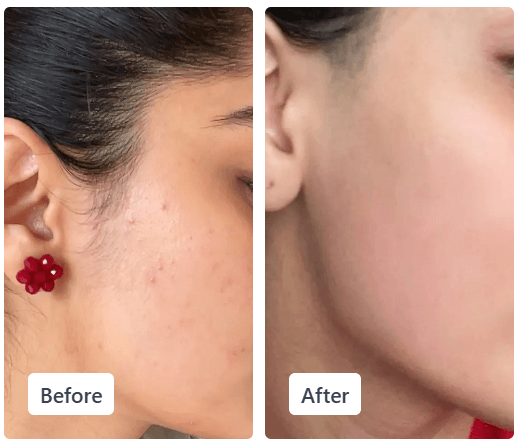
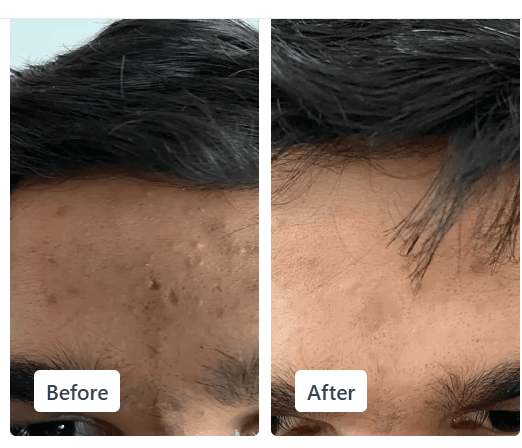
Pimples on lips typically respond well to a consistent, targeted skincare routine. The following steps reflect Clear Ritual's recommended protocol for lip-area breakouts.
Step 1: Cleanse gently twice daily Use a mild, non-comedogenic facial cleanser on the entire perioral area. Avoid harsh scrubs near the lip line, as these can cause micro-tears and worsen inflammation. Cleansing removes excess sebum, bacteria, and product residue that contribute to pore blockages.
Step 2: Apply a targeted spot treatment Apply a thin layer of one of the following actives directly to the pimple:
- Benzoyl peroxide (2.5%): Kills C. acnes bacteria; effective within 3–5 days
- Salicylic acid (0.5%–1%): Dissolves the keratin plug inside the pore; use once daily near sensitive lip tissue
- Niacinamide (4%–10%): Reduces inflammation and sebum production without irritating the lip area
Step 3: Moisturise the surrounding skin A lightweight, non-comedogenic moisturiser prevents the skin around the lip from over-producing oil in response to dryness. Apply after any active treatment has absorbed.
Step 4: Avoid comedogenic lip products Switch to non-comedogenic lip balms and lipsticks while the breakout is active. Ingredients such as lanolin, high-concentration shea butter, and certain waxes can block lip-border pores.
Step 5: Do not pick or squeeze Squeezing a lip pimple forces bacteria and sebum deeper into the tissue, which increases the risk of scarring and can extend healing time by 3–5 days.
Step 6: Review diet and stress levels Reducing high-glycaemic foods and managing cortisol through consistent sleep (7–9 hours) may reduce hormonal triggers within 2–4 weeks.
Common mistakes to avoid:
- Using toothpaste as a spot treatment: it contains fluoride and SLS, which irritate perioral skin
- Applying lip scrubs to active pimples: this spreads bacteria
- Over-treating with multiple actives simultaneously near the lip, which causes dryness and peeling
- Using retinol directly on or adjacent to the lip border without medical guidance
Which Spot Treatment Works Best for a Pimple on the Lip?
Three ingredients are clinically supported for treating a pimple on the lip. Each works differently, suits different skin types, and has specific cautions for the sensitive lip-border zone.
| Active Ingredient | How It Works | Best For | Concentration for Lip Area | Caution |
|---|---|---|---|---|
| Benzoyl peroxide | Kills Cutibacterium acnes bacteria; reduces bacterial load within 3–5 days | Inflamed pustules and papules with a visible head | 2.5% only near lip border (5%+ risks irritation) | Do not apply directly on lip mucosa; bleaches fabric; avoid during pregnancy |
| Salicylic acid | Dissolves the keratin plug inside the pore (keratolytic); unblocks follicles | Whiteheads, blackheads, comedones along the lip line | 0.5%–1% once daily for perioral skin | Drying at higher concentrations; avoid on broken skin |
| Niacinamide | Reduces sebum production, calms inflammation, improves skin barrier | Sensitive skin; hormonal breakouts; suitable alongside other actives | 4%–10% (well tolerated on perioral skin) | No significant contraindications at these concentrations; suitable for most individuals |
Which one should you start with:
- For a single inflamed pustule with a visible head: 2.5% benzoyl peroxide once daily, applied only to the skin surrounding the lip: not directly on the border
- For a whitehead or blocked pore at the lip line: 0.5%–1% salicylic acid once daily
- For repeated hormonal breakouts around the mouth: 10% niacinamide daily as preventive, with benzoyl peroxide as a spot treatment when a pimple appears
- For sensitive skin that reacts to both benzoyl peroxide and salicylic acid: niacinamide alone as a starting point, followed by a dermatology consultation if breakouts continue
Important: Do not apply retinol, AHAs (glycolic or lactic acid), or benzoyl peroxide above 2.5% directly adjacent to the lip border without medical guidance. The lip mucosa lacks the same protective barrier as facial skin, and these actives cause significant irritation when they contact lip tissue.
Clear Ritual recommends using a cotton tip for precise application of any active near the lip line to avoid contact with the lip mucosa itself.
What to Expect: Healing Timeline for Lip Pimples
The time a lip pimple takes to resolve depends on its type, severity, and treatment consistency.
| Timeframe | What Typically Happens |
|---|---|
| Day 1–2 | Redness and swelling begin; spot treatment starts reducing bacterial load |
| Day 3–5 | Whitehead may form or an existing pustule may begin to flatten |
| Day 5–7 | Redness and tenderness usually decrease as the lesion heals |
| Week 1–2 | Most surface-level lip pimples clear, although a temporary mark may remain |
| Week 2–4 | Deeper cystic pimples may continue healing and should not be squeezed |
If the bump becomes more painful, spreads, returns repeatedly in the same place, or does not improve within two weeks, seek a professional assessment to confirm whether it is acne or another lip condition.
How Can You Prevent Pimples Around the Lips?
Prevention focuses on reducing pore blockage, irritation, and repeated contact with the lip area.
- Choose non-comedogenic lip balms, lipsticks, and facial products
- Remove makeup fully before sleeping
- Avoid touching, picking, or squeezing bumps around the mouth
- Clean reusable lip applicators and replace expired lip products
- Rinse the skin around the mouth after eating oily or spicy foods
- Use gentle skincare and avoid applying strong actives directly to the lip tissue
When Should You See a Dermatologist?
Seek professional advice if the bump is severely painful, appears as grouped blisters, keeps returning in the same location, spreads beyond the lip area, or does not improve with gentle care.
You should also arrange an assessment if you develop fever, significant swelling, difficulty eating, or signs of infection. A dermatologist can distinguish acne from cold sores, angular cheilitis, perioral dermatitis, and other conditions that require different care.
Clear Ritual's Perspective on Pimples on Lips
A pimple near the lip should be treated carefully because the surrounding skin is more sensitive than many other areas of the face. Start by identifying whether the bump is a pimple, cold sore, canker sore, or another condition before applying active ingredients.
Use gentle products, avoid squeezing the area, and monitor how the bump changes. If it repeatedly returns or its appearance is unclear, seek professional guidance rather than trying multiple treatments at once.
Frequently Asked Questions
Q: Can you get a pimple directly on your lip?
A: Pimples usually form on the lip border or surrounding skin where follicles and sebaceous glands are present. A bump on the pink lip tissue itself may be another condition.
Q: How long does a pimple on the lip last?
A: A surface-level lip pimple may improve within 5 to 14 days. Deeper cystic lesions can take two to four weeks to settle.
Q: How can you tell a lip pimple from a cold sore?
A: A pimple is usually a single bump and may develop a white head. A cold sore often begins with tingling or burning and develops into a cluster of fluid-filled blisters.
Q: Should you squeeze a pimple near the lip?
A: No. Squeezing can increase inflammation, push material deeper into the tissue, and raise the chance of a lingering mark.
Q: Which ingredients can help a lip-area pimple?
A: Low-strength benzoyl peroxide, salicylic acid, or niacinamide may help when applied carefully to the surrounding skin. Avoid contact with the lip tissue.
Disclaimer: This article is for general information and is not a substitute for personalised professional advice.
Editorial Standards
Clear Ritual has Strict sourcing guidelines to ensure our content is accurate and current. We rely on peer-reviewed studies, academic research institutions, and medical associations. We strive to use primary sources and refrain from using tertiary references. See a mistake? Learn More about our Editorial Standards.
Related Articles
Pimples on Thighs: Causes, Types, and Treatment
Published 13 October 2026
Boils vs Pimples: How to Tell the Difference and When to See a Doctor
Published 13 October 2026
Cystic Acne Explained: Why Deep, Painful Breakouts Form and How to Treat Them
Published 23 September 2026
Fungal Acne vs Closed Comedones: The One Sign That Tells Them Apart
Published 13 October 2026