Pus-Filled Pimples: Causes, Types and How to Treat Them

Quick Answer:
Pus-filled pimples form when bacteria become trapped inside a clogged hair follicle and trigger an immune response. They are not a hygiene problem, they are proof your immune system is working. Most mild pustules heal within 7 to 14 days without interference. Do not squeeze them. Cleanse gently, apply 2.5% benzoyl peroxide once daily, moisturise with a non-comedogenic formula, and use SPF 30+ every morning.
What Is a Pus-Filled Pimple?
A pus-filled pimple is a form of inflammatory acne that forms when bacteria become trapped inside a clogged hair follicle, triggering an immune response. This distinguishes pus-filled pimples from blackheads and whiteheads, which are blocked pores without immune activation.
Pus is a collection of:
- White blood cells (neutrophils) that rush to the infection site
- Dead skin cells
- Bacteria, typically Cutibacterium acnes or Staphylococcus epidermidis
- Inflammatory fluid
The white or yellow tip visible on the surface is the accumulated result of your immune system actively fighting bacteria beneath the skin. The redness, swelling, and tenderness around it are signs of that internal immune process, not poor hygiene.
According to The Clear Ritual's skin health approach, understanding pus for what it actually is, an immune response, not dirt, changes how you treat it. Aggressive scrubbing and squeezing work against the healing process your body has already initiated.
What Are the Different Types of Pus-Filled Pimples?
Not all pimples that contain pus are the same. The type determines how deep the inflammation goes, how much pus is involved, and which treatment approach is appropriate.
| Type | Description | Size | Common Locations | Pain Level |
|---|---|---|---|---|
| Papules | Red, tender bumps with no visible pus head yet | Small | Cheeks, forehead | Mild |
| Pustules | Classic pus-filled pimple with a white or yellow centre | Medium | T-zone, back, shoulders | Moderate |
| Nodules | Deep, hard lumps under the skin, no clear head | Large | Jawline, back, chest | High |
| Cysts | Large, pus-filled pockets deep under the skin | Very large | Chin, jawline, neck | Severe |
Important distinctions:
- Only pustules and cysts clearly contain pus
- Papules may evolve into pustules as the immune response progresses
- Nodules involve deep inflammation but often have no visible pus head
- Cysts and nodules require dermatologist assessment, OTC treatments are typically insufficient
Why Do Pus-Filled Pimples Form? The Immune Mechanism Explained
A pore fills with pus because your immune system treats a bacterial colony inside a follicle the same way it treats any infection, by sending neutrophils to kill the threat. Here is exactly how each stage unfolds:
Stage 1: A pore becomes anaerobic (oxygen-free) Dead skin cells and excess sebum block the follicle opening. Cutibacterium acnes thrives without oxygen, so a clogged pore becomes an ideal environment for it to multiply, where it can contribute to inflammation.
Stage 2: Bacteria produce inflammatory byproducts C. acnes releases fatty acids and enzymes that irritate the follicle wall. This triggers cytokine release, chemical signals that alert the immune system to the threat.
Stage 3: Neutrophils rush to the site White blood cells flood the area through surrounding blood vessels in response to cytokine signals. This surge causes the visible redness and swelling on the surface.
Stage 4: Neutrophils attack bacteria, and die in the process Each neutrophil engulfs bacteria and releases enzymes to destroy them. After this process, the neutrophil itself breaks down. The accumulation of dead neutrophils, destroyed bacterial cells, and inflammatory fluid forms pus.
Stage 5: The follicle wall may rupture As pus volume increases, pressure builds inside the follicle. If the wall holds, the pimple resolves from the top. If it ruptures, often triggered by squeezing, bacterial material spills into the dermis, leading to nodules or cysts.
Different strains of C. acnes and differences in immune responses may help explain why acne inflammation varies between people.
Why some people are more prone than others comes down to three factors:
- Sebum production rate, driven partly by genetics and hormones
- The specific strain of C. acnes present on their skin
- The reactivity of their individual immune response
None of these are hygiene failures.
What Does Pus Color Mean? White, Yellow, Green, and More Explained
The color of pus in a pimple reflects which immune cells are dominant and how far the infection has progressed. Pus colour alone cannot establish whether an infection is present or how serious it is.
| Pus Color | What It Usually Means | Action to Take |
|---|---|---|
| White or cream | Fresh, early-stage pus, mostly neutrophils and inflammatory fluid | Standard topical treatment. No concern. |
| Yellow | Slightly older pus with more dead cell debris. Classic pustule appearance. | Benzoyl peroxide or targeted spot treatment. |
| Green | High concentration of neutrophil enzyme myeloperoxidase, signals active bacterial fight | Monitor. See a dermatologist if accompanied by significant pain, heat, or spreading redness. |
| Brown | Older, oxidised pus, or pus mixed with sebum. Common after several days. | No special action. Keep the area clean. |
| Black | Usually oxidised keratin or sebum at the surface. True black pus is rare. | See a dermatologist if the pimple is painful or spreading. |
| Bloody or red-tinged | Blood vessels near the follicle have been disrupted, common after squeezing | Apply gentle pressure with a clean cloth. Avoid further manipulation. |
| Clear or watery | Early inflammatory fluid, or serum after natural drainage, a sign of healing | Keep skin clean and moisturised. |
| Stringy or thick white threads | Condensed sebum and dead skin cells mixed with pus | Use salicylic acid alongside antibacterial treatment. |
The bottom line on pus color: green or yellow pus does not automatically mean you need antibiotics. Severity is measured by pain level, lesion size, depth, and spread, not color.
Why Shouldn't You Pop a Pus-Filled Pimple?
Popping a pus-filled pimple typically makes the situation worse, not better. Here is what actually happens when you squeeze:
- You push bacteria deeper. Squeezing usually forces pus further into the skin, potentially leading to larger breakouts, nodules, or cysts forming beneath the surface.
- You break the skin barrier. Popping creates an open wound that external bacteria can enter, compounding the original infection.
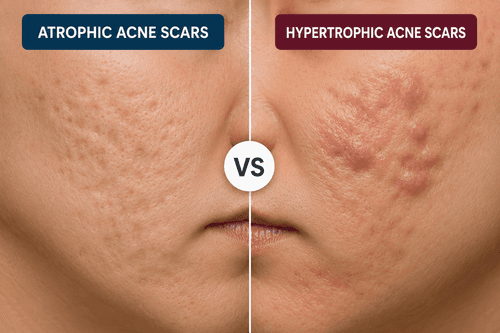
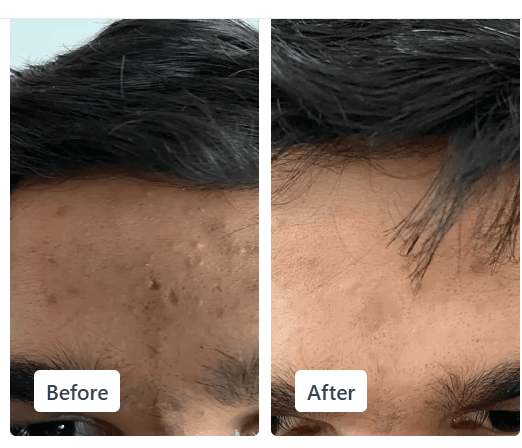
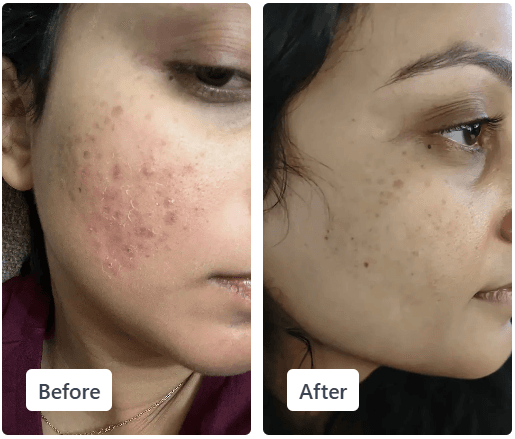
- You increase the risk of scarring and PIH. Picking can increase inflammation and the risk of dark marks or scarring.
- You interrupt the natural healing cycle. The whitehead is your body's way of sealing off bacteria. Popping it disrupts containment and can extend healing from 7–14 days to three weeks or more.
The Clear Ritual's approach to pus-filled pimples is built around this principle: support the skin's natural healing process rather than overriding it with force.
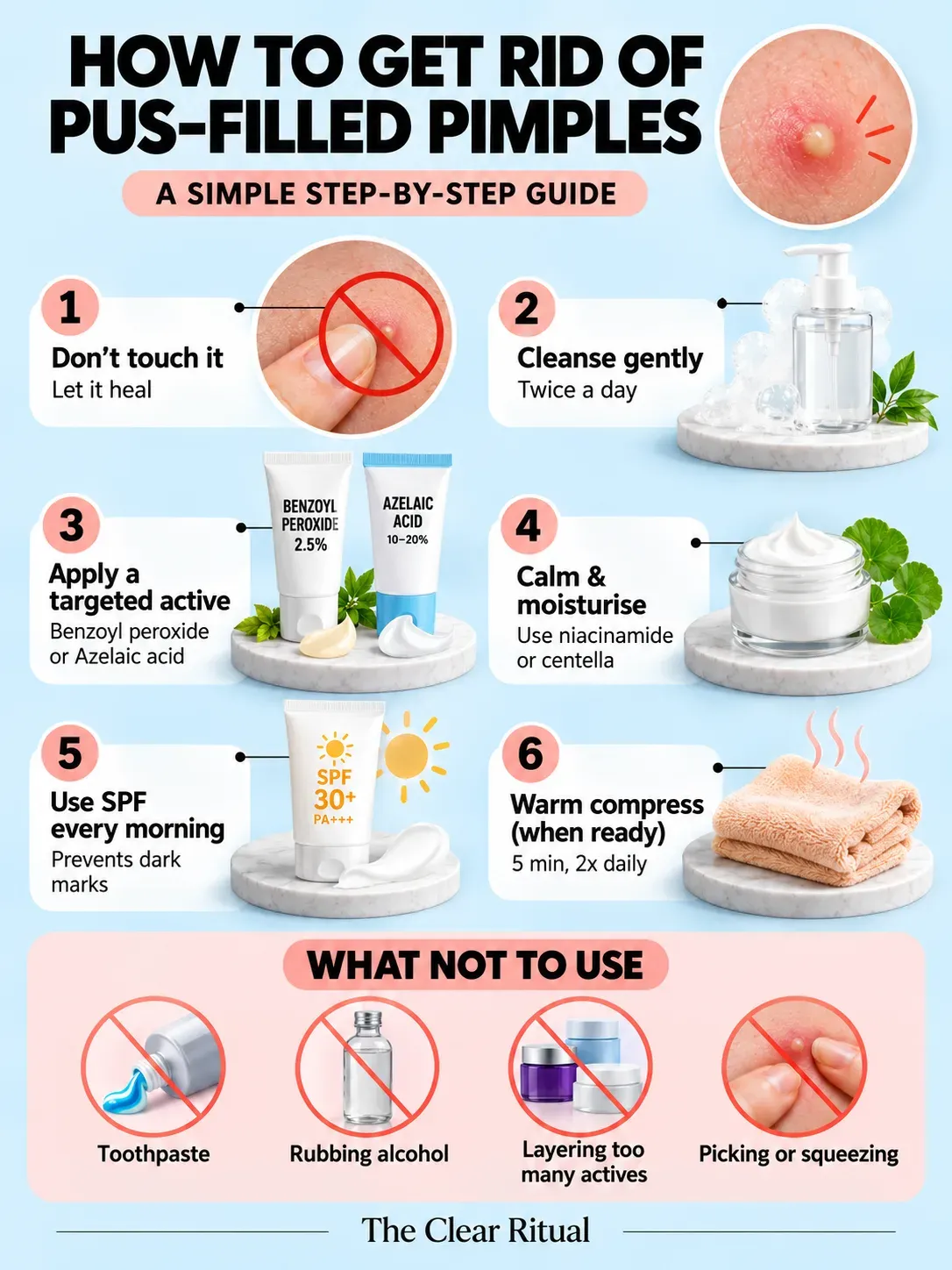
How to Get Rid of Pus-Filled Pimples: A Step-by-Step Treatment Guide
Getting rid of a pus-filled pimple faster means reducing the bacterial load and immune response, not forcing the pus out. Follow these steps from the moment you notice one.
Step 1: Stop touching it (Day 0, immediately) Every time you press, pick, or probe a pus-filled pimple, you risk rupturing the follicle wall. That wall is your body's containment barrier. Leave it intact.
Step 2: Cleanse gently, twice a day (Day 0 onward) Use a pH-balanced, sulphate-free cleanser with lukewarm water. Pat dry with a clean cloth or disposable paper towel. Do not scrub. Foaming cleansers with sodium lauryl sulphate strip the skin barrier and increase inflammation, avoid them on active pimples.
Step 3: Apply a targeted antibacterial active (Day 1–3)
- Benzoyl peroxide 2.5% is the most evidence-backed OTC option. It kills C. acnes by releasing oxygen directly into the pore. Apply a thin layer to the pimple only, not the entire face, once daily at night.
- Azelaic acid 10–20% is the better choice for sensitive skin or skin prone to hyperpigmentation. It kills bacteria and inhibits melanin production simultaneously.
Step 4: Apply a calming anti-inflammatory layer (Day 1 onward) After your antibacterial step has absorbed (wait approximately 10 minutes), apply a lightweight, non-comedogenic moisturiser containing niacinamide (4–10%) or centella asiatica. These ingredients calm cytokine activity, the primary driver of redness and swelling.
Step 5: Apply SPF every morning (Day 1 onward) UV exposure darkens post-inflammatory marks by stimulating melanin production in already-inflamed skin. Broad-spectrum SPF 30+ every morning is essential if you want a pimple to heal without leaving a dark mark.
Step 6: Use a warm compress when the pimple is nearly ready to drain (Day 3–5 only) A warm, damp cloth held against a pimple with a visible, thinned white head can encourage natural drainage without rupture. Apply for 5 minutes, twice daily. Do not squeeze. If natural drainage occurs, blot gently with a clean cloth and gently cleanse the area and avoid picking.
What not to use on pus-filled pimples:
- Toothpaste, drying agents irritate the skin barrier and can cause chemical burns
- Rubbing alcohol, destroys the skin barrier and does not effectively kill C. acnes
- Heavy layering of actives simultaneously (retinol + benzoyl peroxide + salicylic acid), causes barrier breakdown that worsens inflammation
How Long Do Pus-Filled Pimples Take to Heal?
The healing timeline for a pus-filled pimple depends on type, depth, and whether consistent treatment begins early.
| Timeframe | What You Should See |
|---|---|
| Day 1–2 | Redness and swelling begin to reduce if benzoyl peroxide is applied consistently |
| Day 3–5 | White head may flatten or naturally drain |
| Day 5–7 | Lesion flattens. A pink or brown mark may remain. |
| Week 2–4 | PIH mark fades with consistent SPF use |
| Month 1–3 | Mark should resolve significantly with niacinamide and SPF combined |
For body pus-filled pimples (back, chest, shoulders): body skin has larger pores and more sebaceous glands, so pimples here can go deeper faster. Use a benzoyl peroxide body wash left on for 2–3 minutes before rinsing, rather than a spot treatment. Change bedsheets and gym clothes more frequently, body acne is heavily influenced by fabric friction and trapped sweat.
Cysts and nodules take significantly longer, 4 to 8 weeks even with treatment, because inflammation extends into the dermis. These require dermatologist assessment rather than OTC management alone.
Pus-Filled Pimples vs Other Acne Types: How to Tell What You Have
Not every bump with a white centre is a pus-filled pimple. Identifying the correct type matters because treatments differ significantly.
| Lesion Type | Color of Head | Feel to Touch | Contains True Pus? | Best Treatment |
|---|---|---|---|---|
| Pustule | White or yellow | Soft, tender | Yes | Benzoyl peroxide, azelaic acid |
| Whitehead (closed comedo) | White | Soft, not usually tender | No, sebum and dead cells | Salicylic acid, retinoids |
| Milia | White | Hard, not tender | No, trapped keratin | Professional extraction or retinoids |
| Sebaceous cyst | Skin-coloured or white | Firm, movable | Sometimes, cheesy material, not true pus | Dermatologist treatment only |
| Nodule | No visible head | Hard, deep, very tender | No visible pus | Dermatologist, intralesional steroid |
| Cystic acne | May develop white head eventually | Soft, deep, very painful | Yes, often large volume | Prescription-only (isotretinoin, antibiotics) |
| Furuncle (boil) | Yellow or green head | Very tender, hot | Yes, often Staphylococcus aureus | Medical attention required |
| Clear fluid-filled pimple | Clear | Soft | No, inflammatory serum | May resolve on its own; barrier repair helps |
How to tell a pustule from a whitehead: Whiteheads are typically painless and do not throb or feel warm. Pustules are red at the base, may feel warm, and are tender when touched. If pressing around the bump causes pain, it is likely inflammatory.
When it is not a pimple at all: Recurring bumps that refill after drainage, bumps that feel rubbery or move freely under the skin, or lesions that appear alongside fever require a dermatologist visit.
Why Am I Getting Pus-Filled Pimples on My Face? Personal Triggers Explained
Pus-filled pimples on the face appear when a specific combination of factors creates the perfect environment for bacterial overgrowth inside a pore. The immune mechanism is the same in every case, bacteria, blocked follicle, neutrophil response, pus. But why your face is more prone than someone else's comes down to four personal triggers.
Trigger 1: Hormonal surges Androgens (testosterone and its derivatives) stimulate sebaceous glands to produce more sebum. More sebum means more food for Cutibacterium acnes and a higher probability of follicle blockage. This is why pus-filled pimples spike around menstrual cycles, during puberty, in early pregnancy, and in conditions like PCOS. The jawline and chin, areas dense with androgen-sensitive follicles, are the most common sites.
Trigger 2: A disrupted skin barrier When your barrier is weakened by over-exfoliation, harsh foaming cleansers, or abrasive scrubs, bacteria penetrate more easily and the skin's own antimicrobial peptides work less effectively. A compromised barrier means more inflammation from the same bacterial load.
Trigger 3: Comedogenic or pore-blocking products Certain foundations, sunscreens, and hair products, particularly those containing coconut oil, isopropyl myristate, or lanolin, physically block follicle openings. This creates the anaerobic, sebum-rich environment where C. acnes multiplies fastest.
Trigger 4: Stress and cortisol Cortisol signals sebaceous glands to increase oil production and simultaneously suppresses the parts of your immune system that keep C. acnes in check. Stress may aggravate acne in some people, although the relationship varies.
None of these triggers are hygiene failures. Identifying which one applies to you determines which treatment approach will work best.
Why Am I Getting Pus-Filled Pimples on My Body? Face vs Body Differences
Body pus-filled pimples follow the same immune mechanism as facial ones, but three structural differences make them form faster, go deeper, and take longer to clear.
Difference 1: Pore size and sebaceous gland density Your back, chest, and shoulders have larger pores and more sebaceous glands per square centimetre than most facial zones. A larger follicle blocked with sebum creates a bigger reservoir for bacterial growth. This is why body pustules are often larger than facial ones and why nodular or cystic lesions are more common on the body.
Difference 2: Friction and occlusion Clothing, backpack straps, sports bras, and gym equipment press bacteria and sweat directly into follicles. This is called acne mechanica, friction-driven acne that can worsen when clothing or equipment repeatedly rubs against the skin. Sweat and occlusion can add to irritation, although sweat itself does not directly cause acne.
Difference 3: Delayed cleansing after sweating
After exercise, staying in tight, damp clothing can prolong friction and occlusion. Shower when practical, change into clean, breathable clothes, and avoid abrasive scrubbing. Recurrent, similarly sized itchy bumps may instead indicate folliculitis and need a different diagnosis.
For persistent body breakouts, a gentle benzoyl peroxide wash may help. Follow the product directions, rinse thoroughly, and be aware that benzoyl peroxide can bleach fabrics. Painful, widespread, or scarring lesions deserve professional assessment.
How Can You Prevent Pus-Filled Pimples From Coming Back?
Prevention focuses on keeping pores clear while protecting the skin barrier. A routine you can tolerate consistently is more useful than layering several strong treatments at once.
- Wash gently up to twice daily and after heavy sweating, without scrubbing.
- Choose non-comedogenic moisturisers, sunscreen, and makeup where possible.
- Consider acne treatments such as benzoyl peroxide or a topical retinoid based on your skin's tolerance and clinician advice.
- Avoid picking or squeezing inflamed spots, which can worsen marks and scarring.
- Give a new acne routine several weeks to work, and seek help if lesions are deep, painful, frequent, or leave scars.
When Should You See a Dermatologist?
Book an assessment for frequent pustules, painful nodules or cysts, acne that leaves scars, or breakouts that are not improving with a consistent routine. Seek prompt medical care if redness spreads rapidly, the skin becomes very hot or swollen, you develop fever, or a lesion is close to the eye. These symptoms may indicate a skin infection rather than routine acne.
Conclusion
Pus-filled pimples are inflammatory acne lesions shaped by clogged follicles and the immune response. Avoid squeezing, use gentle skincare and appropriate acne treatment, and protect healing skin from sun exposure. If spots are deep, repeatedly return, or cause scarring, a dermatologist can help identify the right treatment.
Understand What Your Skin Needs
Take the Clear Ritual Skin Test to identify your skin type, concerns, and potential triggers before building your routine.
Take the Free Skin Test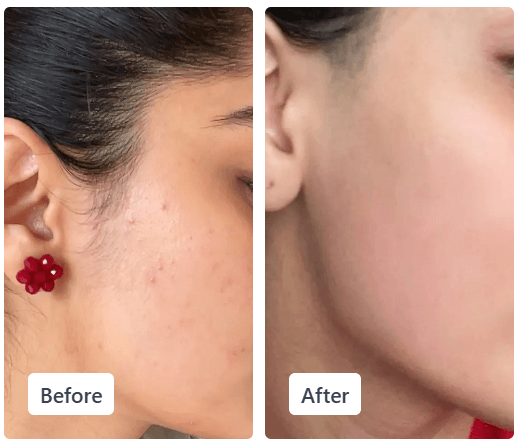
Frequently Asked Questions
Q. Is pus in a pimple a sign of poor hygiene?
A. No. Pus reflects inflammation and immune cells in a lesion; acne is not caused simply by being unclean.
Q. Should I pop a pus-filled pimple?
A. Avoid squeezing it. Picking increases irritation and can contribute to scarring or dark marks.
Q. Can benzoyl peroxide help pustules?
A. Yes, it is a common over-the-counter acne treatment. Start cautiously because it can cause dryness or irritation.
Q. Does yellow or green pus mean I need antibiotics?
A. Colour alone cannot determine the cause or treatment. Spreading redness, fever, warmth, or severe pain warrants medical assessment.
Q. How long do pus-filled pimples take to heal?
A. Small pustules may settle within days to a couple of weeks; deeper lesions and lingering marks can last longer.
References
- American Academy of Dermatology. Acne treatment guidance.
- DermNet. Acne vulgaris.
Disclaimer: Educational information only; not a substitute for diagnosis or personalised medical care. Seek medical advice for severe or worsening symptoms.
Editorial Standards
Clear Ritual has Strict sourcing guidelines to ensure our content is accurate and current. We rely on peer-reviewed studies, academic research institutions, and medical associations. We strive to use primary sources and refrain from using tertiary references. See a mistake? Learn More about our Editorial Standards.