How to Remove Whiteheads Permanently: Dermatologist-Approved Methods

Quick Answer: Whiteheads cannot be eliminated permanently in a single session or treatment. With consistent use of the right ingredients and in-office procedures, most people achieve a sustained 80–90% reduction in recurring whiteheads within three to six months.
The distinction matters: whiteheads form because skin continuously produces sebum and sheds dead skin cells, in some people, in excess. The pore blockage process repeats on its own. Long-term whitehead control requires ongoing prevention, not a one-time cure.
Dermatologists manage whiteheads through three pillars: cell turnover support (retinoids and chemical exfoliants), sebum regulation (niacinamide and salicylic acid), and barrier protection (non-comedogenic moisturisers that prevent reactive over-production of oil).
What Are Whiteheads?
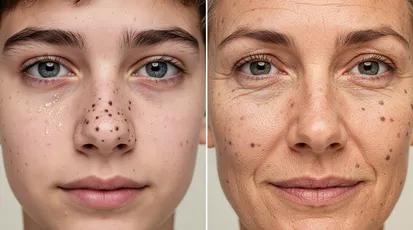
Whiteheads are a type of acne classified as closed comedones. They develop when a pore becomes blocked with sebum, dead skin cells, and cellular debris, but unlike blackheads, the pore surface remains closed.
Because the trapped material is not exposed to air, it stays white or flesh-coloured rather than oxidising to a dark shade. Whiteheads typically appear as small, slightly raised bumps on the forehead, nose, chin, cheeks, jawline, chest, and back.
Although whiteheads are considered a mild form of acne, they can affect skin texture noticeably. If left untreated, they may develop into inflamed acne lesions such as red papules or pustules.
Key characteristics of whiteheads:
- Small, smooth, slightly raised bumps
- White or skin-coloured, no dark centre
- Closed pore surface with no visible opening
- Often appear in clusters on oily areas
- Not typically red, swollen, or painful unless irritated
How Do Whiteheads Form? The Mechanism Behind Pore Blockage
A whitehead forms inside the follicular infundibulum, the upper canal of a hair follicle. Understanding this mechanism explains why some treatments work and others do not.
Step-by-step formation process:
- Sebaceous glands overproduce sebum. Hormones, stress, and genetic factors stimulate oil glands. When sebum production outpaces the skin's ability to clear it, oil accumulates inside the follicle.
- Keratinocytes fail to shed properly. Healthy follicles shed approximately 30,000 dead skin cells per day. When cell turnover slows due to dehydration, barrier damage, or insufficient exfoliation, keratinocytes clump together inside the pore.
- Sebum and keratinocytes form a plug. The combined mass of oil and dead cells compresses into a comedonal plug inside the follicle, this is a closed comedone.
- The pore surface stays sealed. Unlike a blackhead (open comedone), the skin over a whitehead remains closed. Because trapped material never contacts oxygen, it stays white or flesh-coloured, it does not oxidise.
- Bacteria may or may not be involved. In pure comedonal acne, Cutibacterium acnes bacteria are not the primary driver. However, if the blocked follicle becomes inflamed, bacterial overgrowth can convert a whitehead into a red papule or pustule.
This mechanism is why simply washing your face more often does not clear whiteheads. The blockage sits inside the pore, not on the surface. Effective treatment requires ingredients that penetrate the follicle, which is exactly what salicylic acid and retinoids are designed to do.
What Causes Whiteheads?
Whiteheads develop from a combination of skin, hormonal, and lifestyle factors. According to Clear Ritual's dermatology team, most cases involve more than one cause acting simultaneously.
- Excess sebum production. Skin naturally produces oil to stay hydrated, but when sebaceous glands go into overdrive, congestion accumulates inside follicles faster than the skin can clear it.
- Slow skin cell turnover. When dead skin cells do not shed efficiently, they accumulate inside pores and contribute to comedonal plug formation.
- Hormonal fluctuations. Changes in hormone levels, during puberty, menstrual cycles, pregnancy, or periods of chronic stress (which raises cortisol and indirectly increases oil production), stimulate excess sebum production.
- Pore-clogging products. Certain skincare, makeup, and haircare products leave residues that block follicles. Choosing non-comedogenic formulations reduces this risk.
- Genetic predisposition. Some people naturally produce more sebum or have follicles with a narrower canal. This inherited tendency can make whiteheads more common even with consistent skincare habits.
Is It Safe to Remove Whiteheads?
Whitehead removal is safe when the method is correct. The method matters more than most people realise.
One of the most common mistakes is squeezing or picking at whiteheads at home. While it may seem effective in the moment, squeezing typically pushes the blockage deeper into the skin and increases the risk of bacterial spread, inflammation, and scarring.
Risks of home squeezing:
| Risk | How It Affects the Skin |
|---|---|
| Redness and inflammation | Makes skin irritated, swollen, and more visible |
| Skin infection | Introduces bacteria deeper into the follicle, worsening acne |
| Post-inflammatory dark marks | Leaves pigmentation after the whitehead heals |
| Scarring | Damages deeper skin layers and may cause permanent marks |
| More breakouts | Spreads irritation and may trigger adjacent blemishes |
Clear Ritual's approach focuses on treating the underlying causes of whitehead formation rather than aggressive at-home extraction.
Who Is Most Affected by Whiteheads?
Whiteheads can affect people of all ages and skin types, but certain groups are more consistently prone to them.
- Teenagers and young adults, hormonal surges during puberty increase sebum production significantly
- People with oily or combination skin, higher sebaceous gland activity means faster pore congestion
- Those with PCOS or hormonal imbalances, androgen-driven sebum overproduction is a direct whitehead trigger
- People who use comedogenic products, foundations, SPFs, and hair products that contact the skin can contribute to recurring whiteheads in the same locations
- Those with a family history of acne, genetic predisposition to narrow follicles or elevated sebum production runs in families
Home squeezing carries additional risk for people with skin of colour (Fitzpatrick types IV–VI) due to a higher likelihood of post-inflammatory hyperpigmentation and keloid scarring from any skin trauma.
Dermatologist-Approved Methods to Remove Whiteheads
When it comes to whitehead removal, consistency is more important than intensity. Dermatologists typically combine evidence-based topicals with in-office treatments for long-lasting results.
Salicylic Acid
Salicylic acid is oil-soluble, which means it can penetrate inside the sebum-filled follicle and dissolve the lipid bonds holding the comedonal plug together. It belongs to the beta hydroxy acid (BHA) group and is one of the most widely recommended ingredients for whitehead-prone skin.
Concentrations of 0.5–2% in leave-on formulations are considered effective for mild-to-moderate comedonal acne. With regular use, salicylic acid can:
- Unclog existing pores
- Reduce excess oil at the follicle level
- Improve skin texture and smoothness
- Help prevent new whiteheads from forming
Retinoids
Retinoids, including over-the-counter retinol and prescription tretinoin, are the most studied treatments for closed comedones. They work by binding to retinoic acid receptors in keratinocytes and normalising the cell-shedding cycle, preventing dead cells from accumulating inside follicles.
A systematic review published in Dermatology and Therapy (2021) identified topical retinoids as first-line treatment for comedonal acne. Prescription adapalene (0.1%) is now available over the counter in some markets and has demonstrated equivalent efficacy to tretinoin for whiteheads with a better tolerability profile.
Over time, retinoids can:
- Reduce existing whiteheads
- Minimise pore congestion
- Improve overall skin smoothness
- Prevent future comedonal acne
Because retinoids can initially cause dryness and irritation, Clear Ritual recommends introducing them gradually, starting with a low concentration (0.025–0.1% retinol) every other night.
Chemical Exfoliation
Gentle chemical exfoliants remove excess dead skin cells that accumulate inside and around pores. Common options include:
- Salicylic acid (BHA), penetrates inside the follicle; best for whiteheads
- Glycolic acid (AHA), works at the skin surface; best for improving texture and post-comedonal marks
- Lactic acid (AHA), gentler surface exfoliant; suited for sensitive skin types
Unlike physical scrubs, chemical exfoliants work more evenly across the skin and are less likely to cause micro-tears that worsen barrier integrity.
Niacinamide
Niacinamide at concentrations of 4–5% has been shown to reduce the sebum excretion rate, the rate at which oil exits the follicle, directly addressing one of the root causes of pore congestion. A 2006 double-blind, randomised controlled trial published in the International Journal of Dermatology found that 4% niacinamide gel reduced sebum production and improved skin texture compared to vehicle control.
Professional Extraction
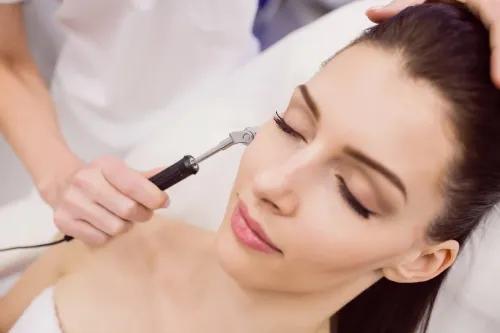
When topical treatments alone are insufficient, dermatologists perform professional extractions using sterile, specialised instruments to safely remove comedonal plugs without causing unnecessary trauma to surrounding tissue.
For persistent deep whiteheads, particularly on the nose, a single professional extraction session with a dermatologist or licensed aesthetician is more effective than weeks of home squeezing. Clinical extraction is most effective when followed immediately by application of a retinoid or salicylic acid to prevent re-blockage.
Prescription Treatments
For persistent or widespread comedonal acne, a dermatologist may recommend prescription-strength options, which may include:
- Prescription retinoids (tretinoin, adapalene 0.3%)
- Topical acne medications
- Hormonal treatments in appropriate cases
- Oral medications for more severe presentations
Daily Broad-Spectrum Sunscreen
Several whitehead treatments, particularly retinoids and exfoliating acids, increase photosensitivity. Using a broad-spectrum, non-comedogenic SPF 30+ daily protects the skin barrier, prevents worsening of post-inflammatory pigmentation marks, and supports overall skin health throughout treatment.
How to Remove Whiteheads at Home: A Step-by-Step Routine
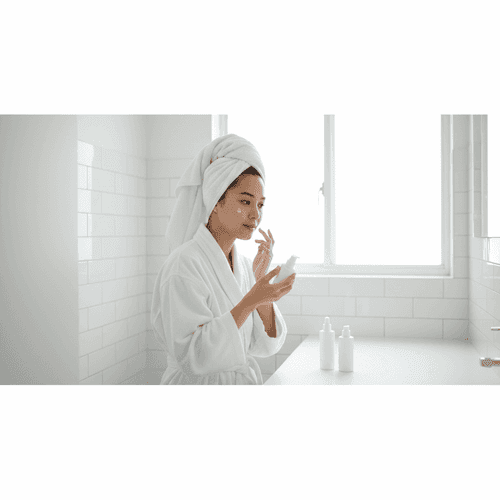
Most whiteheads can be managed at home with the right routine. Sequencing matters, applying products in the correct order at the right frequency clears blockages without damaging the skin barrier.
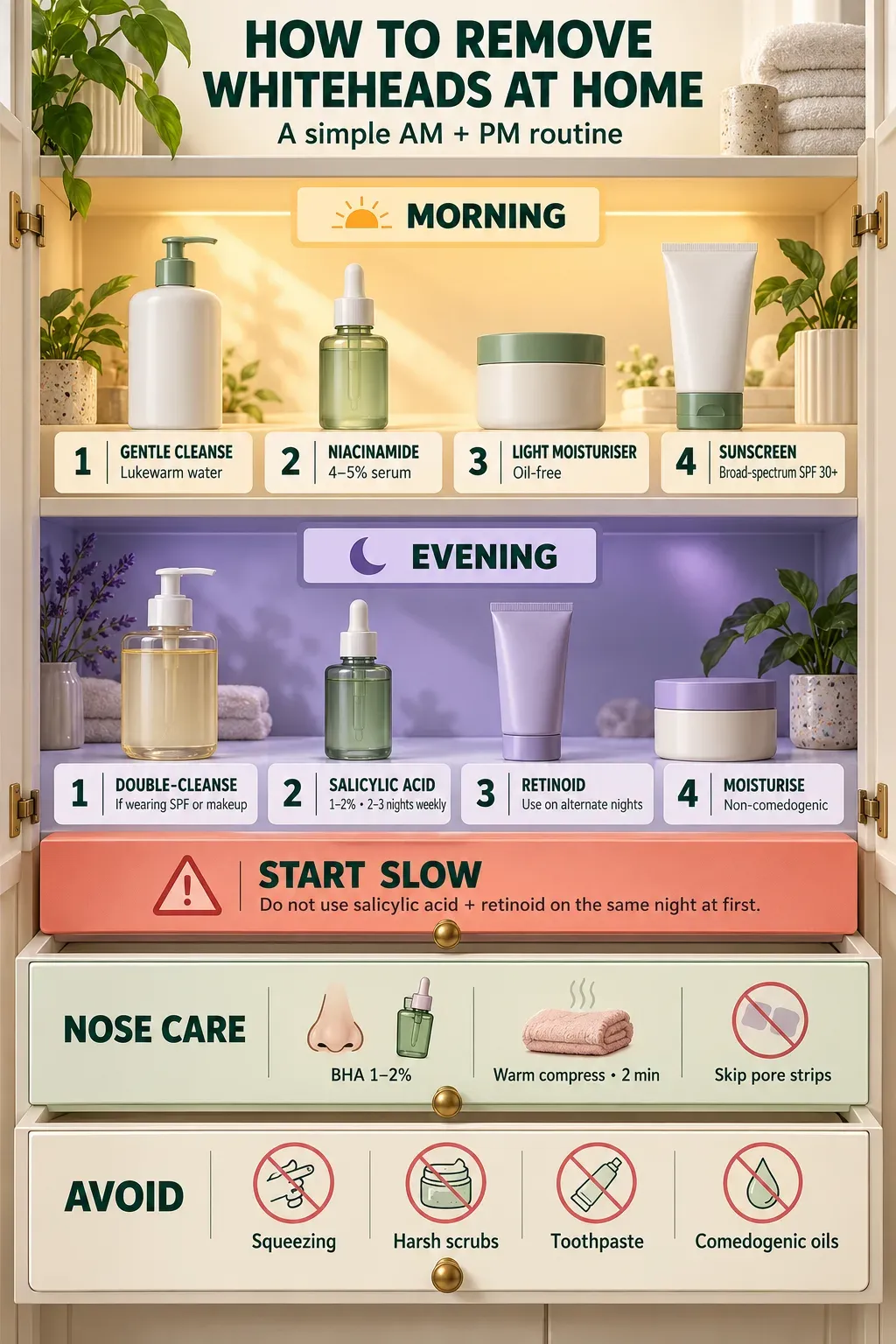
Morning Routine
- Cleanse with a gentle, non-comedogenic cleanser. Use lukewarm water. Hot water strips the barrier and triggers compensatory sebum production. Pat dry, do not rub.
- Apply a niacinamide serum (4–5%). Niacinamide regulates sebum production at the sebaceous gland level and calms inflammation. Apply to clean, slightly damp skin.
- Moisturise with a lightweight, oil-free moisturiser. A hydrated barrier produces less reactive sebum. Even oily skin requires moisture, skipping this step often worsens congestion.
- Apply broad-spectrum SPF 30+ sunscreen. Non-negotiable when using any active ingredient. UV exposure worsens post-inflammatory marks and degrades retinoid efficacy.
Evening Routine
- Double-cleanse if you wear SPF or makeup. Use an oil-based cleanser first, then a gentle foaming or gel cleanser. This ensures no residue blocks pores overnight.
- Apply salicylic acid (1–2%) to whitehead-prone zones. Use two to three nights per week initially to avoid over-exfoliation. Salicylic acid penetrates inside the pore and begins dissolving the comedonal plug.
- Introduce retinol or a retinoid on alternate nights. Start with a low concentration (0.025–0.1% retinol). Apply a pea-sized amount across the whole face, not just individual spots.
- Seal with a non-comedogenic moisturiser. Apply immediately after retinoid to reduce dryness. This buffering method does not significantly reduce retinoid efficacy.
⚠️ Common Mistake: Using salicylic acid and a retinoid on the same night during the first month. This combination can cause irritation and barrier damage. Alternate them, salicylic acid Monday, Wednesday, Friday; retinoid Tuesday, Thursday, until your skin has adjusted.
Targeting Whiteheads on the Nose
The nose is particularly prone to whiteheads because sebaceous gland density is highest in the T-zone. Targeted adjustments that help:
- Apply a BHA-based toner or pad (salicylic acid 1–2%) to the nose specifically after cleansing. The nose's thicker skin can tolerate slightly more frequent application than the cheeks.
- Avoid pore strips. They remove the top of the plug but leave the lower portion intact and can stretch pores over time.
- A warm, damp cloth compress over the nose for two minutes before applying salicylic acid softens the plug and improves ingredient penetration. This is not extraction, it simply improves ingredient delivery.
What to Avoid at Home
- Squeezing or picking, pushes bacteria deeper and risks scarring
- Abrasive physical scrubs, micro-tears in the barrier increase congestion
- Toothpaste as a spot treatment, SLS and fluoride cause contact irritation without clearing the comedone
- Comedogenic oils, coconut oil, cocoa butter, and mineral oil are highly comedogenic for most skin types
Whiteheads vs Blackheads: Key Differences and How to Treat Each
Whiteheads and blackheads are both forms of comedonal acne, but they form, look, and respond to treatment differently. Treating them identically is one of the most common skincare mistakes.
| Feature | Whitehead (Closed Comedone) | Blackhead (Open Comedone) |
|---|---|---|
| Pore surface | Closed, skin covers the plug | Open, plug exposed to air |
| Colour | White or flesh-coloured | Dark brown or black |
| Why the colour | No oxidation (sealed from air) | Sebum oxidises on contact with oxygen |
| Texture | Slightly raised bump | Flat or slightly raised with a visible dark dot |
| Best ingredient | Retinoids (primary) + salicylic acid | Salicylic acid (primary) + niacinamide |
| Professional treatment | Closed extraction with sterile lancet | Manual extraction or hydrafacial |
| At-home extraction | Not recommended, high scarring risk | Not recommended, worsens pore appearance |
| Response to physical scrubs | Ineffective, plug is below the surface | Minimal benefit, partially removes surface debris |
| Timeline to clear | 8–12 weeks with consistent actives | 4–8 weeks with consistent BHA use |
Blackheads are dark because oxygen contacts the plug. Whiteheads are white because the skin seals the pore shut, and that sealed surface is exactly why whiteheads require deeper-penetrating ingredients to clear effectively.
If both types are present simultaneously, a salicylic acid cleanser addresses both as a base layer. Prioritise retinoids in the evening routine to drive whitehead clearance. Avoid layering a separate scrub for blackheads on top of this, it adds too much exfoliation to the routine.
How Long Does It Take to Remove Whiteheads? A Realistic Timeline
Results from whitehead treatment vary based on skin type, hormonal factors, and consistency of use. The timelines below reflect what most people experience on a retinoid combined with salicylic acid routine.
| Timeframe | What Typically Happens |
|---|---|
| Week 1–2 | Skin may feel drier or more sensitive as it adjusts to active ingredients. Some initial purging (a temporary increase in whiteheads) is possible with retinoids. |
| Week 3–6 | Existing whiteheads begin to clear as cell turnover accelerates. New whiteheads form less frequently. Skin texture starts to feel smoother. |
| Month 2–3 | Significant reduction in whitehead count for most people. Post-whitehead marks (flat dark spots) may still be visible but are not new blockages. |
| Month 3–6 | Sustained clearance with consistent treatment. Maintenance remains necessary to reduce recurring pore blockages. |
Whiteheads do not disappear at the same speed for everyone. Hormonal activity, product use, skin sensitivity, treatment frequency, and whether the skin barrier remains comfortable can all affect the timeline.
Can Whiteheads Be Removed Permanently?
Whiteheads can be controlled for long periods, but no treatment can permanently stop the skin from producing sebum or shedding dead cells. A sustainable result depends on preventing new comedonal plugs from forming.
A practical maintenance plan may include:
- A gentle cleanser used once or twice daily
- Salicylic acid used according to skin tolerance
- A retinoid introduced gradually when appropriate
- A lightweight, non-comedogenic moisturiser
- Daily broad-spectrum SPF 30+ sunscreen
- Consistent use for several months rather than frequent product switching
If treatment is stopped completely, pore congestion may gradually return, particularly when excess oil production or hormonal triggers remain active.
When Should You See a Dermatologist for Whiteheads?
Professional guidance may be useful when:
- Whiteheads remain unchanged after 8 to 12 weeks of consistent care
- Closed bumps become red, painful, or inflamed
- Breakouts are widespread across the face, chest, or back
- Whiteheads leave persistent dark marks or scars
- Over-the-counter products repeatedly cause burning, peeling, or irritation
- You are unsure whether the bumps are whiteheads, milia, or another skin concern
A dermatologist can confirm the type of blockage and determine whether prescription retinoids, professional extraction, chemical peels, or another approach is appropriate.
Clear Ritual's Perspective on Whitehead Removal
Long-term whitehead control is less about aggressive removal and more about preventing the pore from becoming blocked again. A routine should support cell turnover, manage excess oil, and protect the skin barrier without creating unnecessary dryness.
At Clear Ritual, we believe understanding your skin type and congestion pattern is the first step towards choosing ingredients and a routine suited to your skin.
Understand Your Whitehead Pattern
Take the free skin test to assess congestion, oiliness, sensitivity, barrier concerns, and recurring breakouts, then build a routine suited to your skin.
Take the Free Skin Test
Frequently Asked Questions
Q: Can whiteheads be removed permanently?
A: Whiteheads can be controlled for long periods, but ongoing care is usually needed because the skin continues producing oil and shedding dead cells.
Q: What is the best way to remove whiteheads?
A: Consistent use of suitable ingredients such as salicylic acid or a retinoid may help. Persistent whiteheads may require dermatologist-guided extraction or prescription care.
Q: Should you squeeze whiteheads?
A: No. Squeezing can increase inflammation, introduce bacteria, cause dark marks, and increase the risk of scarring.
Q: How long do whiteheads take to clear?
A: Early improvement may appear within four to eight weeks, while a more meaningful reduction can take three to six months of consistent care.
Q: Can salicylic acid remove whiteheads?
A: Salicylic acid can enter oily pores and help loosen the mixture of sebum and dead skin cells that forms whiteheads.
References
- American Academy of Dermatology. Skin care habits that can worsen acne.
- American Academy of Dermatology. Acne: Tips for managing.
- National Institute of Arthritis and Musculoskeletal and Skin Diseases. Acne: Types, causes and risk factors.
- Thielitz A, Gollnick H. Topical retinoids in acne vulgaris: update on efficacy and safety. View review.
- Zaenglein AL, Pathy AL, Schlosser BJ, et al. Guidelines of care for the management of acne vulgaris. View guideline.
Disclaimer: This article is for general educational purposes and is not a substitute for personalised medical advice. Consult a qualified dermatologist for persistent, painful, inflamed, or scarring acne.
Editorial Standards
Clear Ritual has Strict sourcing guidelines to ensure our content is accurate and current. We rely on peer-reviewed studies, academic research institutions, and medical associations. We strive to use primary sources and refrain from using tertiary references. See a mistake? Learn More about our Editorial Standards.