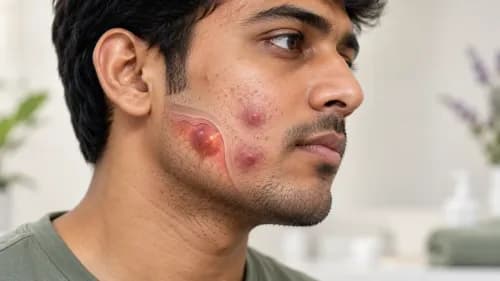
Niacinamide for Acne Scars: What It Actually Fades (And What It Can't)
Niacinamide cannot remove deep, pitted scars that form when acne damages collagen beneath the skin. But for the flat dark marks and red patches that most people mean when they say "acne scars," it is one of the most evidence-backed ingredients available , and it works without the irritation risk of stronger actives.
Niacinamide fades post-inflammatory hyperpigmentation (PIH) by blocking the transfer of excess melanin to the skin's surface. It also calms residual redness, strengthens the skin barrier, and keeps oil production in check. Visible improvement typically appears within 4 to 8 weeks of consistent daily use; stubborn pigmentation may take up to 5 to 6 months.
Understanding exactly what type of acne mark you have determines whether niacinamide alone is enough , or whether you need additional ingredients or professional support.
What Is Niacinamide and How Does It Relate to Acne Marks?
Niacinamide is the water-soluble, bioavailable form of Vitamin B3 that works gradually and supports the skin's natural repair processes. It is generally well tolerated across most skin types, including sensitive skin, which means it can be used alongside other active ingredients such as salicylic acid, azelaic acid, and retinoids without significant risk of reactivity.
According to Clear Ritual's skincare team, niacinamide is effective on the following types of acne-related marks:
- Post-Inflammatory Hyperpigmentation (PIH): Flat brown or dark spots caused by excess melanin distribution after a breakout clears
- Red or Purple Post-Acne Marks: Surface redness and discoloration tied to localised inflammation from acne lesions, also called post-inflammatory erythema (PIE)
- Uneven Skin Tone: General mottled discoloration left behind after a flare-up
Niacinamide does not remove the following:
- Ice-pick scars
- Boxcar scars
- Rolling scars
- Deep atrophic scars
- Post-inflammatory erythema with significant vascular congestion
These structural scars form when inflammation damages collagen and tissue beneath the skin. Because niacinamide primarily targets inflammation and pigmentation at the surface level, it cannot reverse significant collagen loss on its own. If you pick or pop pimples and this has left textured, indented marks, niacinamide will not be effective at removing them.
How Does Niacinamide Actually Work on Post-Acne Marks? The Mechanism Explained
Niacinamide fades post-acne marks through four distinct biological pathways. Each addresses a different part of why marks form and why they persist.
1. Blocks excess melanin transfer When a breakout heals, the skin sometimes overproduces melanin as part of the inflammatory response. Niacinamide interferes with the transfer of melanosomes , melanin-carrying structures , from melanocyte cells to the surface skin cells called keratinocytes. Less melanin reaching the surface means a visibly lighter mark. A 2002 study published in the British Journal of Dermatology confirmed that 5% niacinamide significantly reduced hyperpigmentation after 8 weeks compared to a vehicle control.
2. Calms the inflammation that creates marks in the first place Niacinamide acts as an anti-inflammatory agent by reducing the production of pro-inflammatory cytokines , the signalling molecules that keep redness and irritation active long after an acne lesion has cleared. Quieter inflammation means a lower chance of dark or red marks forming at all.
3. Strengthens the skin barrier Poor barrier function slows the skin's natural cell turnover and healing process. Niacinamide stimulates the synthesis of ceramides, key lipids that hold the skin barrier together. A stronger barrier allows damaged skin cells to shed and be replaced more quickly, speeding up the natural fading process.
4. Regulates sebum without stripping the skin Excess oil keeps pore-clogging conditions active, leading to ongoing breakouts that create new marks. Niacinamide reduces sebum production at the gland level, helping break the acne-to-mark cycle without the dryness and rebound oiliness associated with harsh cleansers. A 2006 study published in the Journal of Cosmetic and Laser Therapy found that 2% topical niacinamide reduced sebum excretion rate by an average of 20 to 30% within 2 to 4 weeks.
Citable one-liner: Niacinamide fades post-acne marks by blocking melanin transfer at the cellular level , not by bleaching or stripping the skin's surface.
Because PIH is a pigmentation issue and pitted scars are a structural collagen-loss issue, niacinamide's melanin-blocking pathway has no mechanism to rebuild lost collagen or physically fill indented scar tissue. This is not a limitation of the ingredient , it is a different biological problem requiring different tools such as microneedling, laser resurfacing, or subcision.
Does Niacinamide Help With Acne Scars? What the Evidence Shows
Yes , niacinamide can meaningfully help improve the appearance of post-acne marks, particularly post-inflammatory hyperpigmentation. Clear Ritual's formulation approach reflects the clinical evidence across different concentrations and delivery formats.
The benefits you receive depend on the formulation and concentration used:
| Formulation & Percentage | Key Benefits |
|---|---|
| Face Wash (0.5–2%) | Cleanses gently and controls excess oil |
| Toner (2–5%) | Hydrates, balances oil, and refines pores |
| 2% Niacinamide Serum | Supports skin barrier and calms visible redness |
| 5% Niacinamide Serum | Controls oil, minimises pores, and fades marks |
| 10% Niacinamide Serum | Targets pigmentation, acne marks, and uneven tone |
| 15–20% Niacinamide Serum | Addresses stubborn pigmentation; irritation risk increases at these concentrations |
| Moisturiser (2–5%) | Hydrates and supports the skin barrier |
| Gel Cream (4–10%) | Lightweight hydration and oil control |
| Night Cream (2–5%) | Supports overnight skin repair |
| Sunscreen (2–5%) | Protects skin and helps prevent pigmentation deepening |
Clinically, the evidence base is strongest at the 4% to 10% range. A 2011 double-blind randomised trial published in the International Journal of Dermatology found significant reduction in hyperpigmented lesions after 8 weeks of twice-daily 4% niacinamide application , results comparable to 4% hydroquinone, the former gold standard for pigmentation treatment, but with a markedly better tolerability profile.
What Does the Research Say About Niacinamide for Acne Marks?
Niacinamide has more clinical backing for skin applications than most cosmetic actives. The key studies most relevant to post-acne mark treatment are summarised below.
Study 1 , Foundational melanin-transfer study (Hakozaki et al., 2002) Published in the British Journal of Dermatology, this study confirmed that 5% niacinamide significantly inhibits the transfer of melanosomes from melanocytes to keratinocytes , the precise mechanism responsible for PIH fading. After 8 weeks of use, participants showed statistically significant reduction in hyperpigmentation compared to a vehicle control. This study established why niacinamide works, not just that it does.
Study 2 , Niacinamide vs. Hydroquinone (Navarrete-Solís et al., 2011) This double-blind randomised trial compared 4% niacinamide directly with 4% hydroquinone over 8 weeks. Both produced significant improvement in hyperpigmentation. Niacinamide's tolerability profile was markedly better , fewer side effects, no risk of ochronosis (a rare long-term side effect of hydroquinone), and suitability for longer-term continuous use.
Study 3 , Topical niacinamide and sebum regulation (Draelos et al., 2006) Published in the Journal of Cosmetic and Laser Therapy, this study confirmed that 2% niacinamide applied topically reduced sebum excretion rate by an average of 20 to 30% within 2 to 4 weeks , supporting the ingredient's dual role in both post-acne mark fading and preventing new breakouts through oil regulation.
What dermatology authorities say: The American Academy of Dermatology (AAD) recognises niacinamide as a well-tolerated ingredient for addressing uneven skin tone and post-inflammatory hyperpigmentation. DermNet New Zealand includes niacinamide among recommended topical agents for PIH management, specifically noting its safety across all Fitzpatrick skin types.
Citable one-liner: Clinical evidence confirms that 5% niacinamide produces significant reduction in post-inflammatory hyperpigmentation within 8 weeks, with a safer tolerability profile than hydroquinone.
How Long Does Niacinamide Take to Work on Acne Scars? A Realistic Timeline
Results from niacinamide are gradual and cumulative , they reward consistency rather than intensity. Most users see a meaningful change within 4 to 8 weeks, but the full picture depends on how deep the pigmentation sits, your skin tone, and whether daily SPF is being used throughout.
Weeks 1–2: Baseline adjustment Skin barrier function begins to improve. You may notice skin feeling slightly more comfortable and less reactive, but visible fading of marks is not expected this early. This phase is about building the foundation for faster cell turnover.
Weeks 3–6: First visible changes Mild, recent post-acne marks , those less than 3 months old , often begin to look lighter. Redness from post-inflammatory erythema typically responds fastest because the mechanism is vascular and inflammatory, not deeply pigmented. At 5% concentration, oil control and pore refinement also become noticeable during this period.
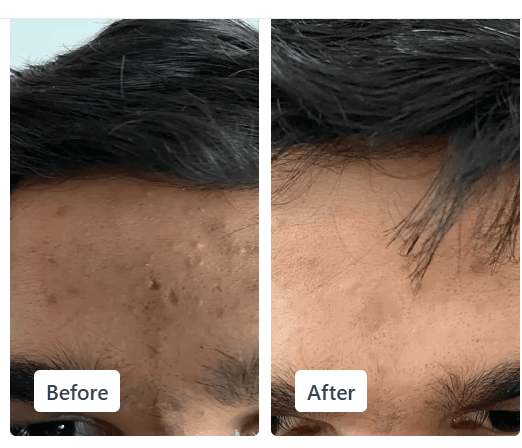
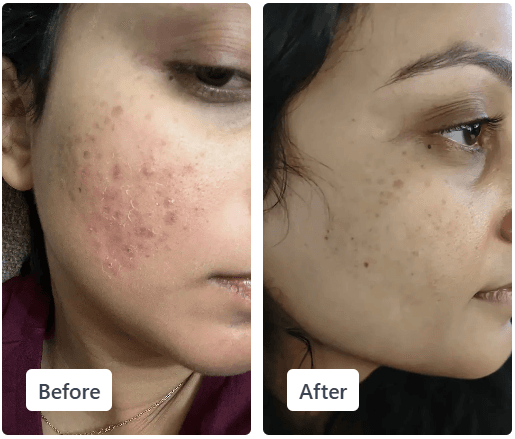
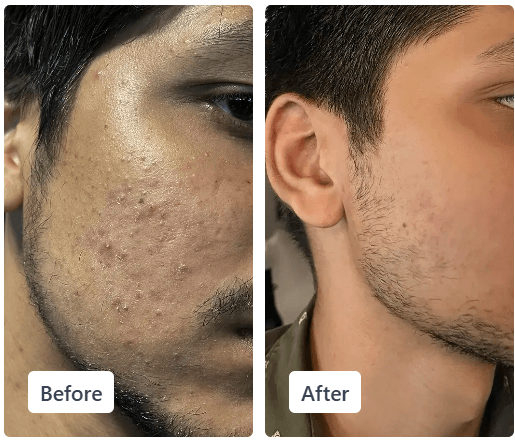
Months 2–3: Moderate improvement in PIH Darker flat marks , the brown or grey patches common in deeper skin tones , begin showing measurable fading. This is where before-and-after photographs taken in the same lighting conditions usually reveal clear progress. The 2011 Navarrete-Solís study found significant reduction in hyperpigmented lesions at the 8-week mark with twice-daily 4% niacinamide application.
Months 4–6: Addressing stubborn pigmentation Deep or long-standing PIH , marks older than 6 months or those in skin tones with a higher melanin baseline , may still be visibly present at month 3 but continue improving through month 6 with consistent use. At this stage, pairing niacinamide with tranexamic acid, azelaic acid, or a low-concentration retinol can help address residual pigmentation that has settled deeper in the dermis.
| Mark Type | Typical Niacinamide Response Time |
|---|---|
| Fresh red or pink marks (post-inflammatory erythema) | 3–6 weeks |
| Light brown flat PIH marks | 4–8 weeks |
| Darker or older brown/grey PIH | 3–6 months |
| Deep atrophic (pitted) scars | Does not respond to niacinamide alone |
What stays the same regardless of timeline: Unprotected UV exposure deepens existing PIH and resets progress. Daily SPF 30 or higher is non-negotiable throughout this process , without it, niacinamide's fading effect is significantly undermined.
Citable one-liner: Most people see measurable fading of flat post-acne marks within 4 to 8 weeks of daily niacinamide use; deeper or older pigmentation may take 5 to 6 months.
How to Use Niacinamide for Acne Scars: A Step-by-Step Routine Guide
The right concentration matters, but so does the order in which you apply it. Clear Ritual's formulation team recommends the following approach to get the most from niacinamide in a practical, sustainable daily routine.
Step 1: Choose the right concentration for your skin's current state
- Sensitive or reactive skin: Begin with 2% in a serum or gel moisturiser. This builds tolerance and improves barrier function without risk of overstimulation.
- Oily or acne-prone skin with mild PIH: 5% niacinamide serum applied morning and evening offers the best balance of oil control, mark fading, and tolerability for most skin types.
- Stubborn dark marks with a stable skin barrier: 10% niacinamide serum targets deeper pigmentation. Introduce it gradually if combining with other actives.
- Concentrations above 10%: Clinically, returns diminish significantly above 10%. Products at 15–20% carry a higher risk of irritation without proportionally better results for PIH.
Step 2: Apply niacinamide in the correct layering order
Niacinamide is water-soluble and works best applied after cleansing and before heavier moisturisers or oils:
- Cleanser (gel or gentle foam)
- Toner (optional , hydrating, alcohol-free)
- Niacinamide serum , apply here, on slightly damp skin
- Moisturiser or gel cream
- SPF 30+ (morning only , non-negotiable)
Step 3: Pair niacinamide with ingredients that complement it
Niacinamide is one of the most combination-friendly actives in skincare:
- Salicylic acid: Clears pores and reduces active breakouts; niacinamide calms the resulting inflammation and fades the marks. Apply salicylic acid as a targeted treatment, then niacinamide serum over it.
- Azelaic acid: Both target PIH through different mechanisms , pairing them can accelerate fading in moderate hyperpigmentation.
- Retinoids (used at night): Use retinol or tretinoin at night and niacinamide in the morning, or apply niacinamide first to buffer potential retinoid irritation.
- Vitamin C: Current evidence shows that niacinamide and Vitamin C can be used in the same routine at typical cosmetic pH and concentrations. Some people prefer to separate them by time of day if they notice sensitivity.
- SPF: Always. UV exposure is the primary factor that slows and reverses PIH fading.
Common mistakes to avoid:
- Skipping SPF while using niacinamide for PIH , this cancels most of the progress
- Starting at 10%+ concentrations without first assessing your skin's response
- Expecting niacinamide to improve textured, pitted scars , these require a different treatment pathway
- Switching products every 3 to 4 weeks before the ingredient has had enough time to show results
Citable one-liner: For most skin types, a 5% niacinamide serum applied morning and evening after cleansing is the most effective and well-tolerated starting point for fading post-acne marks.
How to Treat Different Types of Acne Scars: A Practical Guide
Not all acne scars are the same, which means there is no single treatment that works for everyone. The best approach depends on whether you are dealing with dark marks, red marks, or deeper pitted scars. Identifying your scar type , ideally with a dermatologist's input , is the first step towards choosing the right treatment.
For dark acne marks (post-inflammatory hyperpigmentation) Dark acne marks form when inflammation triggers excess melanin production, leaving a brown or dark patch after a breakout heals. Ingredients that may help fade dark acne marks include niacinamide, azelaic acid, vitamin C, retinoids, and tranexamic acid.
Tip: Daily SPF is non-negotiable. UV exposure deepens existing marks and significantly slows fading.
For red acne marks (post-inflammatory erythema) Red or pink acne marks are usually caused by lingering inflammation and increased blood flow to the affected area. These marks often fade over time but can benefit from soothing and barrier-supporting ingredients. Look for niacinamide, azelaic acid, cica (centella asiatica), and ceramide-rich moisturisers to calm the skin, reduce visible redness, and support the healing process.
For pitted acne scars (structural/atrophic) Pitted or indented scars develop when acne damages the skin's deeper layers, leading to collagen loss. Because the skin structure itself is affected, topical skincare alone is usually not sufficient to significantly improve them. Dermatologist-directed procedures such as microneedling, subcision, laser resurfacing, or carefully selected chemical peels may be considered according to the scar type and skin tone.
| Concern | Can Niacinamide Help? | Suitable Next Step |
|---|---|---|
| Flat brown post-acne marks | Yes, it may gradually reduce their appearance | Consistent niacinamide and daily sun protection |
| Red or pink post-acne marks | It may help calm inflammation and support the barrier | Gentle care and time; seek assessment if persistent |
| Ice-pick, boxcar, or rolling scars | No, it cannot replace lost collagen | Dermatologist assessment for procedure-based options |
| Active breakouts with new marks | It can provide supportive oil and inflammation control | Manage active breakouts to reduce new marks |
When Should You See a Dermatologist for Acne Scars?
Consider professional assessment if your scars are indented or raised, pigmentation is not improving after several months, or your skin becomes irritated when you combine active ingredients. A dermatologist can distinguish PIH from vascular redness and structural scarring before recommending suitable care.
You should also seek guidance if active breakouts continue to create new marks. Managing ongoing acne is an important part of preventing additional discoloration and scarring.
Clear Ritual's Perspective on Niacinamide for Acne Scars
Niacinamide can be a useful part of a routine for flat post-acne marks, but the result depends on correctly identifying the concern. Pigmentation, redness, and indented scars do not respond in the same way because each involves a different process within the skin.
At Clear Ritual, we believe an effective routine should match the type of mark, the condition of the skin barrier, and whether active breakouts are still occurring. Consistency and sun protection matter more than repeatedly adding stronger products.
Build a Routine for Your Post-Acne Marks
Take the Clear Ritual Skin Test to understand your skin concerns and find a routine suited to your marks, breakouts, and skin barrier.
Take the Skin Test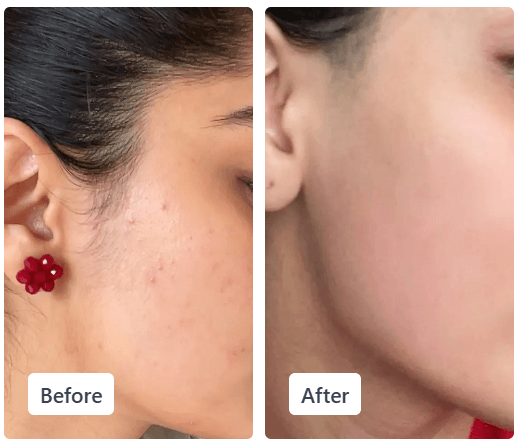
Frequently Asked Questions
1. Does niacinamide remove acne scars?
Niacinamide may help fade flat pigmented marks and support redness reduction, but it cannot remove pitted scars caused by collagen loss.
2. What percentage of niacinamide is suitable for acne marks?
A 4% to 5% formula is a practical starting point for many skin types. Higher concentrations are not automatically more effective and may increase irritation.
3. How long does niacinamide take to fade post-acne marks?
Recent, mild marks may begin improving within four to eight weeks. Older or deeper pigmentation can require several months of consistent care.
4. Can niacinamide and vitamin C be used together?
They can generally be used in the same routine at normal cosmetic concentrations. If your skin is sensitive, introduce them gradually or use them at different times of day.
5. Can niacinamide prevent new acne marks?
Its barrier-supporting, oil-regulating, and anti-inflammatory effects may help reduce factors associated with new marks, but active breakouts still require suitable acne care.
References
- Hakozaki T, et al. The effect of niacinamide on reducing cutaneous pigmentation and suppression of melanosome transfer.
- Navarrete-Solís J, et al. A double-blind, randomized clinical trial of niacinamide 4% versus hydroquinone 4%.
- Davis EC, Callender VD. Postinflammatory hyperpigmentation in skin of color.
- American Academy of Dermatology: Acne scars treatment.
Disclaimer
This article is intended for general informational purposes and is not a substitute for personalised medical advice, diagnosis, or treatment. Consult a qualified dermatologist if you have persistent pigmentation, active breakouts, irritation, or indented acne scars.
Editorial Standards
Clear Ritual has Strict sourcing guidelines to ensure our content is accurate and current. We rely on peer-reviewed studies, academic research institutions, and medical associations. We strive to use primary sources and refrain from using tertiary references. See a mistake? Learn More about our Editorial Standards.
Related Articles
Dermal Fillers for Acne Scars: Treatments and Results
Published 17 July 2026
What is Inflammatory Acne? Causes, Types, and Treatments
Published 10 August 2026

Bacterial Acne vs Fungal Acne: How Are They Different?
Published 17 July 2026
Nodular Acne: Causes, Treatments and What Works
Published 19 October 2026